
Michael Barnes

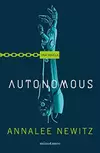
I've enjoyed reading other works by Annalee Newitz described in their podcast 'Our opinions are correct' as a science journalist who writes science fiction and this 2017 debut novel is no exception. It’s a near future rendering of what could be, think William Gibson's Neuromancer but Biopunk rather than Cyberpunk and Newitz knows their way around modern synthetic biology. Its 2144 and our Biopirate Judith 'Jack' Chen is a graduate biochemist who reverse-engineers patented drugs genetic treatments makes the knock-offs available for free or really cheap to those who need them but can’t afford them. Zacuity, the latest drug Jack has released copying Zaxy corporation's Zacuity is supposed to get people feeling good about working; unfortunately, what it actually does is addict people to their jobs to the point of insanity. The novel opens when Jack has to deal; with a pair who break into her sub (it’s a small sub) she ends up taking on the teenage kid Threezed who was indentured to the guy who broke into their sub. Unsurprisingly in a world where children can be indentured (and don't tell me that couldn't happen just read a few tech bros manifestos). Zaxy corporation would rather not have to admit that is very successful 'people now love their work drug' is dangerous and call on the International Property Coalition to help. The IPC tasks Eliasz one human (in a biological sense ) and Paladin (a military bot with a human brain used to process facial recognition) with tracking down and eliminating Jack. Eliasz and Paladin start by tracking down a number of Jack’s associates, looking for clues to Jack’s current whereabouts. Hack heads to an old haunt, the Free Lab. There, she gets her old boyfriend and his students to research a cure to the drug addiction.
Yes it’s a lot and whilst the world building on this climate enshittified earth is excellent the detailed world of biohacking and digital infrastructure including robots, biobots and programs is amazing it’s the discussion of what it measn for these characters where the story really shines. The story follows Jack, but also Eliasz one human (in a biological sense ) and Paladin equal measure. Through their journeys, we visit various aspects of this hyper-commodified world that Newitz envisions. It’s quite dystopian, yet full of beautiful moments too. Also profound as Paladin considers what it means to be autonomous (a term for robots that are no longer regulated by external programs, leads to a discussion about what it means to be autonomous and asks
"These feelings came from programs that ran in a part of his mind that he couldn't access. He was a user of his own consciousness, but he did not have owner privileges. As a result, Paladin felt many things without knowing why".
Who hasn't thought this about this about their own thought processes?
Johnathon Hatful at SciFi now "The story’s most compelling strand, however, is Paladin’s. The robot’s attempts to untangle its feelings for Eliasz, muddled by built-in obedience drives and mostly-useless but definitely gendered human brain in its carapace, are fascinating and unexpectedly unsentimental, even brutal at times. It’s a novel about choices and the lack of them, and Autonomous impresses with its intelligence and sensitivity".
I've enjoyed reading other works by Annalee Newitz described in their podcast 'Our opinions are correct' as a science journalist who writes science fiction and this 2017 debut novel is no exception. It’s a near future rendering of what could be, think William Gibson's Neuromancer but Biopunk rather than Cyberpunk and Newitz knows their way around modern synthetic biology. Its 2144 and our Biopirate Judith 'Jack' Chen is a graduate biochemist who reverse-engineers patented drugs genetic treatments makes the knock-offs available for free or really cheap to those who need them but can’t afford them. Zacuity, the latest drug Jack has released copying Zaxy corporation's Zacuity is supposed to get people feeling good about working; unfortunately, what it actually does is addict people to their jobs to the point of insanity. The novel opens when Jack has to deal; with a pair who break into her sub (it’s a small sub) she ends up taking on the teenage kid Threezed who was indentured to the guy who broke into their sub. Unsurprisingly in a world where children can be indentured (and don't tell me that couldn't happen just read a few tech bros manifestos). Zaxy corporation would rather not have to admit that is very successful 'people now love their work drug' is dangerous and call on the International Property Coalition to help. The IPC tasks Eliasz one human (in a biological sense ) and Paladin (a military bot with a human brain used to process facial recognition) with tracking down and eliminating Jack. Eliasz and Paladin start by tracking down a number of Jack’s associates, looking for clues to Jack’s current whereabouts. Hack heads to an old haunt, the Free Lab. There, she gets her old boyfriend and his students to research a cure to the drug addiction.
Yes it’s a lot and whilst the world building on this climate enshittified earth is excellent the detailed world of biohacking and digital infrastructure including robots, biobots and programs is amazing it’s the discussion of what it measn for these characters where the story really shines. The story follows Jack, but also Eliasz one human (in a biological sense ) and Paladin equal measure. Through their journeys, we visit various aspects of this hyper-commodified world that Newitz envisions. It’s quite dystopian, yet full of beautiful moments too. Also profound as Paladin considers what it means to be autonomous (a term for robots that are no longer regulated by external programs, leads to a discussion about what it means to be autonomous and asks
"These feelings came from programs that ran in a part of his mind that he couldn't access. He was a user of his own consciousness, but he did not have owner privileges. As a result, Paladin felt many things without knowing why".
Who hasn't thought this about this about their own thought processes?
Johnathon Hatful at SciFi now "The story’s most compelling strand, however, is Paladin’s. The robot’s attempts to untangle its feelings for Eliasz, muddled by built-in obedience drives and mostly-useless but definitely gendered human brain in its carapace, are fascinating and unexpectedly unsentimental, even brutal at times. It’s a novel about choices and the lack of them, and Autonomous impresses with its intelligence and sensitivity".