
Michael Barnes


I found this a beautiful sparse mediation on loneliness in modern and marginalised life. The clear and fast pace of the narrative matching the clean and cool prose of the author. As someone unable to read Korean I rely on the English translation and this book I think is an example of why I decry those who suggest it can be handed over to large language models.
The bulk of the story is told through three narratives. A contemporary police detective Suyeon’s investigation into the deemed suicides of four isolated elderly people at the same hospital by jumping out of the sixth-floor window, Violette a adopted Korean baby growing up in France, who is socially isolated (how could she be anything else) whose budding romance with an enchanting vampire, Lily, as a teenager in the 1980s: and Nanju, a night nurse whose violent hatred towards a selfish father fuels a bitter and empty life. I can state Nanju makes understandable but terrible choices.
I liked how their stories connected organically and whilst the resolution might seem inevitable, with a story such as this the point isn't so much the destination but the journey. I wanted to read more of the friendship between Suyeon and her mentor Eungyeong sunbae, both fascinating women but that’s more a personal curiosity than a criticism.
I found this a beautiful sparse mediation on loneliness in modern and marginalised life. The clear and fast pace of the narrative matching the clean and cool prose of the author. As someone unable to read Korean I rely on the English translation and this book I think is an example of why I decry those who suggest it can be handed over to large language models.
The bulk of the story is told through three narratives. A contemporary police detective Suyeon’s investigation into the deemed suicides of four isolated elderly people at the same hospital by jumping out of the sixth-floor window, Violette a adopted Korean baby growing up in France, who is socially isolated (how could she be anything else) whose budding romance with an enchanting vampire, Lily, as a teenager in the 1980s: and Nanju, a night nurse whose violent hatred towards a selfish father fuels a bitter and empty life. I can state Nanju makes understandable but terrible choices.
I liked how their stories connected organically and whilst the resolution might seem inevitable, with a story such as this the point isn't so much the destination but the journey. I wanted to read more of the friendship between Suyeon and her mentor Eungyeong sunbae, both fascinating women but that’s more a personal curiosity than a criticism.

So the 15th and final-ish book in The Laundry Files series of novels which began in 2004 with The Atrocity Archives and ends with The Regicide Report. If you have read the other 14 novels I think you will find this one an as wonderful/horrorful/aweful as the earlier works, with the benefit of well-developed cast of characters who we have grown to love even if they are, as remarked in the story, now more monstrous than human. I enjoyed the called backs to earlier characters such as the British Constable who Bob Howard got trapped in a broom closet surrounded by zombies. The books like most of these appeals to a certain type of nerd, like me. If you read the phrase 'Truck-kun could banish him to Isekai heaven…" and know what this means and if your taste runs to the trashtastic 1970s movies The Abominable Dr. Phibes and sequel then you will get the most out of this final outing. All in all an excellent conclusion CASE NIGHTMARE GREEN it could only ever end one way in someone "work of history assembled from firsthand accounts".
So the 15th and final-ish book in The Laundry Files series of novels which began in 2004 with The Atrocity Archives and ends with The Regicide Report. If you have read the other 14 novels I think you will find this one an as wonderful/horrorful/aweful as the earlier works, with the benefit of well-developed cast of characters who we have grown to love even if they are, as remarked in the story, now more monstrous than human. I enjoyed the called backs to earlier characters such as the British Constable who Bob Howard got trapped in a broom closet surrounded by zombies. The books like most of these appeals to a certain type of nerd, like me. If you read the phrase 'Truck-kun could banish him to Isekai heaven…" and know what this means and if your taste runs to the trashtastic 1970s movies The Abominable Dr. Phibes and sequel then you will get the most out of this final outing. All in all an excellent conclusion CASE NIGHTMARE GREEN it could only ever end one way in someone "work of history assembled from firsthand accounts".

This Gilded Abyss by Rebecca Thorne (of Tomes & Tea quadrology) is book one of the Titan's Wrath trilogy. Described as “lesbians versus zombies on a doomed submarine,” ís only the surface description of this wild genre splicing tale, beneath it is steampunk fantasy with claustrophobic (it is set on a cruise liner sized submarine called The Luminosity descending to an underwater city) supernatural horror.
The story is set Valkesh, a kingdom separated from its bigger neighbour and now at war at them. Valkesh has an advantage though: it has access to a miracle metal called ichoron, which heals, makes weapons, helps you see like an eagle, anything you name really. Ichoron is mined beneath an underwater city which you get to from Valkesh via the Luminosity. The story is threaded with a strong societal classism to which as a Marxist I can respect.
Through into this is our enemies-to-lovers sapphic romance with Sergeant Nix Marr, who is summoned to take a voyage down to the ichoron mines on the Luminosity following tales of a strange massacre, a supernatural beast called the Crypt Keeper seemingly more myth than reality but the alternative is a terrifying contagion driving the miners to violent rage. Now enter the people's hero one of Valkesh’s royals, Kessandra. Last time they were down in the depths together, Nix lost her best friend and her romantic relationship with Kessandra went sour.
The action is fast, the reveals and betrayals exciting and I got to know a supporting cast of interesting and intriguing characters enough that I was concerned for their fates when they were in peril. The book concludes more in a pause than a resolution so I am looking forward to the next book eagerly.
This Gilded Abyss by Rebecca Thorne (of Tomes & Tea quadrology) is book one of the Titan's Wrath trilogy. Described as “lesbians versus zombies on a doomed submarine,” ís only the surface description of this wild genre splicing tale, beneath it is steampunk fantasy with claustrophobic (it is set on a cruise liner sized submarine called The Luminosity descending to an underwater city) supernatural horror.
The story is set Valkesh, a kingdom separated from its bigger neighbour and now at war at them. Valkesh has an advantage though: it has access to a miracle metal called ichoron, which heals, makes weapons, helps you see like an eagle, anything you name really. Ichoron is mined beneath an underwater city which you get to from Valkesh via the Luminosity. The story is threaded with a strong societal classism to which as a Marxist I can respect.
Through into this is our enemies-to-lovers sapphic romance with Sergeant Nix Marr, who is summoned to take a voyage down to the ichoron mines on the Luminosity following tales of a strange massacre, a supernatural beast called the Crypt Keeper seemingly more myth than reality but the alternative is a terrifying contagion driving the miners to violent rage. Now enter the people's hero one of Valkesh’s royals, Kessandra. Last time they were down in the depths together, Nix lost her best friend and her romantic relationship with Kessandra went sour.
The action is fast, the reveals and betrayals exciting and I got to know a supporting cast of interesting and intriguing characters enough that I was concerned for their fates when they were in peril. The book concludes more in a pause than a resolution so I am looking forward to the next book eagerly.
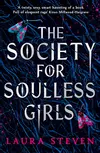
A definite favourite for me to add to my coming of female rage shelf.
A story told with alternating points of view between Lottie a fit, smart freshman on a hockey scholarship the phrase sunshiny as fuck could be used to described her, she is determined to find out what really happened to a girl called Janie who died 10 years earlier at the college (did I mention Lottie is a bit of a true crime fan) and is inhabited by the spirit of a rightfully pissed off angry nun. The other point of view is the beautiful, gothic and fiercely scholarly Alice who to manage the all too believable rage that besets any woman in our hegemonic masculinity culture she stumbles upon a sinister soul-splitting ritual hidden in Carvell’s haunted library, which can manage it, at the cost of a Jekyll/hyde type split. I also loved the slow, caring affection that develops between these two. I definitely want to read more of
Warning there is an immortal cat that during one of these Jekyll/hyde rages is strangled by our protagonist but does return a few days latter.
A definite favourite for me to add to my coming of female rage shelf.
A story told with alternating points of view between Lottie a fit, smart freshman on a hockey scholarship the phrase sunshiny as fuck could be used to described her, she is determined to find out what really happened to a girl called Janie who died 10 years earlier at the college (did I mention Lottie is a bit of a true crime fan) and is inhabited by the spirit of a rightfully pissed off angry nun. The other point of view is the beautiful, gothic and fiercely scholarly Alice who to manage the all too believable rage that besets any woman in our hegemonic masculinity culture she stumbles upon a sinister soul-splitting ritual hidden in Carvell’s haunted library, which can manage it, at the cost of a Jekyll/hyde type split. I also loved the slow, caring affection that develops between these two. I definitely want to read more of
Warning there is an immortal cat that during one of these Jekyll/hyde rages is strangled by our protagonist but does return a few days latter.

Everyone who has read and enjoyed V.E. Schwab works knows what to expect and this novel is no exception. One review described this as A "darker, edgier sister of Addie LaRue".
The focus begins in 16th-century Spain, with the rebellious red headed Maria who seeks and marries a wealthy viscount to seize control over her own life. She soon learns even a wealthy wife is just another cage, but a mysterious widow Sabine says only two groups of women in this society are free Widows and Nuns (and she says she is in to bad a relation with god for that role. María chooses transformation as escape.
The point of view then jumps to 2019, and the most modern college student Alice, with flashbacks of memories of growing up in Scotland with her mercurial older sister. Alice wakes up alone after a one-night Sapphic stand unable to tolerate sunlight, sporting two new fangs, and desperate to drink blood. Alice’s modern timeline brings these ancient horrors into our digital age, where smartphones capture evidence and social media creates its own form of surveillance. Yet the fundamental questions remain unchanged: what does it mean to hunger, to need, to survive at the expense of others? Alice chooses to fight back and it's her story I found the most engaging I do love a tale of female coming of rage.
The last point of view is introduced halfway through 19th century, Charlotte is sent from her home in the English countryside to live with an aunt in London when she’s found trying to kiss her best friend. She’s despondent at the idea of marrying a man, but another mysterious widow—who has a secret connection to Maria’s widow from centuries earlier—appears and teaches Charlotte that she can be free to love whomever she chooses. Charlotte chooses toxic love despite its destructive nature.
Maria, Charlotte, and Alice are queer women searching for love, recognition, and wholeness, growing fangs and defying mortality in a world that would deny them their very existence.
Of course it wouldn't be V.E. Schwab without beautiful lyric descriptions with the title of the book coming from a poem/song provided by a sire/sired pair of vampires she meets early in her transformation.
What sets this novel apart from other vampire fiction is Schwab’s refusal to romanticize the monstrous. María’s transformation from victim to predator is portrayed with unflinching honesty—there’s no moment of beautiful awakening, no gentle introduction to supernatural powers.
Everyone who has read and enjoyed V.E. Schwab works knows what to expect and this novel is no exception. One review described this as A "darker, edgier sister of Addie LaRue".
The focus begins in 16th-century Spain, with the rebellious red headed Maria who seeks and marries a wealthy viscount to seize control over her own life. She soon learns even a wealthy wife is just another cage, but a mysterious widow Sabine says only two groups of women in this society are free Widows and Nuns (and she says she is in to bad a relation with god for that role. María chooses transformation as escape.
The point of view then jumps to 2019, and the most modern college student Alice, with flashbacks of memories of growing up in Scotland with her mercurial older sister. Alice wakes up alone after a one-night Sapphic stand unable to tolerate sunlight, sporting two new fangs, and desperate to drink blood. Alice’s modern timeline brings these ancient horrors into our digital age, where smartphones capture evidence and social media creates its own form of surveillance. Yet the fundamental questions remain unchanged: what does it mean to hunger, to need, to survive at the expense of others? Alice chooses to fight back and it's her story I found the most engaging I do love a tale of female coming of rage.
The last point of view is introduced halfway through 19th century, Charlotte is sent from her home in the English countryside to live with an aunt in London when she’s found trying to kiss her best friend. She’s despondent at the idea of marrying a man, but another mysterious widow—who has a secret connection to Maria’s widow from centuries earlier—appears and teaches Charlotte that she can be free to love whomever she chooses. Charlotte chooses toxic love despite its destructive nature.
Maria, Charlotte, and Alice are queer women searching for love, recognition, and wholeness, growing fangs and defying mortality in a world that would deny them their very existence.
Of course it wouldn't be V.E. Schwab without beautiful lyric descriptions with the title of the book coming from a poem/song provided by a sire/sired pair of vampires she meets early in her transformation.
What sets this novel apart from other vampire fiction is Schwab’s refusal to romanticize the monstrous. María’s transformation from victim to predator is portrayed with unflinching honesty—there’s no moment of beautiful awakening, no gentle introduction to supernatural powers.

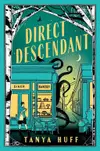
I hadn't encountered Tanya Huff prior to this stand alone novel, though she has a prolific 40 year history of publishing. This is cosy horror romance meet-cute, or given these are eldritch horrors meat-cute (sorry, not sorry) .
Maggie over at the Lesbrary sums it up well "… town of Lake Argen is remote and isolated because it likes it that way. The idyllic small town is a little too idyllic—because generations ago the town founders made a deal with a dark power for prosperity. They keep outsiders out, deal with the odd incursion, and in return they watch the silver flow from their mine and their town prosper. Cassidy Prewitt runs the town bakery and has also been chosen as one of the servants of the Dark. When a wealthy visitor disappears in Lake Argen, it falls to Cassidy to deal with both official questions and the private investigator that the man’s family sends to the town. To Melanie Solvich, a recently unemployed teacher, the chance to earn a much-needed windfall just for driving to the middle of nowhere and asking a few questions seems like the perfect opportunity. She is not prepared for how strange the town is, or how cute the town baker is…"
The story is told from alternating points of view between the dark's Cassie (there is a discussion about how to punctuation this horror from beyond highlighting just how amusing this book can be) and our incomer Melanie (I think incomer is the towns name for those from outside the initial family founding lines).
This story is charming. The Dark (see comment about punctuation) is hilarious and sweetly awkward, (“HAVE THE TWO OF YOU SHARED THE VIVISECTION OF AN ELDRITCH CREATURE BY THE DARK OF THE MOON?”) and I would love to discover more of this town the dark, its guardians and quirky inhabitants, in fact it would make a great TV series. If you appreciate Welcome to Night Vale I think this story will entertain.
I hadn't encountered Tanya Huff prior to this stand alone novel, though she has a prolific 40 year history of publishing. This is cosy horror romance meet-cute, or given these are eldritch horrors meat-cute (sorry, not sorry) .
Maggie over at the Lesbrary sums it up well "… town of Lake Argen is remote and isolated because it likes it that way. The idyllic small town is a little too idyllic—because generations ago the town founders made a deal with a dark power for prosperity. They keep outsiders out, deal with the odd incursion, and in return they watch the silver flow from their mine and their town prosper. Cassidy Prewitt runs the town bakery and has also been chosen as one of the servants of the Dark. When a wealthy visitor disappears in Lake Argen, it falls to Cassidy to deal with both official questions and the private investigator that the man’s family sends to the town. To Melanie Solvich, a recently unemployed teacher, the chance to earn a much-needed windfall just for driving to the middle of nowhere and asking a few questions seems like the perfect opportunity. She is not prepared for how strange the town is, or how cute the town baker is…"
The story is told from alternating points of view between the dark's Cassie (there is a discussion about how to punctuation this horror from beyond highlighting just how amusing this book can be) and our incomer Melanie (I think incomer is the towns name for those from outside the initial family founding lines).
This story is charming. The Dark (see comment about punctuation) is hilarious and sweetly awkward, (“HAVE THE TWO OF YOU SHARED THE VIVISECTION OF AN ELDRITCH CREATURE BY THE DARK OF THE MOON?”) and I would love to discover more of this town the dark, its guardians and quirky inhabitants, in fact it would make a great TV series. If you appreciate Welcome to Night Vale I think this story will entertain.

"It's like having a lab partner who won't stop talking about how they cry after jerking off". which is a description offered of someone in the first few pages of the novel which helps prepare you from what sort of transgressive ride you are in for with Sarah Gailey fifth novel.
And whilst anyone can see the echoes in John Campbell, Jr.’s classic novella ‘‘Who Goes There?’’, and its even acknowledged as any comment by any of the 6 person team to John Carpenter’s The Thing earns a $5 fine in the jar in the dinning hub.
This group is isolated in a half constructed desert station is specifically interested in the life within the desert’s cryptobiotic crust. The team of mixed genders and sexualities, different personalities and motivations lead by Kinsey who (and we don't kink shame in this house howthefuckever) yearns to make love to a virus, the kind of active virus you might find in a dying coyote. On her wall, she has a picture of a T2 bacteriophage, and while staring at it, she is overwhelmed with desire. Where else would a scientist with such a desire choose to work but in a remote desert on a four yar study.
I also enjoyed the at the end of every chapter unravelling the story in the present, there’s a flashback to Kinsey bringing the team together, Ian Mond in Locus magazine sums it up well "then the early months on the station as they get to know each other. Amid all the body horror, these interludes remind us that the team – Domino, Saskia, Jacques, Mab and Nkrumah – is made up of distinctive, flawed, passionate individuals who fall in love, play pranks, argue (mostly while getting drunk), and take their science seriously.
Also the reference to " Felt like to be a scientist in that administration" everyone knows what administration they are talking about.
"It's like having a lab partner who won't stop talking about how they cry after jerking off". which is a description offered of someone in the first few pages of the novel which helps prepare you from what sort of transgressive ride you are in for with Sarah Gailey fifth novel.
And whilst anyone can see the echoes in John Campbell, Jr.’s classic novella ‘‘Who Goes There?’’, and its even acknowledged as any comment by any of the 6 person team to John Carpenter’s The Thing earns a $5 fine in the jar in the dinning hub.
This group is isolated in a half constructed desert station is specifically interested in the life within the desert’s cryptobiotic crust. The team of mixed genders and sexualities, different personalities and motivations lead by Kinsey who (and we don't kink shame in this house howthefuckever) yearns to make love to a virus, the kind of active virus you might find in a dying coyote. On her wall, she has a picture of a T2 bacteriophage, and while staring at it, she is overwhelmed with desire. Where else would a scientist with such a desire choose to work but in a remote desert on a four yar study.
I also enjoyed the at the end of every chapter unravelling the story in the present, there’s a flashback to Kinsey bringing the team together, Ian Mond in Locus magazine sums it up well "then the early months on the station as they get to know each other. Amid all the body horror, these interludes remind us that the team – Domino, Saskia, Jacques, Mab and Nkrumah – is made up of distinctive, flawed, passionate individuals who fall in love, play pranks, argue (mostly while getting drunk), and take their science seriously.
Also the reference to " Felt like to be a scientist in that administration" everyone knows what administration they are talking about.
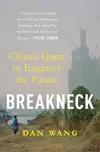
I went in expecting this book to be a series of examples of how having engineers in positions of Authority contrasted to having lawyers in positions of authority which seems to be the centre and repeated thesis of the book, but the book took a more generalist view. Its focus seemed to be how engineers in charge lead to China being engaged in social engineering and lawyers in the US block everything. It's argument obviously more descriptive than that and interesting it was the descriptions of how the US functioned that sounded so simplistic that meant I had doubts about how reflective of China were its descriptions. An interesting highlight was how much of China's success the author attributes to a community of process knowledge which I found intriguing. The book concludes with a plea for each of the superpowers to adopt some of each other's pathologies. Interesting read.
I went in expecting this book to be a series of examples of how having engineers in positions of Authority contrasted to having lawyers in positions of authority which seems to be the centre and repeated thesis of the book, but the book took a more generalist view. Its focus seemed to be how engineers in charge lead to China being engaged in social engineering and lawyers in the US block everything. It's argument obviously more descriptive than that and interesting it was the descriptions of how the US functioned that sounded so simplistic that meant I had doubts about how reflective of China were its descriptions. An interesting highlight was how much of China's success the author attributes to a community of process knowledge which I found intriguing. The book concludes with a plea for each of the superpowers to adopt some of each other's pathologies. Interesting read.
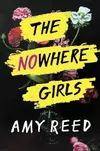
A female coming of rage narrative is a favourite genre of mine, unsurprisingly given the misogynist culture we find around us everyday.
The story focuses on three young adults Grace Salter is the new girl in town, whose family was run out of their former community after her southern Baptist preacher mom turned into a radical liberal after falling off a horse and bumping her head, (and I love this off scene addition to the story. I have read of cases where head injuries have lead to personality changes I love seeing where one made the person more compassionate), Rosina Suarez is the queer punk girl in a conservative Mexican immigrant family, who dreams of a life playing music instead of babysitting her gaggle of cousins and waitressing at her uncle’s restaurant and Erin Delillo is obsessed with two things: marine biology and Star Trek: The Next Generation, but they aren’t enough to distract her from her suspicion that she may in fact be an android.
I was surprised when the young women's collective called for a now sex strike no one referenced Lysistrata's mission to end the Peloponnesian War. The conversations in the novel reveal the power dynamic that young women negotiate, not just with men bit also women in the hierarchy such as the Head of the high school. These called to my mind a scene from the 2020 movie 'Promising Young Woman' and the conversation the protagonist of that movie Cassandra has with Dean Elizabeth Walker of the University. More of this please.
Whilst these young women's view are where we spend most of the story it allowed other women (including a trans woman) voices to be heard and their points of view seen. Whilst the driver is initially the rape Lucy Moynihan, the former occupant of Grace's new home, was run out of town for having accused the popular guys at school of gang rape the story goes on to reveal a culture of rape and assault in the small town which from anyone who has read any statistics is very believable.
A book which for me falls into the window category (thankfully) and a reminder for all pushing for a more hopeful society we should be grateful that women are only demanding equality and not revenge.
A female coming of rage narrative is a favourite genre of mine, unsurprisingly given the misogynist culture we find around us everyday.
The story focuses on three young adults Grace Salter is the new girl in town, whose family was run out of their former community after her southern Baptist preacher mom turned into a radical liberal after falling off a horse and bumping her head, (and I love this off scene addition to the story. I have read of cases where head injuries have lead to personality changes I love seeing where one made the person more compassionate), Rosina Suarez is the queer punk girl in a conservative Mexican immigrant family, who dreams of a life playing music instead of babysitting her gaggle of cousins and waitressing at her uncle’s restaurant and Erin Delillo is obsessed with two things: marine biology and Star Trek: The Next Generation, but they aren’t enough to distract her from her suspicion that she may in fact be an android.
I was surprised when the young women's collective called for a now sex strike no one referenced Lysistrata's mission to end the Peloponnesian War. The conversations in the novel reveal the power dynamic that young women negotiate, not just with men bit also women in the hierarchy such as the Head of the high school. These called to my mind a scene from the 2020 movie 'Promising Young Woman' and the conversation the protagonist of that movie Cassandra has with Dean Elizabeth Walker of the University. More of this please.
Whilst these young women's view are where we spend most of the story it allowed other women (including a trans woman) voices to be heard and their points of view seen. Whilst the driver is initially the rape Lucy Moynihan, the former occupant of Grace's new home, was run out of town for having accused the popular guys at school of gang rape the story goes on to reveal a culture of rape and assault in the small town which from anyone who has read any statistics is very believable.
A book which for me falls into the window category (thankfully) and a reminder for all pushing for a more hopeful society we should be grateful that women are only demanding equality and not revenge.

Mira Grant, aka the terrifying story machine Also Known As Seanan McGuire. I first discovered her with her brilliant Newsflesh series (zombies), more recently I read her deep sea mystery 'Into the Drowning Deep' (mermaids) all of her novels hold a really strong sciency narrative throughout that warms my cerebellum. The botanical horror of Overgrowrth is no exception.
The other common thread in Mira Grants stories is most of the horrors come from the human side, and these are the ones who in Overgrowth really mess things up. At its heart the story is Anastasia “Stasia” Miller, who we discover this curious child at three where she runs into the forest behind her house and is consumed by a star seed and three days later returns a hybrid Anastasia, a plant alien in human form. A compulsion then drives her to say to anyone she’s an alien and an armada is coming. Of course, no one believed her.
Because they’ve always told people exactly what they are, humanity hasn’t been kind to them. Before it was confirmed that they were aliens, people just thought they were freaks. And then, when it turns out they’re telling the truth? Now people hate them for being aliens.
But her circle of friends makes it complicated for her at least initially to be on the side of the invasion There is Graham her boyfriend who as a transman has also experienced the bigoted judgement of humanity. His acceptance of Stasia’s alien nature—while still grounding her emotionally—is beautifully handled and adds rare warmth to a chilling narrative. Along they way they pick up Toni the astronomer who detected the Armada's signal and let the world know it was coming. (Spoilers Humanity doesn't win)
Now, an alien broadcast has been heard from the stars, and Stasia knows what it says. Her biological family are coming. And it’s unlikely that they come in peace. Stasia must choose between the humans she’s grown to care for and the alien race she belongs to.
The resolution is satisfying and it’s a standalone something for which I am grateful for these days in my science fiction, fantasy books.
Mira Grant, aka the terrifying story machine Also Known As Seanan McGuire. I first discovered her with her brilliant Newsflesh series (zombies), more recently I read her deep sea mystery 'Into the Drowning Deep' (mermaids) all of her novels hold a really strong sciency narrative throughout that warms my cerebellum. The botanical horror of Overgrowrth is no exception.
The other common thread in Mira Grants stories is most of the horrors come from the human side, and these are the ones who in Overgrowth really mess things up. At its heart the story is Anastasia “Stasia” Miller, who we discover this curious child at three where she runs into the forest behind her house and is consumed by a star seed and three days later returns a hybrid Anastasia, a plant alien in human form. A compulsion then drives her to say to anyone she’s an alien and an armada is coming. Of course, no one believed her.
Because they’ve always told people exactly what they are, humanity hasn’t been kind to them. Before it was confirmed that they were aliens, people just thought they were freaks. And then, when it turns out they’re telling the truth? Now people hate them for being aliens.
But her circle of friends makes it complicated for her at least initially to be on the side of the invasion There is Graham her boyfriend who as a transman has also experienced the bigoted judgement of humanity. His acceptance of Stasia’s alien nature—while still grounding her emotionally—is beautifully handled and adds rare warmth to a chilling narrative. Along they way they pick up Toni the astronomer who detected the Armada's signal and let the world know it was coming. (Spoilers Humanity doesn't win)
Now, an alien broadcast has been heard from the stars, and Stasia knows what it says. Her biological family are coming. And it’s unlikely that they come in peace. Stasia must choose between the humans she’s grown to care for and the alien race she belongs to.
The resolution is satisfying and it’s a standalone something for which I am grateful for these days in my science fiction, fantasy books.

I selected this novel as my choice for bookclub this month, so from that detail you can surmise I found the text so engaging I recommended it for others to read. I read it fist in the early 2000s and I think it holds up well. The tale whilst initially focusing Jane Takagi-Little, an unemployed Japanese-American documentary filmmaker and Akiko Ueno, the bulimic Japanese wife of the executive who hatched the My American Wife! concept, lives an ocean away. She is thin, so thin that her bones hurt, so thin that her periods have stopped, soon collects other interesting characters with her production crew and the families that each week made up the 30minute episodes of My American Wife.
As Jane uncovers more the terrible industry and dangerous practices in the American beef industry, particular focus on the terrible effect Diethylstilbestrol (DES) an added hormone supposedly no longer and its possible personal cost for Jane. Akiko whose horrendous treatment by her husband 'John' saw a couple of friends I had recommended the book to, call while they were reading it to ask "is Akiko going to be okay" and her journey is one of the most satisfying to read, though both she and Jane have grown though the narrative. John Ueno doesn't, he remains an asshole.
The detail of events that happen around these two that add to the story such as the 1992 Murder of Yoshihiro Hattori a Japanese student on an exchange program to the United States who was shot to death by Rodney Peairs on Halloween, and the information about the cattle industry reminiscent of Upton Sinclair's 'The Jungle' show the detail and research that Ruth Ozeki has pulled in to craft the world around these characters
I selected this novel as my choice for bookclub this month, so from that detail you can surmise I found the text so engaging I recommended it for others to read. I read it fist in the early 2000s and I think it holds up well. The tale whilst initially focusing Jane Takagi-Little, an unemployed Japanese-American documentary filmmaker and Akiko Ueno, the bulimic Japanese wife of the executive who hatched the My American Wife! concept, lives an ocean away. She is thin, so thin that her bones hurt, so thin that her periods have stopped, soon collects other interesting characters with her production crew and the families that each week made up the 30minute episodes of My American Wife.
As Jane uncovers more the terrible industry and dangerous practices in the American beef industry, particular focus on the terrible effect Diethylstilbestrol (DES) an added hormone supposedly no longer and its possible personal cost for Jane. Akiko whose horrendous treatment by her husband 'John' saw a couple of friends I had recommended the book to, call while they were reading it to ask "is Akiko going to be okay" and her journey is one of the most satisfying to read, though both she and Jane have grown though the narrative. John Ueno doesn't, he remains an asshole.
The detail of events that happen around these two that add to the story such as the 1992 Murder of Yoshihiro Hattori a Japanese student on an exchange program to the United States who was shot to death by Rodney Peairs on Halloween, and the information about the cattle industry reminiscent of Upton Sinclair's 'The Jungle' show the detail and research that Ruth Ozeki has pulled in to craft the world around these characters
Added to listOwnedwith 3 books.


Hell is empty and all the devils are here. The Chatelaine has come.
Set during the Flemish Peasant’s Revolt of 1323 – 1328, this is a historical fantasy which provides an incredible cast of strong women a literally hellish world. Once men half blended in the forges of hell with beasts, and birds and even devices becoming walking canons stalk the streets and dead men swarm the walls, revenants who visit to call on their loved ones and bring them to hell or infect them with a lingering death called The grief. Hell is a gigantic beast whose mouth has opened in Flanders. Its new mistress (I would usually defer to the term master but the Chatelaine calls herself mistress and so I adopt her choice) is a woman so long resident of hell that she has forgotten her name but she declares when asked if she is the Queen of hell replies
"I have no right to that kingdom as it had no right to me, but I am, for now, its mistress and manager. I hold the keys, you may call me perhaps its chatelaine". This magnificent introduction perfectly describes the titular character.
She is one of the fascinating women encountered. We meet Margriet de Vos killed her first soldier when she was eleven. Who as a child tricked an invisible water monster with a riddle and so was promised transport on its back throughout the canals. She has buried six children and will fight for the daughter left to her. And she’s on a mission to reclaim her daughter’s stolen inheritance. Jacquenine Ooste who employed her as wet nurse for her daughter is at one point dismissed by a clergyman as a moor underestimated her sharp with in a court. Beatrix Margriet 's grown and married daughter whose kind heart is given visions of the horrors that will one day come to Flander's fields and one of the intriguing man characters Claude a trans man who has stolen a copy to the key to hell, sold it to Margriet's husband and wants it back.
"This isn’t a book about saving the world, that the characters are ordinary people – widows and their children and a man-at-arms – who are more interested in getting the money to live than dealing with the disaster around them. That’s the province of kings and counts who fight and make life hellish enough for common folk without actual hell arriving. These ordinary people are the sort fantasy and historical fiction pay far less attention to, but they have stories of their own". - Sifa Elizabeth
Hell is empty and all the devils are here. The Chatelaine has come.
Set during the Flemish Peasant’s Revolt of 1323 – 1328, this is a historical fantasy which provides an incredible cast of strong women a literally hellish world. Once men half blended in the forges of hell with beasts, and birds and even devices becoming walking canons stalk the streets and dead men swarm the walls, revenants who visit to call on their loved ones and bring them to hell or infect them with a lingering death called The grief. Hell is a gigantic beast whose mouth has opened in Flanders. Its new mistress (I would usually defer to the term master but the Chatelaine calls herself mistress and so I adopt her choice) is a woman so long resident of hell that she has forgotten her name but she declares when asked if she is the Queen of hell replies
"I have no right to that kingdom as it had no right to me, but I am, for now, its mistress and manager. I hold the keys, you may call me perhaps its chatelaine". This magnificent introduction perfectly describes the titular character.
She is one of the fascinating women encountered. We meet Margriet de Vos killed her first soldier when she was eleven. Who as a child tricked an invisible water monster with a riddle and so was promised transport on its back throughout the canals. She has buried six children and will fight for the daughter left to her. And she’s on a mission to reclaim her daughter’s stolen inheritance. Jacquenine Ooste who employed her as wet nurse for her daughter is at one point dismissed by a clergyman as a moor underestimated her sharp with in a court. Beatrix Margriet 's grown and married daughter whose kind heart is given visions of the horrors that will one day come to Flander's fields and one of the intriguing man characters Claude a trans man who has stolen a copy to the key to hell, sold it to Margriet's husband and wants it back.
"This isn’t a book about saving the world, that the characters are ordinary people – widows and their children and a man-at-arms – who are more interested in getting the money to live than dealing with the disaster around them. That’s the province of kings and counts who fight and make life hellish enough for common folk without actual hell arriving. These ordinary people are the sort fantasy and historical fiction pay far less attention to, but they have stories of their own". - Sifa Elizabeth

I read and enjoyed S.A. Chakraborty's Daevabad Trilogy I enjoyed her The Adventures of Amina Al-Sirafi even more. On the surface it's a trope we have read before a retired pirate of the twelfth century Indian Ocean who seeks a quite family life with her young daughter, she’s offered a deal that can’t be refused, forcing her to don her adventuring mantle and embark on one last reckless journey through the high seas.
The story is crafted in a world steeped in the tales like the Arabian nights amidst the Islamic past as the story is told to Jamal a scholar who in subsequent found to be a key character in this story. I loved its language and terms drew on non-European works referencing Indian, Persian, Chinese, and Greek sages. The oaths sworn were the more flowing than in traditional fantasy
"Neither drowsiness nor sleep overtakes Him! To Him belongs whatever is in the heavens and whatever is on the earth—will you get off of me?” I elbowed the creature hard, and it spit in my face. “Who could possibly intercede with Him without His permission? He knows what is ahead of them and what is behind them, but no one can grasp any of His knowledge—except what He wills!”
An our titular hero is neither young nor beautiful anymore – a rare thing for a heroine these days. It is great to read a book about a middle aged heroine, driven by her personality rather than her looks, but she fills the page with her larger than life adventures and the horror that lead to her retiring is slowly revealed and finally announced near the climax.
Later in the story supernatural being offers her tea, reminds me where and when this story takes place. Sucha minor thing built helps build the verisimilitude
Do I take what?” “Tea?” I blinked. “What is tea?” The peri wrinkled a beak-like nose. “Ah, I forget how far I am from home sometimes. Tea is a drink, a wondrous one. It will undoubtedly make its way to this part of the world in another century or two, but I shall give you an early taste.”
We spend most of the story with Amina and her motley crew of sailors, reassembled by necessity. The cast is also delightful non-judgmental of sexual pleasure and embracing of queer, including transgender, characters within the historical and religious context of the story. There are multiple characters that identify on the queer spectrum, and I loved discovering their identities as the story went on – and found that it added a layer of joy to the story that I didn’t expect.
The resolution sets up a clear direction to justify the further adventures Amina Al-Sirafi and her crew/friends I look forward to reading more of her chemical assassin Dalila (I do love a fantasy chemist) and her 4th and current husband Raksh (not a daemon).
Definitely a tale for those of us who like our buckling swashed.
I read and enjoyed S.A. Chakraborty's Daevabad Trilogy I enjoyed her The Adventures of Amina Al-Sirafi even more. On the surface it's a trope we have read before a retired pirate of the twelfth century Indian Ocean who seeks a quite family life with her young daughter, she’s offered a deal that can’t be refused, forcing her to don her adventuring mantle and embark on one last reckless journey through the high seas.
The story is crafted in a world steeped in the tales like the Arabian nights amidst the Islamic past as the story is told to Jamal a scholar who in subsequent found to be a key character in this story. I loved its language and terms drew on non-European works referencing Indian, Persian, Chinese, and Greek sages. The oaths sworn were the more flowing than in traditional fantasy
"Neither drowsiness nor sleep overtakes Him! To Him belongs whatever is in the heavens and whatever is on the earth—will you get off of me?” I elbowed the creature hard, and it spit in my face. “Who could possibly intercede with Him without His permission? He knows what is ahead of them and what is behind them, but no one can grasp any of His knowledge—except what He wills!”
An our titular hero is neither young nor beautiful anymore – a rare thing for a heroine these days. It is great to read a book about a middle aged heroine, driven by her personality rather than her looks, but she fills the page with her larger than life adventures and the horror that lead to her retiring is slowly revealed and finally announced near the climax.
Later in the story supernatural being offers her tea, reminds me where and when this story takes place. Sucha minor thing built helps build the verisimilitude
Do I take what?” “Tea?” I blinked. “What is tea?” The peri wrinkled a beak-like nose. “Ah, I forget how far I am from home sometimes. Tea is a drink, a wondrous one. It will undoubtedly make its way to this part of the world in another century or two, but I shall give you an early taste.”
We spend most of the story with Amina and her motley crew of sailors, reassembled by necessity. The cast is also delightful non-judgmental of sexual pleasure and embracing of queer, including transgender, characters within the historical and religious context of the story. There are multiple characters that identify on the queer spectrum, and I loved discovering their identities as the story went on – and found that it added a layer of joy to the story that I didn’t expect.
The resolution sets up a clear direction to justify the further adventures Amina Al-Sirafi and her crew/friends I look forward to reading more of her chemical assassin Dalila (I do love a fantasy chemist) and her 4th and current husband Raksh (not a daemon).
Definitely a tale for those of us who like our buckling swashed.