
Michael Barnes


Christina (Chris) lives in an gated community in a world that suffering from Capialsim and climate change called the Enclave. Growing up she and all the other members of the community are bombarded telling her how dangerous and evil the world outside the wall is. And like every Dystopia the Enclave has cameras in every room and the lives of those who live within are mapped out in a uniform fashion from birth to death. SafetyNet (Fu*K AI its easy to predict everyone's choices when they are so restricted) knows everyone’s wants and needs before the individual does.
After Christina kisses Serinna a dark skinned worker (because these racist/classist of course would want anyone who works form them to be coloured) bused in each day from outside the walls she is forcefully ejected from the Enclave when her shocked family cuts her off. She survives the Wasteland and makes her way to the mainland to my home town Melbourne. Which give the vision of what the world could be if we didn't listen to greedy racist misogynist homophobic and transphobic asshats.
The first third of the book, set inside the Enclave, is a little slow with simple prose, but this amplifies the vanilla lives of the residents. When Christine is ejected the writing comes alive and is powerfully and graphically written. The final third was one of my favourite ideas, queer theater kids with the help of science nerds save everyone.
Christina (Chris) lives in an gated community in a world that suffering from Capialsim and climate change called the Enclave. Growing up she and all the other members of the community are bombarded telling her how dangerous and evil the world outside the wall is. And like every Dystopia the Enclave has cameras in every room and the lives of those who live within are mapped out in a uniform fashion from birth to death. SafetyNet (Fu*K AI its easy to predict everyone's choices when they are so restricted) knows everyone’s wants and needs before the individual does.
After Christina kisses Serinna a dark skinned worker (because these racist/classist of course would want anyone who works form them to be coloured) bused in each day from outside the walls she is forcefully ejected from the Enclave when her shocked family cuts her off. She survives the Wasteland and makes her way to the mainland to my home town Melbourne. Which give the vision of what the world could be if we didn't listen to greedy racist misogynist homophobic and transphobic asshats.
The first third of the book, set inside the Enclave, is a little slow with simple prose, but this amplifies the vanilla lives of the residents. When Christine is ejected the writing comes alive and is powerfully and graphically written. The final third was one of my favourite ideas, queer theater kids with the help of science nerds save everyone.

Certainly those who enjoyed These Burning Stars and its dramatic reveal will be as eager as I to read this second on the Kindom trilogy. Daniel Haeusser puts I thus "Similar to the first novel, the plot of On Vicious Worlds also alternates between the points of view of two groups of characters: a key pair and a group of caster/collector/refugee colonists. In These Burning Stars, the former pair of characters captivated me far beyond the others, though I did also really enjoy Jun and Liis. Jun is now part of the colonist community, though Liis is away for much of the novel. As they try to revive a society and build it on equity and justice, Jun, Masar, and the Jeveni Wheel face disturbing challenge from an unknown rogue caster who is leaving a trail of sabotage and death in the colony. Meanwhile, the aforementioned (here unnamed) duo try to flee from Kindom forces, but political upheaval as ramification of their actions has altered what their enemies are hunting for, and who can grab hold of power. Jacobs draws events and characters together for an amazing conclusion that nicely sets up the final volume of the trilogy to come: This Brutal Moon".
The standout of On Vicious World for me is the relationships between the characters. Author Bethany Jacobs excels at writing complex bonds between her characters. Two of her characters, Six and Chono, and their ineffable relationship, which seems to transcend all kinds of normal definitions—friendship, love, rivalry, enemies—were absolutely spellbinding to watch
Certainly those who enjoyed These Burning Stars and its dramatic reveal will be as eager as I to read this second on the Kindom trilogy. Daniel Haeusser puts I thus "Similar to the first novel, the plot of On Vicious Worlds also alternates between the points of view of two groups of characters: a key pair and a group of caster/collector/refugee colonists. In These Burning Stars, the former pair of characters captivated me far beyond the others, though I did also really enjoy Jun and Liis. Jun is now part of the colonist community, though Liis is away for much of the novel. As they try to revive a society and build it on equity and justice, Jun, Masar, and the Jeveni Wheel face disturbing challenge from an unknown rogue caster who is leaving a trail of sabotage and death in the colony. Meanwhile, the aforementioned (here unnamed) duo try to flee from Kindom forces, but political upheaval as ramification of their actions has altered what their enemies are hunting for, and who can grab hold of power. Jacobs draws events and characters together for an amazing conclusion that nicely sets up the final volume of the trilogy to come: This Brutal Moon".
The standout of On Vicious World for me is the relationships between the characters. Author Bethany Jacobs excels at writing complex bonds between her characters. Two of her characters, Six and Chono, and their ineffable relationship, which seems to transcend all kinds of normal definitions—friendship, love, rivalry, enemies—were absolutely spellbinding to watch

Blend of Classic Historical Fiction (specifically Dickens’ A tale of Two Cities) and Fantasy of the Fae variety. Early in the novel our protagonist Sydney Carton declares "It was the Year of Our Lord 1780. It was a cold grey March morning; I was a cold, grey legal advocate, twenty-five years old and not yet dead. I feared this was the best of times; I hoped it could not get any worse".
Plenty of characters from A tale of Two Cities some with significant changes and with all the excitement of the French Revolution and throughout this are fairies. They’re the typical narcissist characters caring only for themselves, their agenda, and amassing power while toying with human lives. As in some of the old tales human children are spirited away to The Realm, with changelings left in their place, and upon reaching a certain age they have a choice: stay in The Realm and have your memories of humanity erased, becoming an unfeeling, probably devious fairy and continuing the cycle, or be placed in the mortal world and become a mortal servant, doomed to do any fairy’s bidding.
The story ends with a bittersweet but noble resolution, how could it not with a title 'A Far Better Thing' given that speech. It’s a standalone story so if you don't want the commitment of a new series then I would recommend this book.
Blend of Classic Historical Fiction (specifically Dickens’ A tale of Two Cities) and Fantasy of the Fae variety. Early in the novel our protagonist Sydney Carton declares "It was the Year of Our Lord 1780. It was a cold grey March morning; I was a cold, grey legal advocate, twenty-five years old and not yet dead. I feared this was the best of times; I hoped it could not get any worse".
Plenty of characters from A tale of Two Cities some with significant changes and with all the excitement of the French Revolution and throughout this are fairies. They’re the typical narcissist characters caring only for themselves, their agenda, and amassing power while toying with human lives. As in some of the old tales human children are spirited away to The Realm, with changelings left in their place, and upon reaching a certain age they have a choice: stay in The Realm and have your memories of humanity erased, becoming an unfeeling, probably devious fairy and continuing the cycle, or be placed in the mortal world and become a mortal servant, doomed to do any fairy’s bidding.
The story ends with a bittersweet but noble resolution, how could it not with a title 'A Far Better Thing' given that speech. It’s a standalone story so if you don't want the commitment of a new series then I would recommend this book.
Updated a reading goal:
Read 52 books by December 30, 2025
Progress so far: 125 / 52 240%

How to Survive a Horror Movie
A fun fast paced romp through the well establish genre of young adults at a boarding school on a remote island where a series of gory deaths initially passed off as suicides turns out to be the work of a serial killer. The tale is told through the eyes of a horror enthusiast Charley who uses her knowledge of these tropes to determine the killer. She also is able to see and hear the ghosts of the girls how died, and with her best/only friend Olive are trying to make it to Halloween.
These stories live and die on the reveal of the one behind the murders and the clues are all there. The book ends with a very clear to be continued, which fortunately the sequel was released this year for those who need to know what happens.
A fun fast paced romp through the well establish genre of young adults at a boarding school on a remote island where a series of gory deaths initially passed off as suicides turns out to be the work of a serial killer. The tale is told through the eyes of a horror enthusiast Charley who uses her knowledge of these tropes to determine the killer. She also is able to see and hear the ghosts of the girls how died, and with her best/only friend Olive are trying to make it to Halloween.
These stories live and die on the reveal of the one behind the murders and the clues are all there. The book ends with a very clear to be continued, which fortunately the sequel was released this year for those who need to know what happens.

A fantastic new writer in the Space Opera genre. If like me you have read Megan E. O’Keefe’s work, Elizabeth Bear’s White Space series, and Ann Leckie’s Imperial Radch series this one will appeal. Esek Nightfoot is an appalling character who is I resisted liking for most of the book, Liz Bourke at Locus describes her thus "Charismatic, brutal, and clever, Esek is fiercely ambitious, loyal to her family over the priesthood (because her family better serves her ambitions), possessive, and disinclined to either empathy or sympathy. The novel opens with her diverting an exceptionally talented young student’s career – ruining it – and challenging them to impress her for no better reason than that she can".
And whilst this challenge is pursued across decades and more of the incredible world (universe) building is revealed we learn more of these other compelling actors in this stellar (see what I did there) play. Six, is a descendant of a man reviled for committing genocide against the Jeveni a marginalised community. Jun Ironway the hacker (and what's a scifi story without one of these to move the plot when needed) who Esek would have killed her entire family, instead of just some of them, if a mysterious benefactor hadn’t spirited them away, and last but not least Chono the good cleric, beloved conflicted in her emotions: She was Six’s classmate and then Esek’s novice, and has been part of Six and Esek’s cat-and-mouse game of obsession and revenge for a very long time. Her connections to Six and to Esek are fraught: violence, loyalty, gratitude, and affection all tangle together.
As I alluded to earlier I resisted liking Esek, and then that twist, which I didn't see coming. Brilliant.
A fantastic new writer in the Space Opera genre. If like me you have read Megan E. O’Keefe’s work, Elizabeth Bear’s White Space series, and Ann Leckie’s Imperial Radch series this one will appeal. Esek Nightfoot is an appalling character who is I resisted liking for most of the book, Liz Bourke at Locus describes her thus "Charismatic, brutal, and clever, Esek is fiercely ambitious, loyal to her family over the priesthood (because her family better serves her ambitions), possessive, and disinclined to either empathy or sympathy. The novel opens with her diverting an exceptionally talented young student’s career – ruining it – and challenging them to impress her for no better reason than that she can".
And whilst this challenge is pursued across decades and more of the incredible world (universe) building is revealed we learn more of these other compelling actors in this stellar (see what I did there) play. Six, is a descendant of a man reviled for committing genocide against the Jeveni a marginalised community. Jun Ironway the hacker (and what's a scifi story without one of these to move the plot when needed) who Esek would have killed her entire family, instead of just some of them, if a mysterious benefactor hadn’t spirited them away, and last but not least Chono the good cleric, beloved conflicted in her emotions: She was Six’s classmate and then Esek’s novice, and has been part of Six and Esek’s cat-and-mouse game of obsession and revenge for a very long time. Her connections to Six and to Esek are fraught: violence, loyalty, gratitude, and affection all tangle together.
As I alluded to earlier I resisted liking Esek, and then that twist, which I didn't see coming. Brilliant.

First this seems to be a standalone captivating fantasy. That's not to say that the characters aren't interesting enough or the world building sufficiently engaging to carry further stories but it seems to have been written as a one and done.
In a historical fantasy where an immortal witch emperor (so far lived 300 years so off to a good start) has conquered much of the world through the draining lives, siring other witches (male and female, the story has a refreshingly take on gender and sexuality, present but not commented on because it is how a society should be) and healing himself whenever threatened all by making deals with death. I loved the non-nonsense snarky 'I'm death, I'm not a god' character.
Also I loved the way the narrative set up the way the world works and deaths deals and applied the reasonably and consistently. The characters are charming, interesting and varied and well worth getting to know.
First this seems to be a standalone captivating fantasy. That's not to say that the characters aren't interesting enough or the world building sufficiently engaging to carry further stories but it seems to have been written as a one and done.
In a historical fantasy where an immortal witch emperor (so far lived 300 years so off to a good start) has conquered much of the world through the draining lives, siring other witches (male and female, the story has a refreshingly take on gender and sexuality, present but not commented on because it is how a society should be) and healing himself whenever threatened all by making deals with death. I loved the non-nonsense snarky 'I'm death, I'm not a god' character.
Also I loved the way the narrative set up the way the world works and deaths deals and applied the reasonably and consistently. The characters are charming, interesting and varied and well worth getting to know.

At its heart its a murder mystery, who or what is murdering these significant public figures in town (if I may paraphrase from a batman comic - these men died and they leave the world no poorer), but whilst the resolution of this crime is satisfying and came as a suprise to me its almost secondary to discovering the world view of the protagonist Janina Duszejko an elderly woman who lives in a remote village near the Czech republic. Trained as an engineer (she has built bridges) a superb athlete in her youth, a teacher and now a caretaker for houses in this remote sparse countryside. She also has a deep respect for animals, the poetry of William Blake (as a fan always a welcome addition) which she translates into Polish with one of her neighbors as well as an obsession with astrology (as a fan of science not so much) and you have an interesting character that becomes the focus.
"The tygers of wrath are wiser than the horses of instruction"
and the priest had it coming I say.
At its heart its a murder mystery, who or what is murdering these significant public figures in town (if I may paraphrase from a batman comic - these men died and they leave the world no poorer), but whilst the resolution of this crime is satisfying and came as a suprise to me its almost secondary to discovering the world view of the protagonist Janina Duszejko an elderly woman who lives in a remote village near the Czech republic. Trained as an engineer (she has built bridges) a superb athlete in her youth, a teacher and now a caretaker for houses in this remote sparse countryside. She also has a deep respect for animals, the poetry of William Blake (as a fan always a welcome addition) which she translates into Polish with one of her neighbors as well as an obsession with astrology (as a fan of science not so much) and you have an interesting character that becomes the focus.
"The tygers of wrath are wiser than the horses of instruction"
and the priest had it coming I say.

The unique setting of a new year's eve party combined with a resetting 'groundhogs day' provides a driving narrative to reveal the wondrous/terrifying world building of Melissa Caruso’s The Last Hour Between Worlds. The night begins in a prime level of reality, and then we have echoes, which can be thought of as sub-levels of reality. The levels grow increasingly bizarre and more alien and I enjoyed discovering the oddities and mind twisting realities described as each new reset descended levels. The deeper you go, the more alien--or more precisely fey (there is a strong faerie theme in the book).
The setting feels European 19th Century and the oligarchic nature of the city government (and the people, power and politics of same, which becomes plot relevant) also lends itself to that atmosphere. Our protagonist, Kembral, is a new mom who is on leave from work as a 'hound' one who descends these echoes to recover folk who have fallen through voids. She is an outstanding hound who has saved children (and dogs) all stemming from a drive of losing a childhood friend.
The other half of my favorite frenemy to lovers couple since Gideon Nav and Harrowhark Nonagesimus Rika Nonesuch. She works as a "Cat" a professional thief and a good one. The reveal of her reasons for her attitude and frustration with Kem is well developed and satisfying especially given her origin.
And throughout this game are the inexplicable Empyreans who give strong lords of Fey vibes with names as clever as the sentient ships in the Culture universe of Iain Banks, Stars Tangled In Her Web, Laughing As He Rises and Tilting Towards Oblivion.
Please note it is the first in the Echo Archives series and I do now want to read Melissa Caruso's other series 'Swords and Fire' and 'Rooks and Ruin'.
The unique setting of a new year's eve party combined with a resetting 'groundhogs day' provides a driving narrative to reveal the wondrous/terrifying world building of Melissa Caruso’s The Last Hour Between Worlds. The night begins in a prime level of reality, and then we have echoes, which can be thought of as sub-levels of reality. The levels grow increasingly bizarre and more alien and I enjoyed discovering the oddities and mind twisting realities described as each new reset descended levels. The deeper you go, the more alien--or more precisely fey (there is a strong faerie theme in the book).
The setting feels European 19th Century and the oligarchic nature of the city government (and the people, power and politics of same, which becomes plot relevant) also lends itself to that atmosphere. Our protagonist, Kembral, is a new mom who is on leave from work as a 'hound' one who descends these echoes to recover folk who have fallen through voids. She is an outstanding hound who has saved children (and dogs) all stemming from a drive of losing a childhood friend.
The other half of my favorite frenemy to lovers couple since Gideon Nav and Harrowhark Nonagesimus Rika Nonesuch. She works as a "Cat" a professional thief and a good one. The reveal of her reasons for her attitude and frustration with Kem is well developed and satisfying especially given her origin.
And throughout this game are the inexplicable Empyreans who give strong lords of Fey vibes with names as clever as the sentient ships in the Culture universe of Iain Banks, Stars Tangled In Her Web, Laughing As He Rises and Tilting Towards Oblivion.
Please note it is the first in the Echo Archives series and I do now want to read Melissa Caruso's other series 'Swords and Fire' and 'Rooks and Ruin'.

This is not your traditional vampire novel, immortal undead predators who view humanity as a food source. This is the story of Lyida (she chooses Lyd) a twenty-something millennial artist from a dual-heritage background trying to wrestle with her place in the modern world much like most of her generation.
Much of this struggle arises from her mother who turned her when she was an infant who from a never clearly established failing to thrive and seemed would have died. Many of Lyd's struggles arise from her image that her mother gave of her vampiric nature being dirty, only deserving of surviving on pigs blood, the filthiest of animals (Lyd's later observations that pigs aren't filthy by nature but made to live so by humans is one of the many metaphors this story illustrates.
As Quinn of What's Quinn reading describes "…has to balance the ravenous “demon” within her alongside her more human impulses, as well as her feelings about her mixed ethnic heritage, a fledgling career in the arts, and her relationship with food. (God, the descriptions of food in this novel both delighted and repulsed me in equal measure. Will not look at milk the same way again.) How is she supposed to exist in the world? Without any parental supervision, she starts to find out"
Also the setting in the Arts community in a London provide further allusions to the roll of art and artist, truth and artifice and a reflection for what it means to Lyd being what she is and for her what she wants as a life. I enjoyed her ruminations on why is it Vampires in literature have amassed wealth, power property and she thinks it likely she is going to run out of rent on a place to live in months.
Also, like Quinn it recalled to mind for me Chelsea G. Summers’ A Certain Hunger.
"It’s another stellar addition to the character-driven Sad Fucked Up Women trend that is all over literary fiction right now, with its sparse prose and subdued plotting. Like a Sally Rooney or Otessa Moshfegh novel, only the main character’s favourite food is pig’s blood".
This is not your traditional vampire novel, immortal undead predators who view humanity as a food source. This is the story of Lyida (she chooses Lyd) a twenty-something millennial artist from a dual-heritage background trying to wrestle with her place in the modern world much like most of her generation.
Much of this struggle arises from her mother who turned her when she was an infant who from a never clearly established failing to thrive and seemed would have died. Many of Lyd's struggles arise from her image that her mother gave of her vampiric nature being dirty, only deserving of surviving on pigs blood, the filthiest of animals (Lyd's later observations that pigs aren't filthy by nature but made to live so by humans is one of the many metaphors this story illustrates.
As Quinn of What's Quinn reading describes "…has to balance the ravenous “demon” within her alongside her more human impulses, as well as her feelings about her mixed ethnic heritage, a fledgling career in the arts, and her relationship with food. (God, the descriptions of food in this novel both delighted and repulsed me in equal measure. Will not look at milk the same way again.) How is she supposed to exist in the world? Without any parental supervision, she starts to find out"
Also the setting in the Arts community in a London provide further allusions to the roll of art and artist, truth and artifice and a reflection for what it means to Lyd being what she is and for her what she wants as a life. I enjoyed her ruminations on why is it Vampires in literature have amassed wealth, power property and she thinks it likely she is going to run out of rent on a place to live in months.
Also, like Quinn it recalled to mind for me Chelsea G. Summers’ A Certain Hunger.
"It’s another stellar addition to the character-driven Sad Fucked Up Women trend that is all over literary fiction right now, with its sparse prose and subdued plotting. Like a Sally Rooney or Otessa Moshfegh novel, only the main character’s favourite food is pig’s blood".
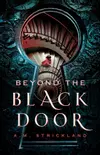
Whilst a synopsis might suggest a familiar tale of romantasy with our orphaned heroine uncovering the dark mysterious stranger who she is trying to resist falling in love with, this would be a disservice to the excellent world crafting by A.M.Strickland which gives us a richly woven mythology of the three gods, the earthly world and the shadow realm of the souls/spirit depicted lushly and at times refreshing malevolently, two secret societies and a plot to murder the king....
The discussion of gender and sexuality is refreshing modern, respectful and integral to the story and the trans character was one of my favorites.
I am certainly looking forward to reading more by A.M. Strickland.
Whilst a synopsis might suggest a familiar tale of romantasy with our orphaned heroine uncovering the dark mysterious stranger who she is trying to resist falling in love with, this would be a disservice to the excellent world crafting by A.M.Strickland which gives us a richly woven mythology of the three gods, the earthly world and the shadow realm of the souls/spirit depicted lushly and at times refreshing malevolently, two secret societies and a plot to murder the king....
The discussion of gender and sexuality is refreshing modern, respectful and integral to the story and the trans character was one of my favorites.
I am certainly looking forward to reading more by A.M. Strickland.

Book 3 of Courtney Smyth's The Undetectables Series The Unfathomable Curse (and with the investigation involving diving into a lake I wonder if the 'fathomable' is a subconscious clue or foreshadowed word play - you decide).
Everything I have come to welcome from these novels is here, complex mysteries, hidden histories involving magic, the supernatural and lore, and a refreshingly respectful take on queer relationships and navigating disabilities. As the last two books focus were Mallory and Diana this novel revolved around Cornelia. Another detailed and richly drawn character who I loved discovering more about, her family awful and I am impressed Cornelia turned out as functional as she did.
At one point I did want to just get the metaphorical dolls of Mallory and Cornelia and smoosh their heads together and say 'now kiss' but I digress. The sting in the tail after all their hard work and sacrifice their cat eared ghost friend Theodore … (go read it)
The conclusion is a Sword of Damocles to which I await Book 4 and final book in the series according to one blog entry by the author, although I would be happy to read more, for the resolution.
Book 3 of Courtney Smyth's The Undetectables Series The Unfathomable Curse (and with the investigation involving diving into a lake I wonder if the 'fathomable' is a subconscious clue or foreshadowed word play - you decide).
Everything I have come to welcome from these novels is here, complex mysteries, hidden histories involving magic, the supernatural and lore, and a refreshingly respectful take on queer relationships and navigating disabilities. As the last two books focus were Mallory and Diana this novel revolved around Cornelia. Another detailed and richly drawn character who I loved discovering more about, her family awful and I am impressed Cornelia turned out as functional as she did.
At one point I did want to just get the metaphorical dolls of Mallory and Cornelia and smoosh their heads together and say 'now kiss' but I digress. The sting in the tail after all their hard work and sacrifice their cat eared ghost friend Theodore … (go read it)
The conclusion is a Sword of Damocles to which I await Book 4 and final book in the series according to one blog entry by the author, although I would be happy to read more, for the resolution.

A satisfying conclusion to an enjoyable series, Rebecca Throne sticks the landing in this the final (according to the author's notes at the end) book in the Tomes & Tea series. Along with the usual welcome shenanigans Reyna and Kienthe's endearing romance (and terrible puns - Stone of Sawing really) dragons, griffins, charming townsfolk dealing with tourists, and even a coda including a return of a previous couple.
What made this resolution so satisfying for me was that the series use of magic was different and consistent and Kienthe's solution to defeat the antagonist (another excellent plotting with a previously known character but gave sufficient surprise to discover by laid out clues) at the end wasn't invented or pulled out of nowhere.
Wonderful stuff I look forward to reading Rebecca Thorne's future stories.
A satisfying conclusion to an enjoyable series, Rebecca Throne sticks the landing in this the final (according to the author's notes at the end) book in the Tomes & Tea series. Along with the usual welcome shenanigans Reyna and Kienthe's endearing romance (and terrible puns - Stone of Sawing really) dragons, griffins, charming townsfolk dealing with tourists, and even a coda including a return of a previous couple.
What made this resolution so satisfying for me was that the series use of magic was different and consistent and Kienthe's solution to defeat the antagonist (another excellent plotting with a previously known character but gave sufficient surprise to discover by laid out clues) at the end wasn't invented or pulled out of nowhere.
Wonderful stuff I look forward to reading Rebecca Thorne's future stories.