
Roo

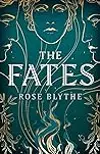
I received a copy of this book for free from NetGalley as an ARC in exchange for a fair review.
I can't give a rating to this book for the simple fact that to me, this is two stories forced to share the same breath and space as one another, and while I liked one story, I did not like the other, which is probably why this ARC took me over a year to read (almost a year and a half).
The first story is a story about free will, and how mortals are given it. That story relies on themes of love and determining your own path, and is told with a prose that is at once both purple but also fits the feeling of being told an ancient myth. That tale I enjoyed. The second story is a retelling of Greek mythology, but that I did not enjoy, because so much of it was bent out of shape and distorted in order to tell the first tale.
This is the problem with retellings. One portion of your audience demands for the tale to be told faithfully to the myth, and there, any deviation will be met with scorn. Another portion of your audience will demand that the tale be given originality and reinvented, and will scorn any attempts to be faithful to the source material. Authors must choose which side they will let their story land on, and ride the consequences, because inevitably, one portion of the natural audience for this tale will be unhappy, and I was unfortunately a part of that.
In this tale, the Olympian gods are all terrible, drunk on their power and spiteful and cruel. The only gods worth their salt are the Fates themselves and a singular Titan that remains behind, the first of the inaccuracies. For someone who enjoys the Greek gods as being a take on divinity that runs closer to the capricious and complexity of humans, to see them painted in such broadstrokes both bored and annoyed me. It was clear to me from that that this book takes the framework of Greek mythos and shakes it and bends it until it fits the story the author actually wants to tell. There is nothing wrong with the tale being told about how humanity is given its free will, nor the way that the story delights in such freedom and self determination of your own path, but I didn't see the need then to take a tale and force it into something else.
For me, this story would have been better served to be split in two, one a tale of Atalanta, and one a tale of mortals finding free will, and the disservice was done by trying to force the two together.
I received a copy of this book for free from NetGalley as an ARC in exchange for a fair review.
I can't give a rating to this book for the simple fact that to me, this is two stories forced to share the same breath and space as one another, and while I liked one story, I did not like the other, which is probably why this ARC took me over a year to read (almost a year and a half).
The first story is a story about free will, and how mortals are given it. That story relies on themes of love and determining your own path, and is told with a prose that is at once both purple but also fits the feeling of being told an ancient myth. That tale I enjoyed. The second story is a retelling of Greek mythology, but that I did not enjoy, because so much of it was bent out of shape and distorted in order to tell the first tale.
This is the problem with retellings. One portion of your audience demands for the tale to be told faithfully to the myth, and there, any deviation will be met with scorn. Another portion of your audience will demand that the tale be given originality and reinvented, and will scorn any attempts to be faithful to the source material. Authors must choose which side they will let their story land on, and ride the consequences, because inevitably, one portion of the natural audience for this tale will be unhappy, and I was unfortunately a part of that.
In this tale, the Olympian gods are all terrible, drunk on their power and spiteful and cruel. The only gods worth their salt are the Fates themselves and a singular Titan that remains behind, the first of the inaccuracies. For someone who enjoys the Greek gods as being a take on divinity that runs closer to the capricious and complexity of humans, to see them painted in such broadstrokes both bored and annoyed me. It was clear to me from that that this book takes the framework of Greek mythos and shakes it and bends it until it fits the story the author actually wants to tell. There is nothing wrong with the tale being told about how humanity is given its free will, nor the way that the story delights in such freedom and self determination of your own path, but I didn't see the need then to take a tale and force it into something else.
For me, this story would have been better served to be split in two, one a tale of Atalanta, and one a tale of mortals finding free will, and the disservice was done by trying to force the two together.