
David

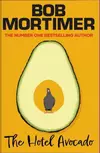
I’m a big fan of Bob Mortimer’s comedy but it doesn’t translate well to the page for me. The quirkiness soon becomes irritating rather than charming. Gary and Emily’s relationship doesn’t feel at all convincing - the characters generally feel superficial (apart from Grace, perhaps). The plot is thin and stretched out over twice as many pages as it needs to be - there is sooo much padding in the writing, with scenes described in the minutest of trivial detail. On the plus side, it’s such an easy, light read that I rattled through it in no time - otherwise I would have ditched it long before finishing.
I should know better than to read a celebrity novel but was drawn in by it being a 99p special offer. So at least it wasn’t an expensive mistake.
I’m a big fan of Bob Mortimer’s comedy but it doesn’t translate well to the page for me. The quirkiness soon becomes irritating rather than charming. Gary and Emily’s relationship doesn’t feel at all convincing - the characters generally feel superficial (apart from Grace, perhaps). The plot is thin and stretched out over twice as many pages as it needs to be - there is sooo much padding in the writing, with scenes described in the minutest of trivial detail. On the plus side, it’s such an easy, light read that I rattled through it in no time - otherwise I would have ditched it long before finishing.
I should know better than to read a celebrity novel but was drawn in by it being a 99p special offer. So at least it wasn’t an expensive mistake.

Wonderful. Just wonderful.
I didn’t love this quite as much as I loved Troubles, which is one of my all-time favourite reads, but it’s still easily deserving of a five-star rating. Much of the first part of the book is scene-setting and there’s a lot of detail to take in. But by the time the action starts you’re deeply immersed in the world of the novel and the horror of the siege is brought vividly to life. It’s a very well paced book.
Overall, it’s not as outright funny as Troubles but the poetry reading scene early on is laugh-out-loud hilarious. Later comical episodes are much darker in tone, reminiscent of Evelyn Waugh’s bleaker moments. The siege setting brilliantly highlights the absurdities of the Victorian world view, as the inhabitants of the Residency continue to believe themselves superior to the Indians even while everything is falling apart around them. And JG Farrell’s writing is simply exquisite. He has a real eye for metaphor.
I saw a review elsewhere that complained we don’t get enough of the Indian perspective on events but that to me is missing the point of what this book is about - there are surely other non-fiction books that offer better purely historical accounts of the Indian mutiny, this is something altogether more profound, an insight into the psyche of the British people at the height of the Empire.
One thing that slowed my reading progress slightly was unfamiliarity with a lot of the Indian terminology and having to look up a number of words - but that’s not a complaint at all. It’s a truly rewarding experience to read such a well written book as this, and if you learn a few new words along the way, all the better.
Wonderful. Just wonderful.
I didn’t love this quite as much as I loved Troubles, which is one of my all-time favourite reads, but it’s still easily deserving of a five-star rating. Much of the first part of the book is scene-setting and there’s a lot of detail to take in. But by the time the action starts you’re deeply immersed in the world of the novel and the horror of the siege is brought vividly to life. It’s a very well paced book.
Overall, it’s not as outright funny as Troubles but the poetry reading scene early on is laugh-out-loud hilarious. Later comical episodes are much darker in tone, reminiscent of Evelyn Waugh’s bleaker moments. The siege setting brilliantly highlights the absurdities of the Victorian world view, as the inhabitants of the Residency continue to believe themselves superior to the Indians even while everything is falling apart around them. And JG Farrell’s writing is simply exquisite. He has a real eye for metaphor.
I saw a review elsewhere that complained we don’t get enough of the Indian perspective on events but that to me is missing the point of what this book is about - there are surely other non-fiction books that offer better purely historical accounts of the Indian mutiny, this is something altogether more profound, an insight into the psyche of the British people at the height of the Empire.
One thing that slowed my reading progress slightly was unfamiliarity with a lot of the Indian terminology and having to look up a number of words - but that’s not a complaint at all. It’s a truly rewarding experience to read such a well written book as this, and if you learn a few new words along the way, all the better.


Irritatingly overwritten. There’s a superfluity of detail but no depth. For example:
“Richard, unsure what to say, studied the beige-knotted carpet in Ben’s study with great intensity. His eyes wandered to the kelim rug under Ben’s desk, woven with a repetitive triangular pattern in reds and browns.”
Without losing anything, that could have been written as:
“Richard, unsure what to say, stared at the floor.”
There’s a lot more like that throughout the whole book. It’s flabby and dull. Endless cataloguing of superficial “colour” passing as insight.
Underneath the terrible writing is a moderately engaging story about politics, class war and revenge, but it feels almost like a parody of stuff we’ve read many times before. And none of the characters are at all likeable.
I’ve not read any Elizabeth Day before. Apparently this is a sequel to an earlier novel. I won’t be rushing to read that one.
Irritatingly overwritten. There’s a superfluity of detail but no depth. For example:
“Richard, unsure what to say, studied the beige-knotted carpet in Ben’s study with great intensity. His eyes wandered to the kelim rug under Ben’s desk, woven with a repetitive triangular pattern in reds and browns.”
Without losing anything, that could have been written as:
“Richard, unsure what to say, stared at the floor.”
There’s a lot more like that throughout the whole book. It’s flabby and dull. Endless cataloguing of superficial “colour” passing as insight.
Underneath the terrible writing is a moderately engaging story about politics, class war and revenge, but it feels almost like a parody of stuff we’ve read many times before. And none of the characters are at all likeable.
I’ve not read any Elizabeth Day before. Apparently this is a sequel to an earlier novel. I won’t be rushing to read that one.

A remarkable book, and a desperately sad one. George Harvey Bone is a problematic protagonist whose problems are to a great extent of his own making, but you're rooting for him all the way to the inevitable end, hoping that he can drag himself out of the pernicious sphere of influence of the cruel Netta and fascist Peter. I think I enjoyed The Slaves of Solitude more - perhaps because the lead character is more sympathetic, and it's funnier (and less bleak) - but Hangover Square's great strengths are its depiction of London in the period immediately before the start of the Second World War, and Hamilton's beautiful writing that had me captivated from beginning to end. You can really feel the authenticity of Hamilton's experience underpinning the world he portrays.
A remarkable book, and a desperately sad one. George Harvey Bone is a problematic protagonist whose problems are to a great extent of his own making, but you're rooting for him all the way to the inevitable end, hoping that he can drag himself out of the pernicious sphere of influence of the cruel Netta and fascist Peter. I think I enjoyed The Slaves of Solitude more - perhaps because the lead character is more sympathetic, and it's funnier (and less bleak) - but Hangover Square's great strengths are its depiction of London in the period immediately before the start of the Second World War, and Hamilton's beautiful writing that had me captivated from beginning to end. You can really feel the authenticity of Hamilton's experience underpinning the world he portrays.

Wanted to love this more than I actually did. There's some beautiful writing - and also some very messy writing. I found it hard to relate to Claire (her “own way“ of going mad felt too strange to me... but I suppose we all deal with grief in different ways) and I didn't much like Tom. They're both very convincingly portrayed characters though. In fact, all the characters are well drawn and fully fleshed out. Overall, I found it interesting rather than captivating. It's also pretty bleak in places. Feeney evokes the harrowing events of the family's past well but - it felt to me - in a fairly disengaged way. The ending doesn't feel like much of a resolution, but maybe that's the point - we deal with these things and carry on with our lives as best we can... or we don't, but to say any more would be a spoiler...
As I'm writing down my thoughts, I'm finding that the novel has given me a lot more to think about than I realise and maybe it deserves upgrading from three to four stars. Let's call it 3.5
Wanted to love this more than I actually did. There's some beautiful writing - and also some very messy writing. I found it hard to relate to Claire (her “own way“ of going mad felt too strange to me... but I suppose we all deal with grief in different ways) and I didn't much like Tom. They're both very convincingly portrayed characters though. In fact, all the characters are well drawn and fully fleshed out. Overall, I found it interesting rather than captivating. It's also pretty bleak in places. Feeney evokes the harrowing events of the family's past well but - it felt to me - in a fairly disengaged way. The ending doesn't feel like much of a resolution, but maybe that's the point - we deal with these things and carry on with our lives as best we can... or we don't, but to say any more would be a spoiler...
As I'm writing down my thoughts, I'm finding that the novel has given me a lot more to think about than I realise and maybe it deserves upgrading from three to four stars. Let's call it 3.5

Added to listOwnedwith 2 books.

Flabby writing with an excess of small, trivial detail that adds nothing to the story. Makes it feel very sloooow. It's also very repetitive - eg when stuff that has been mentioned earlier in the book becomes relevant again, it isn't just hinted at, it's retold in detail, so it feels like the author is treating the readers as idiots.
The maths stuff is supposed to make Dee seem interesting and quirky but it feels bolted on and irrelevant except to provide a hook for pseudo-philosophical analogies and musings that are trite rather than profound. And the drip-feeding of hints about Dee's past is irritating rather than intriguing. Almost as irritating as the short chapters, which feel more like scenes in a screenplay than a novel.
I persisted with it mainly because it's a very easy read so didn't require much of a time commitment.
Flabby writing with an excess of small, trivial detail that adds nothing to the story. Makes it feel very sloooow. It's also very repetitive - eg when stuff that has been mentioned earlier in the book becomes relevant again, it isn't just hinted at, it's retold in detail, so it feels like the author is treating the readers as idiots.
The maths stuff is supposed to make Dee seem interesting and quirky but it feels bolted on and irrelevant except to provide a hook for pseudo-philosophical analogies and musings that are trite rather than profound. And the drip-feeding of hints about Dee's past is irritating rather than intriguing. Almost as irritating as the short chapters, which feel more like scenes in a screenplay than a novel.
I persisted with it mainly because it's a very easy read so didn't require much of a time commitment.
