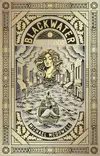
Dan


Wow. It’s been a long time coming, but this is Joe Hill’s best novel by a long way. It’s a beast of a book - I read an eARC, but I’d guess the print version isn’t going to be far short of a thousand pages - but nothing is bloated or wasted. It’s a genuine epic that spans decades and continents as the story of how a group of friends make a deal with something they really shouldn’t have plays out down the years. It feels lazy to make comparison with Hill’s dad (although to be fair he does kind of invite it with direct references to The Dead Zone and The Dark Tower here, let alone the first word of the title), but this is up there with any of King Sr’s biiiig books, and possibly even better. It has lots to say about class, about friendship, our emergent billionaire class, folklore and mythic archetypes and their relevance to the 21st century, plus there’s a bloody enormous dragon that loves nothing more than smashing up untold amounts of buildings and military hardware. It’s exciting, funny, tense and sad, and it’s the most fun I’ve had with a book for a long time.
Wow. It’s been a long time coming, but this is Joe Hill’s best novel by a long way. It’s a beast of a book - I read an eARC, but I’d guess the print version isn’t going to be far short of a thousand pages - but nothing is bloated or wasted. It’s a genuine epic that spans decades and continents as the story of how a group of friends make a deal with something they really shouldn’t have plays out down the years. It feels lazy to make comparison with Hill’s dad (although to be fair he does kind of invite it with direct references to The Dead Zone and The Dark Tower here, let alone the first word of the title), but this is up there with any of King Sr’s biiiig books, and possibly even better. It has lots to say about class, about friendship, our emergent billionaire class, folklore and mythic archetypes and their relevance to the 21st century, plus there’s a bloody enormous dragon that loves nothing more than smashing up untold amounts of buildings and military hardware. It’s exciting, funny, tense and sad, and it’s the most fun I’ve had with a book for a long time.

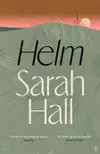
It might be a bit niche, but there’s something about polyphonic novels set in a tight geographical location but ranging though time that I really like. I loved Alan Moore’s Voice of The Fire, Andrew Michael Hurley’s Barrowbeck and now Sarah Hall’s Helm. It’s a really good evocation of a place and the people who inhabit it over thousands of years, culminating in a glorious soaring sequence that will live long in the memory, all told in distinct voices and some excellent prose.
It might be a bit niche, but there’s something about polyphonic novels set in a tight geographical location but ranging though time that I really like. I loved Alan Moore’s Voice of The Fire, Andrew Michael Hurley’s Barrowbeck and now Sarah Hall’s Helm. It’s a really good evocation of a place and the people who inhabit it over thousands of years, culminating in a glorious soaring sequence that will live long in the memory, all told in distinct voices and some excellent prose.


This is the story of two British women over the next forty years or so, taking in climate change, eco-activism, rewilding and pandemics. It takes the form of pair of separate narratives that brush up against each other and overlap here and there as each chapter hops us forward a few years. Swift does a great job of keeping us up to date with these women’s personal lives and relationships over the decades while also sketching the political and social changes happening. She never flinches from the scale of the catastrophe facing us, but crucially offers hope and solutions instead of wallowing in doom. It’s tempting to read this as a smaller scale, more intimate, version of Kim Stanley Robinson’s Ministry For The Future, but that isn’t necessary - it’s a more than good enough book to stand on its own. Plus it has some excellent dogs* in it. I really liked this one.
This is the story of two British women over the next forty years or so, taking in climate change, eco-activism, rewilding and pandemics. It takes the form of pair of separate narratives that brush up against each other and overlap here and there as each chapter hops us forward a few years. Swift does a great job of keeping us up to date with these women’s personal lives and relationships over the decades while also sketching the political and social changes happening. She never flinches from the scale of the catastrophe facing us, but crucially offers hope and solutions instead of wallowing in doom. It’s tempting to read this as a smaller scale, more intimate, version of Kim Stanley Robinson’s Ministry For The Future, but that isn’t necessary - it’s a more than good enough book to stand on its own. Plus it has some excellent dogs* in it. I really liked this one.

This is the story of two British women over the next forty years or so, taking in climate change, eco-activism, rewilding and pandemics. It takes the form of pair of separate narratives that brush up against each other and overlap here and there as each chapter hops us forward a few years. Swift does a great job of keeping us up to date with these women’s personal lives and relationships over the decades while also sketching the political and social changes happening. She never flinches from the scale of the catastrophe facing us, but crucially offers hope and solutions instead of wallowing in doom. It’s tempting to read this as a smaller scale, more intimate, version of Kim Stanley Robinson’s Ministry For The Future, but that isn’t necessary - it’s a more than good enough book to stand on its own. Plus it has some excellent dogs* in it. I really liked this one.
This is the story of two British women over the next forty years or so, taking in climate change, eco-activism, rewilding and pandemics. It takes the form of pair of separate narratives that brush up against each other and overlap here and there as each chapter hops us forward a few years. Swift does a great job of keeping us up to date with these women’s personal lives and relationships over the decades while also sketching the political and social changes happening. She never flinches from the scale of the catastrophe facing us, but crucially offers hope and solutions instead of wallowing in doom. It’s tempting to read this as a smaller scale, more intimate, version of Kim Stanley Robinson’s Ministry For The Future, but that isn’t necessary - it’s a more than good enough book to stand on its own. Plus it has some excellent dogs* in it. I really liked this one.
Updated a reading goal:
Read 100 books by December 31, 2025
Progress so far: 50 / 100 50%