
Michael Barnes


This was my bookclub's choice and it suffers the same problem that many self help book suffer - its primary life coaching theory could be summed up in a paragraph but that means you need to fill up 300 pages to sell a book.
This was my bookclub's choice and it suffers the same problem that many self help book suffer - its primary life coaching theory could be summed up in a paragraph but that means you need to fill up 300 pages to sell a book.

If you have read and found the previous two sworn solider stories by T Kingfisher as entertaining as I then I can promise you this third story which sees the titular Sworn Solider Alex Easton is just as engaging. This tale sees our protagonist travelling to the United States to assist the doctor from
What Moves the Dead to investigate the uncanny shenanigans in a closed coal mine, in as an enjoyable addition to the series that makes me hope for more.
If you have read and found the previous two sworn solider stories by T Kingfisher as entertaining as I then I can promise you this third story which sees the titular Sworn Solider Alex Easton is just as engaging. This tale sees our protagonist travelling to the United States to assist the doctor from
What Moves the Dead to investigate the uncanny shenanigans in a closed coal mine, in as an enjoyable addition to the series that makes me hope for more.

Have just read the first book about our snarky protagonist Alex Easton the titular Sworn Solider of the series I followed on with this one. If you haven't read the first it won't be a problem, but honestly read 'what moves the dead' its enjoyable/creepy story where these interesting characters are introduced (a personal favourite unflappable British mycologist Miss Potter and yes in the book she is identified as a relation of Beatrix Potter).
It’s a supernatural rather than eldritch horror but I still found plenty of humour a style characteristic of T.Kingfishers work. Alex remains an excellent lead character with a distinct, often hilarious, POV. This tale takes place in their homeland of Gallacia. I loved the whole “lovingly exasperated” take that Alex and the locals seem to have about their own country and its culture and history.
On to Sworn Solider 3 "What Stalks the Deep".
Have just read the first book about our snarky protagonist Alex Easton the titular Sworn Solider of the series I followed on with this one. If you haven't read the first it won't be a problem, but honestly read 'what moves the dead' its enjoyable/creepy story where these interesting characters are introduced (a personal favourite unflappable British mycologist Miss Potter and yes in the book she is identified as a relation of Beatrix Potter).
It’s a supernatural rather than eldritch horror but I still found plenty of humour a style characteristic of T.Kingfishers work. Alex remains an excellent lead character with a distinct, often hilarious, POV. This tale takes place in their homeland of Gallacia. I loved the whole “lovingly exasperated” take that Alex and the locals seem to have about their own country and its culture and history.
On to Sworn Solider 3 "What Stalks the Deep".

This book is over a massive timescale but incredible small and personal focus about the quiet end of the world. Its the postapocalyptic setting, but gentle. The author’s experience in biology shines through her writing as she imagines the diverse forms that humans and their societies might take in the far distant future.
Under the Eye of the Big Bird is a collection of fourteen stand-alone stories with recurring 'characters/features that gradually form a larger narrative, and the reader is encouraged to put together a history from bits and pieces of individual lives. We never see the full picture, however, and I imagine that assembling a concrete timeline would take careful detective work.
Some of the stories bring a touch of touch of existential dread as in any encounter with real difference, this initial sense of discomfort is important. The gentle strangeness of Under the Eye of the Big Bird encourages the reader to confront their biases, and it also lends weight to the narrative theme of human extinction
This book is over a massive timescale but incredible small and personal focus about the quiet end of the world. Its the postapocalyptic setting, but gentle. The author’s experience in biology shines through her writing as she imagines the diverse forms that humans and their societies might take in the far distant future.
Under the Eye of the Big Bird is a collection of fourteen stand-alone stories with recurring 'characters/features that gradually form a larger narrative, and the reader is encouraged to put together a history from bits and pieces of individual lives. We never see the full picture, however, and I imagine that assembling a concrete timeline would take careful detective work.
Some of the stories bring a touch of touch of existential dread as in any encounter with real difference, this initial sense of discomfort is important. The gentle strangeness of Under the Eye of the Big Bird encourages the reader to confront their biases, and it also lends weight to the narrative theme of human extinction

I read Maria Dong's Liar, Dreamer, Thief because a review of her novel Psychopomp sounded like just my thing, but it isn't in my library and the publication hasn't appeared on Australian Kobo (or I would have bought it in a heart beat), so I picked up the only novel of hers in my public library Liar, Dreamer, Thief.
So grateful I did its brilliant. For the first 50 pages I struggled a bit but then something clicked and I was propelled into this - its not an unreliable narrative story, as those stories seem to have a sense of deception, our ethnically Korean narrator Katrina Kim living in the US sees the world refracted through a mind that she understand isn't how others see it. This refraction through the world of a book she read as a child 'Mi-Hee and the Mirror-Man'.
The mystery begins with the apparent suicide of her co-worker Kurt (who she isn't stalking no matter what her roomate Lonie says) and eventually ties in her fellow workers, roomate, even her parents is a resolution that makes the whole tale worthwhile.
Even more desperate to read Psychopomp now, may even have to buy a paper copy rather than ebook.
I read Maria Dong's Liar, Dreamer, Thief because a review of her novel Psychopomp sounded like just my thing, but it isn't in my library and the publication hasn't appeared on Australian Kobo (or I would have bought it in a heart beat), so I picked up the only novel of hers in my public library Liar, Dreamer, Thief.
So grateful I did its brilliant. For the first 50 pages I struggled a bit but then something clicked and I was propelled into this - its not an unreliable narrative story, as those stories seem to have a sense of deception, our ethnically Korean narrator Katrina Kim living in the US sees the world refracted through a mind that she understand isn't how others see it. This refraction through the world of a book she read as a child 'Mi-Hee and the Mirror-Man'.
The mystery begins with the apparent suicide of her co-worker Kurt (who she isn't stalking no matter what her roomate Lonie says) and eventually ties in her fellow workers, roomate, even her parents is a resolution that makes the whole tale worthwhile.
Even more desperate to read Psychopomp now, may even have to buy a paper copy rather than ebook.

I haven't read any of Bora Chung's work before, a deficiency I expect to address after finishing this extraordinary collection of short stories.
Each of these eight tales are very original and difficult to categorise other than science fiction 'with a twist' none more so than the first story where we meet people working at the Center for Immortality Research, with most of the senior staff displaying very mortal pettiness. The End of the Voyage a zombie tale where seemingly rational people get suddenly and startlingly infected with cannibalism. We root (pardon that unwitting pun) for a species of plant-human hybrids as they try to save their patch of land from what else, but humans. We are moved when an AI-enabled elevator develops a fondness for a woman suffering from the onset of Parkinson`s. We recoil in horror as a suspicious husband gets more than he bargained for, when he tries to keep track of his wife`s movements, this is another one where a classic science fiction trope gets hit with a twilight zonesque twist but it was her story 'To know her' the last in this collection which affected me most deeply giving a more deserving end to Korea's late Byun Hee-soo tragic story.
Reading up on Bora Chung in a piece titled ' Bora Chung shows us what sci-fi with its fists raised looks like' and revealing "In fact, one way the writer describes her own brand of science fiction is “demonstration sci-fi” — a term shaped by her 12 years as a political activist, attending rallies for victims of the 2014 Sewol ferry disaster and LGBTQ rights, as well as campaigns for a comprehensive anti-discrimination law and workplace safety reform", has only made me want to read her more.
I haven't read any of Bora Chung's work before, a deficiency I expect to address after finishing this extraordinary collection of short stories.
Each of these eight tales are very original and difficult to categorise other than science fiction 'with a twist' none more so than the first story where we meet people working at the Center for Immortality Research, with most of the senior staff displaying very mortal pettiness. The End of the Voyage a zombie tale where seemingly rational people get suddenly and startlingly infected with cannibalism. We root (pardon that unwitting pun) for a species of plant-human hybrids as they try to save their patch of land from what else, but humans. We are moved when an AI-enabled elevator develops a fondness for a woman suffering from the onset of Parkinson`s. We recoil in horror as a suspicious husband gets more than he bargained for, when he tries to keep track of his wife`s movements, this is another one where a classic science fiction trope gets hit with a twilight zonesque twist but it was her story 'To know her' the last in this collection which affected me most deeply giving a more deserving end to Korea's late Byun Hee-soo tragic story.
Reading up on Bora Chung in a piece titled ' Bora Chung shows us what sci-fi with its fists raised looks like' and revealing "In fact, one way the writer describes her own brand of science fiction is “demonstration sci-fi” — a term shaped by her 12 years as a political activist, attending rallies for victims of the 2014 Sewol ferry disaster and LGBTQ rights, as well as campaigns for a comprehensive anti-discrimination law and workplace safety reform", has only made me want to read her more.

I found this narrative as engaging and action packed as the first with the bonus of having a background on each of the characters in this chosen family/scoobygang and drives providing a richer story. It begins almost immediately after the events in Ocean's Godori. Once again I would search various terms as they came up, which someone mor familiar with Korean culture mightnot need to but I found it added to the experience.
When I read some authors of action filled narratives I find myself skipping the fight scenes as I lose track (or if I am honest, I don't find it engaging when all know the hero is going to succeed no matter how dire the circumstances seem) but not so with Elaine U. Cho's work. The descriptions are clear and they provide supporting details which hold my attention.
Phoenix and Teo are very effectively counterpointing our swoony-yearny-KDrama pair of Ocean and Haven. I'm pleased that they have more than what Joseph Campbell called (in that memorable Bill Moyers series) "the zeal of the organs for each other," but equally pleased they're not shilly-shallying around. Lest I leave someone with the wrong impression, this story is not steamy. It's passionate, just not graphic, more the "fire flickered and died" way.
The story is resolved in consistent and positive way, there is more I would like to know (the earing worn by Ocean for example) and with some of the bad'uns having escaped at the end means there can certainly more to tell. I have seen a reading app categorise it as a Duology and the authors website makes no mention of any further works in this solar system I would be happy to read more.
I found this narrative as engaging and action packed as the first with the bonus of having a background on each of the characters in this chosen family/scoobygang and drives providing a richer story. It begins almost immediately after the events in Ocean's Godori. Once again I would search various terms as they came up, which someone mor familiar with Korean culture mightnot need to but I found it added to the experience.
When I read some authors of action filled narratives I find myself skipping the fight scenes as I lose track (or if I am honest, I don't find it engaging when all know the hero is going to succeed no matter how dire the circumstances seem) but not so with Elaine U. Cho's work. The descriptions are clear and they provide supporting details which hold my attention.
Phoenix and Teo are very effectively counterpointing our swoony-yearny-KDrama pair of Ocean and Haven. I'm pleased that they have more than what Joseph Campbell called (in that memorable Bill Moyers series) "the zeal of the organs for each other," but equally pleased they're not shilly-shallying around. Lest I leave someone with the wrong impression, this story is not steamy. It's passionate, just not graphic, more the "fire flickered and died" way.
The story is resolved in consistent and positive way, there is more I would like to know (the earing worn by Ocean for example) and with some of the bad'uns having escaped at the end means there can certainly more to tell. I have seen a reading app categorise it as a Duology and the authors website makes no mention of any further works in this solar system I would be happy to read more.

This was my bookclub's book of the month so I am using this review more a prompt for the meeting. When the said it was Ted Chiang’s collection of science-fiction short stories - Stories of Your Life and Others, I subsequently realised I confuse Ted Chaing with Ken Liu of the Dandelion Dynasty series (Silkpunk). Which I found relevant when think about the "silkpunk aesthetic, I was influenced by the ideas of W. Brian Arthur, who articulates a vision of technology as language. The task of the engineer is much like that of a poet in that the engineer must creatively combine existing components to solve novel problems, thereby devising artifacts that are new expressions in the technical language". Relevant to the story in Story of Your Life .
I initially mistook this collection for Ken Liu's The Paper Menagerie and Other Stories
Tower of Babylon: From the Tower of Babel (Babylon) myth springs this fully developed fantasy novelette. The protagonist of Tower of Babylon is Hillalum, a miner from Elam and a member of a group of miners who have come to Babylon to mine the vault of heaven near the top of the tower.
Understand: This first person science fiction novelette is narrated entirely in the point of view of Leon, a man who suffered brain damage and was given an experimental treatment, hormone K therapy. The therapy regenerated his damaged neurons, but an unforeseen side effect was that they came back with many more dendrites, raising Leon’s intelligence and motor skills considerably. When Leon’s doctor asks him to participate in a study in which he will be given additional treatments of hormone K, Leon quickly agrees. The concept here about how thoughts could act as software also front and center of Story of Your Life.
Division by Zero This short story examines the marriage of two professors. Renee is a brilliant mathematician whose recent suicide attempt is related to her work (I don’t want to reveal how); her husband Carl is a biologist. Many years ago Carl made a suicide attempt of his own; he has since been emotionally healed. The facts about mathematics are fascinating, especially as they pertain to the conflict in Renee and Carl’s marriage. I found this story not just intellectually interesting, but also poignant, though I was skeptical that the conclusions Carl draws late in the story were enough to result in what happened to him.
Story of Your Life (arrival) narrated in first person by Louise, a linguistics expert who is asked by the military to serve as a translator between aliens and humans.
Seventy-Two Letters This fantasy novella, set in an alternate Victorian England, begins in Robert Stratton’s childhood. As a boy, Robert is fascinated by his toy automatons’ ability to move powered only by seventy-two letter names inserted into them via paper slips. _Golem R F Kaungs Babel Aphros: The Sea God of Foam In Greek mythology, Aphros (meaning "foam") was one of the Ichthyocentaurs, a unique group of sea deities with the upper body of a man, the lower front of a horse, and the tail of a fish. Alongside his brother Bythos, Aphros was born from the union of the sea god Poseidon and the nymph Aphrodite (or in some versions, the primordial sea deities).
The Evolution of Human Science This is a very short story, only a few pages long, and written in the form of an editorial from a scientific journal. The subject of the editorial is the gap between the scientific achievements of DNT(digital neural transfer)-capable “metahumans” and the regular humans’ ability to grasp these. Prompted me with some of the arguments raised in David Brin's Uplift series.
Hell is the Absence of God. It takes place in a world in which God exists, and Hell is a plane below the ground, occasionally revealed to people on the mortal plane as if through a glass floor. Hell is also the plane that houses those are not devout descend after their death. There is a Heaven, too, widely assumed to be better although less is known about it. Hell is the Absence of God is, more than anything, an exploration of man’s need to come up with explanations for the inexplicable. As such I found it startling, yet while the world depicted in the story is surreal, the characters’ responses to it are familiar and utterly convincing.
Liking What You See: A Documentary This story explores a future world in which scientific progress in the field of neurology has made it possible to induce calliagnosia, a condition which makes it possible to look at beautiful people and remain unmoved by their beauty.
This was my bookclub's book of the month so I am using this review more a prompt for the meeting. When the said it was Ted Chiang’s collection of science-fiction short stories - Stories of Your Life and Others, I subsequently realised I confuse Ted Chaing with Ken Liu of the Dandelion Dynasty series (Silkpunk). Which I found relevant when think about the "silkpunk aesthetic, I was influenced by the ideas of W. Brian Arthur, who articulates a vision of technology as language. The task of the engineer is much like that of a poet in that the engineer must creatively combine existing components to solve novel problems, thereby devising artifacts that are new expressions in the technical language". Relevant to the story in Story of Your Life .
I initially mistook this collection for Ken Liu's The Paper Menagerie and Other Stories
Tower of Babylon: From the Tower of Babel (Babylon) myth springs this fully developed fantasy novelette. The protagonist of Tower of Babylon is Hillalum, a miner from Elam and a member of a group of miners who have come to Babylon to mine the vault of heaven near the top of the tower.
Understand: This first person science fiction novelette is narrated entirely in the point of view of Leon, a man who suffered brain damage and was given an experimental treatment, hormone K therapy. The therapy regenerated his damaged neurons, but an unforeseen side effect was that they came back with many more dendrites, raising Leon’s intelligence and motor skills considerably. When Leon’s doctor asks him to participate in a study in which he will be given additional treatments of hormone K, Leon quickly agrees. The concept here about how thoughts could act as software also front and center of Story of Your Life.
Division by Zero This short story examines the marriage of two professors. Renee is a brilliant mathematician whose recent suicide attempt is related to her work (I don’t want to reveal how); her husband Carl is a biologist. Many years ago Carl made a suicide attempt of his own; he has since been emotionally healed. The facts about mathematics are fascinating, especially as they pertain to the conflict in Renee and Carl’s marriage. I found this story not just intellectually interesting, but also poignant, though I was skeptical that the conclusions Carl draws late in the story were enough to result in what happened to him.
Story of Your Life (arrival) narrated in first person by Louise, a linguistics expert who is asked by the military to serve as a translator between aliens and humans.
Seventy-Two Letters This fantasy novella, set in an alternate Victorian England, begins in Robert Stratton’s childhood. As a boy, Robert is fascinated by his toy automatons’ ability to move powered only by seventy-two letter names inserted into them via paper slips. _Golem R F Kaungs Babel Aphros: The Sea God of Foam In Greek mythology, Aphros (meaning "foam") was one of the Ichthyocentaurs, a unique group of sea deities with the upper body of a man, the lower front of a horse, and the tail of a fish. Alongside his brother Bythos, Aphros was born from the union of the sea god Poseidon and the nymph Aphrodite (or in some versions, the primordial sea deities).
The Evolution of Human Science This is a very short story, only a few pages long, and written in the form of an editorial from a scientific journal. The subject of the editorial is the gap between the scientific achievements of DNT(digital neural transfer)-capable “metahumans” and the regular humans’ ability to grasp these. Prompted me with some of the arguments raised in David Brin's Uplift series.
Hell is the Absence of God. It takes place in a world in which God exists, and Hell is a plane below the ground, occasionally revealed to people on the mortal plane as if through a glass floor. Hell is also the plane that houses those are not devout descend after their death. There is a Heaven, too, widely assumed to be better although less is known about it. Hell is the Absence of God is, more than anything, an exploration of man’s need to come up with explanations for the inexplicable. As such I found it startling, yet while the world depicted in the story is surreal, the characters’ responses to it are familiar and utterly convincing.
Liking What You See: A Documentary This story explores a future world in which scientific progress in the field of neurology has made it possible to induce calliagnosia, a condition which makes it possible to look at beautiful people and remain unmoved by their beauty.
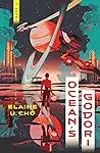
An excellent debut from Elaine U.Cho who I will be looking to read any future works (obviously including the second in the Alliance duology 'Teo's Durumi'. Who isn't a sucker for chosen family in small spaceship crew (such as the also enjoyable Cascade Failure by L.M. Sagas). \
For me this is a 'windows' book I have very little knowledge of Korea or Korean culture and I relished the Koreanesque aspects of this novel, even if it meant I had to keep consulting online resources as t the meaning of words as it wasn't till I had finished that I found Elaine U.Cho had included an excellent resource for this at the back of the novel.
In a nutshell -"A disgraced Korean space pilot and her misfit crewmates are pushed into a high-stakes conflict when her best friend is framed for murder, leading to a thrilling adventure across the solar system that explores themes of colonialism, capitalism, and identity. The story unfolds with rich character development, engaging interactions, and a blend of action, romance, and cultural exploration set in a futuristic world dominated by Korea's space agency".
Did I mention there are dashing space pirates, I feel I need to mention the dashing space pirates on to Teo's Durumi.
An excellent debut from Elaine U.Cho who I will be looking to read any future works (obviously including the second in the Alliance duology 'Teo's Durumi'. Who isn't a sucker for chosen family in small spaceship crew (such as the also enjoyable Cascade Failure by L.M. Sagas). \
For me this is a 'windows' book I have very little knowledge of Korea or Korean culture and I relished the Koreanesque aspects of this novel, even if it meant I had to keep consulting online resources as t the meaning of words as it wasn't till I had finished that I found Elaine U.Cho had included an excellent resource for this at the back of the novel.
In a nutshell -"A disgraced Korean space pilot and her misfit crewmates are pushed into a high-stakes conflict when her best friend is framed for murder, leading to a thrilling adventure across the solar system that explores themes of colonialism, capitalism, and identity. The story unfolds with rich character development, engaging interactions, and a blend of action, romance, and cultural exploration set in a futuristic world dominated by Korea's space agency".
Did I mention there are dashing space pirates, I feel I need to mention the dashing space pirates on to Teo's Durumi.

I enjoyed this Asian take on a future fantasy post apocalypse where due to Earthrages (think earthquakes/massive storms but even worse) humanity had to take to the skies in flying cities constructed from plants by architects, People who can manipulate plants and build structures out of them. There are also sungineers…who develop technology separate to the powers wielded by architects.
It's an engaging story with the narrative being driven by the architects who by wielding this power run the risk of losing themselves in the 'ecstasy' and this power going wild destroying their cities. Plenty of mysteries at the heart some involving the past (how could they not when one of the two narrative views is an archaeologist). If you liked N.K. Jemisin The Broken Earth series, and if you didn't why not, then give Kritika H. Rao's tale a try.
I enjoyed this Asian take on a future fantasy post apocalypse where due to Earthrages (think earthquakes/massive storms but even worse) humanity had to take to the skies in flying cities constructed from plants by architects, People who can manipulate plants and build structures out of them. There are also sungineers…who develop technology separate to the powers wielded by architects.
It's an engaging story with the narrative being driven by the architects who by wielding this power run the risk of losing themselves in the 'ecstasy' and this power going wild destroying their cities. Plenty of mysteries at the heart some involving the past (how could they not when one of the two narrative views is an archaeologist). If you liked N.K. Jemisin The Broken Earth series, and if you didn't why not, then give Kritika H. Rao's tale a try.

A short sharp story using a handful of science fiction staples, secret underground military base, genius young teens, a ticking timer, meticulously planned escapes, throw in a is_the_world_a_simulation, and time travel and you have your self an entertaining romp.
A short sharp story using a handful of science fiction staples, secret underground military base, genius young teens, a ticking timer, meticulously planned escapes, throw in a is_the_world_a_simulation, and time travel and you have your self an entertaining romp.

This is a sequel to “Meru” which about the protagonist's parents and the circumstances that led to Akshaya's unique hybrid biology I think you could read Loka as a stand alone novel but then you would miss out on how much her own mother Jayanthi is reflected in Akshaya character and how much her mother has to have grown to change her decision.
It was very readable and the changing environments and different challenges kept the pace. Warning there is a death of a loved character that I kept expecting to appear later by miraculous rescue but never came.
I enjoyed seeing how the book approached medical disability of Akshaya's sickle cell disease I also love the way S.B.Diva's engineering approach came in with the use of the breather masks to help Akshaya's crisis.
This is a sequel to “Meru” which about the protagonist's parents and the circumstances that led to Akshaya's unique hybrid biology I think you could read Loka as a stand alone novel but then you would miss out on how much her own mother Jayanthi is reflected in Akshaya character and how much her mother has to have grown to change her decision.
It was very readable and the changing environments and different challenges kept the pace. Warning there is a death of a loved character that I kept expecting to appear later by miraculous rescue but never came.
I enjoyed seeing how the book approached medical disability of Akshaya's sickle cell disease I also love the way S.B.Diva's engineering approach came in with the use of the breather masks to help Akshaya's crisis.