
Michael Barnes


Royal Assassin is an excellent second book in Robin Hobb’s FARSEER SAGA. It returns to the setting and characters without a break launching into the political intrigue. The teenager now FitzChivalry in the first book, Assassin’s Apprentice, protected from his ambitious uncle Regal by King Shrewd and Prince Verity, but Shrewd is dying and Verity is gone, leaving Fitz to fend for himself. Hobb hasn’t treated Fitz well up to this point so, even though these events are related in the first person by a future Fitz, the reader feels no assurance that Fitz is going to be okay. And, indeed, he isn’t — the ending is surprising and devastating.
Hobb’s characters are phenomenally well-crafted and the way that she’s able to arouse my heart, my tears, and also my utter hatred of certain players is masterful. A favourite for me was the interplay between Fitz and a wolf that he rescued from captivity, Nighteyes.
Although it does include stunning action, much of Royal Assassin is the quieter times, the thoughts and conversations characters share, beautifully massaging every word, statement, motive, agenda into our mind so then the action scenes hit much harder as we completely understand the consequences from all angles. An average day for Fitz would be a conversation with Burrich, with Patience, meeting the Fool, keeping Kettricken company, talking to Nighteyes, conversing with Verity, being summoned by the King, insulted by Regal, still infatuated with Molly and then meeting Chade is the assassin’s hidden abode. It doesn’t sound the most exciting when spelled out like that but I was hanging on every word and adored the entire reading experience.
Looking forward to leaping into the last in the trilogy but not the tale of FitzChivalry.
Royal Assassin is an excellent second book in Robin Hobb’s FARSEER SAGA. It returns to the setting and characters without a break launching into the political intrigue. The teenager now FitzChivalry in the first book, Assassin’s Apprentice, protected from his ambitious uncle Regal by King Shrewd and Prince Verity, but Shrewd is dying and Verity is gone, leaving Fitz to fend for himself. Hobb hasn’t treated Fitz well up to this point so, even though these events are related in the first person by a future Fitz, the reader feels no assurance that Fitz is going to be okay. And, indeed, he isn’t — the ending is surprising and devastating.
Hobb’s characters are phenomenally well-crafted and the way that she’s able to arouse my heart, my tears, and also my utter hatred of certain players is masterful. A favourite for me was the interplay between Fitz and a wolf that he rescued from captivity, Nighteyes.
Although it does include stunning action, much of Royal Assassin is the quieter times, the thoughts and conversations characters share, beautifully massaging every word, statement, motive, agenda into our mind so then the action scenes hit much harder as we completely understand the consequences from all angles. An average day for Fitz would be a conversation with Burrich, with Patience, meeting the Fool, keeping Kettricken company, talking to Nighteyes, conversing with Verity, being summoned by the King, insulted by Regal, still infatuated with Molly and then meeting Chade is the assassin’s hidden abode. It doesn’t sound the most exciting when spelled out like that but I was hanging on every word and adored the entire reading experience.
Looking forward to leaping into the last in the trilogy but not the tale of FitzChivalry.

One of the aspects of Pillars of the Earth I reveled in was the author's unapologetic geekery over Western (England/France mainly) Cathedral building and holding strong when no doubt editors asked 'do we really need to spend this much time on flying buttresses?
And whilst a long novel (mine clocked in at 1100pages) due to the nature of the narrative centre shifting through characters naturally allowed the story to progress without ever feeling slow or dragging.
My only reservation is that like other English/French medieval historical stories written in the 90s I think these days a sensitivity reader would propose changes to the rape and sexual assaults which seem to me to show the evil of the antagonists such as William (the only villain not to get a redemption arc thankfully).
One of the aspects of Pillars of the Earth I reveled in was the author's unapologetic geekery over Western (England/France mainly) Cathedral building and holding strong when no doubt editors asked 'do we really need to spend this much time on flying buttresses?
And whilst a long novel (mine clocked in at 1100pages) due to the nature of the narrative centre shifting through characters naturally allowed the story to progress without ever feeling slow or dragging.
My only reservation is that like other English/French medieval historical stories written in the 90s I think these days a sensitivity reader would propose changes to the rape and sexual assaults which seem to me to show the evil of the antagonists such as William (the only villain not to get a redemption arc thankfully).

I began reading Robin Hobb's Debut novel with some concern given the extensive praise and positive reviews and i must say my oly regret is I hadn't read it sooner, its an outstanding fantasy, a good story well told. If you don’t enjoy slow paced fantasy filled with world building this one isn’t for you. I don’t necessarily mind that and the way that Hobb built the world captured my attention. We learned the setting with Fitz. He knew very little about the world he was thrust into and so we essentially grew up with him as he learned the politics and magic systems. There wasn’t any info dumping or clunky unnecessary passages. And though it was slow paced the story moved smoothly along.
Synopsis from Grimdark magazine May 2015
" about a royal bastard named Fitz put to use by his family, and trying to survive and find happiness. Fitz is an outcast by none of his own doing. He’s a bastard. His father, Chivalry, abdicates to escape him. He’s been born with the Wit, an ability to mind meld with animals, a skill that is shunned by the nobility as an abomination which puts him off side with Burrich, his only chance at a father figure. Other members of his family have the Skill, a way to meld minds with other humans, which is a far better accepted form of magic all but restricted to royalty. One of his uncles, Regal, despises his very existence, as do most who considered themselves Chivalry’s or his wife’s Patience’s loyal subjects. Only Burrich puts up with him, reluctantly taking Fitz under his wing, though the man is constantly torn between his own agony at the loss of his lord, Chivalry, and a fatherly want to look after a young boy abandoned by all.
Assassin's Apprentice by Robin Hobb King Shrewd (all nobility are supposedly named after a character trait they have) decides that it’s better the devil you know than to put up with a royal bastard-led uprising down the track, he decides to train Fitz as an assassin to bind the boy’s loyalty to the crown of the Six Duchies. Fitz’s world is opened to not just the sword and dagger, but to a wide range of reasons a king may need for an assassin – an illness to take a noble who may influence another at court out of the picture for a month, an injured horse to keep another at court for a few more days. Fitz is introduced to Chade, the current (though forgotten) Royal Assassin, who teaches him the ways of death and deception.
When the Red Ships begin to invade and Forge people (remove their humanity and leave them as mindless savages) before letting them loose once more in the Six Duchies, Shrewd’s kingdom begins to crumble. Fitz is pushed to do more and more for his king – for he is a King’s man – which challenges his relationships with his mentors, his friend Molly, and his family to its limits. He sees them all, and himself, at their worst and is saved more often that he saves. He goes into secret combat with his half brother, Regal, in order to save himself, his other uncle Verity, and his kingdom from Regal’s greed and ambition during a marriage forced on a weakening Verity by the vicious Skillmaster Galen (Who is with Regal in plotting – somewhat unwillingly as we find out at the end).
When reviewers say this novel is complex, do not mean that it is challenging to follow or understand. I was amazed by how easily I fell into the many branches of this storyline. There is so much intricate detailed poured into every moment—into every event and setting and relationship. Years go by and new knowledge, twists, and turns fill each page and never once does it become muddled or overwhelming. Hobb writes in such a way that effortlessly carries you over every single page, not allowing you to get lost along the way. So many stories and so many characters and so many twists, yet not one bit of it is left unresolved.
So while the narrative is a perfect blend of plot and world building its these marvelous, three-dimensional characters that are the driving force. Fitz is an incredibly strong lead character, someone who is easy to connect and sympathize with. His story is equal parts heart-wrenching and heart-pounding, and it is impossible not to cheer for him all the way. He faces such massive obstacles and stands up to them, persevering in the most unlikely circumstances. Fitz is not one of those flawless heroes—every aspect of his life, every success and failure, is chronicled in these pages. His growth throughout the narrative as he fights to give himself a life is awe-inspiring.
Every single character Robin Hobb creates in this story is multi-dimensional and fully fleshed out. They are all made into a significant element of the overall narrative, contributing in some way, however small, to the unfolding of the plot. I thought Hobb did a brilliant job building each and every one of her characters with care and precision.
I began reading Robin Hobb's Debut novel with some concern given the extensive praise and positive reviews and i must say my oly regret is I hadn't read it sooner, its an outstanding fantasy, a good story well told. If you don’t enjoy slow paced fantasy filled with world building this one isn’t for you. I don’t necessarily mind that and the way that Hobb built the world captured my attention. We learned the setting with Fitz. He knew very little about the world he was thrust into and so we essentially grew up with him as he learned the politics and magic systems. There wasn’t any info dumping or clunky unnecessary passages. And though it was slow paced the story moved smoothly along.
Synopsis from Grimdark magazine May 2015
" about a royal bastard named Fitz put to use by his family, and trying to survive and find happiness. Fitz is an outcast by none of his own doing. He’s a bastard. His father, Chivalry, abdicates to escape him. He’s been born with the Wit, an ability to mind meld with animals, a skill that is shunned by the nobility as an abomination which puts him off side with Burrich, his only chance at a father figure. Other members of his family have the Skill, a way to meld minds with other humans, which is a far better accepted form of magic all but restricted to royalty. One of his uncles, Regal, despises his very existence, as do most who considered themselves Chivalry’s or his wife’s Patience’s loyal subjects. Only Burrich puts up with him, reluctantly taking Fitz under his wing, though the man is constantly torn between his own agony at the loss of his lord, Chivalry, and a fatherly want to look after a young boy abandoned by all.
Assassin's Apprentice by Robin Hobb King Shrewd (all nobility are supposedly named after a character trait they have) decides that it’s better the devil you know than to put up with a royal bastard-led uprising down the track, he decides to train Fitz as an assassin to bind the boy’s loyalty to the crown of the Six Duchies. Fitz’s world is opened to not just the sword and dagger, but to a wide range of reasons a king may need for an assassin – an illness to take a noble who may influence another at court out of the picture for a month, an injured horse to keep another at court for a few more days. Fitz is introduced to Chade, the current (though forgotten) Royal Assassin, who teaches him the ways of death and deception.
When the Red Ships begin to invade and Forge people (remove their humanity and leave them as mindless savages) before letting them loose once more in the Six Duchies, Shrewd’s kingdom begins to crumble. Fitz is pushed to do more and more for his king – for he is a King’s man – which challenges his relationships with his mentors, his friend Molly, and his family to its limits. He sees them all, and himself, at their worst and is saved more often that he saves. He goes into secret combat with his half brother, Regal, in order to save himself, his other uncle Verity, and his kingdom from Regal’s greed and ambition during a marriage forced on a weakening Verity by the vicious Skillmaster Galen (Who is with Regal in plotting – somewhat unwillingly as we find out at the end).
When reviewers say this novel is complex, do not mean that it is challenging to follow or understand. I was amazed by how easily I fell into the many branches of this storyline. There is so much intricate detailed poured into every moment—into every event and setting and relationship. Years go by and new knowledge, twists, and turns fill each page and never once does it become muddled or overwhelming. Hobb writes in such a way that effortlessly carries you over every single page, not allowing you to get lost along the way. So many stories and so many characters and so many twists, yet not one bit of it is left unresolved.
So while the narrative is a perfect blend of plot and world building its these marvelous, three-dimensional characters that are the driving force. Fitz is an incredibly strong lead character, someone who is easy to connect and sympathize with. His story is equal parts heart-wrenching and heart-pounding, and it is impossible not to cheer for him all the way. He faces such massive obstacles and stands up to them, persevering in the most unlikely circumstances. Fitz is not one of those flawless heroes—every aspect of his life, every success and failure, is chronicled in these pages. His growth throughout the narrative as he fights to give himself a life is awe-inspiring.
Every single character Robin Hobb creates in this story is multi-dimensional and fully fleshed out. They are all made into a significant element of the overall narrative, contributing in some way, however small, to the unfolding of the plot. I thought Hobb did a brilliant job building each and every one of her characters with care and precision.

A satisfying end to an different take on the zombie apocalypse. I like other reviewers found the numerous and varying perspectives, points of view overwhelming at times and for length it certainly earned its title but I was glad to see the many disparate characters stories resolved by the end.
A satisfying end to an different take on the zombie apocalypse. I like other reviewers found the numerous and varying perspectives, points of view overwhelming at times and for length it certainly earned its title but I was glad to see the many disparate characters stories resolved by the end.

In Ashes, an EMP changed a large portion of the population, turning them into what can best be described as what we call zombies. The Changed roam and eat the flesh of those that remain unchanged. At the end of Ashes, our main character Alex found herself in a town called Rule hoping to find help for a fellow survivor named Tom; he was left injured as the two fled for their lives. The town of Rule is populated by survivors that have organized themselves into a survival group that appears almost as a religious cult. All is not what it seems in Rule.
Shadows picks off where Ashes left us, Alex is trying to escape Rule and finds herself in an enclave of zombies. The zombies may be the least of her problems.
Shadows follow several characters and their story lines, they eventually come together. I found it difficult to sort out all of the new characters – and there are a lot – but their paths all cross in a way that is satisfying and leaves you hanging on waiting for the third and final book in this trilogy.
Bick is a psychiatrist and she definitely puts some interesting psychological twists into this tale. There are a group of characters that will eerily remind readers of the Nazi doctors as they engage in some disturbing experiments regarding the nature of the changed. And one of the biggest questions appears to be whether or not the changed are in fact done changing.
Although Shadows is indeed an exciting read, it can at times also be a challenging read. There are many characters to keep track of and sometimes the characters make observations that they just leave dangling that come up a little bit later.
The Ashes trilogy is a unique and complex look at a post apocalyptic world and it takes the zombie genre and tweaks it in all the right ways; each character is thrust into unthinkable situations and is forced to make difficult decisions in order to survive. The characters also cover the spectrum; there are your truly evil characters, but there are also those that are basically good people forced to make unthinkable decisions in order to survive. This is, after all, the post-apocalyptic world so how do the old rules apply in this new world?
In Ashes, an EMP changed a large portion of the population, turning them into what can best be described as what we call zombies. The Changed roam and eat the flesh of those that remain unchanged. At the end of Ashes, our main character Alex found herself in a town called Rule hoping to find help for a fellow survivor named Tom; he was left injured as the two fled for their lives. The town of Rule is populated by survivors that have organized themselves into a survival group that appears almost as a religious cult. All is not what it seems in Rule.
Shadows picks off where Ashes left us, Alex is trying to escape Rule and finds herself in an enclave of zombies. The zombies may be the least of her problems.
Shadows follow several characters and their story lines, they eventually come together. I found it difficult to sort out all of the new characters – and there are a lot – but their paths all cross in a way that is satisfying and leaves you hanging on waiting for the third and final book in this trilogy.
Bick is a psychiatrist and she definitely puts some interesting psychological twists into this tale. There are a group of characters that will eerily remind readers of the Nazi doctors as they engage in some disturbing experiments regarding the nature of the changed. And one of the biggest questions appears to be whether or not the changed are in fact done changing.
Although Shadows is indeed an exciting read, it can at times also be a challenging read. There are many characters to keep track of and sometimes the characters make observations that they just leave dangling that come up a little bit later.
The Ashes trilogy is a unique and complex look at a post apocalyptic world and it takes the zombie genre and tweaks it in all the right ways; each character is thrust into unthinkable situations and is forced to make difficult decisions in order to survive. The characters also cover the spectrum; there are your truly evil characters, but there are also those that are basically good people forced to make unthinkable decisions in order to survive. This is, after all, the post-apocalyptic world so how do the old rules apply in this new world?

In Stoker Dracula’s first victim, Lucy’s death and rebirth mostly serves as a lesson to showcase the bloody, vivid reality of Dracula’s hunger. Lucy Undying, White reclaims and empowers her.
Lucy Undying flits between her's and 21 century Iris who discovers Lucy's journals which reveal what happened to her after becoming a vampire, told via excerpts from her diary as she travels from 1890s Whitby across the world up until the modern day.
These entries, filled with female rage, loss, grief and queer longing, neatly intertwine with the narrative of the other main protagonist, Iris. Heir to a ghoulish (quite literally) health empire where “blood is life”, she is desperate to escape her bloodsucking family and reclaim her own path as she moves to London to deal with clearing out her old family estate.
I loved the transition between historical reassessment of the literary Lucy to 21 century medical conspiracy and I delighted in the reveal that the greatest monster was Mina.
When Lucy and Iris eventually meet when Lucy shows up to help Iris ‘catalogue’ the mansion she has inherited in London, uncovering all manner of mysteries about the house and each other. Both are women trying to escape controlling figures and come to terms with their trauma and – as is revealed as the narrative progresses – it turns out that Dracula really does cast a long, horrid shadow.
The story chips away at the mystery behind Dracula, leaving you guessing about his fate and lingering, traumatic influence on Lucy at every twist and turn. There are slightly gruesome scenes too, peppered throughout the book. Haunting scenes that include animals, stalking, creaky gothic mansions and Dracula call backs aplenty for those seeking the darker thread in the story. I also liked it was at least three quarters of the book before Dracula entered the chat.
The slow-burn romance between Lucy and Iris is a nice touch. Not only does she make Lucy become a more fleshed out protagonist, it adds a beautiful twist of hope and melancholy throughout.
In Stoker Dracula’s first victim, Lucy’s death and rebirth mostly serves as a lesson to showcase the bloody, vivid reality of Dracula’s hunger. Lucy Undying, White reclaims and empowers her.
Lucy Undying flits between her's and 21 century Iris who discovers Lucy's journals which reveal what happened to her after becoming a vampire, told via excerpts from her diary as she travels from 1890s Whitby across the world up until the modern day.
These entries, filled with female rage, loss, grief and queer longing, neatly intertwine with the narrative of the other main protagonist, Iris. Heir to a ghoulish (quite literally) health empire where “blood is life”, she is desperate to escape her bloodsucking family and reclaim her own path as she moves to London to deal with clearing out her old family estate.
I loved the transition between historical reassessment of the literary Lucy to 21 century medical conspiracy and I delighted in the reveal that the greatest monster was Mina.
When Lucy and Iris eventually meet when Lucy shows up to help Iris ‘catalogue’ the mansion she has inherited in London, uncovering all manner of mysteries about the house and each other. Both are women trying to escape controlling figures and come to terms with their trauma and – as is revealed as the narrative progresses – it turns out that Dracula really does cast a long, horrid shadow.
The story chips away at the mystery behind Dracula, leaving you guessing about his fate and lingering, traumatic influence on Lucy at every twist and turn. There are slightly gruesome scenes too, peppered throughout the book. Haunting scenes that include animals, stalking, creaky gothic mansions and Dracula call backs aplenty for those seeking the darker thread in the story. I also liked it was at least three quarters of the book before Dracula entered the chat.
The slow-burn romance between Lucy and Iris is a nice touch. Not only does she make Lucy become a more fleshed out protagonist, it adds a beautiful twist of hope and melancholy throughout.

“We are clairvoyants, Dr Nygård. We are the keepers of truth, the guardians of the future; the bridge between the living and the dead, the mundane and the divine.”
“The Bone Season” is set in London, the year 2059. It follows Paige Mahoney, not only is she high ranking in the criminal underworld but she is also a rare clairvoyant – might I mention that both of these are treasonous under Scion Law! She is then arrested for murder and held captive in Oxford where she has to decide if she should trust her enemy in order to escape…
“If your hope is alive, so are you.”
This book has a bit of everything! The rebellion and revolution of a dystopian novel, supernatural creatures from another world, and a magical deep dive into the different kinds of clairvoyancy.
The characters were unique and the focus on character development for Paige was an excellent narrative choice allowing us to understand this future alternative earth without clunky exposition. Equally crafted was the mysterious Arcturus.
Shannon’s world-building was detailed and intriguing. One of my favourite things about this book was that there was a constant flow of information – never a slow moment!
“I want to remind them that if you leave one spark aglow, it can still burn everything down.”
“We are clairvoyants, Dr Nygård. We are the keepers of truth, the guardians of the future; the bridge between the living and the dead, the mundane and the divine.”
“The Bone Season” is set in London, the year 2059. It follows Paige Mahoney, not only is she high ranking in the criminal underworld but she is also a rare clairvoyant – might I mention that both of these are treasonous under Scion Law! She is then arrested for murder and held captive in Oxford where she has to decide if she should trust her enemy in order to escape…
“If your hope is alive, so are you.”
This book has a bit of everything! The rebellion and revolution of a dystopian novel, supernatural creatures from another world, and a magical deep dive into the different kinds of clairvoyancy.
The characters were unique and the focus on character development for Paige was an excellent narrative choice allowing us to understand this future alternative earth without clunky exposition. Equally crafted was the mysterious Arcturus.
Shannon’s world-building was detailed and intriguing. One of my favourite things about this book was that there was a constant flow of information – never a slow moment!
“I want to remind them that if you leave one spark aglow, it can still burn everything down.”
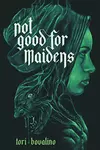
An enchanting tale spun from the mythology of the fae inspired by Christina Rossetti's poem Goblin Market (though one of their names are changed and roles are swapped from the poem) where the title of the novel also appears and references to Scarborough Fair.
“I didn’t say it was pleasant.” She swallowed hard, looking down at the mug in her hands. May wondered if it was still warm. “Our love stories rarely are.”
Lou never believed in superstitions or magic–until her teenage aunt Neela is kidnapped to the goblin market. The market is a place Lou has only read about–twisted streets, offerings of sweet fruits and incredible jewels. Everything–from the food and wares, to the goblins themselves–is a haunting temptation for any human who manages to find their way in. Determined to save Neela, Lou learns songs and spells and tricks that will help her navigate this dangerous world and slip past a goblin’s defenses–but she only has three days to find Neela before the market disappears and her aunt becomes one of them forever. If she isn’t careful, the market might just end up claiming her too.
I loved this novel of two generations of Wickett women and their strong relationships. The story alternates between the contemporary setting and 18 years earlier which reveals what drew May to the market and what Laura did to see them banished. Lou is every bit the resourceful protagonist learning about herself that I love in these stories and the resolution is consistent and satisfying for such a rule bound place at the market.
Ilana at Unbridged Adventures observed "There is representation for many different aspects of the queer community. May is a bisexual woman coming to terms with her sexuality in late ’90s, early 2000s York, England. Lou is ace and Neela is pan, both girls are comfortable in their identities and supportive of each other. It seems to be the queer women that are most drawn to the market, maybe because they are more able to recognize unconventional forms of beauty and attraction. I absolutely loved how Lou’s asexuality works to her benefit when dealing with creatures who use physical pleasure and desire as the basics of their tricks".
I also appreciated Chekhov's gun but in this case Chekhov's Goblin Ice introduced until chapter 26.
An enchanting tale spun from the mythology of the fae inspired by Christina Rossetti's poem Goblin Market (though one of their names are changed and roles are swapped from the poem) where the title of the novel also appears and references to Scarborough Fair.
“I didn’t say it was pleasant.” She swallowed hard, looking down at the mug in her hands. May wondered if it was still warm. “Our love stories rarely are.”
Lou never believed in superstitions or magic–until her teenage aunt Neela is kidnapped to the goblin market. The market is a place Lou has only read about–twisted streets, offerings of sweet fruits and incredible jewels. Everything–from the food and wares, to the goblins themselves–is a haunting temptation for any human who manages to find their way in. Determined to save Neela, Lou learns songs and spells and tricks that will help her navigate this dangerous world and slip past a goblin’s defenses–but she only has three days to find Neela before the market disappears and her aunt becomes one of them forever. If she isn’t careful, the market might just end up claiming her too.
I loved this novel of two generations of Wickett women and their strong relationships. The story alternates between the contemporary setting and 18 years earlier which reveals what drew May to the market and what Laura did to see them banished. Lou is every bit the resourceful protagonist learning about herself that I love in these stories and the resolution is consistent and satisfying for such a rule bound place at the market.
Ilana at Unbridged Adventures observed "There is representation for many different aspects of the queer community. May is a bisexual woman coming to terms with her sexuality in late ’90s, early 2000s York, England. Lou is ace and Neela is pan, both girls are comfortable in their identities and supportive of each other. It seems to be the queer women that are most drawn to the market, maybe because they are more able to recognize unconventional forms of beauty and attraction. I absolutely loved how Lou’s asexuality works to her benefit when dealing with creatures who use physical pleasure and desire as the basics of their tricks".
I also appreciated Chekhov's gun but in this case Chekhov's Goblin Ice introduced until chapter 26.

This is a very harsh unforgiving horror novel and I cannot recommend it without knowing the person who wants to read it if I would suggest it. It’s a powerful and compelling piece of literature and I can see why Alison Rumfitt deserves all the praise for this her debut novel.
Tell Me I’m Worthless tells the story of two friends, Alice and Ila, in the aftermath of a night spent together in a haunted house. Alice is transgender, and Ila is a ‘gender critical’ feminist. That in itself provides a novel worth of complexity and social culture. The haunted house, Albion, is the core or the rising shadow of the particular brand of British fascism which is infecting the social fabric of the United Kingdom today.
Tell Me I’m Worthless is bleak, but the ending proves cathartic and even hopeful, reminding us that resistance to fascism is always possible.
This is a very harsh unforgiving horror novel and I cannot recommend it without knowing the person who wants to read it if I would suggest it. It’s a powerful and compelling piece of literature and I can see why Alison Rumfitt deserves all the praise for this her debut novel.
Tell Me I’m Worthless tells the story of two friends, Alice and Ila, in the aftermath of a night spent together in a haunted house. Alice is transgender, and Ila is a ‘gender critical’ feminist. That in itself provides a novel worth of complexity and social culture. The haunted house, Albion, is the core or the rising shadow of the particular brand of British fascism which is infecting the social fabric of the United Kingdom today.
Tell Me I’m Worthless is bleak, but the ending proves cathartic and even hopeful, reminding us that resistance to fascism is always possible.
This is a very harsh unforgiving horror novel and I cannot recommend it without knowing the person who wants to read it if I would suggest it. It’s a powerful and compelling piece of literature and I can see why Alison Rumfitt deserves all the praise for this her debut novel.
Tell Me I’m Worthless tells the story of two friends, Alice and Ila, in the aftermath of a night spent together in a haunted house. Alice is transgender, and Ila is a ‘gender critical’ feminist. That in itself provides a novel worth of complexity and social culture. The haunted house, Albion, is the core or the rising shadow of the particular brand of British fascism which is infecting the social fabric of the United Kingdom today.
Tell Me I’m Worthless is bleak, but the ending proves cathartic and even hopeful, reminding us that resistance to fascism is always possible.
This is a very harsh unforgiving horror novel and I cannot recommend it without knowing the person who wants to read it if I would suggest it. It’s a powerful and compelling piece of literature and I can see why Alison Rumfitt deserves all the praise for this her debut novel.
Tell Me I’m Worthless tells the story of two friends, Alice and Ila, in the aftermath of a night spent together in a haunted house. Alice is transgender, and Ila is a ‘gender critical’ feminist. That in itself provides a novel worth of complexity and social culture. The haunted house, Albion, is the core or the rising shadow of the particular brand of British fascism which is infecting the social fabric of the United Kingdom today.
Tell Me I’m Worthless is bleak, but the ending proves cathartic and even hopeful, reminding us that resistance to fascism is always possible.
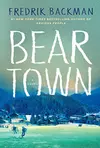
If books can be described as windows or mirrors then for me this book falls into the windows category as I would have never chosen to read this book if it wasn't selected by the bookclub. I am pleased it was as I think its a brilliant work of literary fiction. I am happy to categorize it as that because of the literary touches such as some characters are referred to but are never given names: the colleague, the girlfriend (and before I could think its a gender thing0 the guy in the black Saab). The focus on a sports team but without encountering a game until a quarter of the way through the story.
I loved how all the book is all about the small town and hockey and how its all a matter of clichés: its all about the team, were are a hockey town, etc but also interrogates what those trite basis for your life end up meaning. The story focuses on the relationships to each other, some helpful, some negative (making your your son walk miles home through snow because he got lost at a market and was 5 minutes late returning to the car is a dick move Kevin's Dad) and how these can change. Also kudos for choosing to show just how shit the legal/police system is when it comes to rape. Author could have chosen to put a spin on it but no one I know or respect believes the police/legal system are anything but shit when it comes to this.
As I mentioned its a bookclub book so I won't record much here but it was a suprisingly engaging worthwhile read for me.
If books can be described as windows or mirrors then for me this book falls into the windows category as I would have never chosen to read this book if it wasn't selected by the bookclub. I am pleased it was as I think its a brilliant work of literary fiction. I am happy to categorize it as that because of the literary touches such as some characters are referred to but are never given names: the colleague, the girlfriend (and before I could think its a gender thing0 the guy in the black Saab). The focus on a sports team but without encountering a game until a quarter of the way through the story.
I loved how all the book is all about the small town and hockey and how its all a matter of clichés: its all about the team, were are a hockey town, etc but also interrogates what those trite basis for your life end up meaning. The story focuses on the relationships to each other, some helpful, some negative (making your your son walk miles home through snow because he got lost at a market and was 5 minutes late returning to the car is a dick move Kevin's Dad) and how these can change. Also kudos for choosing to show just how shit the legal/police system is when it comes to rape. Author could have chosen to put a spin on it but no one I know or respect believes the police/legal system are anything but shit when it comes to this.
As I mentioned its a bookclub book so I won't record much here but it was a suprisingly engaging worthwhile read for me.

I leap into Bea Fitzgerald's next retelling of the Greek myths after finishing her telling of Hades and Persephone in GIRL, GODDESS, QUEEN. Her craft has developed further in the story of Helen (yes that Helen) and Cassandra during the war for Troy.
The joy I have in Bea Fitzgerald's work is the attention to the mythology which our culture draws on and her refocus on the women in these stories. Most of these myths are focus on the heroics of the males, almost like they are either created from hegemonic masculinity or to reinforce it.
The points of the narrative are those from them myth. Cassandra’s patron god, Apollo, offers to bestow upon her the gift of prophecy, plus all the power that comes with it, she gratefully accepts this wonderful opportunity. However, when she neglects to maintain her side of the agreement, she soon discovers just how far she has to fall! No one believes her visions, which are, strangely, only of a certain girl. An immensely beautiful girl, who is going to start a war!! Helen fled Sparta in the age old pursuit of love, which is proving to be much more – although that’s proving to be more evasive than she’d hoped! Leaving her home and family far behind, Helen now finds herself manoeuvring a rocky road through the politics and backstabbings of the Trojan court.
The return of the lost prince Paris, the golden apple, Aphrodite's gift of Helen, the war on troy, death of Achilles, the prophecies of Cassandra, the wooden horse and the fall of Troy are all there and I the different types of love described in the Greek myths (including the growing love between Cassandra and Helen) it was with a growing sense of dread as I know how this story ends. Fortunately this ending was much more satisfying than the mythology would permit.
Just as GIRL, GODDESS, QUEEN served a side discussion about gender roles (Hades as an artist/craftsman) THE END CROWNS ALL provides a welcome discussion about consent.
I leap into Bea Fitzgerald's next retelling of the Greek myths after finishing her telling of Hades and Persephone in GIRL, GODDESS, QUEEN. Her craft has developed further in the story of Helen (yes that Helen) and Cassandra during the war for Troy.
The joy I have in Bea Fitzgerald's work is the attention to the mythology which our culture draws on and her refocus on the women in these stories. Most of these myths are focus on the heroics of the males, almost like they are either created from hegemonic masculinity or to reinforce it.
The points of the narrative are those from them myth. Cassandra’s patron god, Apollo, offers to bestow upon her the gift of prophecy, plus all the power that comes with it, she gratefully accepts this wonderful opportunity. However, when she neglects to maintain her side of the agreement, she soon discovers just how far she has to fall! No one believes her visions, which are, strangely, only of a certain girl. An immensely beautiful girl, who is going to start a war!! Helen fled Sparta in the age old pursuit of love, which is proving to be much more – although that’s proving to be more evasive than she’d hoped! Leaving her home and family far behind, Helen now finds herself manoeuvring a rocky road through the politics and backstabbings of the Trojan court.
The return of the lost prince Paris, the golden apple, Aphrodite's gift of Helen, the war on troy, death of Achilles, the prophecies of Cassandra, the wooden horse and the fall of Troy are all there and I the different types of love described in the Greek myths (including the growing love between Cassandra and Helen) it was with a growing sense of dread as I know how this story ends. Fortunately this ending was much more satisfying than the mythology would permit.
Just as GIRL, GODDESS, QUEEN served a side discussion about gender roles (Hades as an artist/craftsman) THE END CROWNS ALL provides a welcome discussion about consent.
Updated a reading goal:
Read 52 books by December 30, 2025
Progress so far: 50 / 52 96%