
Michael Barnes


I've seen it described as "a feminist retelling of Carmilla" which surprised me as I had always thought of J. Sheridan Le Fanu's 1872 novella of Lesbian Vampires (published 25 years before Bram Stoker's Dracula) was pretty darn feminist. Le Fanu's story doesn't demonize the love between the two women, the relationship between Carmilla and Laura seemed honest and features no intervention from men. Society’s starkly negative view of gay people in England at the time makes this a highly progressive story. The classism and racism however….
Anyway Kat Dunn's (an author I am now keen to explore their back catalogue after reading this) Carmilla is now in the Parthenon of this sapphic icon. My heart appropriately belongs to Netflix's Castlevania's Carmilla Queen of Styria. Another favourite is from Theodora Goss' 2018 novel 'European Travel for the Monstrous Gentlewoman' is my third. Camilla in this novel is more an element of nature than a character, it's this version of Laura sorry Lenore that shines for me.
Initially I did not find Lenore an engaging character which is a problem as so much time in her head. She was so full of the faults and failings of anyone in the horrible misogyny and classism of this time and place. Situated in a number of essential nineteenth-century contexts: her husband Henry’s steelworks and the consequences of industrialisation for the working class, Lenore’s role as housewife and house manager, and the intricacies of social graces in this period.
Also for those that need a heads up there are some spicy scenes in the novel.
But then around halfway through the book Laura has her coming of rage moment. The realisation that for all her efforts, planning organising and sheer willpower to forge herself safety she isn't safe. She then realises she was never safe. And this is a glorious moment that propels her agency forward.
From then on I am cheering for Lenore, and some might find the resolution contrary to what has gone before I believe it is an elegant and clever acknowledgement of all the author's evocation of the culture. And of course contrary to the trope no gays are buried in this one.
I've seen it described as "a feminist retelling of Carmilla" which surprised me as I had always thought of J. Sheridan Le Fanu's 1872 novella of Lesbian Vampires (published 25 years before Bram Stoker's Dracula) was pretty darn feminist. Le Fanu's story doesn't demonize the love between the two women, the relationship between Carmilla and Laura seemed honest and features no intervention from men. Society’s starkly negative view of gay people in England at the time makes this a highly progressive story. The classism and racism however….
Anyway Kat Dunn's (an author I am now keen to explore their back catalogue after reading this) Carmilla is now in the Parthenon of this sapphic icon. My heart appropriately belongs to Netflix's Castlevania's Carmilla Queen of Styria. Another favourite is from Theodora Goss' 2018 novel 'European Travel for the Monstrous Gentlewoman' is my third. Camilla in this novel is more an element of nature than a character, it's this version of Laura sorry Lenore that shines for me.
Initially I did not find Lenore an engaging character which is a problem as so much time in her head. She was so full of the faults and failings of anyone in the horrible misogyny and classism of this time and place. Situated in a number of essential nineteenth-century contexts: her husband Henry’s steelworks and the consequences of industrialisation for the working class, Lenore’s role as housewife and house manager, and the intricacies of social graces in this period.
Also for those that need a heads up there are some spicy scenes in the novel.
But then around halfway through the book Laura has her coming of rage moment. The realisation that for all her efforts, planning organising and sheer willpower to forge herself safety she isn't safe. She then realises she was never safe. And this is a glorious moment that propels her agency forward.
From then on I am cheering for Lenore, and some might find the resolution contrary to what has gone before I believe it is an elegant and clever acknowledgement of all the author's evocation of the culture. And of course contrary to the trope no gays are buried in this one.


A contemporary science fiction centred around the premise "It's 2035, and for the last nine years Pearl has worked as a technician for the Apricity Corporation, a San Francisco company that's devised a machine that, using skin cells collected from the inside of a subject’s cheek, provides “contentment plans” for those seeking happiness. (The firm’s name means the feeling of warmth on one’s skin from the sun.) The machine’s prescriptions veer sharply from the benign to the bewildering, telling one of Pearl’s clients to “eat tangerines on a regular basis,” “work at a desk that receive[s] more morning light,” and “amputate the uppermost section of his right index finger.” “The recommendations can seem strange at first…but we must keep in mind the Apricity machine uses a sophisticated metric, taking into account factors of which we’re not consciously aware,” Pearl reassures the client contemplating going under the knife, in a speech she has memorized from the company manual. “The proof is borne out in the numbers. The Apricity system boasts a nearly one hundred percent approval rating. Ninety-nine point nine seven percent.” Never mind the .03 percent the company considers “aberrations.”
But this does the story a disservice as the focus is the characters, throughout the story we see the next narrative development through a different character, sometimes returning to them in later chapters and their significant developmental steps. Her husband, Elliot, an artist, has left her for a younger, pink-haired woman, Val, who has her own secrets—yet Elliot persists in his feelings with Pearl. (ugh Elliot, my least favourite character we all have known and Elliot) Her teenage son, Rhett, has stopped eating, perversely finding contentment in dissatisfaction and self-denial. We others who all undergo significant self-awareness and growth, except maybe Elliot who remains essential Elliot (sigh).
I am interested to read others reactions to the conclusion which I found abrupt but satisfying, others it seems not so much.
I'm going to read this story as a metaphor for why the Large Language Models like Chatgpt, Copilot, Grok and others not a solution (mainly because they aren't)
A contemporary science fiction centred around the premise "It's 2035, and for the last nine years Pearl has worked as a technician for the Apricity Corporation, a San Francisco company that's devised a machine that, using skin cells collected from the inside of a subject’s cheek, provides “contentment plans” for those seeking happiness. (The firm’s name means the feeling of warmth on one’s skin from the sun.) The machine’s prescriptions veer sharply from the benign to the bewildering, telling one of Pearl’s clients to “eat tangerines on a regular basis,” “work at a desk that receive[s] more morning light,” and “amputate the uppermost section of his right index finger.” “The recommendations can seem strange at first…but we must keep in mind the Apricity machine uses a sophisticated metric, taking into account factors of which we’re not consciously aware,” Pearl reassures the client contemplating going under the knife, in a speech she has memorized from the company manual. “The proof is borne out in the numbers. The Apricity system boasts a nearly one hundred percent approval rating. Ninety-nine point nine seven percent.” Never mind the .03 percent the company considers “aberrations.”
But this does the story a disservice as the focus is the characters, throughout the story we see the next narrative development through a different character, sometimes returning to them in later chapters and their significant developmental steps. Her husband, Elliot, an artist, has left her for a younger, pink-haired woman, Val, who has her own secrets—yet Elliot persists in his feelings with Pearl. (ugh Elliot, my least favourite character we all have known and Elliot) Her teenage son, Rhett, has stopped eating, perversely finding contentment in dissatisfaction and self-denial. We others who all undergo significant self-awareness and growth, except maybe Elliot who remains essential Elliot (sigh).
I am interested to read others reactions to the conclusion which I found abrupt but satisfying, others it seems not so much.
I'm going to read this story as a metaphor for why the Large Language Models like Chatgpt, Copilot, Grok and others not a solution (mainly because they aren't)


I'm using the genre tag cosy fantasy as its how the book is marked and it certainly has the feel of it. Similar to United States Supreme Court Justice Potter Stewart 1964 Jacobellis v. Ohio when asked to describe his threshold test for obscenity "I know it when I see it".
"Undying loyalty to a sociopathic queen can get pretty old. For Reyna, a palace guard, the final straw comes when a potential assassin holds a knife to her throat and she finds that Queen Tilaine doesn’t care whether she lives or dies. Decades of fealty collapse in an instant, and truthfully ...Reyna doesn’t care either. She’s finally free to escape the palace grounds and never look back, to travel to the ends of the earth and open a tea shop/bookstore. Reyna and her girlfriend, Kianthe, have dreamed of combining their favorite pastimes into a solid income and living a life free from royal obligation and bloodshed. But Reyna isn’t the only half of the couple who will need to escape Tilaine—Kianthe is the Arcandor, the Mage of Ages. Kianthe wants no part of the Queendom, nor any role in the Magicary; she’d rather act on her own to decide what duty she owes the world’s magic. Reyna and Kianthe flee the Queendom in the night and arrive just south of dragon country in a backwoods town named Tawney, meeting charming locals and uncovering an abandoned barn perfect for their tea- and bookshop. As Reyna and Kianthe embrace their independence, they tackle threats of dragons, Queen Tilaine’s spies, and commands from the ancient Stone of Seeing, all while openly and patiently navigating their newly public relationship. Thorne’s novel encompasses all the wonders of fantasy—pet griffons, vengeful dragons, and a bloodthirsty monarch—while capturing the heartwarming moments of a blossoming romance. Side characters, including a nonbinary diarn crushing on a young lord, add to the whimsy as Thorne deftly weaves a closed-door, cozy romantasy.
A sweet fantasy brews little conflict". _Kirus reviews
and if you think that pun above is out of place I can assure you that they are exactly as many puns in this story as you would expect given the word play in the title. I am looking forward to reading more of this world.
I was also enchanted to see in the acknowledgements the honest, grateful thanks Rebecca Thorne expressed to Travis Baldree for this inspiration that this story draws on for his 'Legends & Lattes' and 'Bookshops & Bonesdust' novels and if you enjoyed these then I think you will enjoy reading Rebecca Thorne's Tomes & Tea Cosy fantasies of which this is the first.
I'm using the genre tag cosy fantasy as its how the book is marked and it certainly has the feel of it. Similar to United States Supreme Court Justice Potter Stewart 1964 Jacobellis v. Ohio when asked to describe his threshold test for obscenity "I know it when I see it".
"Undying loyalty to a sociopathic queen can get pretty old. For Reyna, a palace guard, the final straw comes when a potential assassin holds a knife to her throat and she finds that Queen Tilaine doesn’t care whether she lives or dies. Decades of fealty collapse in an instant, and truthfully ...Reyna doesn’t care either. She’s finally free to escape the palace grounds and never look back, to travel to the ends of the earth and open a tea shop/bookstore. Reyna and her girlfriend, Kianthe, have dreamed of combining their favorite pastimes into a solid income and living a life free from royal obligation and bloodshed. But Reyna isn’t the only half of the couple who will need to escape Tilaine—Kianthe is the Arcandor, the Mage of Ages. Kianthe wants no part of the Queendom, nor any role in the Magicary; she’d rather act on her own to decide what duty she owes the world’s magic. Reyna and Kianthe flee the Queendom in the night and arrive just south of dragon country in a backwoods town named Tawney, meeting charming locals and uncovering an abandoned barn perfect for their tea- and bookshop. As Reyna and Kianthe embrace their independence, they tackle threats of dragons, Queen Tilaine’s spies, and commands from the ancient Stone of Seeing, all while openly and patiently navigating their newly public relationship. Thorne’s novel encompasses all the wonders of fantasy—pet griffons, vengeful dragons, and a bloodthirsty monarch—while capturing the heartwarming moments of a blossoming romance. Side characters, including a nonbinary diarn crushing on a young lord, add to the whimsy as Thorne deftly weaves a closed-door, cozy romantasy.
A sweet fantasy brews little conflict". _Kirus reviews
and if you think that pun above is out of place I can assure you that they are exactly as many puns in this story as you would expect given the word play in the title. I am looking forward to reading more of this world.
I was also enchanted to see in the acknowledgements the honest, grateful thanks Rebecca Thorne expressed to Travis Baldree for this inspiration that this story draws on for his 'Legends & Lattes' and 'Bookshops & Bonesdust' novels and if you enjoyed these then I think you will enjoy reading Rebecca Thorne's Tomes & Tea Cosy fantasies of which this is the first.


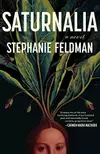
It was the world setting in this that I found intriguing, a contemporary Philadelphia where the climate apocalypse we have all seen coming is now here and getting worse. The terrible storms, tornadoes that have destroyed houses, flooding, fever season as a common place consideration, but this is the background- setting the place
A story centered on a titular festival of misrule and fiesta, protagonist character is gradually peeled back, making her captivating if mercurial, compelling if occasionally duplicitous. She is both strong and vulnerable, and the more the narrative progresses, the more charismatic and compelling she becomes.
Kirkus reviews described it as "A near-future version of the U.S. entranced by mutual aid organizations–turned–secret societies and caught in a slow-burn environmental catastrophe that’s unsettlingly plausible, and her depiction of the aftermath of sexual assault is complicated in its rage and compassion. The novel’s pacing is electric, its worldbuilding seamless, and the magic that slowly reveals itself feels truly strange and captivating—a considerable feat".
Set over just one night, but with many flash backs to expand our understanding of character's and motivations the plot’s five-part structure has a traditional unity of time and place that serves only to contrast the chaos of the action.
I would have liked to spend more time with some of this fascinating cast of women (the male characters, not so much)
It was the world setting in this that I found intriguing, a contemporary Philadelphia where the climate apocalypse we have all seen coming is now here and getting worse. The terrible storms, tornadoes that have destroyed houses, flooding, fever season as a common place consideration, but this is the background- setting the place
A story centered on a titular festival of misrule and fiesta, protagonist character is gradually peeled back, making her captivating if mercurial, compelling if occasionally duplicitous. She is both strong and vulnerable, and the more the narrative progresses, the more charismatic and compelling she becomes.
Kirkus reviews described it as "A near-future version of the U.S. entranced by mutual aid organizations–turned–secret societies and caught in a slow-burn environmental catastrophe that’s unsettlingly plausible, and her depiction of the aftermath of sexual assault is complicated in its rage and compassion. The novel’s pacing is electric, its worldbuilding seamless, and the magic that slowly reveals itself feels truly strange and captivating—a considerable feat".
Set over just one night, but with many flash backs to expand our understanding of character's and motivations the plot’s five-part structure has a traditional unity of time and place that serves only to contrast the chaos of the action.
I would have liked to spend more time with some of this fascinating cast of women (the male characters, not so much)

An new twist on the deal with the devil story which I found a pleasant change from the usual way these tales go. The last time I hit such a refreshing reinterpretation of the bargain of Faust was Ryka Aoki's 2021 Novel Light from Uncommon Stars.
A respectable faction of a bookclub I read with said positive things about this novel and I can certainly add my voice to the chorus.
Anyone already a fan of V.E.Schwabs need read no further and add this one to their To-Be-read- Ziggurat immediately. The Invisible Life of Addie LaRue is a dark fantasy romance with queer protagonists and a cast of shadowy, ephemeral characters spanning centuries and continents. If you are into vampire books, The Invisible Life of Addie LaRue just might scratch that itch. Although Addie is not a vampire, the story includes such vampire tropes as immortality, agelessness, and a cruel sire.
The historical periods span 300 years and I always enjoy those stories which we see our world change through our protagonist and Addie is a smart and experienced character who learns to over come the challenges and how she wins a victory for her lover means even though it does not conclude the story for her I am satisfied she will succeed in the end.
An new twist on the deal with the devil story which I found a pleasant change from the usual way these tales go. The last time I hit such a refreshing reinterpretation of the bargain of Faust was Ryka Aoki's 2021 Novel Light from Uncommon Stars.
A respectable faction of a bookclub I read with said positive things about this novel and I can certainly add my voice to the chorus.
Anyone already a fan of V.E.Schwabs need read no further and add this one to their To-Be-read- Ziggurat immediately. The Invisible Life of Addie LaRue is a dark fantasy romance with queer protagonists and a cast of shadowy, ephemeral characters spanning centuries and continents. If you are into vampire books, The Invisible Life of Addie LaRue just might scratch that itch. Although Addie is not a vampire, the story includes such vampire tropes as immortality, agelessness, and a cruel sire.
The historical periods span 300 years and I always enjoy those stories which we see our world change through our protagonist and Addie is a smart and experienced character who learns to over come the challenges and how she wins a victory for her lover means even though it does not conclude the story for her I am satisfied she will succeed in the end.
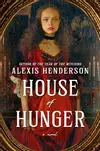
This is the first book by Alexis Henderson I have read and I found it so engaging I will seek out her other works such as The year of the Witching and Academy for Liars.
House of Hunger is set in a world where the upper class literally feed on the blood of lower-class women they enlist into their service. Its a suprisingly refereshing take, as they are not vampires in the sense of '..the children of the night" but the rich feed on the blood of the young to keep their viltality and health. Our protagonist Marion is a bloodmaid in the House of Hunger, an infamous and ancient clan of vampiric aristocrats. Surrounded by debauchery and hedonism, Marion is quickly swept away by her new mistress, Countess Lisavet. Marion’s blood keeps Lisavet healthy, and Marion is drawn in by Lisavet’s magnetic pull, but soon she realizes that things might not be as they appear. Suddenly, bloodmaids begin to go missing, and questions begin to arise about what exactly happens once a bloodmaid has outlived her term at the House of Hunger.
Whilst I struggled a bit to continue in the middle of the story the resolution was dramatic consistent and satisfying.
This is the first book by Alexis Henderson I have read and I found it so engaging I will seek out her other works such as The year of the Witching and Academy for Liars.
House of Hunger is set in a world where the upper class literally feed on the blood of lower-class women they enlist into their service. Its a suprisingly refereshing take, as they are not vampires in the sense of '..the children of the night" but the rich feed on the blood of the young to keep their viltality and health. Our protagonist Marion is a bloodmaid in the House of Hunger, an infamous and ancient clan of vampiric aristocrats. Surrounded by debauchery and hedonism, Marion is quickly swept away by her new mistress, Countess Lisavet. Marion’s blood keeps Lisavet healthy, and Marion is drawn in by Lisavet’s magnetic pull, but soon she realizes that things might not be as they appear. Suddenly, bloodmaids begin to go missing, and questions begin to arise about what exactly happens once a bloodmaid has outlived her term at the House of Hunger.
Whilst I struggled a bit to continue in the middle of the story the resolution was dramatic consistent and satisfying.

Sunny Moraine's horror novella is a brilliantly creepy story of an unfolding 'pandemic' apocalypse of a violent rage spread by eye contact. But this is no CDC zombie uprising survivalist story (not that there is anything wrong with that love your work Last Of Us) but a first person perspective of a young woman Riley, who has left the city to huddle in the small house her grandparents owned, somewhere in the country. While lots of humans have died—more accurately, killed each other and themselves—there is enough infrastructure left that she can order groceries via her computer. When the story opens, Riley throws her still-functioning phone into the lake. She herself isn’t quite sure why, except for a feeling that there is literally no one to connect with.
The story unfolds from her personal view and so you wonder how much of this is real and how much is it Riley's decent into the madness.
And I don't care what anyone says crows are creepy, nothing ends well if a crow is your herald of change.
Sunny Moraine's horror novella is a brilliantly creepy story of an unfolding 'pandemic' apocalypse of a violent rage spread by eye contact. But this is no CDC zombie uprising survivalist story (not that there is anything wrong with that love your work Last Of Us) but a first person perspective of a young woman Riley, who has left the city to huddle in the small house her grandparents owned, somewhere in the country. While lots of humans have died—more accurately, killed each other and themselves—there is enough infrastructure left that she can order groceries via her computer. When the story opens, Riley throws her still-functioning phone into the lake. She herself isn’t quite sure why, except for a feeling that there is literally no one to connect with.
The story unfolds from her personal view and so you wonder how much of this is real and how much is it Riley's decent into the madness.
And I don't care what anyone says crows are creepy, nothing ends well if a crow is your herald of change.

I read and enjoyed Yume Kitasei's debut novel The Deep Sky and this story confirms her as a science fiction author who writes a compelling tale. This is a thrilling anti-colonial space heist to save an alien civilization. One blurb which I thought summed it up nicely by the Author Veronica Roth "Come … for Indiana Jones-style outer space heist adventure, stay for the sensitively drawn characters and thoughtful exploration of other forms of life far beyond our own"
I read and enjoyed Yume Kitasei's debut novel The Deep Sky and this story confirms her as a science fiction author who writes a compelling tale. This is a thrilling anti-colonial space heist to save an alien civilization. One blurb which I thought summed it up nicely by the Author Veronica Roth "Come … for Indiana Jones-style outer space heist adventure, stay for the sensitively drawn characters and thoughtful exploration of other forms of life far beyond our own"