
Michael Barnes


Another enjoyable story of these intrepid sisters in regency England, if you enjoyed the first I'll mannered ladies book this is equally enjoyable. What sets this series apart is the authors attention to actual events, persons and circumstances summarised in the Authors end notes including but not limited to the ladies of Llangollen, the 1810, mercury poisoning on the British ships, HMS Triumph and HMS Phipps, the appalling gentleman's clubs and the ongoing consequences of their adventures from the first book and yes their brother remains an asshat.
Another enjoyable story of these intrepid sisters in regency England, if you enjoyed the first I'll mannered ladies book this is equally enjoyable. What sets this series apart is the authors attention to actual events, persons and circumstances summarised in the Authors end notes including but not limited to the ladies of Llangollen, the 1810, mercury poisoning on the British ships, HMS Triumph and HMS Phipps, the appalling gentleman's clubs and the ongoing consequences of their adventures from the first book and yes their brother remains an asshat.

I always enjoy reading the Wayward Children novellas and this one is an origin story for one of the children we have encounted before - Nadezhda 'Nadya' a drowned girl who I first read about in Beneath the Sugar Sky (which ends happily for Nadya returning to her Belyyreka, a water world).
A story of Mother Russia, turtles and not thinking you know what people want because they were born missing the lower part of her right arm.
I always enjoy reading the Wayward Children novellas and this one is an origin story for one of the children we have encounted before - Nadezhda 'Nadya' a drowned girl who I first read about in Beneath the Sugar Sky (which ends happily for Nadya returning to her Belyyreka, a water world).
A story of Mother Russia, turtles and not thinking you know what people want because they were born missing the lower part of her right arm.

A solid entertaining contemporary horror that I have come to expect and can rely on to deliver from Darcy Coates after reading a number of her novels. In this story the ground work is laid early on with the introduction of the various parties and groups to a private and secluded tropical island by Eton, a “Mr. Beast”-esque online influencer who has become a billionaire and has monetary prizes in store for his guests.
The central protagonist is Ruth who was the a survivor of a cult called Petition which she begins to realise committed the Jones style massacre on this island 20 years earlier. Ruth was a child how had survived a awful experience so its believable she hadn't recognised where she was until she arrived.
That's another aspect of Coates writing of horror, she always includes suspense and twists but she never relies on an unbelievable coincidence to progress her plot. Its in the last third of the novel where the horror and butchery begins to unfold with well developed reveals to explain all that had happened up until then.
A satisfying and well crafted conclusion though when I thought the smart and competent character deserved to make it - that one hurt.
A solid entertaining contemporary horror that I have come to expect and can rely on to deliver from Darcy Coates after reading a number of her novels. In this story the ground work is laid early on with the introduction of the various parties and groups to a private and secluded tropical island by Eton, a “Mr. Beast”-esque online influencer who has become a billionaire and has monetary prizes in store for his guests.
The central protagonist is Ruth who was the a survivor of a cult called Petition which she begins to realise committed the Jones style massacre on this island 20 years earlier. Ruth was a child how had survived a awful experience so its believable she hadn't recognised where she was until she arrived.
That's another aspect of Coates writing of horror, she always includes suspense and twists but she never relies on an unbelievable coincidence to progress her plot. Its in the last third of the novel where the horror and butchery begins to unfold with well developed reveals to explain all that had happened up until then.
A satisfying and well crafted conclusion though when I thought the smart and competent character deserved to make it - that one hurt.
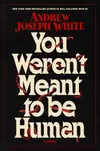
Having read Andrew Joseph White's young adult fiction 'Hell followed with us', and 'The spirit bares its teeth' I pre-ordered 'You weren't meant to be human' thinking I knew what to expect. I was grateful that his unapologetically bold, unflinching, and provocative from those works was carried into this work but I did find it hard to keep reading through some of the experiences described in White’s raw, visceral and intoxicating prose. Like Esmay Rosalyne said in Grimdark magazine ".. maybe I just kept turning the pages out of a sheer desperate desire for this tragic nightmare to be over as quickly as possible, and I fully realise how privileged I am in saying that".
What happens to the protagonist Crane an autistic, mute, and transgender man is sometimes unrelentingly desolate and even the descriptive landscape reflects this a dystopianish near-future version of rural West Virginia where festering masses of worms and flies offer salvation to the broken souls of society in return for fresh corpses and unwavering loyalty.
I was so grateful for the tiniest bit of salvation that came from allowing someone to flee this nightmare and in reading the author's notes discovered this was only thanks to the intervention from his wife (for this I thank you).
Like Esmay Rosalyne quotes in her review "My heart absolutely broke while reading You Weren’t Meant to Be Human, not only for Crane, but also for all the marginalized people in real life who are forced to survive instead of thrive in a world that is becoming increasingly hostile when all they want to do is just peacefully live as their true authentic selves".
It's an amazing work and ensures that I will seek out any future novels by White.
Having read Andrew Joseph White's young adult fiction 'Hell followed with us', and 'The spirit bares its teeth' I pre-ordered 'You weren't meant to be human' thinking I knew what to expect. I was grateful that his unapologetically bold, unflinching, and provocative from those works was carried into this work but I did find it hard to keep reading through some of the experiences described in White’s raw, visceral and intoxicating prose. Like Esmay Rosalyne said in Grimdark magazine ".. maybe I just kept turning the pages out of a sheer desperate desire for this tragic nightmare to be over as quickly as possible, and I fully realise how privileged I am in saying that".
What happens to the protagonist Crane an autistic, mute, and transgender man is sometimes unrelentingly desolate and even the descriptive landscape reflects this a dystopianish near-future version of rural West Virginia where festering masses of worms and flies offer salvation to the broken souls of society in return for fresh corpses and unwavering loyalty.
I was so grateful for the tiniest bit of salvation that came from allowing someone to flee this nightmare and in reading the author's notes discovered this was only thanks to the intervention from his wife (for this I thank you).
Like Esmay Rosalyne quotes in her review "My heart absolutely broke while reading You Weren’t Meant to Be Human, not only for Crane, but also for all the marginalized people in real life who are forced to survive instead of thrive in a world that is becoming increasingly hostile when all they want to do is just peacefully live as their true authentic selves".
It's an amazing work and ensures that I will seek out any future novels by White.

I loved Courtney Smyth's first book in the Undetectables series and everything that made it a wonderful tale of chosen family, modern young adult, queer, struggling with physical health and the supernatural are further developed in this sequel.
Mallory, Diana, Cornelia and Theodore are hired to solve a murder on a TV shoot by the victim herself an past/maybe present love of Diana's. This tale is from Diana's point of view and the I appreciated reading how her hearing loss/damage affected her and how she deals with it. Also her focus in dealing with the challenges of this investigation highlight how different a person she is too Malory the protagonist from the first book. I wonder if the next will centre on Cornelia?
The mystery is more complex and with more moving parts than the first book but its beating heart is these friends and how they would do anything for each other, except maybe have an honest talk about how they feel yes I am looking at you Mallory.
On to The Unfathomable Curse, which I know is ultimately fathomable to our intrepid team.
I loved Courtney Smyth's first book in the Undetectables series and everything that made it a wonderful tale of chosen family, modern young adult, queer, struggling with physical health and the supernatural are further developed in this sequel.
Mallory, Diana, Cornelia and Theodore are hired to solve a murder on a TV shoot by the victim herself an past/maybe present love of Diana's. This tale is from Diana's point of view and the I appreciated reading how her hearing loss/damage affected her and how she deals with it. Also her focus in dealing with the challenges of this investigation highlight how different a person she is too Malory the protagonist from the first book. I wonder if the next will centre on Cornelia?
The mystery is more complex and with more moving parts than the first book but its beating heart is these friends and how they would do anything for each other, except maybe have an honest talk about how they feel yes I am looking at you Mallory.
On to The Unfathomable Curse, which I know is ultimately fathomable to our intrepid team.

Whilst I finished the novel and I can see CJ Leede has mad skills with an ability to craft a unique and clear narrative style the book was not was not for me.
Robin Marx at Grimdark Magazine sums it up well
"With its uncompromising tone and unsettling main character, Maeve Fly is destined to be a divisive book. The violence is graphic, and Leede does not shy away from depictions of sexual assault or animal abuse. Maeve is a forceful and liberated woman, but she’s simultaneously a black hole of need and dependence. She’s a fascinating character, but also an unrepentant monster. There’s no inciting incident from her past that turned Maeve into a killer, she’s a monster with no origin story. The people she kills and mutilates generally aren’t deserving of their fates. They don’t “have it coming.” There’s some sparse and under-cooked commentary about misogyny and gendered violence, but it’s undermined by the fact that Maeve acts more savagely towards women than any of the male characters in the book, and her brutality has a relentlessly sexual component. Maeve is not the subversive feminist icon some prospective readers may be looking for".
Whilst I finished the novel and I can see CJ Leede has mad skills with an ability to craft a unique and clear narrative style the book was not was not for me.
Robin Marx at Grimdark Magazine sums it up well
"With its uncompromising tone and unsettling main character, Maeve Fly is destined to be a divisive book. The violence is graphic, and Leede does not shy away from depictions of sexual assault or animal abuse. Maeve is a forceful and liberated woman, but she’s simultaneously a black hole of need and dependence. She’s a fascinating character, but also an unrepentant monster. There’s no inciting incident from her past that turned Maeve into a killer, she’s a monster with no origin story. The people she kills and mutilates generally aren’t deserving of their fates. They don’t “have it coming.” There’s some sparse and under-cooked commentary about misogyny and gendered violence, but it’s undermined by the fact that Maeve acts more savagely towards women than any of the male characters in the book, and her brutality has a relentlessly sexual component. Maeve is not the subversive feminist icon some prospective readers may be looking for".
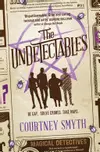
With the tagline, “Be gay. Solve crimes. Take naps”? Who wouldn't want to read Courtney Smyth queer paranormal mystery involving fae, witches, daemons, vampires, and ghosts.
The characters are wonderful combination of competent and complex with our protagonist Mallory expressing all the frustrations and feelings of rage due to the challenge of fibromyalgia that has inhibited her social life and her career goals. Her best friends Cornelia and Diana have moved on with lives since founding the eponymous detective agency without solving their first crime the murder which gives rise to the fourth of the team sweet ghost Theodore.
I loved the savvy smarts these scooby gangers display, the dialog that highlights the longstanding friendship. The relationships between the protagonist Mallory and her friends Diana and Cornelia are the most parts I enjoyed most about the book which each bring different talents and passions. Imagine Alfred Hitchcock's The Three Investigators books but with more developed and contemporary young adults but with Buffy's scooby gang antagonist. The story is at turns humorous, warm and cosy, then also dark, painful and sarcastic, with moments of intense social commentary.
It maybe not be queer as fuck (for that I recommend H.A.Clarke see Scapegracers) but certainly queer as heck and thoroughly enjoyable story which is only improved knowing that their adventures continue in The Undead Complex and The Unfathomable Curse.
With the tagline, “Be gay. Solve crimes. Take naps”? Who wouldn't want to read Courtney Smyth queer paranormal mystery involving fae, witches, daemons, vampires, and ghosts.
The characters are wonderful combination of competent and complex with our protagonist Mallory expressing all the frustrations and feelings of rage due to the challenge of fibromyalgia that has inhibited her social life and her career goals. Her best friends Cornelia and Diana have moved on with lives since founding the eponymous detective agency without solving their first crime the murder which gives rise to the fourth of the team sweet ghost Theodore.
I loved the savvy smarts these scooby gangers display, the dialog that highlights the longstanding friendship. The relationships between the protagonist Mallory and her friends Diana and Cornelia are the most parts I enjoyed most about the book which each bring different talents and passions. Imagine Alfred Hitchcock's The Three Investigators books but with more developed and contemporary young adults but with Buffy's scooby gang antagonist. The story is at turns humorous, warm and cosy, then also dark, painful and sarcastic, with moments of intense social commentary.
It maybe not be queer as fuck (for that I recommend H.A.Clarke see Scapegracers) but certainly queer as heck and thoroughly enjoyable story which is only improved knowing that their adventures continue in The Undead Complex and The Unfathomable Curse.

In my local public library this is a very popular novel even with numerous copies I only recall seeing on the selves once and so I took the opportunity to borrow it and I can well understand the appeal. The author herself in the book's notes cites Georgette Heyer as an inspiration (an author I haven't read but my partner has enthusiastically devoured and I respect her judgement) is the story of two sisters who well accommodated and independent as characters in such a Regency novel as you could wish.
So far on behalf of the women in their circle they have foiled a blackmail plot, rescued young girls kidnapped to provide the virgin cure, freed a married woman being drugged to death by her husband because she could not bear an heir and closed an asylum conducted with all the terrible darkness and evil of handling the mentally ill or inconvenient women.
Throw in a dashing noble highwayman (with a touch of the sentenced to NSW and absconded) a dastardly plot to reveal from 20 years ago for the romance and guest mentions of Ann Lister, Beau Brummell.
But it was the incorporation of details such as the very minor character Madame d'Arblay who was introduced by the protagonist Lady Augusta ‘Gus’ Colebrook to her twin sister Julia, who is suffering from cancer of the breast, an all too common affliction in their family, to explain the surgery which was performed on her to save her life from breast cancer. The author acknowledges these six pages we drawn from the letter sent by Fanny Burney to her sister detailing he own experience is when I realised just how much I wanted to read more of Alison Goodman's work.
In my local public library this is a very popular novel even with numerous copies I only recall seeing on the selves once and so I took the opportunity to borrow it and I can well understand the appeal. The author herself in the book's notes cites Georgette Heyer as an inspiration (an author I haven't read but my partner has enthusiastically devoured and I respect her judgement) is the story of two sisters who well accommodated and independent as characters in such a Regency novel as you could wish.
So far on behalf of the women in their circle they have foiled a blackmail plot, rescued young girls kidnapped to provide the virgin cure, freed a married woman being drugged to death by her husband because she could not bear an heir and closed an asylum conducted with all the terrible darkness and evil of handling the mentally ill or inconvenient women.
Throw in a dashing noble highwayman (with a touch of the sentenced to NSW and absconded) a dastardly plot to reveal from 20 years ago for the romance and guest mentions of Ann Lister, Beau Brummell.
But it was the incorporation of details such as the very minor character Madame d'Arblay who was introduced by the protagonist Lady Augusta ‘Gus’ Colebrook to her twin sister Julia, who is suffering from cancer of the breast, an all too common affliction in their family, to explain the surgery which was performed on her to save her life from breast cancer. The author acknowledges these six pages we drawn from the letter sent by Fanny Burney to her sister detailing he own experience is when I realised just how much I wanted to read more of Alison Goodman's work.

Premee Mohamed is an author I will always make time to read, though given how prolific a writer she is that posses challenges of their own. I could easily make a to be read ziggurat from her writings.
This award winning novel is a remarkable meditation on war, pacifism and sacrifice. It has to be as much of the tale is of the two characters slow progress across a war torn landscape towards a the flying fortress city of the enemy. Dylan Haston describes it thus "Alefret, radical pacifist imprisoned by the Varkal military, and Qhudur, bloodthirsty internment camp guard. Prior to the novel’s start, Alefret had been imprisoned and held without trial for war crimes: namely, being the de facto leader and author of “The Pact”, a loosely organized pacifist movement. A representative section of the group’s titular Pact reads, “For the preservation of human life, no sacrifice can be too great; we in the Pact will hold it above all else…” Alefret and the other signatories of the Pact were taken into custody after a Varkal bomb backfired and blew up a patch of their own city, taking one of Alefret’s legs with it".
Alefret is an interesting, complicated protagonist: he is an extremely large man (seven feet four) who is viewed as a "freak" and a "monstrosity" by Qhudur and the people in his home village:
So huge, so ugly; look at that face, must be simple, he'll never speak, never read, never think, not really. He'll eat you out of house and home if he lives. And you can forget having in-laws, forget being taken care of when you're older, you'll die alone and penniless, you should never have let him be born. All those things people said to them as Alefret watched. As if he could not understand the words. His parents had never defended him, only nodded, wept, nodded.
He wished he could hate them for it, but even now, with them both dead, he could not; there was only a great bewilderment, because he could speak, and could write, and think, and they dismissed it all, till he himself wondered whether he really could do any of those things or was simply imagining them, locked into a skull as thick as everyone said he had. As thick as a bull's, they said. No room for a brain. And that great misshapen forehead: like horns.
Even when he was older, and had made his living teaching mathematics and geometry and science to the village children, when he had his own school at the family farm, sold his own wool and eggs, even when he purchased his house, the village said: We love you. And in the next breath: You monster.
The pacing is slow, deliberate and so provides plenty of time to meditate on the nature of war. A engaging and deliberate novel.
Premee Mohamed is an author I will always make time to read, though given how prolific a writer she is that posses challenges of their own. I could easily make a to be read ziggurat from her writings.
This award winning novel is a remarkable meditation on war, pacifism and sacrifice. It has to be as much of the tale is of the two characters slow progress across a war torn landscape towards a the flying fortress city of the enemy. Dylan Haston describes it thus "Alefret, radical pacifist imprisoned by the Varkal military, and Qhudur, bloodthirsty internment camp guard. Prior to the novel’s start, Alefret had been imprisoned and held without trial for war crimes: namely, being the de facto leader and author of “The Pact”, a loosely organized pacifist movement. A representative section of the group’s titular Pact reads, “For the preservation of human life, no sacrifice can be too great; we in the Pact will hold it above all else…” Alefret and the other signatories of the Pact were taken into custody after a Varkal bomb backfired and blew up a patch of their own city, taking one of Alefret’s legs with it".
Alefret is an interesting, complicated protagonist: he is an extremely large man (seven feet four) who is viewed as a "freak" and a "monstrosity" by Qhudur and the people in his home village:
So huge, so ugly; look at that face, must be simple, he'll never speak, never read, never think, not really. He'll eat you out of house and home if he lives. And you can forget having in-laws, forget being taken care of when you're older, you'll die alone and penniless, you should never have let him be born. All those things people said to them as Alefret watched. As if he could not understand the words. His parents had never defended him, only nodded, wept, nodded.
He wished he could hate them for it, but even now, with them both dead, he could not; there was only a great bewilderment, because he could speak, and could write, and think, and they dismissed it all, till he himself wondered whether he really could do any of those things or was simply imagining them, locked into a skull as thick as everyone said he had. As thick as a bull's, they said. No room for a brain. And that great misshapen forehead: like horns.
Even when he was older, and had made his living teaching mathematics and geometry and science to the village children, when he had his own school at the family farm, sold his own wool and eggs, even when he purchased his house, the village said: We love you. And in the next breath: You monster.
The pacing is slow, deliberate and so provides plenty of time to meditate on the nature of war. A engaging and deliberate novel.

If you have been reading the Singing Hills saga since the spellbinding The Empress of Salt and Fortune as have I then I can promise you this novella continues in that outstanding series tradition. This tale begins with a darker tone with our wandering Cleric Chih and their hoopoe companion Almost Brilliant uncovering a persons remains in the ground.
Hunger pervades this story, reminding me of the stories from lone Wolf and Cub 'The town where hunger lives' Jayne over at Dear reader sums it up better than I can. "... This is a disturbing little novella.... It’s beautifully written, evocative, and really creepy. But then the events are ghastly and have been played out countless times through countless famines. In this case, famine isn’t just the weather or war but an actual demon who must be appeased. For much of the story, Cleric Chih does their mandate which in this case involves listening to past trauma and then fights off the nervous feelings the place gives them, before witnessing the horrific resolution. This story which they collect will also contain a bit of them".
Also they provided the title and cover of the next in the series, which only makes me HUNGRY for more. "Your Boos mean nothing I've seen what makes you cheer". (thank you Rick of Rick and Morty)
If you have been reading the Singing Hills saga since the spellbinding The Empress of Salt and Fortune as have I then I can promise you this novella continues in that outstanding series tradition. This tale begins with a darker tone with our wandering Cleric Chih and their hoopoe companion Almost Brilliant uncovering a persons remains in the ground.
Hunger pervades this story, reminding me of the stories from lone Wolf and Cub 'The town where hunger lives' Jayne over at Dear reader sums it up better than I can. "... This is a disturbing little novella.... It’s beautifully written, evocative, and really creepy. But then the events are ghastly and have been played out countless times through countless famines. In this case, famine isn’t just the weather or war but an actual demon who must be appeased. For much of the story, Cleric Chih does their mandate which in this case involves listening to past trauma and then fights off the nervous feelings the place gives them, before witnessing the horrific resolution. This story which they collect will also contain a bit of them".
Also they provided the title and cover of the next in the series, which only makes me HUNGRY for more. "Your Boos mean nothing I've seen what makes you cheer". (thank you Rick of Rick and Morty)

Firstly I was promised Environmental collapse. The return of fascism. Wars. A sexual reckoning. A plague, and whilst those things did happen they were not quite the apocalyptic reckoning I was expecting.
I should have known when the 'This Devastating Fever' referred to love, or maybe lust according to the conjured shade of Leonard Woolf husband to Virginia Woolf, and not some comet borne end times disease.
Sophie Cunningham novel has been deservedly praised for its originality and style and weaving the protagonist Alice and author struggling to bring her novel together and the story of Leonard and Virginia Woolf whose own timeline is explored, and even intrude into Alice's.
My own personal taste but I would have like to read more about Alice's experiences in contemporary Australia but that's because I am a contemporary Australian but I think Sophie Cunningham has done an enviable job weaving these disparate strand into a remarkable cloth.
Firstly I was promised Environmental collapse. The return of fascism. Wars. A sexual reckoning. A plague, and whilst those things did happen they were not quite the apocalyptic reckoning I was expecting.
I should have known when the 'This Devastating Fever' referred to love, or maybe lust according to the conjured shade of Leonard Woolf husband to Virginia Woolf, and not some comet borne end times disease.
Sophie Cunningham novel has been deservedly praised for its originality and style and weaving the protagonist Alice and author struggling to bring her novel together and the story of Leonard and Virginia Woolf whose own timeline is explored, and even intrude into Alice's.
My own personal taste but I would have like to read more about Alice's experiences in contemporary Australia but that's because I am a contemporary Australian but I think Sophie Cunningham has done an enviable job weaving these disparate strand into a remarkable cloth.
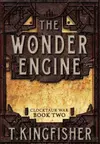
So its the suicide end of the suicide mission. Following on from The Clockwork Boys (its best to view these books as two parts of the same book) its full of wit and care between a small group of people expecting to spend the rest of their extremely brief lives in one another's company against long odds and in great danger.
The Wonder Engine, while still full of Vernon’s trademark practicality, compassion, pragmatism, and humour, reaffirms Clockwork Boys‘ somewhat darker direction. There’s still plenty of practicality, compassion, pragmatism, and humour – but this time a lot more of that humour is the gallows kind.
I think the resolution wraps up the mysteries encounted to date, which I had feared dues to their disparate nature may have left some unresolved. Spoiler warning one of our plucky band does not survive this adventure.
So its the suicide end of the suicide mission. Following on from The Clockwork Boys (its best to view these books as two parts of the same book) its full of wit and care between a small group of people expecting to spend the rest of their extremely brief lives in one another's company against long odds and in great danger.
The Wonder Engine, while still full of Vernon’s trademark practicality, compassion, pragmatism, and humour, reaffirms Clockwork Boys‘ somewhat darker direction. There’s still plenty of practicality, compassion, pragmatism, and humour – but this time a lot more of that humour is the gallows kind.
I think the resolution wraps up the mysteries encounted to date, which I had feared dues to their disparate nature may have left some unresolved. Spoiler warning one of our plucky band does not survive this adventure.