
Lee


Added to listBooks Read Before Watching The Film/Showwith 101 books.


“Science has now known sin.”
Living up to its title, this one was a bit of a challenge to really get into. Kurt Vonnegut’s Slaughterhouse-Five is one of my all-time favorite books, so I figured it was long overdue for me to read another Vonnegut. Cat’s Cradle is supposedly based on Kurt’s day when the atomic bomb was dropped. Is this about the atomic bomb and Oppenheimer? No, it is not. Is it about World War II again? It is not. Cat’s Cradle is a dark comedy and social commentary on the mess of humanity in the face of mutually assured destruction. Largely set on the fictional utopian island of San Lorenzo, where the eccentric inhabitants, under the dictatorship of Papa Monzano, follow the Book of Bokonon. I won’t go into all the details of their religion, but as an example, it's oddly full of Hoosiers, encourages free love, fancies foot jobs(?), and believes in cosmic connections between ordinary people with nothing special in common. Oh, and it's illegal.
Our protagonist—a stand-in for Kurt—investigates and seeks out an Oppenheimer-like individual’s children. There is indeed an atomic-bomb-adjacent scientific invention turned weapon called “Ice-9,” which plays a key role. There’s also a cultish island infiltration, but this book isn’t a sci-fi thriller or action story. I’m telling you this to highlight that the book is a meandering, almost aimless wander through its heavy themes. It’s a satire on how mankind can become both the destroyer of worlds and completely clueless, isolated, and obsessed with the most mundane things. There's a sense of mess around and find out to it all, which you can be connected to mankind in the real world, especially those in power. Being on the brink of total destruction, Jane and John worry more about whether a superstitious hook on the island exists or why Jane was playing footsy with Bill.
When I read Cat’s Cradle, I saw Bokononism and everything happening on the island as the pointless distractions life throws at us. We're like headless chickens running around, clawing at each other while the farmer in the house plans what herbs and spices he’ll use for dinner. Whether it’s the warnings and risks before dropping the atomic bomb—as recently memeified in Chris Nolan’s Oppenheimer—or the jokes and disregard for how AI might greatly alter life for better and worse, Vonnegut captures that blend of innovation and boredom. These days it perpetually feels like the end of the world is nigh, but we don’t really do anything to change course or learn from our history. It's cynical and ends unhappily, but the book never feels grim or serious. Vonnegut has a way of writing about bad things with casual grace and humor.
I'll close with two of the top four definitions of Cat’s Cradle:
- “A children's string game.”
- “Any complicated structure which appears to be without purpose.”
Life can be and often is both.
“Science has now known sin.”
Living up to its title, this one was a bit of a challenge to really get into. Kurt Vonnegut’s Slaughterhouse-Five is one of my all-time favorite books, so I figured it was long overdue for me to read another Vonnegut. Cat’s Cradle is supposedly based on Kurt’s day when the atomic bomb was dropped. Is this about the atomic bomb and Oppenheimer? No, it is not. Is it about World War II again? It is not. Cat’s Cradle is a dark comedy and social commentary on the mess of humanity in the face of mutually assured destruction. Largely set on the fictional utopian island of San Lorenzo, where the eccentric inhabitants, under the dictatorship of Papa Monzano, follow the Book of Bokonon. I won’t go into all the details of their religion, but as an example, it's oddly full of Hoosiers, encourages free love, fancies foot jobs(?), and believes in cosmic connections between ordinary people with nothing special in common. Oh, and it's illegal.
Our protagonist—a stand-in for Kurt—investigates and seeks out an Oppenheimer-like individual’s children. There is indeed an atomic-bomb-adjacent scientific invention turned weapon called “Ice-9,” which plays a key role. There’s also a cultish island infiltration, but this book isn’t a sci-fi thriller or action story. I’m telling you this to highlight that the book is a meandering, almost aimless wander through its heavy themes. It’s a satire on how mankind can become both the destroyer of worlds and completely clueless, isolated, and obsessed with the most mundane things. There's a sense of mess around and find out to it all, which you can be connected to mankind in the real world, especially those in power. Being on the brink of total destruction, Jane and John worry more about whether a superstitious hook on the island exists or why Jane was playing footsy with Bill.
When I read Cat’s Cradle, I saw Bokononism and everything happening on the island as the pointless distractions life throws at us. We're like headless chickens running around, clawing at each other while the farmer in the house plans what herbs and spices he’ll use for dinner. Whether it’s the warnings and risks before dropping the atomic bomb—as recently memeified in Chris Nolan’s Oppenheimer—or the jokes and disregard for how AI might greatly alter life for better and worse, Vonnegut captures that blend of innovation and boredom. These days it perpetually feels like the end of the world is nigh, but we don’t really do anything to change course or learn from our history. It's cynical and ends unhappily, but the book never feels grim or serious. Vonnegut has a way of writing about bad things with casual grace and humor.
I'll close with two of the top four definitions of Cat’s Cradle:
- “A children's string game.”
- “Any complicated structure which appears to be without purpose.”
Life can be and often is both.

“Isn't a miserable reality better than the most interesting illusion?
PKD once again crafts an eerily relatable futurescape that feels increasingly familiar the more you read. Marketed as a sci-fi novel, it sounds like a theological tale, but in reality, it’s an intricate cosmic horror. The Three Stigmata of Palmer Eldritch weaves a complex, layered parable against technology and consumerism. It may take a few chapters to really get into this tightly woven story, but I believe it's worth the effort. Humanity’s relentless desire to grow, expand, and conquer knows no limits on our small planet. With space travel and interdimensional rifts that bend reality, that's just one more step. The theme of escapism stood out most to me while reading, as the characters kept seeking even greater highs to find freedom and peace in their situations. Whether it’s the forced migration to farm on Mars or the longing to discover something bigger in the cosmos, each character shows an itch to take the future drugs PKD creates to imagine new selves and sometimes literally enter alternate realities. The parallels with our own world—the rise of AI, VR, social media, and DMs—blend as our real world crumbles around us. Why suffer in daily life when we can just take some CAN-D or CHEW-Z and transport our minds to an ideal dream vacation? Don’t mistake me for supporting this idea, but the appeal is easy to see (especially in times like these). PKD also explored themes beyond digital escapism and space colonization, including environmental issues, overpopulation, class systems, and questions of belief and godhood. For example, Earth’s overpopulation and global warming almost eliminate the possibility of going outside during the day. New technologies are created just to keep us cool enough to do what's necessary, while drafts are initiated to send the poor to Mars for demanding physical labor. Written three years before Do Androids Dream of Electric Sheep?, this hints that PKD may have had thoughts about androids or replicants being the labor force responsible for working off Earth. Regarding belief and god, PKD (a Christian, I believe) presents a reality where maybe God is dead or, worse, replaced. That's the central mystery in The Three Stigmata of Palmer Eldritch, and I enjoyed slowly uncovering and deciphering it. Feels like a good companion piece to the rich hijinks that those of Ballard’s Super-Cannes would get up to.
“Isn't a miserable reality better than the most interesting illusion?
PKD once again crafts an eerily relatable futurescape that feels increasingly familiar the more you read. Marketed as a sci-fi novel, it sounds like a theological tale, but in reality, it’s an intricate cosmic horror. The Three Stigmata of Palmer Eldritch weaves a complex, layered parable against technology and consumerism. It may take a few chapters to really get into this tightly woven story, but I believe it's worth the effort. Humanity’s relentless desire to grow, expand, and conquer knows no limits on our small planet. With space travel and interdimensional rifts that bend reality, that's just one more step. The theme of escapism stood out most to me while reading, as the characters kept seeking even greater highs to find freedom and peace in their situations. Whether it’s the forced migration to farm on Mars or the longing to discover something bigger in the cosmos, each character shows an itch to take the future drugs PKD creates to imagine new selves and sometimes literally enter alternate realities. The parallels with our own world—the rise of AI, VR, social media, and DMs—blend as our real world crumbles around us. Why suffer in daily life when we can just take some CAN-D or CHEW-Z and transport our minds to an ideal dream vacation? Don’t mistake me for supporting this idea, but the appeal is easy to see (especially in times like these). PKD also explored themes beyond digital escapism and space colonization, including environmental issues, overpopulation, class systems, and questions of belief and godhood. For example, Earth’s overpopulation and global warming almost eliminate the possibility of going outside during the day. New technologies are created just to keep us cool enough to do what's necessary, while drafts are initiated to send the poor to Mars for demanding physical labor. Written three years before Do Androids Dream of Electric Sheep?, this hints that PKD may have had thoughts about androids or replicants being the labor force responsible for working off Earth. Regarding belief and god, PKD (a Christian, I believe) presents a reality where maybe God is dead or, worse, replaced. That's the central mystery in The Three Stigmata of Palmer Eldritch, and I enjoyed slowly uncovering and deciphering it. Feels like a good companion piece to the rich hijinks that those of Ballard’s Super-Cannes would get up to.
“Isn't a miserable reality better than the most interesting illusion?
PKD once again crafts an eerily relatable futurescape that feels increasingly familiar the more you read. Marketed as a sci-fi novel, it sounds like a theological tale, but in reality, it’s an intricate cosmic horror. The Three Stigmata of Palmer Eldritch weaves a complex, layered parable against technology and consumerism. It may take a few chapters to really get into this tightly woven story, but I believe it's worth the effort. Humanity’s relentless desire to grow, expand, and conquer knows no limits on our small planet. With space travel and interdimensional rifts that bend reality, that's just one more step. The theme of escapism stood out most to me while reading, as the characters kept seeking even greater highs to find freedom and peace in their situations. Whether it’s the forced migration to farm on Mars or the longing to discover something bigger in the cosmos, each character shows an itch to take the future drugs PKD creates to imagine new selves and sometimes literally enter alternate realities. The parallels with our own world—the rise of AI, VR, social media, and DMs—blend as our real world crumbles around us. Why suffer in daily life when we can just take some CAN-D or CHEW-Z and transport our minds to an ideal dream vacation? Don’t mistake me for supporting this idea, but the appeal is easy to see (especially in times like these). PKD also explored themes beyond digital escapism and space colonization, including environmental issues, overpopulation, class systems, and questions of belief and godhood. For example, Earth’s overpopulation and global warming almost eliminate the possibility of going outside during the day. New technologies are created just to keep us cool enough to do what's necessary, while drafts are initiated to send the poor to Mars for demanding physical labor. Written three years before Do Androids Dream of Electric Sheep?, this hints that PKD may have had thoughts about androids or replicants being the labor force responsible for working off Earth. Regarding belief and god, PKD (a Christian, I believe) presents a reality where maybe God is dead or, worse, replaced. That's the central mystery in The Three Stigmata of Palmer Eldritch, and I enjoyed slowly uncovering and deciphering it.
“Isn't a miserable reality better than the most interesting illusion?
PKD once again crafts an eerily relatable futurescape that feels increasingly familiar the more you read. Marketed as a sci-fi novel, it sounds like a theological tale, but in reality, it’s an intricate cosmic horror. The Three Stigmata of Palmer Eldritch weaves a complex, layered parable against technology and consumerism. It may take a few chapters to really get into this tightly woven story, but I believe it's worth the effort. Humanity’s relentless desire to grow, expand, and conquer knows no limits on our small planet. With space travel and interdimensional rifts that bend reality, that's just one more step. The theme of escapism stood out most to me while reading, as the characters kept seeking even greater highs to find freedom and peace in their situations. Whether it’s the forced migration to farm on Mars or the longing to discover something bigger in the cosmos, each character shows an itch to take the future drugs PKD creates to imagine new selves and sometimes literally enter alternate realities. The parallels with our own world—the rise of AI, VR, social media, and DMs—blend as our real world crumbles around us. Why suffer in daily life when we can just take some CAN-D or CHEW-Z and transport our minds to an ideal dream vacation? Don’t mistake me for supporting this idea, but the appeal is easy to see (especially in times like these). PKD also explored themes beyond digital escapism and space colonization, including environmental issues, overpopulation, class systems, and questions of belief and godhood. For example, Earth’s overpopulation and global warming almost eliminate the possibility of going outside during the day. New technologies are created just to keep us cool enough to do what's necessary, while drafts are initiated to send the poor to Mars for demanding physical labor. Written three years before Do Androids Dream of Electric Sheep?, this hints that PKD may have had thoughts about androids or replicants being the labor force responsible for working off Earth. Regarding belief and god, PKD (a Christian, I believe) presents a reality where maybe God is dead or, worse, replaced. That's the central mystery in The Three Stigmata of Palmer Eldritch, and I enjoyed slowly uncovering and deciphering it.


Added to listOwnedwith 262 books.


Added to listYouTube Discoverieswith 17 books.


Using mixed mediums like forum chats, interviews, social media posts, magazines, and more, About a Place in the Kinki Region crafts an atmospheric, creepy, and intriguing supernatural narrative. Those familiar with The Ring and J-Horror will be familiar with the slow-burning tension usually present through these narratives, and for a debut novel, I did enjoy Sesuji’s tone and efforts. I would certainly read more from the author. That said, I was disappointed when the formatting and non-linear nature of the stories weren't used properly to really make a full circle reveal scare by the end. You feel like you're in a found footage movie library research montage as you read and uncover or connect dots yourself with the characters, all adding to the suspense and eerieness (especially if you read at night alone), but then the culmination is left quite lacklustre. It's a fast and entertaining read nonetheless, but it doesn't escape my thoughts that there was some serious potential to really nail a home run in closing. There are some great visuals left to the imagination upon reading that I'm curious to see how they matchup in the very quickly made soon after film adaptation.
Using mixed mediums like forum chats, interviews, social media posts, magazines, and more, About a Place in the Kinki Region crafts an atmospheric, creepy, and intriguing supernatural narrative. Those familiar with The Ring and J-Horror will be familiar with the slow-burning tension usually present through these narratives, and for a debut novel, I did enjoy Sesuji’s tone and efforts. I would certainly read more from the author. That said, I was disappointed when the formatting and non-linear nature of the stories weren't used properly to really make a full circle reveal scare by the end. You feel like you're in a found footage movie library research montage as you read and uncover or connect dots yourself with the characters, all adding to the suspense and eerieness (especially if you read at night alone), but then the culmination is left quite lacklustre. It's a fast and entertaining read nonetheless, but it doesn't escape my thoughts that there was some serious potential to really nail a home run in closing. There are some great visuals left to the imagination upon reading that I'm curious to see how they matchup in the very quickly made soon after film adaptation.


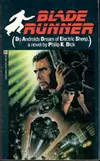
On reread, I still stand by the film being better. Dick created the world—but as the cliche goes—Scott filled it and brought it to life.
Having re-read this now after having seen Blade Runner 2046, I do think it's interesting that there are some elements towards the end shared with the sequel film. So good on Villenueve.
On reread, I still stand by the film being better. Dick created the world—but as the cliche goes—Scott filled it and brought it to life.
Having re-read this now after having seen Blade Runner 2046, I do think it's interesting that there are some elements towards the end shared with the sequel film. So good on Villenueve.


Having recently read Dennis Johnson’s own drug trip of his own, I do prefer Jesus’ Son. I don't really see the hype for Junky.
Having recently read Dennis Johnson’s own drug trip of his own, I do prefer Jesus’ Son. I don't really see the hype for Junky.