
Matthew


A valuable read for Beale's comparisons of the Temple to the garden of Eden and other ancient near eastern temples (showing how the Temple is a microcosm of the universe), his case for an ever-expanding Temple, and his analysis of many of the OT texts concerning the Temple. There are some good points in Beale's NT analysis as well, though overall this section seemed to presume too much. For a good argument of Jesus as the Temple rooted in 1st Jewish context, I would recommend Perrin's “Jesus, the Temple”.
I would recommend this to anyone seriously interested in scholarly study (the book is rather long and a bit dense) of Temple theology, especially as Beale is an oft cited authority on the subject.
A valuable read for Beale's comparisons of the Temple to the garden of Eden and other ancient near eastern temples (showing how the Temple is a microcosm of the universe), his case for an ever-expanding Temple, and his analysis of many of the OT texts concerning the Temple. There are some good points in Beale's NT analysis as well, though overall this section seemed to presume too much. For a good argument of Jesus as the Temple rooted in 1st Jewish context, I would recommend Perrin's “Jesus, the Temple”.
I would recommend this to anyone seriously interested in scholarly study (the book is rather long and a bit dense) of Temple theology, especially as Beale is an oft cited authority on the subject.


I found this to be an excellent, thorough, and well-balanced account of the history of philosophy. Evans works hard to put you into the shoes of each philosopher that he covers so that you can understand them on their own terms. At times he'll offer a little bit of his own commentary (from a Christian point of view), but he does it in a way that I found helpful rather than distracting. Highly recommended for anyone wanting to dig into the history of philosophy.
My only disappointment was that his covering of 20th-century philosophy (found in the conclusion chapter) was rather abbreviated (as Evans notes, this century is much too recent to cover with any kind of objectivity and could fill a book of its own). Though brief, his reflections on the history of western philosophy as a whole and on the direction of philosophy today were helpful and encouraging.
Now to go back and actually reflect on all of this...
I found this to be an excellent, thorough, and well-balanced account of the history of philosophy. Evans works hard to put you into the shoes of each philosopher that he covers so that you can understand them on their own terms. At times he'll offer a little bit of his own commentary (from a Christian point of view), but he does it in a way that I found helpful rather than distracting. Highly recommended for anyone wanting to dig into the history of philosophy.
My only disappointment was that his covering of 20th-century philosophy (found in the conclusion chapter) was rather abbreviated (as Evans notes, this century is much too recent to cover with any kind of objectivity and could fill a book of its own). Though brief, his reflections on the history of western philosophy as a whole and on the direction of philosophy today were helpful and encouraging.
Now to go back and actually reflect on all of this...

As my first graphic novel, I thought this one was excellent. It tells the story of the boxer rebellion (a bit of eastern history I was not familiar with before reading this) through the eyes of two characters on opposite sides of the fighting. Both sides were told well, fully immersing you in each of their points of view.
As my first graphic novel, I thought this one was excellent. It tells the story of the boxer rebellion (a bit of eastern history I was not familiar with before reading this) through the eyes of two characters on opposite sides of the fighting. Both sides were told well, fully immersing you in each of their points of view.
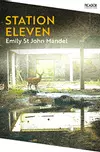
I picked this one up because I saw it on a list of top sci-fi books (I forget now where I saw the list). Plotwise, the story centers around a flu-like disease that takes out most of the population (not sure if I bought into the speed and totality of the collapse, but that's a minor squabble compared to where the book excels). There are definitely a few moments of suspense, but overall I would consider this a character driven novel–and here the book really excels.
The book follows a number of characters, lives interrelated, both before and after the apocalypse. Throughout the book you see slowly unfold how their various stories are connected. More than that, you see expertly woven into the story themes of what life is meant to be, how we relate to the past and future, and how we react to disaster and tragedy. All of this is pulled off very naturally such that the themes really don't start to hit you until you've taken some time to reflect on the story afterward (the edition I read had some questions in the back that helped spark some of this reflection).
I would put this on my highly recommended list (for just about anyone). I think the combination of deep characters with compelling storylines, all interwoven expertly, should make this book appealing to a wide audience.
I picked this one up because I saw it on a list of top sci-fi books (I forget now where I saw the list). Plotwise, the story centers around a flu-like disease that takes out most of the population (not sure if I bought into the speed and totality of the collapse, but that's a minor squabble compared to where the book excels). There are definitely a few moments of suspense, but overall I would consider this a character driven novel–and here the book really excels.
The book follows a number of characters, lives interrelated, both before and after the apocalypse. Throughout the book you see slowly unfold how their various stories are connected. More than that, you see expertly woven into the story themes of what life is meant to be, how we relate to the past and future, and how we react to disaster and tragedy. All of this is pulled off very naturally such that the themes really don't start to hit you until you've taken some time to reflect on the story afterward (the edition I read had some questions in the back that helped spark some of this reflection).
I would put this on my highly recommended list (for just about anyone). I think the combination of deep characters with compelling storylines, all interwoven expertly, should make this book appealing to a wide audience.


