
Mostafa Chizari


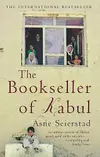
To read this book and not walk away angry, you have to accept that this is a critique, not a representation. Through the lens of a white woman (and all the biases that carries), you follow a middle-class family caught between modernity and tradition. Seierstad clearly has a disdain for the latter, framing it almost entirely as a "backwards mindset." The joys and beauty of Afghan culture are reduced to superficial, fleeting moments, while the tragedy of repression is given the entire spotlight. This isn’t to say her observations aren’t true, but they certainly aren't the full picture.
However, once you stop looking for a balanced portrait and start reading it as a pointed critique, you can appreciate the writing, and my, is it beautiful. The characters are almost all jaded, arrogant, or depressing, but they have genuine substance. While I disagree with how they are represented, the author still manages to bring a specific, dark side of this world to life.
She is clearly a talented journalist. It takes a certain brazen bravery to offer such an honest, unfiltered viewpoint of the "dark side" of a civilisation. I might disagree with her framing, but I can still give her props for the skill and grit it took to write it.
To read this book and not walk away angry, you have to accept that this is a critique, not a representation. Through the lens of a white woman (and all the biases that carries), you follow a middle-class family caught between modernity and tradition. Seierstad clearly has a disdain for the latter, framing it almost entirely as a "backwards mindset." The joys and beauty of Afghan culture are reduced to superficial, fleeting moments, while the tragedy of repression is given the entire spotlight. This isn’t to say her observations aren’t true, but they certainly aren't the full picture.
However, once you stop looking for a balanced portrait and start reading it as a pointed critique, you can appreciate the writing, and my, is it beautiful. The characters are almost all jaded, arrogant, or depressing, but they have genuine substance. While I disagree with how they are represented, the author still manages to bring a specific, dark side of this world to life.
She is clearly a talented journalist. It takes a certain brazen bravery to offer such an honest, unfiltered viewpoint of the "dark side" of a civilisation. I might disagree with her framing, but I can still give her props for the skill and grit it took to write it.

Ishiguro is a master of saying so much in so few words, but here, he’s almost undone by the other side of that coin: saying so little in so much text.
This book is expertly crafted to find the eerie within the mundane, and he plays that tension perfectly right to the very end. The problem is that it remains relentlessly mundane all the way until chapter 20(!) out of 23. It’s a slow burn that occasionally feels like it’s forgotten to light the fuse :(
I know many people who DNF’ed this, and honestly, I can see why. It’s a crying shame because the potential is massive and the ending is thoroughly satisfying (even with a lingering trail of unanswered questions). Ishiguro is clearly a masterful writer, and I’m keen to read more of his work, but there’s no denying that this one is a slog. I don't regret finishing it, but I’m well aware that "pushing through" isn't everyone’s cup of tea.
A haunting, clinical look at humanity that sadly takes a bit too long to find its pulse.
Ishiguro is a master of saying so much in so few words, but here, he’s almost undone by the other side of that coin: saying so little in so much text.
This book is expertly crafted to find the eerie within the mundane, and he plays that tension perfectly right to the very end. The problem is that it remains relentlessly mundane all the way until chapter 20(!) out of 23. It’s a slow burn that occasionally feels like it’s forgotten to light the fuse :(
I know many people who DNF’ed this, and honestly, I can see why. It’s a crying shame because the potential is massive and the ending is thoroughly satisfying (even with a lingering trail of unanswered questions). Ishiguro is clearly a masterful writer, and I’m keen to read more of his work, but there’s no denying that this one is a slog. I don't regret finishing it, but I’m well aware that "pushing through" isn't everyone’s cup of tea.
A haunting, clinical look at humanity that sadly takes a bit too long to find its pulse.
Ishiguro is a master of saying so much in so few words, but here, he’s almost undone by the other side of that coin: saying so little in so much text.
This book is expertly crafted to find the eerie within the mundane, and he plays that tension perfectly right to the very end. The problem is that it remains <i>relentlessly</i> mundane all the way until chapter 20(!) out of 23. It’s a slow burn that occasionally feels like it’s forgotten to light the fuse :(
I know many people who DNF’ed this, and honestly, I can see why. It’s a crying shame because the potential is massive and the ending is thoroughly satisfying (even with a lingering trail of unanswered questions). Ishiguro is clearly a masterful writer, and I’m keen to read more of his work, but there’s no denying that this one is a slog. I don't regret finishing it, but I’m well aware that "pushing through" isn't everyone’s cup of tea.
A haunting, clinical look at humanity that sadly takes a bit too long to find its pulse.
Ishiguro is a master of saying so much in so few words, but here, he’s almost undone by the other side of that coin: saying so little in so much text.
This book is expertly crafted to find the eerie within the mundane, and he plays that tension perfectly right to the very end. The problem is that it remains <i>relentlessly</i> mundane all the way until chapter 20(!) out of 23. It’s a slow burn that occasionally feels like it’s forgotten to light the fuse :(
I know many people who DNF’ed this, and honestly, I can see why. It’s a crying shame because the potential is massive and the ending is thoroughly satisfying (even with a lingering trail of unanswered questions). Ishiguro is clearly a masterful writer, and I’m keen to read more of his work, but there’s no denying that this one is a slog. I don't regret finishing it, but I’m well aware that "pushing through" isn't everyone’s cup of tea.
A haunting, clinical look at humanity that sadly takes a bit too long to find its pulse.
Updated a reading goal:
Read 3k pages in 2026
Progress so far: 853 / 3000 28%

Intoxicating, lyrical, and unashamedly poetic. This book is a high-stakes literary flex: two authors at the top of their game showing off in the best possible way.
The background of how this was written - letters sent back and forth between the two authors, then topped off with collaboratively written narrative scaffolding in between - adds a layer of mystique that makes the final product even more impressive. You can feel the competitive creativity in the prose. It’s dense, rich, and frankly, exquisite.
The plot is basically just wibbly-wobbly timey-wimey stuff, but to be perfectly honest this is all a distraction from the incredible literary art held within the writing style. The plot doesn’t need to do the heavy lifting when the prose is this evocative.
A short, sharp read, and an immaculate sensory experience.
Intoxicating, lyrical, and unashamedly poetic. This book is a high-stakes literary flex: two authors at the top of their game showing off in the best possible way.
The background of how this was written - letters sent back and forth between the two authors, then topped off with collaboratively written narrative scaffolding in between - adds a layer of mystique that makes the final product even more impressive. You can feel the competitive creativity in the prose. It’s dense, rich, and frankly, exquisite.
The plot is basically just wibbly-wobbly timey-wimey stuff, but to be perfectly honest this is all a distraction from the incredible literary art held within the writing style. The plot doesn’t need to do the heavy lifting when the prose is this evocative.
A short, sharp read, and an immaculate sensory experience.

Added to listBook Clubwith 5 books.


Updated a reading goal:
Read 3k pages in 2026
Progress so far: 577 / 3000 19%

A masterclass in storytelling! Michael Lewis takes what should be a dry subject and turns it into something sharp, funny, and genuinely absorbing. He weaves the financial crisis into a much broader (and sometimes blunt) take on human nature, arguing that these collapses aren’t failures of maths or regulation, but of character.
His cultural observations can be pretty reductive, but they’re delivered with enough wit and pace to feel balanced. The core idea - that people everywhere behave the same way when handed ‘free’ money - is both uncomfortable and hard to ignore. It’s crude at times, sure, but given the scale of the damage caused, that feels almost necessary.
Honestly, I’d recommend this book even if you have zero interest in economics; it’s worth it just to experience how effortlessly the story pulls you in.
A masterclass in storytelling! Michael Lewis takes what should be a dry subject and turns it into something sharp, funny, and genuinely absorbing. He weaves the financial crisis into a much broader (and sometimes blunt) take on human nature, arguing that these collapses aren’t failures of maths or regulation, but of character.
His cultural observations can be pretty reductive, but they’re delivered with enough wit and pace to feel balanced. The core idea - that people everywhere behave the same way when handed ‘free’ money - is both uncomfortable and hard to ignore. It’s crude at times, sure, but given the scale of the damage caused, that feels almost necessary.
Honestly, I’d recommend this book even if you have zero interest in economics; it’s worth it just to experience how effortlessly the story pulls you in.

Simple, cosy, and surprisingly comforting. It’s not the most intricate or deeply reflective book out there, but it’s an easy one to recommend.
Nora spends a lot of the story draining the life out of every situation and her journey out of that pit leans into simple self-help territory. But the end of the day, this isn’t really trying to be a philosophy text: it’s a story, and a very digestible one at that. It’s easy to read, easy to empathise with, and easy to move on from once you’re done. For a book that touches on heavy themes, it stays refreshingly light and was a great reset before diving back into more intense reads.
Simple, cosy, and surprisingly comforting. It’s not the most intricate or deeply reflective book out there, but it’s an easy one to recommend.
Nora spends a lot of the story draining the life out of every situation and her journey out of that pit leans into simple self-help territory. But the end of the day, this isn’t really trying to be a philosophy text: it’s a story, and a very digestible one at that. It’s easy to read, easy to empathise with, and easy to move on from once you’re done. For a book that touches on heavy themes, it stays refreshingly light and was a great reset before diving back into more intense reads.

