
Emma Goto


A fun YA sci-fi book with some good world-building.
To me it felt a bit stupid that Spensa would go to her enemy's space school, proceed to show off her skills as a pilot (these aliens have seen her skills in combat, couldn't that blow her cover?) and teach them the best way to train their pilots.. so that they could come and kill some humans. Of course through the power of friendship it all works out in the end. She didn't really try and blend in and try to pretend to be a different alien race either - she was her usual loud/angry self, with a lot of human mannerisms.Feels like throughout the book there wasn't really many consequences for her actions. Maybe I've read too many depressing adult sci-fi/fantasy books lately (looking at you, The Fifth Season) and this is just how YA is.
Originally posted at www.emgoto.com.
A fun YA sci-fi book with some good world-building.
To me it felt a bit stupid that Spensa would go to her enemy's space school, proceed to show off her skills as a pilot (these aliens have seen her skills in combat, couldn't that blow her cover?) and teach them the best way to train their pilots.. so that they could come and kill some humans. Of course through the power of friendship it all works out in the end. She didn't really try and blend in and try to pretend to be a different alien race either - she was her usual loud/angry self, with a lot of human mannerisms.Feels like throughout the book there wasn't really many consequences for her actions. Maybe I've read too many depressing adult sci-fi/fantasy books lately (looking at you, The Fifth Season) and this is just how YA is.
Originally posted at www.emgoto.com.

Short story anthology. I really loved Ted's other book of short stories so I decided to give this one a read. These contain his earlier works (from the 90s) as well as the short story that inspired the acclaimed sci-fi movie Arrival.
I think he's definitely improved in his storytelling over time, so some of his earlier work is boring in comparison (one was very mathy and about how 1+1=2, another where a guy became a super genius and then it was just explaining how he was outwitting the government, felt kind of dry).
The movie Arrival I enjoyed more than the actual short story as well, it had more of an emotional impact but definitely big kudos for inspiring such an awesome movie.
The last couple were the best. Like one where all of humankind technically already “exists” in an unborn state, because if you zoomed in on sperm close enough, you could see the sperm for its children, and so on (sounds stupid but I think it's partially based on what people used to think). Also one where angels literally walk the earth and people chase them around like storm seekers chase after tornados, often with dangerous consequences.
I'll give this one a 4 overall since it does have some good stories.
Originally posted at www.emgoto.com.
Short story anthology. I really loved Ted's other book of short stories so I decided to give this one a read. These contain his earlier works (from the 90s) as well as the short story that inspired the acclaimed sci-fi movie Arrival.
I think he's definitely improved in his storytelling over time, so some of his earlier work is boring in comparison (one was very mathy and about how 1+1=2, another where a guy became a super genius and then it was just explaining how he was outwitting the government, felt kind of dry).
The movie Arrival I enjoyed more than the actual short story as well, it had more of an emotional impact but definitely big kudos for inspiring such an awesome movie.
The last couple were the best. Like one where all of humankind technically already “exists” in an unborn state, because if you zoomed in on sperm close enough, you could see the sperm for its children, and so on (sounds stupid but I think it's partially based on what people used to think). Also one where angels literally walk the earth and people chase them around like storm seekers chase after tornados, often with dangerous consequences.
I'll give this one a 4 overall since it does have some good stories.
Originally posted at www.emgoto.com.

A very melancholy “will they or won't they” book about two people dipping in and out of each other's lives. It could have been very frustrating, since a lot of their issues boil down to miscommunication but I think the author pulled off the reasons for their breakups really well.
I do like that the ending is ambiguous, I don't think I could have been satisfied if they did end up together with a fairytale happy ending. If anything I would have been fine with an ending where they don't end up staying together at all (seems more realistic).
Originally posted at www.emgoto.com.
A very melancholy “will they or won't they” book about two people dipping in and out of each other's lives. It could have been very frustrating, since a lot of their issues boil down to miscommunication but I think the author pulled off the reasons for their breakups really well.
I do like that the ending is ambiguous, I don't think I could have been satisfied if they did end up together with a fairytale happy ending. If anything I would have been fine with an ending where they don't end up staying together at all (seems more realistic).
Originally posted at www.emgoto.com.

Set in a land where there's devastating earthquakes and societies either try and survive through the aftermath or end up dying out. There's magic users (Orogenes), who have the power to prevent these earthquakes and wield its power (as well as the life force of other people / nature). Even though they alone can keep the world from falling apart, untrained Orogenes can be a risk to society, and so they're considered to be less than human and are kept under the control of Guardians who will eliminate anyone that steps out of line.
It's a good fantasy book, but it's not a fun fantasy book.
The Orogenes are required to have sex with other Orogenes to produce babies, they lobotomise Orogenes that are too old to be trained and then use their natural instincts to subdue earthquakes, the book begins with a small Orogene child having her hand broken so that she is taught a lesson by her Guardian.
I liked the way the author brought together the storyline of three separate Orogenes - one just embarking on her training, another much further along, and a third woman who living a peaceful life, hiding her powers. I found it really engrossing and hard to put down. So for that I give this one a 5, but I also find it pretty depressing and so I won't be reading the next two books in the trilogy
Originally posted at www.emgoto.com.
Set in a land where there's devastating earthquakes and societies either try and survive through the aftermath or end up dying out. There's magic users (Orogenes), who have the power to prevent these earthquakes and wield its power (as well as the life force of other people / nature). Even though they alone can keep the world from falling apart, untrained Orogenes can be a risk to society, and so they're considered to be less than human and are kept under the control of Guardians who will eliminate anyone that steps out of line.
It's a good fantasy book, but it's not a fun fantasy book.
The Orogenes are required to have sex with other Orogenes to produce babies, they lobotomise Orogenes that are too old to be trained and then use their natural instincts to subdue earthquakes, the book begins with a small Orogene child having her hand broken so that she is taught a lesson by her Guardian.
I liked the way the author brought together the storyline of three separate Orogenes - one just embarking on her training, another much further along, and a third woman who living a peaceful life, hiding her powers. I found it really engrossing and hard to put down. So for that I give this one a 5, but I also find it pretty depressing and so I won't be reading the next two books in the trilogy
Originally posted at www.emgoto.com.

Krakauer's probably best known for his book “Into the Wild”. I'd also recently read his book about Mormonism. However I had no idea he had first-hand experience climbing Mt Everest, in which multiple people on his expedition team died.
This was a very tragic (and fairly short) book surrounding the extreme dangers of attempting to climb Everest. Climbers spend time acclimatizing at camps, but even by this point they've lost a lot of weight and have other debilitating illnesses - and yet even through these struggles, fhey still go on to attempt the summit.
In the end the biggest danger is not knowing your own limits. It's not so hard to make it up the top of the mountain, but if you've used up all your energy, or you've spent most of the daylight hours trying to get up there, making it safely back down can become impossible.
Originally posted at www.emgoto.com.
Krakauer's probably best known for his book “Into the Wild”. I'd also recently read his book about Mormonism. However I had no idea he had first-hand experience climbing Mt Everest, in which multiple people on his expedition team died.
This was a very tragic (and fairly short) book surrounding the extreme dangers of attempting to climb Everest. Climbers spend time acclimatizing at camps, but even by this point they've lost a lot of weight and have other debilitating illnesses - and yet even through these struggles, fhey still go on to attempt the summit.
In the end the biggest danger is not knowing your own limits. It's not so hard to make it up the top of the mountain, but if you've used up all your energy, or you've spent most of the daylight hours trying to get up there, making it safely back down can become impossible.
Originally posted at www.emgoto.com.

Left slightly confused by some inconsistencies - seems like the donors at the hospital / recovery centres weren't treated as poorly as you would expect, considering that the Madame / Miss Emily mentioned how badly the students at other schools were being treated. Wonder if each patient getting their own room, carer etc. is cost-effective. Is raising the children in schools really cost-effective either? Allowing the donor adults to live alone after high school also runs the risk of them getting into drugs etc. that could ruin their organs too.
Originally posted at www.emgoto.com.
Left slightly confused by some inconsistencies - seems like the donors at the hospital / recovery centres weren't treated as poorly as you would expect, considering that the Madame / Miss Emily mentioned how badly the students at other schools were being treated. Wonder if each patient getting their own room, carer etc. is cost-effective. Is raising the children in schools really cost-effective either? Allowing the donor adults to live alone after high school also runs the risk of them getting into drugs etc. that could ruin their organs too.
Originally posted at www.emgoto.com.

Wells had his own affair and this book was apparently partially based off that - I'm not sure if we're supposed to feel sympathetic as the main character and his mistress have a whole Romeo/Juliet “I can't bear to be parted from you and I might kill myself” moment because the guy is cheating on his wife! No sympathy for you sir!
The book really trudged on too. I don't have any interest in politics and we had to read the character's whole life story of how he got into politics. It only got interesting right at the end where the guy decided to abandon his wife and run away with his lover.
Originally posted at www.emgoto.com.
Wells had his own affair and this book was apparently partially based off that - I'm not sure if we're supposed to feel sympathetic as the main character and his mistress have a whole Romeo/Juliet “I can't bear to be parted from you and I might kill myself” moment because the guy is cheating on his wife! No sympathy for you sir!
The book really trudged on too. I don't have any interest in politics and we had to read the character's whole life story of how he got into politics. It only got interesting right at the end where the guy decided to abandon his wife and run away with his lover.
Originally posted at www.emgoto.com.

One of those books about slavery and the treatment of Black people in America that is really hard to read, but worth reading.
I went into this not knowing that much about American history so I took everything at face value, not realising this was an alternate history / fictional version of America (in hindsight the underground railroad being a literal railroad is a bit too crazy to be true. Whoops!)
I thought it was uncharacteristic of Cora at the end to give up the location of the railroad, she was threatened with a gun but surely being shot by a gun would be a better fate than what was in store for her if she was tried for murder?
Originally posted at www.emgoto.com.
One of those books about slavery and the treatment of Black people in America that is really hard to read, but worth reading.
I went into this not knowing that much about American history so I took everything at face value, not realising this was an alternate history / fictional version of America (in hindsight the underground railroad being a literal railroad is a bit too crazy to be true. Whoops!)
I thought it was uncharacteristic of Cora at the end to give up the location of the railroad, she was threatened with a gun but surely being shot by a gun would be a better fate than what was in store for her if she was tried for murder?
Originally posted at www.emgoto.com.

Alex is a girl with an edgy dark past who can see ghosts. So she ends up at Yale with the job of watching over a bunch of rich kids in secret societies perform very unethical magic (e.g. operating on some random dude to tell the future).
For the short period of time Alex's mentor, Darlington, was around he came off as super pretentious mansplainer. As soon as he disappears though I kept reading hoping for him to come back. The book doesn't feel as exciting when Alex has to fumble through solving a murder mystery by herself.
I do enjoy how the story jumps between different periods of time as we build up to finally learning how Darlington disappeared.I also liked how it turns out that Daisy was right there all along, but the concept of Alex and other murdered girls being a “wheel” kind of comes out of nowhere and just feels like the setup for book #2.
Originally posted at www.emgoto.com.
Alex is a girl with an edgy dark past who can see ghosts. So she ends up at Yale with the job of watching over a bunch of rich kids in secret societies perform very unethical magic (e.g. operating on some random dude to tell the future).
For the short period of time Alex's mentor, Darlington, was around he came off as super pretentious mansplainer. As soon as he disappears though I kept reading hoping for him to come back. The book doesn't feel as exciting when Alex has to fumble through solving a murder mystery by herself.
I do enjoy how the story jumps between different periods of time as we build up to finally learning how Darlington disappeared.I also liked how it turns out that Daisy was right there all along, but the concept of Alex and other murdered girls being a “wheel” kind of comes out of nowhere and just feels like the setup for book #2.
Originally posted at www.emgoto.com.

It reminds me a lot of The Way of Kings in that the main character is an underdog from a lower “class”, who strives to become as strong as the warrior nobles (a feat considered impossible).
However, unlike TWOK it only follows one character's perspective, and he spends all his time surrounded by dudes as they train together and fight against each other. Even though their society is supposed to be matriarchal, the only evidence of that is that people take their mother's surname. Beyond that I'm not really seeing anything different and would've liked the author to explore that aspect a bit more.
I think I did feel a bit disappointed that although the women have strength (they can summon dragons) they still need to be protected by the men, and the main female characters only seem to exist as potential love interests. I've probably been spoiled by the Priory of the Orange Tree!
Nonetheless it was still an enjoyable read though, would recommend for fantasy lovers.
Originally posted at www.emgoto.com.
It reminds me a lot of The Way of Kings in that the main character is an underdog from a lower “class”, who strives to become as strong as the warrior nobles (a feat considered impossible).
However, unlike TWOK it only follows one character's perspective, and he spends all his time surrounded by dudes as they train together and fight against each other. Even though their society is supposed to be matriarchal, the only evidence of that is that people take their mother's surname. Beyond that I'm not really seeing anything different and would've liked the author to explore that aspect a bit more.
I think I did feel a bit disappointed that although the women have strength (they can summon dragons) they still need to be protected by the men, and the main female characters only seem to exist as potential love interests. I've probably been spoiled by the Priory of the Orange Tree!
Nonetheless it was still an enjoyable read though, would recommend for fantasy lovers.
Originally posted at www.emgoto.com.
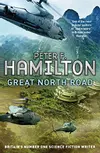
Loved how the Angela's backstory (one of the main characters) was revealed throughout the book. The potential alien lurking throughout the book was pretty gripping too. The book was longer than it needed to be though.
I didn't find Angela's romances to be that convincing either. She's put on such a pedestal (in terms of appearance) and then gets with some ordinary dudes. She uses Paresh, but then ends up caring for him, but I feel like a hardened badass like Angela would end up ditching him?Also Ian's creepy stalking near the end of the book was sort of acknowledged, but then all swept under the rug as soon as he got with the girl. His coworkers didn't even care that he was abusing police powers to watch her on cameras. Felt useless as a side plot if there wasn't going to be any consequences for it.
Originally posted at www.emgoto.com.
Loved how the Angela's backstory (one of the main characters) was revealed throughout the book. The potential alien lurking throughout the book was pretty gripping too. The book was longer than it needed to be though.
I didn't find Angela's romances to be that convincing either. She's put on such a pedestal (in terms of appearance) and then gets with some ordinary dudes. She uses Paresh, but then ends up caring for him, but I feel like a hardened badass like Angela would end up ditching him?Also Ian's creepy stalking near the end of the book was sort of acknowledged, but then all swept under the rug as soon as he got with the girl. His coworkers didn't even care that he was abusing police powers to watch her on cameras. Felt useless as a side plot if there wasn't going to be any consequences for it.
Originally posted at www.emgoto.com.
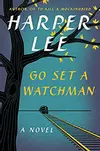
So Scout finds out that her dad Atticus is a racist, and she's not because she's “color blind” (but would never marry a black person so is she really) and then in the end she forgives him and all is well.
Feels bizarre to me because the climax of the book is Scout's argument with Atticus, and the resolution is that she was wrong to argue because Atticus is a racist but at least he's not a mega-racist?
Feel like the book should have come with an introduction explaining that it's just a draft of a book, it feels wrong that it's been sold as-is.
Originally posted at www.emgoto.com.
So Scout finds out that her dad Atticus is a racist, and she's not because she's “color blind” (but would never marry a black person so is she really) and then in the end she forgives him and all is well.
Feels bizarre to me because the climax of the book is Scout's argument with Atticus, and the resolution is that she was wrong to argue because Atticus is a racist but at least he's not a mega-racist?
Feel like the book should have come with an introduction explaining that it's just a draft of a book, it feels wrong that it's been sold as-is.
Originally posted at www.emgoto.com.

There was a lot more action in this than the first book (which I gave 4 stars).
I'm really hoping there isn't going to be a love triangle in one of the future books but it seems like it's heading that way. Or maybe Adolin can be killed off so that Kaladin will swoop in. Also it felt convenient that in the end the Parshendi were considered the bad guys, and it was the right thing to do to kill them off, so that our characters could remain as the heroes of the story. Would have liked to see more of the "good" Parshendi (maybe that will come in a future book?)
Originally posted at www.emgoto.com.
There was a lot more action in this than the first book (which I gave 4 stars).
I'm really hoping there isn't going to be a love triangle in one of the future books but it seems like it's heading that way. Or maybe Adolin can be killed off so that Kaladin will swoop in. Also it felt convenient that in the end the Parshendi were considered the bad guys, and it was the right thing to do to kill them off, so that our characters could remain as the heroes of the story. Would have liked to see more of the "good" Parshendi (maybe that will come in a future book?)
Originally posted at www.emgoto.com.

I'll give it a 4.5 stars. An interesting retelling of Achilles' story, focusing on his relationship with Patroclus. The Iliad itself doesn't outright mention any sort of romance between the two of them but interestingly, other ancient Greeks did interpret it as a romance. It's only more recently that people were keen to interpret their relationship as a friendship instead.
I enjoyed how flawed Achilles' character became as his pride got the better of him.The ending didn't really make me as sad as I thought it would, since in the end the two were reunited in the afterlife. Another fun fact I learnt was that Achilles and Patroclus were really buried in the same tomb, and that Alexander the Great and his male "companion" (friendship or romantic, who knows) paid it a visit.
Originally posted at www.emgoto.com.
I'll give it a 4.5 stars. An interesting retelling of Achilles' story, focusing on his relationship with Patroclus. The Iliad itself doesn't outright mention any sort of romance between the two of them but interestingly, other ancient Greeks did interpret it as a romance. It's only more recently that people were keen to interpret their relationship as a friendship instead.
I enjoyed how flawed Achilles' character became as his pride got the better of him.The ending didn't really make me as sad as I thought it would, since in the end the two were reunited in the afterlife. Another fun fact I learnt was that Achilles and Patroclus were really buried in the same tomb, and that Alexander the Great and his male "companion" (friendship or romantic, who knows) paid it a visit.
Originally posted at www.emgoto.com.

A meandering look at the Mormon religion - its history, right from its founder Joseph Smith and his secret proclivities for polygamy, the founding of Utah, through to present-day Mormonism and its many offshoots (notably the fundamentalist Mormons who still practice polygamy). Krakaeur also makes a connection between some of the violence committed by Mormons in its early history with the murders carried out by two fundamentalist Mormons in the present day.
Published in 2003, I can imagine this book did some good towards exposing some of the church's dark sides (for instance it wasn't until 2013 when they stopped discouraging interracial marriage at their youth groups). However it did feel anti-religion and anti-Mormon (although weirdly Krakauer preferred to express this via quoting from books/other resources rather than outright saying it himself) which as a non-religious person I'm fine with but is probably very off-putting for any potential Mormon readers.
I was also expecting more of a “true crime” style novel but instead I felt like there was a lot of jumping around. The author would mention present-day Mormons towards the start of the novel and then reference them again towards the end (although making sure though to remind you who they were) which didn't really help me to connect with their stories.
Originally posted at www.emgoto.com.
A meandering look at the Mormon religion - its history, right from its founder Joseph Smith and his secret proclivities for polygamy, the founding of Utah, through to present-day Mormonism and its many offshoots (notably the fundamentalist Mormons who still practice polygamy). Krakaeur also makes a connection between some of the violence committed by Mormons in its early history with the murders carried out by two fundamentalist Mormons in the present day.
Published in 2003, I can imagine this book did some good towards exposing some of the church's dark sides (for instance it wasn't until 2013 when they stopped discouraging interracial marriage at their youth groups). However it did feel anti-religion and anti-Mormon (although weirdly Krakauer preferred to express this via quoting from books/other resources rather than outright saying it himself) which as a non-religious person I'm fine with but is probably very off-putting for any potential Mormon readers.
I was also expecting more of a “true crime” style novel but instead I felt like there was a lot of jumping around. The author would mention present-day Mormons towards the start of the novel and then reference them again towards the end (although making sure though to remind you who they were) which didn't really help me to connect with their stories.
Originally posted at www.emgoto.com.
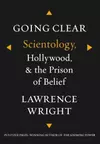
A detailed look into the history of Scientology. Honestly scary how much they can get away with without the US government being able to do anything. E.g. all the stalking they do to try and get people who leave to come back, or how they abuse their followers (technically willingly, but cmon they're basically brainwashed).
I've given it a 5 since it was very detailed and well researched, however it isn't quite as gripping to read as something like a book on Jonestown for example (which is morbid to say) so it's probably more like a 4.5.
Originally posted at www.emgoto.com.
A detailed look into the history of Scientology. Honestly scary how much they can get away with without the US government being able to do anything. E.g. all the stalking they do to try and get people who leave to come back, or how they abuse their followers (technically willingly, but cmon they're basically brainwashed).
I've given it a 5 since it was very detailed and well researched, however it isn't quite as gripping to read as something like a book on Jonestown for example (which is morbid to say) so it's probably more like a 4.5.
Originally posted at www.emgoto.com.

A fun read, I devoured it in one sitting. Not sure I'm super keen on the ending though.
It's really good if you don't think about it too hard. But Addie and Henry didn't really have anything in common other than the fact that there was literally no one else they could be in relationships with. But Addie is happy to give that away (and Henry seems fine with it also) and seems fine with being with the devil for the next however many years. I dunno, it feels like it shouldn't have been a happy ending.
Originally posted at www.emgoto.com.
A fun read, I devoured it in one sitting. Not sure I'm super keen on the ending though.
It's really good if you don't think about it too hard. But Addie and Henry didn't really have anything in common other than the fact that there was literally no one else they could be in relationships with. But Addie is happy to give that away (and Henry seems fine with it also) and seems fine with being with the devil for the next however many years. I dunno, it feels like it shouldn't have been a happy ending.
Originally posted at www.emgoto.com.

The author has had a very, very impressive career helping to champion the art of hostage negotiation within the FBI.
It goes into detail on both Ruby Ridge and Waco, which has coincidentally been mentioned in a couple of other books I have recently read (like Educated) so it's been good to get that additional context on American history.
Obviously Gary Noesner's done a lot of great things and has saved a lot of people but I felt at times he was patting himself on the back a bit too much. There was a lot of “I'm right and you're wrong” which I wanted to take seriously but at the same time felt like I had to take with a grain of salt due to the heavy bias throughout the book.
Originally posted at www.emgoto.com.
The author has had a very, very impressive career helping to champion the art of hostage negotiation within the FBI.
It goes into detail on both Ruby Ridge and Waco, which has coincidentally been mentioned in a couple of other books I have recently read (like Educated) so it's been good to get that additional context on American history.
Obviously Gary Noesner's done a lot of great things and has saved a lot of people but I felt at times he was patting himself on the back a bit too much. There was a lot of “I'm right and you're wrong” which I wanted to take seriously but at the same time felt like I had to take with a grain of salt due to the heavy bias throughout the book.
Originally posted at www.emgoto.com.

Listened to this one (+ its follow-up, “Habits for Happiness at work”) for free through Audible.
There's the usual suspects - getting enough sleep, getting enough exercise. Tim Sharp also recommends creating a vision board for what happiness would look like for you, and then setting SMART goals to work towards achieving them.
One highlight for me was the mention of the “tyranny of when” (which after Googling looks like is a phrase he coined himself). i.e. we shouldn't be falling into the trap of “When X happens I will be happy”. I'm definitely guilty of this one!
Might be worth a listen if you've used up your credits on your Audible account but I wouldn't go out of your way to listen to it otherwise.
Originally posted at www.emgoto.com.
Listened to this one (+ its follow-up, “Habits for Happiness at work”) for free through Audible.
There's the usual suspects - getting enough sleep, getting enough exercise. Tim Sharp also recommends creating a vision board for what happiness would look like for you, and then setting SMART goals to work towards achieving them.
One highlight for me was the mention of the “tyranny of when” (which after Googling looks like is a phrase he coined himself). i.e. we shouldn't be falling into the trap of “When X happens I will be happy”. I'm definitely guilty of this one!
Might be worth a listen if you've used up your credits on your Audible account but I wouldn't go out of your way to listen to it otherwise.
Originally posted at www.emgoto.com.

Listened to the audiobook version, well narrated.
A very “Aussie” coming-of-age story, set in 1980s Brisbane, filled with a bunch of colourful characters - Vietnamese drug dealers, a bikie gang member, and real-life Slim Halliday (“The Houdini of Boggo Road”) who escaped twice from a Brisbane jail. What makes it all the more amazing is the book is partially based on the author's own childhood (Slim was once his babysitter, and his dad really did spend his days living as a chain-smoking recluse who read books all day).
One of the major themes of the book is what makes someone a "good man". The main character Eli is trying to figure out if he is a good man, as well as if the people around him (who have criminal backgrounds) are also good men. It's interesting that people like convicted felon Slim and bikie gang member Alex are portrayed in that "good man" light even after their past misdeeds, but someone like Teddy is "bad" once their bad deeds are uncovered. Maybe would have been cool to get that redemption, but also highlights Eli's potential naivety / young age throughout most of the book.
Originally posted at www.emgoto.com.
Listened to the audiobook version, well narrated.
A very “Aussie” coming-of-age story, set in 1980s Brisbane, filled with a bunch of colourful characters - Vietnamese drug dealers, a bikie gang member, and real-life Slim Halliday (“The Houdini of Boggo Road”) who escaped twice from a Brisbane jail. What makes it all the more amazing is the book is partially based on the author's own childhood (Slim was once his babysitter, and his dad really did spend his days living as a chain-smoking recluse who read books all day).
One of the major themes of the book is what makes someone a "good man". The main character Eli is trying to figure out if he is a good man, as well as if the people around him (who have criminal backgrounds) are also good men. It's interesting that people like convicted felon Slim and bikie gang member Alex are portrayed in that "good man" light even after their past misdeeds, but someone like Teddy is "bad" once their bad deeds are uncovered. Maybe would have been cool to get that redemption, but also highlights Eli's potential naivety / young age throughout most of the book.
Originally posted at www.emgoto.com.

3.5 stars - I wouldn't recommend you go out and read it, but it's not complete trash either.
The book covers the concept of nudges - how small changes to the way people are presented choices will change their decisions. The key point being you aren't removing the ability to choose or removing certain choices, just the way they are presented.
E.g. adding health warnings to cigarette packs or making organ donation opt-out rather than opt-in.
However the book also does a lot of pondering on the way American society could be improved by these nudges (e.g. healthcare) and even gets side tracked onto the topic of changing how marriage works.
As a non-American and non-politician, a lot of this felt irrelevant to me. The authors made good suggestions but at the same time they're just telling me things that I'm not going to be able to do anything about anyway.
It's also a bit dated. At one point the authors make a joke that women in Sweden were more likely to choose a portfolio because the authors' wives are organised (idk, some sort of stereotype about women? Felt weird to read).
Originally posted at www.emgoto.com.
3.5 stars - I wouldn't recommend you go out and read it, but it's not complete trash either.
The book covers the concept of nudges - how small changes to the way people are presented choices will change their decisions. The key point being you aren't removing the ability to choose or removing certain choices, just the way they are presented.
E.g. adding health warnings to cigarette packs or making organ donation opt-out rather than opt-in.
However the book also does a lot of pondering on the way American society could be improved by these nudges (e.g. healthcare) and even gets side tracked onto the topic of changing how marriage works.
As a non-American and non-politician, a lot of this felt irrelevant to me. The authors made good suggestions but at the same time they're just telling me things that I'm not going to be able to do anything about anyway.
It's also a bit dated. At one point the authors make a joke that women in Sweden were more likely to choose a portfolio because the authors' wives are organised (idk, some sort of stereotype about women? Felt weird to read).
Originally posted at www.emgoto.com.

The book wasn't horrific (I finished reading it!), but I've definitely read better sci-fi. 3.5 stars.
I was a huge fan of the Eragon books as a kid so I was interested to see what Paolini had come up with next.
In Eragon, the dude bonds with a dragon (which makes him OP and very unique), runs into some elves and dwarves, and then has to save the world from evil.
Switch genders, replace dragon with magic spacesuit, and have aliens instead of fantasy characters and it's the same sort of thing.
Things I didn't like:
* I love sci-fi because it feels realistic - like humans are going to get there in 100 or 500 years. Unfortunately I didn't really get those vibes from this book. It felt a bit too fantastical. In a way the suit the main character obtains just feels like magic powers that help propel the plot by getting her out of sticky situations
* The above-mentioned suit makes the main character seem like an invincible Mary Sue who can get out of any situation. She suddenly gets strong like halfway through the book and turns into a killing machine
* Her main personality trait is that she's a xenobiologist. Paolini loves to bring up every two seconds how she's so interested in studying the foreign environment around her but can't stop because she's saving the world
* Main character's original boyfriend's only purpose is to die immediately and then she spends the rest of the book thinking about him. Felt very shallow. You could also see the second romance coming from a mile away, and it felt pretty cringe, like he was the only option on board and she just went with it
* There was a character very similar to Angela from Eragon (the eccentric / mysterious cat lady) who I think was originally based off of Paolini's sister. I guess it's supposed to be a nice nod to previous fans but it did feel out of place and overall unnecessary to the plot.
* So much travelling back and forth between locations. Honestly the characters spend sooo much time on the ship, it really doesn't help to bring out that sci-fi feel i.e. exploring different societies and cultures in depth (we do get to see a bit of it among the aliens but I would've loved to see more, even among the humans)
I will admit the one thing I didn't see coming was how she suddenly turned into Mother Earth at the end of the book, which conveniently does away with the second cringey romance which was nice. Again though it's kind of just making the character super OP (like she just builds a space station out of magic basically) and doesn't really feel sci-fi.
Originally posted at www.emgoto.com.
The book wasn't horrific (I finished reading it!), but I've definitely read better sci-fi. 3.5 stars.
I was a huge fan of the Eragon books as a kid so I was interested to see what Paolini had come up with next.
In Eragon, the dude bonds with a dragon (which makes him OP and very unique), runs into some elves and dwarves, and then has to save the world from evil.
Switch genders, replace dragon with magic spacesuit, and have aliens instead of fantasy characters and it's the same sort of thing.
Things I didn't like:
* I love sci-fi because it feels realistic - like humans are going to get there in 100 or 500 years. Unfortunately I didn't really get those vibes from this book. It felt a bit too fantastical. In a way the suit the main character obtains just feels like magic powers that help propel the plot by getting her out of sticky situations
* The above-mentioned suit makes the main character seem like an invincible Mary Sue who can get out of any situation. She suddenly gets strong like halfway through the book and turns into a killing machine
* Her main personality trait is that she's a xenobiologist. Paolini loves to bring up every two seconds how she's so interested in studying the foreign environment around her but can't stop because she's saving the world
* Main character's original boyfriend's only purpose is to die immediately and then she spends the rest of the book thinking about him. Felt very shallow. You could also see the second romance coming from a mile away, and it felt pretty cringe, like he was the only option on board and she just went with it
* There was a character very similar to Angela from Eragon (the eccentric / mysterious cat lady) who I think was originally based off of Paolini's sister. I guess it's supposed to be a nice nod to previous fans but it did feel out of place and overall unnecessary to the plot.
* So much travelling back and forth between locations. Honestly the characters spend sooo much time on the ship, it really doesn't help to bring out that sci-fi feel i.e. exploring different societies and cultures in depth (we do get to see a bit of it among the aliens but I would've loved to see more, even among the humans)
I will admit the one thing I didn't see coming was how she suddenly turned into Mother Earth at the end of the book, which conveniently does away with the second cringey romance which was nice. Again though it's kind of just making the character super OP (like she just builds a space station out of magic basically) and doesn't really feel sci-fi.
Originally posted at www.emgoto.com.

As someone who has only read one of King's books (the one on JFK's assassination) and is currently not aspiring to be a fiction author, I don't think I was the target reader for this book.
Some of the writing tips from King:
* Read a lot (King reads 70 - 80 books a year) especially in the genre that you want to write in
* Write a lot. King was submitting short stories from a young age.
Note that for both of the above points, the author doesn't consider them to be “chores” but finds them genuinely enjoyable (i.e. don't become a fiction author if you don't love every minute of it).
* Have a set schedule - King spends each morning writing until he is finished
* Write in a room with the door. The room should be free of distractions, and you shouldn't leave the room until you've reached your goal e.g. 1000 words.
* The second draft should be 10% shorter than the first draft.
* Have an “ideal reader” in mind when writing. King uses his wife.
* Steer clear of adverbs and try and use mainly “he said, she said” in dialogue. The context should be what's getting your point across and thus making the additional adverbs/ different verbs redundant.
* Use active voice, not a passive voice, because it sounds better.
Originally posted at www.emgoto.com.
As someone who has only read one of King's books (the one on JFK's assassination) and is currently not aspiring to be a fiction author, I don't think I was the target reader for this book.
Some of the writing tips from King:
* Read a lot (King reads 70 - 80 books a year) especially in the genre that you want to write in
* Write a lot. King was submitting short stories from a young age.
Note that for both of the above points, the author doesn't consider them to be “chores” but finds them genuinely enjoyable (i.e. don't become a fiction author if you don't love every minute of it).
* Have a set schedule - King spends each morning writing until he is finished
* Write in a room with the door. The room should be free of distractions, and you shouldn't leave the room until you've reached your goal e.g. 1000 words.
* The second draft should be 10% shorter than the first draft.
* Have an “ideal reader” in mind when writing. King uses his wife.
* Steer clear of adverbs and try and use mainly “he said, she said” in dialogue. The context should be what's getting your point across and thus making the additional adverbs/ different verbs redundant.
* Use active voice, not a passive voice, because it sounds better.
Originally posted at www.emgoto.com.
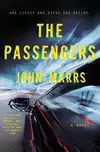
I give this one a 3.5/5 because while it wasn't necessarily terrible, I wouldn't recommend anyone else to read it.
It tries to sort of explore the morality of self-driving cars (and who should die in case of an accident) but it felt fairly shallow. The main character gives fairly obvious arguments against the “evil” people who want autonomous cars to take over the road. I think at times the dialogue wasn't that great. The cringiest moment for me was when a social media expert walks into a courtroom and says:
“Nobody knows more about mass communication that I do. I know my machine learning from my micromoments; my conversions from my clickbait; my organic reach from my omni-channels and my big data from my business intelligence...” (He keeps going too!)
Like, who talks like that? Maybe it was on purpose to highlight how silly his character is but it just made me cringe, really.
Originally posted at www.emgoto.com.
I give this one a 3.5/5 because while it wasn't necessarily terrible, I wouldn't recommend anyone else to read it.
It tries to sort of explore the morality of self-driving cars (and who should die in case of an accident) but it felt fairly shallow. The main character gives fairly obvious arguments against the “evil” people who want autonomous cars to take over the road. I think at times the dialogue wasn't that great. The cringiest moment for me was when a social media expert walks into a courtroom and says:
“Nobody knows more about mass communication that I do. I know my machine learning from my micromoments; my conversions from my clickbait; my organic reach from my omni-channels and my big data from my business intelligence...” (He keeps going too!)
Like, who talks like that? Maybe it was on purpose to highlight how silly his character is but it just made me cringe, really.
Originally posted at www.emgoto.com.

I accidentally started this book 70% of the way through (I must have accidentally tapped a chapter title from the index at the beginning and my kindle took me to it). I didn't even notice! I finished it, and thought “wow, that was so short”.
I dunno what that says about the book that I could skip most of it and not realise.
I think the ending was a bit too much “wow I'm fully cured now here I go to live happily ever after”. It didn't feel too realistic. The moral of the story is probably “the grass is always greener” and you don't realise what you have until you lose it. Yes, her brother and bestie are alive and well but is she really going to be fulfilled for the rest of her life knowing what she's missed out on?
Originally posted at www.emgoto.com.
I accidentally started this book 70% of the way through (I must have accidentally tapped a chapter title from the index at the beginning and my kindle took me to it). I didn't even notice! I finished it, and thought “wow, that was so short”.
I dunno what that says about the book that I could skip most of it and not realise.
I think the ending was a bit too much “wow I'm fully cured now here I go to live happily ever after”. It didn't feel too realistic. The moral of the story is probably “the grass is always greener” and you don't realise what you have until you lose it. Yes, her brother and bestie are alive and well but is she really going to be fulfilled for the rest of her life knowing what she's missed out on?
Originally posted at www.emgoto.com.