
Eric Stone


I burned through Six of Crows in about two days, though to be fair, that’s just my usual pace and not necessarily a glowing endorsement. It’s a bit of a weird one for me. On paper, it has the goods: a fun magic system and some solid class warfare themes that actually kept me engaged for a while. But despite the high stakes, I found myself zoning out hard somewhere in the middle.
The characters are all supposed to be in their late teens, but I didn't feel any of that "transport" I usually look for. It didn't bring me back to being that age even for a second; they felt more like seasoned 40yos trapped in teenage bodies. By the time I hit the halfway mark, I was already mentally browsing my shelves for what I was going to read next.
There’s a cliffhanger at the end, but I’m mostly indifferent to it. Usually, a cliffhanger makes me want to immediately track down the sequel, but this one just left me standing on the edge of the cliff feeling nothing in particular. It’s a "mostly okay" read that somehow missed the mark for me. If you’re into the Grishaverse you'll probably dig the magic, but for me, it was just... fine.
The version of the hardcover I read had black edges - the actual book itself was really cool. That, plus the fact that everyone tells me Part 2 is even better... that's keeping Crooked Kingdom on my TBR.


I’ll be blunt: I thought this book was terrible. I know it has a massive following and I know I’m probably not the target audience, but I couldn't get past how performative the whole thing felt.
The biggest hurdle for me was the audiobook. The narrator for the male lead was so incredibly cheesy. You know the "men writing women" trope? This felt like that - a male narrator giving Z the voice he thinks women want to hear. Maybe some do, but it just felt forced to me.
Even the "spicy" elements didn't land. The CNC aspect is a totally valid kink, but here it felt like it was just being used for shock value or performance rather than being a real part of the characters. I suspect people actually in the BDSM community would find this pretty eye-rolling. It wasn't for me, the voice wasn't for me, and I’m happy to leave this one unfinished.


I really tried with this one, over a period of MONTHS, but it just went on and on for me. I love hard sci-fi - Seveneves is one of my absolute favorites - so I’m usually fine with technical density, but here the world-building just completely buried the story.
Neither the characters nor the plot ever really hooked me. I kept waiting for that moment where I’d finally start caring about what happened to these people, but it never came. Eventually, I realized I was just forcing myself to turn pages. It just felt dry in a way that Seveneves didn't.


This one hurts because I love Game of Thrones. I’m all in on this world - the books, the shows, give me a spinoff for every day of the week and I'll watch it. But A Dance with Dragons is where George R.R. Martin’s insanely descriptive writing finally caught up to me and killed the momentum.
I just. wanted. something. to. happen.
Instead, I’d find myself reading three pages about the specific leather-working on Brienne of Tarth’s saddle or some other minor detail that didn't move the needle. I appreciate the world-building, but at a certain point, the "flavor" starts to drown out the actual plot. I still love the lore, but I realized I’d rather wait for a summary than slog through another hundred pages of stationary travelogue.


Dan Brown is the fast food of literature: you know it’s not "good" for you, but you can't stop eating it.
Inferno is exactly what you expect it to be - historically inaccurate, shamelessly cookie-cutter, and a total ridiculous guilty pleasure. It follows the exact same blueprint as every other Robert Langdon book, but that’s the point. It’s a high-speed chase through art history that doesn't care about the rules of "serious" literature, and honestly, it’s better for it.
If you’re looking for high-brow prose, look elsewhere. But if you want a fun, cinematic ride that keeps you turning pages until 2:00 AM, this is peak Brown. It’s predictable, but in the best way possible.


This is a tremendous book and a true hidden gem. I ordered it out of the back of either Hit Parader or Circus Magazine in the early 2000s when I was fourteen, and I’m not overstating it when I say it literally transformed my life. It was my definitive coming-of-age tale, and it shifted the entire path of my journey. I’ll be forever grateful for it.
A few years ago, I reached out to the author, Charles Romalotti. He was incredibly kind and sent me the 10th Anniversary Edition (the one with the black cover) and a copy of his later book, Bride of the Reaper. Super kind of him to do so.. but Salad Days? If you can track down a copy, read it.


I first read this in high school, and even years later, the ending remains one of the most powerful things I’ve ever experienced in literature. It was the first time I really stopped to think, "Love can mean so many different things."
The story reminds me of the Buddhist concept of non-attachment - the idea that if you truly love someone, you only want what is best for them, even if that means a painful loss for yourself. It’s like deeply loving a spouse and being able to mourn the loss of the relationship while still being genuinely happy that they found a path to greater joy elsewhere.
Of Mice and Men touches on that same selfless, heartbreaking territory - though, as the book shows, it’s a dangerous and heavy thing to decide for someone else exactly how their life should proceed (or not proceed, as the case may be). It’s a slim book, but the weight of that final choice is something that stays with you forever.


This one hurts because I actually loved this series - the first book is one of my 5-star reads. But I’ve reached a point where I can’t recommend the series to anyone anymore. It feels like the author just gave up after this installment, leaving the character arc completely unfinished.
The pacing here was non-existent. The entire book took place in a cave; the main character quite literally went nowhere. And then, of course, there’s the infamous chapter dedicated entirely to the protagonist having diarrhea. It was unreal.
Despite the "4.1 stars" on Audible from the release-day hype, this was a massive letdown for the fandom. It’s a classic case of a series losing its momentum and its way. I’m frustrated because I invested so much time into this world, only to have it stall out in a cave with a joke that went on way too long.
Author claims there will be more books in the series, but that's been his talk track for YEARS.


At first I was like... Now I'm like...
On paper, Armada has every element I want in a book: video games, high-stakes sci-fi, and a heavy dose of "Dad stuff." It’s a fun, engaging story, and I’m still stoked on the overall concept. But the execution left me with some serious questions about the pacing.
I found myself repeatedly thinking, “Okay, I guess this is happening now.” Things that we as an audience know are coming - the inevitable story beats - arrived much earlier than they should have. Instead of a slow build that earns the payoff, it felt like the plot was in a rush to get to the finish line.
Cline still manages to hold onto the element of surprise, but unfortunately, those twists often feel more like a lack of technique than a purposeful subversion of the genre. It’s a great "guilty pleasure" read, but it leaves you wondering how much better it could have been with a bit more room to breathe.


Quick read. It’s written as a screenplay, which was a great change of pace and kept the story moving fast enough that I didn't want to put it down.
What really got me was the setting. King nailed the isolation of Little Tall Island, but he also captured a sense of community that I actually found quite attractive. There’s something about that small-island life that appealed to me, despite the whole evil presence thing.
The ending was the real standout, though. It’s not your standard King ending - it’s much tighter and more effective than I expected. I didn’t sit around philosophizing about it once I was done, but I really appreciated how it turned out. It’s a solid, rugged story that transported me somewhere else for a bit, and that’s exactly what I wanted from it.
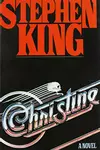

I’ve been living in Christine for the last week, toggling between the hardcover when I’m putting the kids to bed and the audiobook while I’m doing chores or out for a walk. It’s a hell of a way to experience a story - hearing Arnie’s voice physically warp and decline in my ears while I’m doing the dishes, then picking up the physical page to see the carnage in print. That narrator deserves a raise for the way he handled Arnie’s transformation; it’s one thing to read about a kid losing his mind, but hearing the gravel enter his throat is another thing entirely.
The book brought out the nostalgia. It dragged me straight back to 2003, right around graduation, when you could actually "lose" four hours to a hobby and not even realize the sun had gone down. It made me miss having a project that felt like the center of the world. It also made me desperately want a hot rod - though, ideally, a "nice" one that doesn't require a blood sacrifice to keep the engine turning.
It’s dark, tense, and classic King. Even though I’m not giving it a perfect 5, there is so much value in how it captures that specific high school purgatory where your car is your only real personality trait. It’s a trip worth taking, especially if you’ve ever spent too much time under a hood.


I tracked this down because I’m a bit obsessed with the Boston Athenaeum. It’s the kind of place I’ve actually skipped work for, just to spend a few hours disappearing into those halls. I went into this expecting - honestly, hoping - to be transported back there. I wanted the architectural history and the dust and the specific feeling of being inside that building.
While Katherine Wolff does cover how the place came to be, the "purpose" of this book is something else entirely. Instead of a deep dive into the institution’s bones, it felt more like it was checking boxes I wasn't particularly interested in. It’s hard to find, which usually makes a book feel like a hidden gem once you finally get your hands on it, but this one just left me wanting.
It’s enlightening in parts, and I’ll never say a book about such a grand institution has no value, but the "vibe" wasn't there for me. It didn't take me back to those afternoons I spent playing hooky from the real world. If you're looking for a sociological history focused on the Athenaeum's place in American cultural history it's fine, but it didn't capture the magic of the actual library for me.


This is a neat little story that’s going to frustrate a lot of people, but only if they’re missing the point. It lacks any real resolution, which is a bold move, but it fits the Hard Case Crime series perfectly. It’s not about the "whodunnit" as much as it is about the story itself and the people telling it.
I got the new illustrated version for Christmas, and it looks fantastic. There’s something about having that physical, pulp-inspired art in your hands that makes the experience feel more authentic - like you’ve picked up a random book in a laundromat rather than a modern reprint. It’s a short, sharp read that doesn't overstay its welcome. If you need every loose end tied up in a neat bow, stay away, but if you appreciate a mystery that respects the "unknown," it’s a great way to spend an afternoon.


Even if you don’t walk in agreeing with the topic, the essay provides some incredible insight into why King ultimately decided to pull Rage from the shelves. It’s a rare look at an author grappling with the real-world weight of their own work. I’m from Massachusetts, so listening to this was admittedly a bit of an echo-chamber experience for me, but that didn't make it any less compelling. It’s concise, sharp, and hard to argue with, regardless of where you stand.


Contains spoilers
This one was tricky for me. On one hand, it’s a great story with some wonderfully complex characters. I really liked Jamie, his family, and the whole cast of people in his orbit - especially during the "youth" chapters. King is at his best when he’s writing that specific kind of coming-of-age nostalgia, and I was fully on board for the first two-thirds of the book.
The issue for me was the payoff. People always cite Revival as having one of his darkest endings, and while it is definitely bleak, it didn't quite land for me. The notion that the afterlife just universally sucks didn't feel as heavy or as "bad" as a small community being forced to hand a child over to the devil, or a figure like the Dark Man always looming.
The Verdict: I didn't feel the sting of the ending as much as I wanted to, but the journey getting there was solid enough that I’ll probably try rereading it in a few years to see if it sits any better with me. For now, it’s a good book that just missed that final gut-punch.


Contains spoilers
A neat little story that pulled off a great trick. I loved the slow-burn realization that the narrator is a total piece of shit. There’s something deeply satisfying about a story that doesn't try to make you like the person leading you through it. It’s short, punchy, and exactly what I wanted for a quick end-of-year read.


This is a cute little novella, though to be honest, I probably would have settled on a flat 3 stars if it weren't for the illustrations. They are fantastic and really elevate the whole experience. It’s a quick, breezy read that doesn't try to do too much, but it hits the right notes for a werewolf story.
It’s actually something I’ll probably urge my kids to read when they're a bit older. It’s accessible enough to be a "gateway" book into horror without being totally traumatizing. It’s not a masterpiece, but with the artwork included, it’s a great addition to the shelf.


This was a decent enough story, but honestly, it was a bit forgettable for me compared to the others. The setting kept triggering memories of the closing episodes of the 2000 The Stand miniseries - I couldn't stop picturing that specific house with the well. It definitely nails the atmosphere, but once I finished it, it didn't really stick. It was a fine way to spend an hour, but it’s not the one I’ll be recommending to people.


Book of the Year (2025)
I waited a long time for this one to show up via inter-library loan, and it was worth every second of the wait. King Sorrow is massive, but I flew through it so fast I’m actually annoyed it’s over. It gave me everything: I cheered, I gasped, I giggled in shock, and I genuinely felt the anger and the sadness. I'm not sure what else you can even ask for in a book.
I was so hooked that I carried this huge hardcover into the ER when my kid ended up with a concussion. The cover got me some weird looks in the waiting room - it's not exactly "hospital-appropriate" imagery - but I didn't care. I needed to know what happened next.
Beyond the plot, Joe Hill nailed a very specific kind of longing. It made me desperate for that tight-knit, ride-or-die group of friends that seemingly no one has anymore once they hit 40. Life gets in the way, people drift, but for a few days, this book transported me into a circle where that kind of loyalty still exists.
Easily my favorite read of 2025.. brb, you can find me adding this book to like 30 different prompts now.


A man of noble birth finds his calling, but he’s always a moment too late. He couldn't save his mother, his father, or the boy. By the end, you’re left wondering if he’ll even be able to save himself. Roland is a tragic figure, but his coming-of-age story was a huge highlight for me and gave the character some much-needed weight.
I read this while on a business trip in Texas, and the context was perfect. Reading that opening scene in the saloon while being out in that heat made the atmosphere feel incredibly real. It’s a strange, sparse book - very different from King’s "doorstoppers" - but it’s effectively haunting in its own way. It’s not a perfect journey, but it’s clearly the start to something much more meaningful.


SpoilerGuy goes nuts because he procrastinated so much, his entire life implodes. Clearly very depressed, but unwilling to open up and get some help.
New highway is routes through his home and employer. He's big mad. Refuses to find a new home. Lies to employer about getting a new location locked down. Naturally he loses everything and everyone because he's insanely selfish. Ends up spiraling. Rigs his house to blow. Then he blows it.


SpoilerGwendy is now a grown up, working in DC as a state rep. She returns to Castle Rock for the holidays because Richard Farris needs someone to watch the box for a quick minute. While she has it, she gives her mother some of the chocolates and cures her cancer. She also somehow finds herself with the same powers as another notable Castle Rock resident by the name of Johnny Smith, which she uses to solve a series of murders.
All this in 206 pages.
I enjoyed the book while reading it. The audiobook is also great, read by Maggie Siff. In writing the summary though, and I guess upon reflection, it seems a little odd for so much to occur in such a short period of time for seemingly no reason whatsoever.
I look forward to the final chapter.


