
Imric


Interesting enough and the scene it sets does grip you in what it tells. However books of such overwhelming self-hate and depression are just kind of meaningless to me at this point in my life. As an edgy teenager I might've identified with this book more, but I just can't bother to read about how awful someone's life is and how much they hate themselves throughout a book. Thankfully this was a novella so it was indeed short so it did not overstay its welcome. The family dynamic was interesting and I only hope for the best for Wolfgang.
Interesting enough and the scene it sets does grip you in what it tells. However books of such overwhelming self-hate and depression are just kind of meaningless to me at this point in my life. As an edgy teenager I might've identified with this book more, but I just can't bother to read about how awful someone's life is and how much they hate themselves throughout a book. Thankfully this was a novella so it was indeed short so it did not overstay its welcome. The family dynamic was interesting and I only hope for the best for Wolfgang.
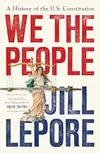
Amend, amend, amend. At the end of this book, that's all that I could really think of. Amendment. Throughout the work, almost every other page elicited a "what the fuck..." due to some unforeseen consequence of a document written by white male slaveholders in the 1700s or an action taken by someone to (in their view) adhere to the Constitution. Amend, amend, amend. Jill Lepore mentions it repeatedly throughout the book, what the founding fathers intended as a release valve for the pressure that builds as democracy grows and ideals clash. Amendment. A check on the Constitution and the dead men who wrote it, who stated that no one should be held to a doctrine that they had no part of creating. Amend, amend, amend. The Constitution is a alive, and meant to be treated as such. Amendment. I hope every American can read this book and see what's wrong with our system of government today and what we as a people can do to mend it. Amend, amend, amend!
Amend, amend, amend. At the end of this book, that's all that I could really think of. Amendment. Throughout the work, almost every other page elicited a "what the fuck..." due to some unforeseen consequence of a document written by white male slaveholders in the 1700s or an action taken by someone to (in their view) adhere to the Constitution. Amend, amend, amend. Jill Lepore mentions it repeatedly throughout the book, what the founding fathers intended as a release valve for the pressure that builds as democracy grows and ideals clash. Amendment. A check on the Constitution and the dead men who wrote it, who stated that no one should be held to a doctrine that they had no part of creating. Amend, amend, amend. The Constitution is a alive, and meant to be treated as such. Amendment. I hope every American can read this book and see what's wrong with our system of government today and what we as a people can do to mend it. Amend, amend, amend!

Tau Zero is an interesting case of a fascinating concept written at a strange time. Some science referenced in the book is no longer regarded as accurate and there are certain writing tropes utilized that were typical in pulpy scifi books of the day. The audiobook narrator was also, in my opinion, the worst I've ever heard and made listening an active, straining event. What's left however is a haunting tale that is sure to stick with you for years to come. Anderson really allows you to place yourself in the shoes of the crew of this ship as they hurtle through the universe approaching near light speed; as Anderson describes every new plight, every new realization just how far the crew has come, you start to wonder how you would handle each scenario as it unfolds. Could you handle living in a ship for years at a time heading towards destination unknown? Could you survive yours and other's despair as you realize that some can cope, and others degrade into shells of themselves? Could you bear approaching light speed, knowing as second tick by on ship, centuries pass by on Earth?
A truly endearing tale that, while mostly hampered by some archaic tropes (stoic badass gets all ladies, women are weak and need to be protected), weaves a story that leaves a lasting impression on what it takes to create a universe of man.
Tau Zero is an interesting case of a fascinating concept written at a strange time. Some science referenced in the book is no longer regarded as accurate and there are certain writing tropes utilized that were typical in pulpy scifi books of the day. The audiobook narrator was also, in my opinion, the worst I've ever heard and made listening an active, straining event. What's left however is a haunting tale that is sure to stick with you for years to come. Anderson really allows you to place yourself in the shoes of the crew of this ship as they hurtle through the universe approaching near light speed; as Anderson describes every new plight, every new realization just how far the crew has come, you start to wonder how you would handle each scenario as it unfolds. Could you handle living in a ship for years at a time heading towards destination unknown? Could you survive yours and other's despair as you realize that some can cope, and others degrade into shells of themselves? Could you bear approaching light speed, knowing as second tick by on ship, centuries pass by on Earth?
A truly endearing tale that, while mostly hampered by some archaic tropes (stoic badass gets all ladies, women are weak and need to be protected), weaves a story that leaves a lasting impression on what it takes to create a universe of man.

Added to listOwnedwith 12 books.


