
Dan


Nick Harkaway’s second Titanium Noir expands on the first, and gives us more of a picture of this society and the tensions within it. Like all good SF, this book uses its central idea to interrogate our own world, in this case the rise of the billionaire class and their societal, cultural and political dominance. In case that sounds too heavy, the noir part of the series title is also fully in effect, with a succession of femme fatales, our hero getting banged on the head at regular intervals, and a crime that I gave up trying to solve or understand and just went along for a ride with. A lot of fun.
Nick Harkaway’s second Titanium Noir expands on the first, and gives us more of a picture of this society and the tensions within it. Like all good SF, this book uses its central idea to interrogate our own world, in this case the rise of the billionaire class and their societal, cultural and political dominance. In case that sounds too heavy, the noir part of the series title is also fully in effect, with a succession of femme fatales, our hero getting banged on the head at regular intervals, and a crime that I gave up trying to solve or understand and just went along for a ride with. A lot of fun.


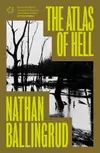
I’m very happy that Dead Ink are bringing Nathan Ballingrud’s stories into print on this side of the Atlantic. If the previous collection, North American Lake Monsters, concentrated mostly on, duh, monster stories, this one Is more explicitly supernatural, with all the stories tapping into an overarching mythology of Hell and the creatures that live there. It’s potent, fiercely imaginative stuff with vivd and intense imagery throughout. Ballingrud appears to have all the power and imagination of the early Clive Barker, and I am more than ready for whatever comes next.
I’m very happy that Dead Ink are bringing Nathan Ballingrud’s stories into print on this side of the Atlantic. If the previous collection, North American Lake Monsters, concentrated mostly on, duh, monster stories, this one Is more explicitly supernatural, with all the stories tapping into an overarching mythology of Hell and the creatures that live there. It’s potent, fiercely imaginative stuff with vivd and intense imagery throughout. Ballingrud appears to have all the power and imagination of the early Clive Barker, and I am more than ready for whatever comes next.

Not actually a new novel, the indicia indicates that this was originally serialised back in 2013. Knowing that it’s easy to spot in the shape of the book, which feels like a novelisation of several D&D sessions (albeit ones put together by a DM with a fondness for the philosophical conundrum alongside the stealing and the stabbing and the setting things on fire). It’s a quick and simple read, with a lot of good gags and with enough going on under the surface to raise questions around personhood and free will. Nothing groundbreaking, but a good diversion for a few hours.
Not actually a new novel, the indicia indicates that this was originally serialised back in 2013. Knowing that it’s easy to spot in the shape of the book, which feels like a novelisation of several D&D sessions (albeit ones put together by a DM with a fondness for the philosophical conundrum alongside the stealing and the stabbing and the setting things on fire). It’s a quick and simple read, with a lot of good gags and with enough going on under the surface to raise questions around personhood and free will. Nothing groundbreaking, but a good diversion for a few hours.

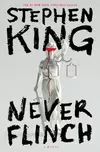
The storylines here don't really gel at all, it feels like two novellas awkwardly pushed together, a feeling only intensified by the cheap and easy way one of them is resolved. There are dangling characters and motivations, hints at setups that don't go anywhere....King's afterword suggests this one was a difficult experience for him, and sadly you can see that on the page. Even in his late period he can still write a good book (I really liked Billy Summers), but this isn't one of them. I wouldn't mind at all if Holly had a rest for a couple of books now.
The storylines here don't really gel at all, it feels like two novellas awkwardly pushed together, a feeling only intensified by the cheap and easy way one of them is resolved. There are dangling characters and motivations, hints at setups that don't go anywhere....King's afterword suggests this one was a difficult experience for him, and sadly you can see that on the page. Even in his late period he can still write a good book (I really liked Billy Summers), but this isn't one of them. I wouldn't mind at all if Holly had a rest for a couple of books now.