
Dan


This is heralded as the last Wayfarers book, but like the others it's a standalone novel that can be appreciated on its own (although there is a nice little string of connection back to the first one). I think the thing I like most about Becky Chambers's books is that they are nice. It's a word that is too often used as a sneer or a substitute for cloying and twee, but it's the apposite word for the way she shows us the best versions of ourselves, with love, principles and courage as the cardinal virtues. It can be seen in the climax here, where people* who didn't previously know each other rally around and work with each other to resolve a crisis, despite fundamental disagreements between some of them. A great deal of the book is simply these characters, thrown together and stuck with each other by circumstance (I wonder if it is a lockdown novel?), chatting and getting to know each other. There's no villain, there's no fate of civilisation resting on the outcome (the stakes at the climax, while very high, are strictly local), just some lovely character building stuff that also manages to touch on gender politics, the notion of a just war, love across cultural divides and societal expectations of motherhood. Chambers is very good at describing a range of alien physiologies, but if I had one quibble it'd be that maybe she's not quite so successful at getting across alien psychologies - for all their different body types and cultural backgrounds, the interior life of these characters is something humans can identify with. But I suppose it's a paradox that a human can't ever convincingly portray an alien way of thought because we simply don't have the mental equipment or headspace to do it without human terms of reference. I'll leave that to the exopsychologists, and just say this is a great book.
*aliens, but you know what I mean. There aren't any humans in this book, which seems only fair after the last one was pretty much exclusively human based iirc.


I have been waiting a long time for a second novel from Steven Hall. I'm happy to report that fans of The Raw Shark Texts will dig this just as much. It's playful, imaginative and oh so twisty, springing about all over the place from father-son relationships to entropy, angels and the real nature of the alphabet. There's a strong narrative throughline alongside the philosophical enquiry and physics lessons, and I kept turning the (virtual) pages in a classic ‘one more bit before I turn out the light' style. A very good read, and I hope his next book comes along a little quicker.


Karachi is an underreported city in the West. I have to confess I had no idea it was a big as it is - 20 million people! This book takes a look at several intertwined lives there, from . It focuses on the poorer and undeveloped parts of the city - the author alludes to the richer districts of Clifton and Defence, but we don't spend any real time there - so it's not a complete picture of the megalopolis, but it is an eye opener. Running gun battles in the streets, entire districts under the control of gangs, the complete entanglement of politics and crime, these aren't things this Bristolian is used to. Shackle makes the streets come alive, with a vivd and evocative sense of place. The people she follows are drawn in well rounded and sympathetic prose. They may be living in a very different world to mine, but the common humanity is clear, and the book is best when it focuses on these small moments of decency and courage. Safdar the ambulance driver in particular is a real hero. The saddest story is Jannat's, a bright young woman whose schooling is cut short by circumstance and tradition (although I should make it clear that she doesn't seem to be unhappy or regretful). A very interesting book that opened a window onto a society previously largely unknown to me past cliche, well worth a read.


review courtesy of my thirteen year old daughter...
I thought Influence was an amazing book. It had lots of different twists and lots of things happened that I didn't expect. It was really interesting to see things from the influencer's point of view rather than the fan's as you don't see that from a social media page. I'm someone who uses Instagram a lot so this was really engaging to read because the characters see social media in a totally different way. There were quite a few major plot twists throughout the book which kept me wanting to read more. I really like how it was told from different points of view, it kept the storyline from becoming one main plot. The only thing I would improve is the ending, it felt a little rushed to get the big plot twist out. However, it was a very good book and I highly recommend it.


Like the previous book centred on A New Hope, this is a collection of forty stories taking place in and around The Empire Strikes Back that run alongside or at right angles to the plot of the film. Also like that book, it's a mixed bag at best. I really liked some of the stories, and strongly disliked others. Obviously there's no way you're going to get a consistent level of quality across forty stories, and my favourites could well be someone else's hates and vice versa. I am slightly perturbed that my favourite stories tended to be the ones that put you in the head of an Imperial. I don't know what that says about me, but the bottom line is that this is a fun if undemanding read, and one every Star Wars fan should get at least some enjoyment out of.


I'm glad to see that Near Dark has enough clout these days to merit a BFI Classic. It's a great film, and Abbott's monograph does a skilful job of illuminating it. It's a short book, but it covers a lot of ground, from diving into the (excellent) cinematography to the ambiguities of the characters, without leaving us feeling shortchanged. It made me want to watch the film with fresh eyes, and you can't really ask more than that from one of these, can you?


This is a comic urban fantasy set around a Fortean Timesalike newspaper in Manchester. It's very likeable, a fun and entertaining read, with some opening sketches for an interesting mythology should this become a series. It's not hard to spot the antecedents. The “small organisation gets involved in defeating occult plots” set up will be familiar to Ben Aaronovitch's fans, while there are also definite elements of Pratchett. McDonnell has a way to go before he can be talked of alongside him, but the camaraderie between the loveable - well, losers would be harsh, but winners is in no way accurate either - of the Stranger Times staff is reminiscent of the Watch. Either way, I wolfed it down in a day, and I'll be looking out for the next one.


A bit frustrating, this one. The author fires out loads of ideas, some of which land and some of which don't, and also teases out lots of threads for discussion. The problem for me is that most of these threads just don't get tugged on enough. There are seeds of some really worthwhile discussion here, but it all gets passed over very quickly. It's partly a failing of the monograph format, I guess, but I would have preferred a book of this length to concentrate on fewer things and follow through on them a bit more. It doesn't help that the whole thing is written in an academic style, which a) brings back terrible memories of my own dissertation, and b) adds a layer of unnecessary verbiage to a book that's already chafing against size restrictions. It's interesting, but not what it could be.


Hippies, pagans, travellers, ley lines, stone circles, old gods and Masonic conspiracies? I should be all over this, and I was back in 89. But in 2020 it hasn't aged at all well. The bones of the story are still interesting, but the telling is so dull. There's no formal experimentation, no attempts to use the page in an interesting way. The medium has just moved on since this was published, and titles like Gideon Falls or Black Monday Murders are far better doses of occult horror.


Four stars for the prose, two for the plot. It's very well written, but parts of the book appear to be aiming for magical realism which doesn't gel with the SF element and makes what should be an emotional climax kind of silly. Also, and this might just be because it's a picaresque, I definitely got the vibe that some of the episodes here were existing short stories or other pieces that had been given bit of a rerub to work them into the novel. A few reviews have mentioned Ursula LeGuin, and I have to say that the last part certainly put me in mind of The Ones Who Walk Away From Omelas. It's not as good as that, of course, but very little is. Overall, flawed but promising.


This is KSR's roadmap to how we might avoid total climate disaster in the coming decades. I say avoid, yet many hundreds of thousands of people die during the course of the book. Grimly, this is the optimistic view. The pessimistic one is much worse. The book engages with politics, global finance, geo engineering, technology, sociology and constructive terrorism to offer a path to a twenty second century Earth that is in much better shape than she is at the moment. There is a framing narrative around the formation and work of the titular Ministry, led by Mary Murphy, the closest thing to a main character there, but really it's a collage novel. There are short discursive interludes from all kinds of viewpoints, and the plentiful chapters hop between viewpoints and locations to give a global picture. It's a good read, with some fine writing - the opening chapter is particularly effective. I do worry that some of the obstacles to Robinson's ideas are overcome too easily. It's a long way from Trump and Johnson to even the 2025 actions depicted in this book, and that's before we get to the destruction of capital a decade or two further down the line. It's going to be a long hard road, but this gives us the hope that it might be worth walking.


Lethem sets up an interesting world with this one, with shades of the cozy dystopia you get in the second half of a John Wyndham novel, and then sets a good plot in that world (a variation on the classic A Stranger Comes To Town formula). Unfortunately he goes on to make a mess of the execution, thanks to his choice and handling of the main character. Journeyman is a void at the centre of the book. He doesn't do anything, doesn't influence anything and has little impact on what happens in the story. He's just a vessel for describing what other people are doing. The story happens around him, and I'm not sure events would have panned out any differently if he hadn't been there at all. The vehicle that drives (excuse the pun) the plot is fantastic, some of the imagery is great, especially at the climax, and Lethem can certainly write, but ultimately this is bit of a nothing book.
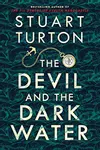


This had an interesting setting, (mostly) on a ship heading from Batavia to Amsterdam in the 1600s. A sense of place is conveyed well, with the descriptions of the sights, the sounds, and yes, the smells, of a hard working cargo ship, but I didn't feel the same about the sense of time. None of the lead characters felt like genuinely seventeenth century people to me, and their attitudes and dialogue often felt a bit too modern, which undid a lot of the hard work put into the descriptions of life aboard the ship.
The mystery is complex and involving, with plenty of twists and misdirection, but the resolution is disappointing. The denouement and subsequent explanation was straight out of Scooby Doo, lacking only someone complaining that they would have got away with it if it hadn't been for those pesky kids.
Basically, the book's an entertaining way of passing a few hours, but little more than that.


An interesting, but sometimes heavy going, read that illuminates an underappreciated area of history. There's a heavy focus on medieval astronomy, which was surprisingly central to life in those times. This dominates the book a little too much to my taste, at the expense of some of the fascinating monastic history, which I could happily have read much more about.
Even in a period often dismissed as ignorant and brutish, the scope of human ingenuity and inquisitiveness impresses.


This initially comes off as a semi random collection of essays and short pieces covering various aspects of the horror genre. Zombies, vampires, Lovecraft are all present and correct. It's a fun read on those terms, but the further you get into it, the more you realise there is a throughline connecting all these seemingly disparate pieces, an underlying narrative that ties the whole thing together. The whole thing finishes up as a disquisition on horror as a coping mechanism, a consideration of how fictional evil works in a world full of real horrors. Interesting stuff, and should be appreciated by all fans of the genre.


The novella length suits this one. It has a simple and direct fable-like quality, and like a fable it uses the specific to highlight the general. For a short book, there's a lot to unpack here - it touches on consumerism, our basic dissatisfaction with what we have versus what we want, abusive partners, relationships with our parents, and more.
It's a smooth and easy read that will pull you in easily. For all that, though, it feels very linear, and there are no real surprises. Her first few novels left me thinking Claire North had a great book in her, but the next couple made me doubt that. Sweet Harmony isn't that great book, but it has smoothed out her wobble.


This is a tale of rebellion, full of scheming, deceit, trickery and bad faith, capped off with an epic and harrowing battle. It's not just the characters being manipulated - your sympathies will slide all over the place as you find yourself urging on someone who stands against the character you were rooting for just one chapter ago. No one is really good, no one is pure evil. They're all a cocktail of motives and emotions, expertly sketched by Abercrombie in a tale told with his trademark sharp dialogue and mordant observation.
Middle volumes can often feel a bit padded and ineffectual, as the big drama gets saved for the climax. Not the case here, as the last quarter builds to one of the grittiest, most widescreen, battles in recent fiction. The final sting in the tail leaves us poised on the edge of all kinds of upset...so frustrating to know the third and final book is already written, but we have to wait a year to read it. Bring it on!


So this novel, published at the end of last year, is about a future in which there's no live music, partly because of a pandemic? Ooof. I like a good dystopia anyway, but the focus on and evident love for music here along with the anti-corporate message speak straight to my punk rock heart. It's an engaging and highly readable novel. Maybe it's a little naively idealistic, but hey, so is rock n roll. If you ever believed that three chords and the truth can change the world, then this is for you.


Exciting secret societies, mystical encounters in forests, creatures from myth walking our modern (well, 1983) streets, booksellers with a secret history and supernatural powers? If I'd read this when I was thirteen I would have really loved it. Even as a curmudgeonly fortysomething I still enjoyed it a lot. It takes the classic YA / fantasy theme of someone on the edge of adulthood discovering their true self and heritage, but reflects it through a lens of English folklore and landscape. There's a nod to Alan Garner early on that gives you an idea of the territory Nix is working in, and there's a strong Dark Is Rising vibe as well. Very readable, very enjoyable.


I've been a voracious reader all my life, so I am probably right in the target market for this amiable and chatty memoir of a life around books. Rentzenbrink mixes autobiography with easy conversation about her favourite books. Her family, especially her father, are well drawn and charming, and there are little nuggets of joy to be had when she alights on a book that you also love. It's a great comfort read, warm and inclusive, with no “oh, you haven't read Proust?” snobbery. My only real complaint is that it's too brief, I could have read twice as much again.


This is set in the world of the Laundry Files, but the Laundry and its work is absent, bar a few passing references. The flavour is the same, though, the usual mix of wild eldritch transdimensional horror and the fetishisation of competency and process you'd expect from hard SF. This one throws Peter Pan into the mix, as an updated version of the Lost Boys get mixed up in a demon strewn hunt for a missing occult book that has some very firm ideas on ownership. Don't be put off by the lack of Bob and Mo, this is very much in the lineage of the earlier books, and if you've enjoyed them this is going to work for you as well.
I'm not 100% sure if it is a standalone, or setting up a new cast for a string of books. It could work either way, and I'd just as happy with a new Imp and co book as I would a new Bob one. And surely there's a crossover brewing down the line....


A mixed bag for me, this one. To begin with I struggled with the clunky prose, which is truly dreadful at times, but the more I read, the more the story began to capture me, and I started reading huge chunks at a time. I found it increasingly easier to ignore my misgivings over the style, and indeed over the daftness of the whole setup (it's an espionage story involving at least four different countries chasing the MacGuffin, and yet every single character involved in this chase is connected to the same school in Oxford). So it became a pacy and engrossing read, and then I hit the ending. On a narrative level, it's deeply unsatisfying, but I reckon you could make a case for it being a political allegory, an illustration of the way strife rolls down from the rich and powerful to those less able to deal with it. Maybe, maybe not.
Essentially what we have here is a thriller with pretensions. Those pretensions don't always convince, but I'd be lying if I said it didn't keep me turning the pages.


Okay, at novel length I probably would have hated this, but as a novella it's an intriguing piece of oblique storytelling that doesn't outstay it's welcome. The story itself is rather slight, but the fun is in the format. The book is essentially a series of... well, not really monologues, but rather halves of dialogues, where you only see responses to a question and not the questions themselves. It's a fun exercise to be forced to put the story together yourself, and this book is a good way to spend an afternoon.


This is a sequel to the similarly excellently named Sixteen ways To Defend A Walled City, but bar a few passing references it works perfectly well as a standalone novel. It's a very entertaining read, clever and sardonic and full of wit and jeopardy. Much like the main character, it has a charm that means you will willingly overlook its flaws and quibbles, and gladly go along with the ride