
Michael Barnes


It's book 3 and the writing, characters and world building all becoming more assured. Further characters stories are developed as are the relationships. If you have enjoyed the other books in the series this will certainly satisfy however minor caution I had thought his was a trilogy but the cliff hanger ending and reveal means I hope this is an ongoing series so prepare yourself for that. Hitting a short chapter that concludes this step in the narrative only to have it end and the last 30 page an except from the first novel was a frustrating.
It's book 3 and the writing, characters and world building all becoming more assured. Further characters stories are developed as are the relationships. If you have enjoyed the other books in the series this will certainly satisfy however minor caution I had thought his was a trilogy but the cliff hanger ending and reveal means I hope this is an ongoing series so prepare yourself for that. Hitting a short chapter that concludes this step in the narrative only to have it end and the last 30 page an except from the first novel was a frustrating.

When I began reading The Shutouts I didn't know it was set in the (Cli-Fi) climate fiction world of her debut Yours for the Taking (2023) but I certainly didn't feel I missed out on understanding the situation or if any of the characters stories were lacking because they were explained in the previous novel.
"Set in parallel points of view 2041 and 2078. In 2041, the world is falling apart due to rapidly accelerating climate change. As storms, fires, and viruses destroy cities, millions of climate refugees find themselves without homes. Kelly, a hacker and activist, is traveling across the United States and writing letters to the daughter she left behind. Seven years earlier, Kelly joined a group she believed would save the world. Starting from her childhood, Kelly recounts in devastating detail how and why she left—and, even more importantly, why she’s returning.
In 2078, a group of queer characters seeks out new ways of surviving in a world that is unimaginable and nearly uninhabitable. Max, a nonbinary person who grew up in the Winter Liberation Army, discovers truths about their home that make it impossible to stay. Survivalist Orchid sets out to save her ex-girlfriend Ava from the Inside Project, a highly selective, government-funded climate protection program. Meanwhile, Ava and her daughter, Brook, have escaped the Inside after unearthing a deadly secret. Finally, climate refugee Camilla decides to wait for her friend Orchid to return, while their group travels further north for safety. As Max, Orchid, Ava, Brook, and Camilla try to survive both together and apart, they begin to discover the known and unknown connections among them. A page-turning queer, feminist dystopia". -From Kirkus reviews
As the novel races to a finish, the dual story lines converge satisfyingly. The novel ends with a perfect blend of sadness and hope that refuses to downplay the dangers of climate change nor discount humanity’s desire to survive.
When I began reading The Shutouts I didn't know it was set in the (Cli-Fi) climate fiction world of her debut Yours for the Taking (2023) but I certainly didn't feel I missed out on understanding the situation or if any of the characters stories were lacking because they were explained in the previous novel.
"Set in parallel points of view 2041 and 2078. In 2041, the world is falling apart due to rapidly accelerating climate change. As storms, fires, and viruses destroy cities, millions of climate refugees find themselves without homes. Kelly, a hacker and activist, is traveling across the United States and writing letters to the daughter she left behind. Seven years earlier, Kelly joined a group she believed would save the world. Starting from her childhood, Kelly recounts in devastating detail how and why she left—and, even more importantly, why she’s returning.
In 2078, a group of queer characters seeks out new ways of surviving in a world that is unimaginable and nearly uninhabitable. Max, a nonbinary person who grew up in the Winter Liberation Army, discovers truths about their home that make it impossible to stay. Survivalist Orchid sets out to save her ex-girlfriend Ava from the Inside Project, a highly selective, government-funded climate protection program. Meanwhile, Ava and her daughter, Brook, have escaped the Inside after unearthing a deadly secret. Finally, climate refugee Camilla decides to wait for her friend Orchid to return, while their group travels further north for safety. As Max, Orchid, Ava, Brook, and Camilla try to survive both together and apart, they begin to discover the known and unknown connections among them. A page-turning queer, feminist dystopia". -From Kirkus reviews
As the novel races to a finish, the dual story lines converge satisfyingly. The novel ends with a perfect blend of sadness and hope that refuses to downplay the dangers of climate change nor discount humanity’s desire to survive.
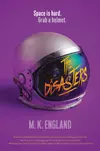
A fun science fiction story, imagine the golden age science fiction stories of Robert Heinlein about plucky teens saving the solar systems but without the heteronormativity, American exceptionalism and masculine hegemony (yeah that doesn't leave much does it).
The story of 5 teenage underdogs trying to find their place in a universe that is intent on discarding the rejects. M. K. England sets up a unique and brilliant world of Earth and space in the year 2194. Space travel is a constant, there are hundreds of fully-functioning colonies, and Earth has a strict no-return policy.
Our chosen family are all washed out the selection process for the Academy and I loved how England drops us into the action from almost the first page with out any build up or backstory. The teens stories are organically revealed. Becca Evans at " Nax Hall, the young, attractive, hotshot pilot, is openly bi. Readers get to sympathize with teenage hormones and unfortunate timing, quickly-developed crushes, and lots of inconvenient emotions as Nax recognizes his attraction to other members of his crew and reminisces on past relationships". One of his crew is trans (with a sad, real connection to our own current events). She is a brilliant, kick-ass character, and also was a favorite.
Case, the engineering wiz, Zee, the high-kicking medic, and Rion, the slightly-posh and roguishly handsome smooth talker. Along the way, they meet up with Asra, who promises to get them a ship if they can just help her steal it. And I love every single one of them. These characters are unique, flawed, and undeniably interesting. Each one is brilliant, if atypical, and make up a crew that patches each other’s cracks and works well together.
And while the story is resolved I wouldn't mind spending more time with these characters in this world and the ending certainly leave that open with a new crew and a their spaceship in a big system of worlds.
A fun science fiction story, imagine the golden age science fiction stories of Robert Heinlein about plucky teens saving the solar systems but without the heteronormativity, American exceptionalism and masculine hegemony (yeah that doesn't leave much does it).
The story of 5 teenage underdogs trying to find their place in a universe that is intent on discarding the rejects. M. K. England sets up a unique and brilliant world of Earth and space in the year 2194. Space travel is a constant, there are hundreds of fully-functioning colonies, and Earth has a strict no-return policy.
Our chosen family are all washed out the selection process for the Academy and I loved how England drops us into the action from almost the first page with out any build up or backstory. The teens stories are organically revealed. Becca Evans at " Nax Hall, the young, attractive, hotshot pilot, is openly bi. Readers get to sympathize with teenage hormones and unfortunate timing, quickly-developed crushes, and lots of inconvenient emotions as Nax recognizes his attraction to other members of his crew and reminisces on past relationships". One of his crew is trans (with a sad, real connection to our own current events). She is a brilliant, kick-ass character, and also was a favorite.
Case, the engineering wiz, Zee, the high-kicking medic, and Rion, the slightly-posh and roguishly handsome smooth talker. Along the way, they meet up with Asra, who promises to get them a ship if they can just help her steal it. And I love every single one of them. These characters are unique, flawed, and undeniably interesting. Each one is brilliant, if atypical, and make up a crew that patches each other’s cracks and works well together.
And while the story is resolved I wouldn't mind spending more time with these characters in this world and the ending certainly leave that open with a new crew and a their spaceship in a big system of worlds.


I'm a fan of huge fan of Neon Yang’s Tensorate novellas So I was excited to read this transmutation of saint Joan of Arc into a foul-mouthed and combative protagonist Misery Nomaki.
The world building is incredible, sufficiently strange but with weird but firm underlying structure With the battles fought by holy mechs It’s a little Pacific Rim, a little medieval Europe with the combative arguments of power between monarchs and the catholic church. The ritualistic, authoritarian trappings of empire around that which call to mind Yoon Ha Lee’s Hexarchate or Ann Leckie’s Imperial Radch; and the giant sacred space robots and the battles between the Empire’s space robots and the forces of the rebel Heretics – smaller in number but able to engage in more novel formations thanks to said heresy. (of course I am rooting for the heretics, because science)
As a space opera at heart, there will be terms and names that make your brain sputter in confusion. Just go with it, the meaning will soon be clear enough. An example of this wielding of language to create different space the groups of mechs called servings then of course a battle group would be termed a banquet.
"The narration begins with someone asking an angel for Misery's story, to make sense of things, which explains the omniscient narration and the interludes that explain some of the backstory of humanity going into space, how the Church of the Faithful was created and how the Heretics split off. The holy war between them is officially at a truce, and there are stones that can be manipulated by those considered saints or are holy parts of the Church. There are also those infected with the Void, the emptiness and mutated aspects of space. It gets into the mind first, creating hallucinations and then personality changes before completely obliterating the human form with mutations and violence. From the start, Misery is aware of the void sickness inside her, as she has a hallucination following her and running commentary or telling her what to do; this sickness had also killed her mother years ago. But she is able to manipulate the holy stones, changing their shapes or moving through their doors, so everyone believes she is the next Messiah that was prophesied. She must train to use the mechs in combat against remaining Heretic forces while not really believing in her own hype. Her goal is survival, and if the rest of humanity survives too, that's a bonus".
The book ends in what I think suggests the story has more to tell and I have seen suggestions its is a duology or trilogy and I certainly would love to see more of this world and Misery.
I'm a fan of huge fan of Neon Yang’s Tensorate novellas So I was excited to read this transmutation of saint Joan of Arc into a foul-mouthed and combative protagonist Misery Nomaki.
The world building is incredible, sufficiently strange but with weird but firm underlying structure With the battles fought by holy mechs It’s a little Pacific Rim, a little medieval Europe with the combative arguments of power between monarchs and the catholic church. The ritualistic, authoritarian trappings of empire around that which call to mind Yoon Ha Lee’s Hexarchate or Ann Leckie’s Imperial Radch; and the giant sacred space robots and the battles between the Empire’s space robots and the forces of the rebel Heretics – smaller in number but able to engage in more novel formations thanks to said heresy. (of course I am rooting for the heretics, because science)
As a space opera at heart, there will be terms and names that make your brain sputter in confusion. Just go with it, the meaning will soon be clear enough. An example of this wielding of language to create different space the groups of mechs called servings then of course a battle group would be termed a banquet.
"The narration begins with someone asking an angel for Misery's story, to make sense of things, which explains the omniscient narration and the interludes that explain some of the backstory of humanity going into space, how the Church of the Faithful was created and how the Heretics split off. The holy war between them is officially at a truce, and there are stones that can be manipulated by those considered saints or are holy parts of the Church. There are also those infected with the Void, the emptiness and mutated aspects of space. It gets into the mind first, creating hallucinations and then personality changes before completely obliterating the human form with mutations and violence. From the start, Misery is aware of the void sickness inside her, as she has a hallucination following her and running commentary or telling her what to do; this sickness had also killed her mother years ago. But she is able to manipulate the holy stones, changing their shapes or moving through their doors, so everyone believes she is the next Messiah that was prophesied. She must train to use the mechs in combat against remaining Heretic forces while not really believing in her own hype. Her goal is survival, and if the rest of humanity survives too, that's a bonus".
The book ends in what I think suggests the story has more to tell and I have seen suggestions its is a duology or trilogy and I certainly would love to see more of this world and Misery.

It was great to return to E∂ian world of MY LADY JANE! The focus is on Mary Queen of Scott's while in France we meet Francis her childhood friend and future spouse, not not that one they other Francis. Cynthia Hand amuses with her collection of historical details. It was a joy to encounter Jay Grey, Edward and now Elizabeth (good queen Bess) you don't need to know this history but it does highten the enjoyment. For example I learned that John Knox was a real figure who published 'The First Blast of the Trumpet Against the Monstruous Regiment of Women'
A fun historical rump for those who loved My Lady Jane and The Princess Bride.
It was great to return to E∂ian world of MY LADY JANE! The focus is on Mary Queen of Scott's while in France we meet Francis her childhood friend and future spouse, not not that one they other Francis. Cynthia Hand amuses with her collection of historical details. It was a joy to encounter Jay Grey, Edward and now Elizabeth (good queen Bess) you don't need to know this history but it does highten the enjoyment. For example I learned that John Knox was a real figure who published 'The First Blast of the Trumpet Against the Monstruous Regiment of Women'
A fun historical rump for those who loved My Lady Jane and The Princess Bride.

This one was fun. The fantasy Dark Lord/lady/nonbinary who we get to discover is actually a good is one I never tire of reading L.G. Estrella's The Unconventional Heroes beginning with Two Necromancers, a Bureaucrat, and an Elf, Hannah Nicole Maehrer's Assistant to the Villain and my first exposure to this genre Paul Dale's The Dark Lord's handbook.
The narrative driver in this one is the Dread Lord Gavrax wakes up in a summoning circle with a whole in his memories and looming dread ritual with three other evil (differing values of Evil) wizards he has to spend much of the story playing catch up with goblin minions, townsfolk used to suffering under the yoke of a dark lord, stalwart (though in many ways clueless) heroes and a kidnapped princess who is by every measure smarter than he is. Also the more Gav learns of Gavrax the less he likes and not sure he wants his memories back.
Mediation on what we are as a person, our thoughts or our actions, and a clever use of Chekhov's moat squid mean I am hoping to read more from Caitlin Rozakis after finishing this one.
This one was fun. The fantasy Dark Lord/lady/nonbinary who we get to discover is actually a good is one I never tire of reading L.G. Estrella's The Unconventional Heroes beginning with Two Necromancers, a Bureaucrat, and an Elf, Hannah Nicole Maehrer's Assistant to the Villain and my first exposure to this genre Paul Dale's The Dark Lord's handbook.
The narrative driver in this one is the Dread Lord Gavrax wakes up in a summoning circle with a whole in his memories and looming dread ritual with three other evil (differing values of Evil) wizards he has to spend much of the story playing catch up with goblin minions, townsfolk used to suffering under the yoke of a dark lord, stalwart (though in many ways clueless) heroes and a kidnapped princess who is by every measure smarter than he is. Also the more Gav learns of Gavrax the less he likes and not sure he wants his memories back.
Mediation on what we are as a person, our thoughts or our actions, and a clever use of Chekhov's moat squid mean I am hoping to read more from Caitlin Rozakis after finishing this one.

This was a delightful discovery, its one of the story ideas that just click.
A spaceship AI who love nothing more than traveling Earth and Alpha Centauri B. With a name like Demeter you were bound to carry Dracula on board. Since vampires aren't seen on technology then the death of all the crew and passengers creates a mystery. Next trip its a shapeshifting werewolf, also more death, next trip its passengers are infected with a body transforming Cthulhu cult, subsequently we meet a Frankenstien linked to the first mass deaths, an alien hive that seems consider its self an ancient mummy called Steve.
Its the dialog and back and forths getting to know Demeter, seeing points of view from Steward, Demeter’s on-board medical AI. Steward is practical and sarcastic, with a human-interaction module that helps them see things that Demeter can’t. On another of Demeter’s ill-fated flights, she must find a way to save two children from something on board, something that she can only find reference to in her folklore files. Between Demeter’s highly logical AI and Steward’s human-interaction skills, they work together to achieve their mission objective and save the children.
But after so many unexplained occurrences and catastrophic flights, people are beginning to suspect that the ship is the problem and Demeter is in danger of being scrapped for being a ‘ghost ship’.
This story as I said was a cheerful delight and sometimes that is what you need to read.
This was a delightful discovery, its one of the story ideas that just click.
A spaceship AI who love nothing more than traveling Earth and Alpha Centauri B. With a name like Demeter you were bound to carry Dracula on board. Since vampires aren't seen on technology then the death of all the crew and passengers creates a mystery. Next trip its a shapeshifting werewolf, also more death, next trip its passengers are infected with a body transforming Cthulhu cult, subsequently we meet a Frankenstien linked to the first mass deaths, an alien hive that seems consider its self an ancient mummy called Steve.
Its the dialog and back and forths getting to know Demeter, seeing points of view from Steward, Demeter’s on-board medical AI. Steward is practical and sarcastic, with a human-interaction module that helps them see things that Demeter can’t. On another of Demeter’s ill-fated flights, she must find a way to save two children from something on board, something that she can only find reference to in her folklore files. Between Demeter’s highly logical AI and Steward’s human-interaction skills, they work together to achieve their mission objective and save the children.
But after so many unexplained occurrences and catastrophic flights, people are beginning to suspect that the ship is the problem and Demeter is in danger of being scrapped for being a ‘ghost ship’.
This story as I said was a cheerful delight and sometimes that is what you need to read.

I have enjoyed reading Annalee Newitz for years now, (and their monthly podcast Our opinions are correct with Charlie Jane Anders) and this latest in another thoroughly researched and engaging banger.
he book covers the origins of Psychological Warfare in the united states including the American Indian Wars (better characterized as a war on Indigenous peoples); the story of the Coquille tribe's recovery of their "lost map" was a fascinating example of how reclaiming history can empower marginalized communities.
The rise of Psychological Warfare codified by Paul Myron Anthony Linebarger better known as the science fiction writer Cordwainer Smith, whose stories I read growing up. The 'brainwashing scare' that lead the stories like The Manchurian Candidate. Interestingly Linebarger's believed that the ultimate goal of psyops was to end war, not to perpetuate conflict. He advocated for investing in public education, opening national borders, and supporting a robust free press.
The psychology of the authoritarian personality and the f (for fascist) test developed early in the 20 century; the War Department’s launch of a Propaganda Section during World War I; Edward Bernays’s application of his uncle Sigmund Freud’s theories to the field of advertising; the gender politics of early comic books (including censorship campaigns or why the early Wonder Woman comixs were awesome); the role of the Russian state’s Internet Research Agency in the 2016 election.
And loved that in the final chapter one of the tools suggested to resist this nightmare was public libraries, which for me is always a litmus test for what I think of a person is what they think of public libraries.
All leading to the contemporary use of psyops in the United States that see Culture Wars Weaponized Stories Against Each Other and the specific qualities and functions of off-line libraries.
I have enjoyed reading Annalee Newitz for years now, (and their monthly podcast Our opinions are correct with Charlie Jane Anders) and this latest in another thoroughly researched and engaging banger.
he book covers the origins of Psychological Warfare in the united states including the American Indian Wars (better characterized as a war on Indigenous peoples); the story of the Coquille tribe's recovery of their "lost map" was a fascinating example of how reclaiming history can empower marginalized communities.
The rise of Psychological Warfare codified by Paul Myron Anthony Linebarger better known as the science fiction writer Cordwainer Smith, whose stories I read growing up. The 'brainwashing scare' that lead the stories like The Manchurian Candidate. Interestingly Linebarger's believed that the ultimate goal of psyops was to end war, not to perpetuate conflict. He advocated for investing in public education, opening national borders, and supporting a robust free press.
The psychology of the authoritarian personality and the f (for fascist) test developed early in the 20 century; the War Department’s launch of a Propaganda Section during World War I; Edward Bernays’s application of his uncle Sigmund Freud’s theories to the field of advertising; the gender politics of early comic books (including censorship campaigns or why the early Wonder Woman comixs were awesome); the role of the Russian state’s Internet Research Agency in the 2016 election.
And loved that in the final chapter one of the tools suggested to resist this nightmare was public libraries, which for me is always a litmus test for what I think of a person is what they think of public libraries.
All leading to the contemporary use of psyops in the United States that see Culture Wars Weaponized Stories Against Each Other and the specific qualities and functions of off-line libraries.

From the category of stories can be either Mirrors or Windows this "Ocean's 8 meets Blade Runner in this trail-blazing debut science fiction novel and swashbuckling love letter to Hawai'i about being forced to find a new home and striving to build a better one" is definitely a Windows for me (unsurprisingly given its amazing queer, nonbinary author) and I am all the better for having read it. It’s a science fiction caper/heist and I was resisting the temptation to skip parts which were suggestive of our protagonist Edie being betrayed (again) because I didn't want to read the heartbreak. The protagonist and his family is heartfelt, believable and so worthy that I wanted everything to work out, inspite of all the moving parts to the plan, inspite of the forces arrayed against them, cursing the almost inevitable betrayal, Can't ask for more than that in my caper stories.
From the category of stories can be either Mirrors or Windows this "Ocean's 8 meets Blade Runner in this trail-blazing debut science fiction novel and swashbuckling love letter to Hawai'i about being forced to find a new home and striving to build a better one" is definitely a Windows for me (unsurprisingly given its amazing queer, nonbinary author) and I am all the better for having read it. It’s a science fiction caper/heist and I was resisting the temptation to skip parts which were suggestive of our protagonist Edie being betrayed (again) because I didn't want to read the heartbreak. The protagonist and his family is heartfelt, believable and so worthy that I wanted everything to work out, inspite of all the moving parts to the plan, inspite of the forces arrayed against them, cursing the almost inevitable betrayal, Can't ask for more than that in my caper stories.

If you enjoyed the first book in this duology ALL OF US VILLAINS, then read this sequel a soon after as you can. The Hunger Gamesesque feel but with magic of curses and spells was only heightened and with the death of a major character revealing how you can choose to be the hero or the villain of your story was heartfelt. The constant threat of betrayal, switching back and forth of allegiances and race against time out due to the curse breaking heightened the tension, and in this story you will find the powers that be and the adults are the real monsters (one of the defining characteristics of the Young Adult genre). This was a satisfying end to this story.
If you enjoyed the first book in this duology ALL OF US VILLAINS, then read this sequel a soon after as you can. The Hunger Gamesesque feel but with magic of curses and spells was only heightened and with the death of a major character revealing how you can choose to be the hero or the villain of your story was heartfelt. The constant threat of betrayal, switching back and forth of allegiances and race against time out due to the curse breaking heightened the tension, and in this story you will find the powers that be and the adults are the real monsters (one of the defining characteristics of the Young Adult genre). This was a satisfying end to this story.


Over on Kirkus there is an excellent spoiler free review "bloody tournament will determine whose family controls the only high magick in the world.
Until someone spilled the city of Ilvernath’s dark secret in the anonymously authored book A Tradition of Tragedy, the world thought that the high magick was gone. Instead, seven families are locked into a curse tournament, providing a child every 20 years to fight for exclusive control over it. Rotating third-person narration follows monstrous favorite Alistair (of the sinister and most winningest Lowe family), paparazzi darling and talented spellmaker Isobel (of the Macaslan family, who are viewed as distasteful vultures), brains-and-brawn underdog Gavin (of the Grieve family, a lost cause that’s never produced a winner), and born-for-heroism Briony (of the respected Thorburn family). Prior to the tournament’s starting, exquisite worldbuilding shines as the characters navigate family stories and outsiders trying to influence the tournament and deal with the spellmakers and cursemakers who equip the champions. One cursemaker in particular puts ideas in the aspiring champions’ heads about whether the tournament’s curse can be changed—or broken. The competitors teeter wildly between heroism and villainy, especially once the tournament starts and their preconceived ideas of themselves and each other are challenged in lethal combat. Of the seven champions, Finley has dark skin and curly black hair, while the rest are pale; among background characters there’s ethnic diversity and casual queer inclusion".
I don't recommend starting this first book in the duology unless you have "All of Our Demise" to hand as the end of this book is very cliffhangery.
Over on Kirkus there is an excellent spoiler free review "bloody tournament will determine whose family controls the only high magick in the world.
Until someone spilled the city of Ilvernath’s dark secret in the anonymously authored book A Tradition of Tragedy, the world thought that the high magick was gone. Instead, seven families are locked into a curse tournament, providing a child every 20 years to fight for exclusive control over it. Rotating third-person narration follows monstrous favorite Alistair (of the sinister and most winningest Lowe family), paparazzi darling and talented spellmaker Isobel (of the Macaslan family, who are viewed as distasteful vultures), brains-and-brawn underdog Gavin (of the Grieve family, a lost cause that’s never produced a winner), and born-for-heroism Briony (of the respected Thorburn family). Prior to the tournament’s starting, exquisite worldbuilding shines as the characters navigate family stories and outsiders trying to influence the tournament and deal with the spellmakers and cursemakers who equip the champions. One cursemaker in particular puts ideas in the aspiring champions’ heads about whether the tournament’s curse can be changed—or broken. The competitors teeter wildly between heroism and villainy, especially once the tournament starts and their preconceived ideas of themselves and each other are challenged in lethal combat. Of the seven champions, Finley has dark skin and curly black hair, while the rest are pale; among background characters there’s ethnic diversity and casual queer inclusion".
I don't recommend starting this first book in the duology unless you have "All of Our Demise" to hand as the end of this book is very cliffhangery.

I think I enjoyed Assassin's Quest even more than the previous two books in the trilogy. Not only are the characters of Fitz, the fool and others more fleshed out with more developed characters (and sufficiently developed to have the foibles that they have had through out the story to be called out by other characters thank you Starling), the return of Queen Kettricken still woefully under utilized for such an interesting person, but the addition of more women such as the traveling minstrel Starling (whose sexual assault was handled in such a more sensitive way as to highlight the distinction between old fantasy writing before the concept of sensitivity readers) and the mysterious woman named Kettle.
The fool's discussion on gender and plumbing are also a welcome addition to fantasy.
An exciting resolution to all the threads Hobbs has worn to date and I look forward to returning to this world in the further books in the Realm of the Elderlings.
I think I enjoyed Assassin's Quest even more than the previous two books in the trilogy. Not only are the characters of Fitz, the fool and others more fleshed out with more developed characters (and sufficiently developed to have the foibles that they have had through out the story to be called out by other characters thank you Starling), the return of Queen Kettricken still woefully under utilized for such an interesting person, but the addition of more women such as the traveling minstrel Starling (whose sexual assault was handled in such a more sensitive way as to highlight the distinction between old fantasy writing before the concept of sensitivity readers) and the mysterious woman named Kettle.
The fool's discussion on gender and plumbing are also a welcome addition to fantasy.
An exciting resolution to all the threads Hobbs has worn to date and I look forward to returning to this world in the further books in the Realm of the Elderlings.