
Michael Barnes


This reads as a very confident and assured writer, I was so impressed to discover this was a debut author. I signed up for this book as a pre-order after one of my favourites Xiran Jay Zhao revealed that Cait Corrain author whose debut fantasy novel Crown of Starlight was scheduled to be publish in 2024 had created multiple fake accounts on Goodreads to review bomb other authors of colour. Kamilah Cole's (So Let Them Burn), Bethany Baptiste's (The Poisons We Drink), Frances White (Voyage of the Damned), and K.M. Enright (Mistress of Lies). So I immediately pre-ordered these novels.
The worldbuilding and the mythos of how magic works in the contemporary greater Washington, D.C., metro area id intricate and interesting, but it's the family and relations between the characters is a real strength. Leading off by the protagonist Venus’ mother, the formidable Clarissa Stoneheart, used to be the Love Witcher. From Kirkus review "She broke her pledge to only brew love potions, lost her magic as a consequence, and then turned her attention to teaching Venus, the new Love Witcher, “her 3-B philosophy…Get your bag, brew, and bounce.” When Clarissa is murdered, Venus is tested to her limits as she fights external forces by using her calling (her magical ability to brew) for political gain while also struggling to quiet the deviation (or trauma-inflicted corruption of her calling) that infects her. The deviation, which she calls It, can give Venus access to immense power, but she’s still haunted, in more ways than she realizes, by the first time it was uncaged, when she was 15. Patient readers will eventually encounter unexpected twists and turns that provide an exciting and satisfying ending.
This reads as a very confident and assured writer, I was so impressed to discover this was a debut author. I signed up for this book as a pre-order after one of my favourites Xiran Jay Zhao revealed that Cait Corrain author whose debut fantasy novel Crown of Starlight was scheduled to be publish in 2024 had created multiple fake accounts on Goodreads to review bomb other authors of colour. Kamilah Cole's (So Let Them Burn), Bethany Baptiste's (The Poisons We Drink), Frances White (Voyage of the Damned), and K.M. Enright (Mistress of Lies). So I immediately pre-ordered these novels.
The worldbuilding and the mythos of how magic works in the contemporary greater Washington, D.C., metro area id intricate and interesting, but it's the family and relations between the characters is a real strength. Leading off by the protagonist Venus’ mother, the formidable Clarissa Stoneheart, used to be the Love Witcher. From Kirkus review "She broke her pledge to only brew love potions, lost her magic as a consequence, and then turned her attention to teaching Venus, the new Love Witcher, “her 3-B philosophy…Get your bag, brew, and bounce.” When Clarissa is murdered, Venus is tested to her limits as she fights external forces by using her calling (her magical ability to brew) for political gain while also struggling to quiet the deviation (or trauma-inflicted corruption of her calling) that infects her. The deviation, which she calls It, can give Venus access to immense power, but she’s still haunted, in more ways than she realizes, by the first time it was uncaged, when she was 15. Patient readers will eventually encounter unexpected twists and turns that provide an exciting and satisfying ending.

This is the fourth in the Lady Astronaut series by Mary Robinette Kowal which began in 2018 with The Calculating Stars. I have enjoyed reading each with its blend of technical details of how in 1952
a meteorite strikes the eastern seaboard of the United States. Climate change from the disaster will make the Earth uninhabitable within decades and so the world begins to embark on a plan to build habitats off earth.
The previous books have seen lunar landings, a moon platform, a Mars landing and now in the 1970s the first steps of establishing a habitat on Mars.
The satisfactions of these novels for me is seeing how the technological achievements may exceed our own but catching up on the social issues which our world has worked through with the sexism faced by our protagonist Elma York, mathematician and pilot with attitudes I wish we could believe were left in the eras covered by the books. The racism so heightened as major plot driver in the previous novel with its repercussions a major factor in this book. One of the crucial points in this novel is trying to support scientists, engineers, etc from a coalitions dispart nations all while 43 minutes from communication of earth.
I look forward to reading more about this future.
This is the fourth in the Lady Astronaut series by Mary Robinette Kowal which began in 2018 with The Calculating Stars. I have enjoyed reading each with its blend of technical details of how in 1952
a meteorite strikes the eastern seaboard of the United States. Climate change from the disaster will make the Earth uninhabitable within decades and so the world begins to embark on a plan to build habitats off earth.
The previous books have seen lunar landings, a moon platform, a Mars landing and now in the 1970s the first steps of establishing a habitat on Mars.
The satisfactions of these novels for me is seeing how the technological achievements may exceed our own but catching up on the social issues which our world has worked through with the sexism faced by our protagonist Elma York, mathematician and pilot with attitudes I wish we could believe were left in the eras covered by the books. The racism so heightened as major plot driver in the previous novel with its repercussions a major factor in this book. One of the crucial points in this novel is trying to support scientists, engineers, etc from a coalitions dispart nations all while 43 minutes from communication of earth.
I look forward to reading more about this future.
This reads as a very confident and assured writer, I was so impressed to discover this was a debut author. I signed up for this book as a pre-order after one of my favourites Xiran Jay Zhao revealed that Cait Corrain author whose debut fantasy novel Crown of Starlight was scheduled to be publish in 2024 had created multiple fake accounts on Goodreads to review bomb other authors of colour. Kamilah Cole's (So Let Them Burn), Bethany Baptiste's (The Poisons We Drink), Frances White (Voyage of the Damned), and K.M. Enright (Mistress of Lies). So I immediately pre-ordered these novels.
The worldbuilding and the mythos of how magic works in the contemporary greater Washington, D.C., metro area id intricate and interesting, but it's the family and relations between the characters is a real strength. Leading off by the protagonist Venus’ mother, the formidable Clarissa Stoneheart, used to be the Love Witcher. From Kirkus review "She broke her pledge to only brew love potions, lost her magic as a consequence, and then turned her attention to teaching Venus, the new Love Witcher, “her 3-B philosophy…Get your bag, brew, and bounce.” When Clarissa is murdered, Venus is tested to her limits as she fights external forces by using her calling (her magical ability to brew) for political gain while also struggling to quiet the deviation (or trauma-inflicted corruption of her calling) that infects her. The deviation, which she calls It, can give Venus access to immense power, but she’s still haunted, in more ways than she realizes, by the first time it was uncaged, when she was 15. Patient readers will eventually encounter unexpected twists and turns that provide an exciting and satisfying ending.
This reads as a very confident and assured writer, I was so impressed to discover this was a debut author. I signed up for this book as a pre-order after one of my favourites Xiran Jay Zhao revealed that Cait Corrain author whose debut fantasy novel Crown of Starlight was scheduled to be publish in 2024 had created multiple fake accounts on Goodreads to review bomb other authors of colour. Kamilah Cole's (So Let Them Burn), Bethany Baptiste's (The Poisons We Drink), Frances White (Voyage of the Damned), and K.M. Enright (Mistress of Lies). So I immediately pre-ordered these novels.
The worldbuilding and the mythos of how magic works in the contemporary greater Washington, D.C., metro area id intricate and interesting, but it's the family and relations between the characters is a real strength. Leading off by the protagonist Venus’ mother, the formidable Clarissa Stoneheart, used to be the Love Witcher. From Kirkus review "She broke her pledge to only brew love potions, lost her magic as a consequence, and then turned her attention to teaching Venus, the new Love Witcher, “her 3-B philosophy…Get your bag, brew, and bounce.” When Clarissa is murdered, Venus is tested to her limits as she fights external forces by using her calling (her magical ability to brew) for political gain while also struggling to quiet the deviation (or trauma-inflicted corruption of her calling) that infects her. The deviation, which she calls It, can give Venus access to immense power, but she’s still haunted, in more ways than she realizes, by the first time it was uncaged, when she was 15. Patient readers will eventually encounter unexpected twists and turns that provide an exciting and satisfying ending.

A young adult novel very much in demand at my library. When it was chosen at the previous bookclub a month back I was No 12 on the list. By the weekend before book club I was down to No 6 which speaks to its popularity for a book published in 2005.
More lyrical than I expected - haven't read much WWII set in Germany literature. My exposure has been more Thomas Keneally 'Schindler's list', Primo Levi's 'If This Is a Man', and Art Spiegelman 'Maus'.
I was intrigued by the use of a philosophical, sentimental, melancholy grim reaper as the narrator, giving it a more resonant 3rd person perspective. Death was able to provide some of the more reflections, “I am haunted by humans.” "I wanted to tell the book thief many things, about beauty and brutality. But what could I tell her about those things that she didn’t already know? I wanted to explain that I am constantly overestimating and underestimating the human race—that rarely do I ever simply estimate it. I wanted to ask her how the same thing could be so ugly and so glorious, and its words and stories so damning and brilliant.
This big, (552 pages depending on edition and font size) expansive novel is a leisurely working out of fate, of seemingly chance encounters and events that ultimately touch, like dominoes as they collide. The writing is elegant, philosophical and moving. I have read a few reviews that recommend it is to be read slowly and savored. Sorry not really my thing but I can understand why it was so well regarded.
A young adult novel very much in demand at my library. When it was chosen at the previous bookclub a month back I was No 12 on the list. By the weekend before book club I was down to No 6 which speaks to its popularity for a book published in 2005.
More lyrical than I expected - haven't read much WWII set in Germany literature. My exposure has been more Thomas Keneally 'Schindler's list', Primo Levi's 'If This Is a Man', and Art Spiegelman 'Maus'.
I was intrigued by the use of a philosophical, sentimental, melancholy grim reaper as the narrator, giving it a more resonant 3rd person perspective. Death was able to provide some of the more reflections, “I am haunted by humans.” "I wanted to tell the book thief many things, about beauty and brutality. But what could I tell her about those things that she didn’t already know? I wanted to explain that I am constantly overestimating and underestimating the human race—that rarely do I ever simply estimate it. I wanted to ask her how the same thing could be so ugly and so glorious, and its words and stories so damning and brilliant.
This big, (552 pages depending on edition and font size) expansive novel is a leisurely working out of fate, of seemingly chance encounters and events that ultimately touch, like dominoes as they collide. The writing is elegant, philosophical and moving. I have read a few reviews that recommend it is to be read slowly and savored. Sorry not really my thing but I can understand why it was so well regarded.
Updated a reading goal:
Read 52 books by December 30, 2025
Progress so far: 25 / 52 48%

I think Bill Capossere at Fantasy Literature website said it best
"Cutesy tag lines for a review of The Empire of Gold (2020), S. A. Chakraborty’s concluding novel for her DAEVABAD trilogy of humans, djinn, and water elementals, sort of write themselves:
“Chakraborty strikes gold with the final novel in … ”
“Chakraborty is on fire with her newest … ”
“Come on djinn, the water’s fine … ” .
The Empire of Gold is a fully satisfying conclusion to this excellent trilogy, even though there are definitely moments that many fans won’t like for whatever reason. But, as a whole, what matters is that this feels like a bittersweet close one that is both deserved and earned, for both good and ill. And that is something to be celebrated .
I think Bill Capossere at Fantasy Literature website said it best
"Cutesy tag lines for a review of The Empire of Gold (2020), S. A. Chakraborty’s concluding novel for her DAEVABAD trilogy of humans, djinn, and water elementals, sort of write themselves:
“Chakraborty strikes gold with the final novel in … ”
“Chakraborty is on fire with her newest … ”
“Come on djinn, the water’s fine … ” .
The Empire of Gold is a fully satisfying conclusion to this excellent trilogy, even though there are definitely moments that many fans won’t like for whatever reason. But, as a whole, what matters is that this feels like a bittersweet close one that is both deserved and earned, for both good and ill. And that is something to be celebrated .

I found this a satisfying conclusion to this fantasy romance duology. While the focus of book one, CONSORT OF FIRE, was largely on the developing relationship between Ash, Sachi, and Zanya, this second book puts the brewing world politics more front and center. Our main characters and the rest of the gods in the Court of Dreamers are gearing up for a war on two fronts, and they’re fighting with every tool in their arsenal. There’s politicking to be had at royal banquets, training of latent magical gifts, and a truly impressive climactic battle scene on the scale of gods. Whilst there were fewer spicy scenes they were longer and more intense more Scotch Bonnet than Habanero I'd say.
I have read that Kit Rocha's is planning more stories in this world one focusing on Aleksi, the god known as the Lover. Certainly some of the characters in these stories were intriguing and the world building interesting enough to carry more stories.
I found this a satisfying conclusion to this fantasy romance duology. While the focus of book one, CONSORT OF FIRE, was largely on the developing relationship between Ash, Sachi, and Zanya, this second book puts the brewing world politics more front and center. Our main characters and the rest of the gods in the Court of Dreamers are gearing up for a war on two fronts, and they’re fighting with every tool in their arsenal. There’s politicking to be had at royal banquets, training of latent magical gifts, and a truly impressive climactic battle scene on the scale of gods. Whilst there were fewer spicy scenes they were longer and more intense more Scotch Bonnet than Habanero I'd say.
I have read that Kit Rocha's is planning more stories in this world one focusing on Aleksi, the god known as the Lover. Certainly some of the characters in these stories were intriguing and the world building interesting enough to carry more stories.

Only 398 pages which for romantasy is more manageable than many (a work colleague put it to me "you'll finish it in 3 days"). The world building is sumptuous and on the Scoville scale of spicyness it's about a Habanero with the added bonus it's queer AF. Penned by cult-favourite writing duo Kit Rocha (Bree Bridges and Donna Herren who started out writing as Moira Rogers) in a world dominated by Sarah J Maas and Rebecca Yarros.
The sitch
For three thousand years, an ancient dragon god has protected the borders of the Sheltered Lands. In return, he makes only one demand: every one hundred years, the mortal ruler must send their heir to serve as his consort…for as long as they can survive.
Sachielle of House Roquebarre is the thirty-first consort to be sacrificed to the monster who guards the world. She is young, beautiful—and she has three secrets.
First: she’s a disposable orphan trained in seduction.
Second: her handmaid, Zanya, is an assassin and the only person she has ever loved.
Third—and most dangerous: she’s cursed. Sachi and Zanya have five weeks to murder the Dragon. If they fail, the mortal king’s curse will steal not just Sachi’s life, but her very soul.
The Dragon has only one secret: he is nothing like what they have been told.
Only 398 pages which for romantasy is more manageable than many (a work colleague put it to me "you'll finish it in 3 days"). The world building is sumptuous and on the Scoville scale of spicyness it's about a Habanero with the added bonus it's queer AF. Penned by cult-favourite writing duo Kit Rocha (Bree Bridges and Donna Herren who started out writing as Moira Rogers) in a world dominated by Sarah J Maas and Rebecca Yarros.
The sitch
For three thousand years, an ancient dragon god has protected the borders of the Sheltered Lands. In return, he makes only one demand: every one hundred years, the mortal ruler must send their heir to serve as his consort…for as long as they can survive.
Sachielle of House Roquebarre is the thirty-first consort to be sacrificed to the monster who guards the world. She is young, beautiful—and she has three secrets.
First: she’s a disposable orphan trained in seduction.
Second: her handmaid, Zanya, is an assassin and the only person she has ever loved.
Third—and most dangerous: she’s cursed. Sachi and Zanya have five weeks to murder the Dragon. If they fail, the mortal king’s curse will steal not just Sachi’s life, but her very soul.
The Dragon has only one secret: he is nothing like what they have been told.

The second book of a series can be a bit of a let down, but no so kingdom of copper. If anything the world is richer for you having the first, the characters consistently developed and expanded and a genuine concern because of how much you have come to care about them. Except the ruler F* that guy.
The second book of a series can be a bit of a let down, but no so kingdom of copper. If anything the world is richer for you having the first, the characters consistently developed and expanded and a genuine concern because of how much you have come to care about them. Except the ruler F* that guy.

A satisfying and epic conclusion to the trilogy. I enjoyed this novel especially because after the climatic cathartic third act Marvel battle the story continues, not just an epilogue but for a number of chapters. We got to see not just how all the players are recovering but instead of focusing on how societies and government are restructured we focus on the characters we have been following through these three books and get to see them find some resolution.
A satisfying and epic conclusion to the trilogy. I enjoyed this novel especially because after the climatic cathartic third act Marvel battle the story continues, not just an epilogue but for a number of chapters. We got to see not just how all the players are recovering but instead of focusing on how societies and government are restructured we focus on the characters we have been following through these three books and get to see them find some resolution.
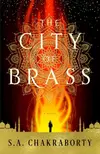
This novel won a metric frack tonne of awards, positive reviews and effusive praise. I can see why after I read this rich Middle Eastern fantasy, the first of a trilogy and the author Chakraborty’s intriguing debut.
"On the streets of 18th-century Cairo, young Nahri—she has a real talent for medicine but lacks the wherewithal to acquire proper training—makes a living swindling Ottoman nobles by pretending to wield supernatural powers she doesn’t believe in. Then, during a supposed exorcism, she somehow summons a mysterious djinn warrior named Dara, whose magic is both real and incomprehensibly powerful. Dara insists that Nahri is no longer safe—evil djinn threaten her life, so he must convey her to Daevabad, a legendary eastern city protected by impervious magical brass walls. During the hair-raising journey by flying carpet, Nahri meets spirits and monsters and develops feelings for Dara, a deeply conflicted being with a long, tangled past. At Daevabad she’s astonished to learn that she’s the daughter of a legendary healer of the Nahid family. All the more surprising, then, that King Ghassan, whose ancestor overthrew the ruling Nahid Council and stole Suleiman’s seal, which nullifies magic, welcomes her. With Ghassan’s younger son, Prince Ali, Nahri becomes immersed in the city’s deeply divisive (and not infrequently confusing) religious, political, and racial tensions. Meanwhile, Dara’s emerging history and personality grow more and more bewildering and ambiguous". -Kirkus review
In this syncretic, nonderivative and incredible backdrop, Chakraborty has constructed a compelling yarn of personal ambition, power politics, racial and religious tensions, strange magics, and terrifying creatures, culminating in a cataclysmic showdown that I did not see coming.
Can not wait to follow this in the next novel The Kingdom of Copper.
This novel won a metric frack tonne of awards, positive reviews and effusive praise. I can see why after I read this rich Middle Eastern fantasy, the first of a trilogy and the author Chakraborty’s intriguing debut.
"On the streets of 18th-century Cairo, young Nahri—she has a real talent for medicine but lacks the wherewithal to acquire proper training—makes a living swindling Ottoman nobles by pretending to wield supernatural powers she doesn’t believe in. Then, during a supposed exorcism, she somehow summons a mysterious djinn warrior named Dara, whose magic is both real and incomprehensibly powerful. Dara insists that Nahri is no longer safe—evil djinn threaten her life, so he must convey her to Daevabad, a legendary eastern city protected by impervious magical brass walls. During the hair-raising journey by flying carpet, Nahri meets spirits and monsters and develops feelings for Dara, a deeply conflicted being with a long, tangled past. At Daevabad she’s astonished to learn that she’s the daughter of a legendary healer of the Nahid family. All the more surprising, then, that King Ghassan, whose ancestor overthrew the ruling Nahid Council and stole Suleiman’s seal, which nullifies magic, welcomes her. With Ghassan’s younger son, Prince Ali, Nahri becomes immersed in the city’s deeply divisive (and not infrequently confusing) religious, political, and racial tensions. Meanwhile, Dara’s emerging history and personality grow more and more bewildering and ambiguous". -Kirkus review
In this syncretic, nonderivative and incredible backdrop, Chakraborty has constructed a compelling yarn of personal ambition, power politics, racial and religious tensions, strange magics, and terrifying creatures, culminating in a cataclysmic showdown that I did not see coming.
Can not wait to follow this in the next novel The Kingdom of Copper.
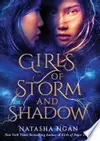
Second books in a trilogy have a challenge, especially with such a debut to follow.
After the smoldering intensity of the first book, Lei and Wren’s relationship quickly took a turn for the worse in the second book. Lei was still committed, but Wren distanced herself. She didn’t want to reveal their relationship to her father, and also didn’t appreciate Lei’s questions about her father’s intentions for the rebellion. And yet there’s also an ex that immediately pulls Wren’s attention once they come back into contact. Both of these story lines are not bad relationship story lines in general, necessarily, but they were not what I was expecting from the tone of the first book.
There is also the typical second book of a dystopian trilogy “everything gets unbearably worse” happening, but it’s not just the rebellion’s prospects of winning that seem dim.
There is much traveling to secure allies, politics the art of the possible is not how Lei understands you change the world for the better, however her lover and partner Wren was raised in these politics, and they struggle to reconcile these different beliefs.
There are also some large discoveries that I don’t want to spoil, but that change things dramatically. Lei miss identifying a sister to Wren leads to some pretty messed up results.
The conclusion is very cliff-hanging and I would recommend before starting this novel have a copy of the Girls of Fate and Fury to continue reading.
Second books in a trilogy have a challenge, especially with such a debut to follow.
After the smoldering intensity of the first book, Lei and Wren’s relationship quickly took a turn for the worse in the second book. Lei was still committed, but Wren distanced herself. She didn’t want to reveal their relationship to her father, and also didn’t appreciate Lei’s questions about her father’s intentions for the rebellion. And yet there’s also an ex that immediately pulls Wren’s attention once they come back into contact. Both of these story lines are not bad relationship story lines in general, necessarily, but they were not what I was expecting from the tone of the first book.
There is also the typical second book of a dystopian trilogy “everything gets unbearably worse” happening, but it’s not just the rebellion’s prospects of winning that seem dim.
There is much traveling to secure allies, politics the art of the possible is not how Lei understands you change the world for the better, however her lover and partner Wren was raised in these politics, and they struggle to reconcile these different beliefs.
There are also some large discoveries that I don’t want to spoil, but that change things dramatically. Lei miss identifying a sister to Wren leads to some pretty messed up results.
The conclusion is very cliff-hanging and I would recommend before starting this novel have a copy of the Girls of Fate and Fury to continue reading.


I was immediately impressed by Girls of Paper and Fire as in the first pages it includes trigger warnings and a list of support services. The author herself in these pages warns readers that the book deals with issues of violence and sexual assault, allowing readers to decide before even starting to read if this is the book for them. Seeing it at the beginning of this book gave me confidence these topics would be handled respectfully.
There is internalized misogyny throughout the story dealt with genuinely, treating all parties as people who have value despite their flaws. Girls are not written off as merely jealous or petty — they are given reasons for the ways in which they act.
The protagonist, Lei, goes through character development throughout the story. She’s extremely likable despite some frustrating qualities. You want her to succeed. She’s strong and courageous, but also weary and at times frightened. First and foremost she is human, making human choices and thinking human thoughts. Because of it, she sometimes does things that infuriate you. Like with all the characters, it’s refreshing that she’s allowed to have flaws and make mistakes without immediately being labelled a failure or worthless by the narrative. She’s allowed to grow and learn.
There is all so some spice in the primary relationship.
Certainly looking forward to reading the next novel in the trilogy Girls of Storm and Shadow.
I was immediately impressed by Girls of Paper and Fire as in the first pages it includes trigger warnings and a list of support services. The author herself in these pages warns readers that the book deals with issues of violence and sexual assault, allowing readers to decide before even starting to read if this is the book for them. Seeing it at the beginning of this book gave me confidence these topics would be handled respectfully.
There is internalized misogyny throughout the story dealt with genuinely, treating all parties as people who have value despite their flaws. Girls are not written off as merely jealous or petty — they are given reasons for the ways in which they act.
The protagonist, Lei, goes through character development throughout the story. She’s extremely likable despite some frustrating qualities. You want her to succeed. She’s strong and courageous, but also weary and at times frightened. First and foremost she is human, making human choices and thinking human thoughts. Because of it, she sometimes does things that infuriate you. Like with all the characters, it’s refreshing that she’s allowed to have flaws and make mistakes without immediately being labelled a failure or worthless by the narrative. She’s allowed to grow and learn.
There is all so some spice in the primary relationship.
Certainly looking forward to reading the next novel in the trilogy Girls of Storm and Shadow.

As a science fiction/Fantasy/horror author Darcy Coates, with an extensive bibliography has been on my radar for a while especially given she lives in the Central Coast of Australia with "her family, cat, and a collection of chickens. Her home is surrounded by rolling wilderness on all sides". I selected Parasite out of her back catalogue as it ticks a lot of my preferred boxes, Science Ficiton, Interstellar Space, Aliens and Pandemic models…
As I was reading it its style reminded me of World War Z with its shifting view points in a series of discrete encounters in a larger narrative. This made sense when I realised this novel is actually five short stories/novellas tied together by an alien invasion throughout a distant human-populated system united under an entity called Control.
A fast, well-crafted straight forward tale of the monstrous alien infiltrator infection and the humans who after setbacks learn to rally and begin to defeat the threat. Nothing wrong with that. My sole caveat is that ends with a "the war had only just begun…". So whilst I don't think there is any likelyhood of a continuation of the story so it can leave a reader a bit unsatisfied.
As a science fiction/Fantasy/horror author Darcy Coates, with an extensive bibliography has been on my radar for a while especially given she lives in the Central Coast of Australia with "her family, cat, and a collection of chickens. Her home is surrounded by rolling wilderness on all sides". I selected Parasite out of her back catalogue as it ticks a lot of my preferred boxes, Science Ficiton, Interstellar Space, Aliens and Pandemic models…
As I was reading it its style reminded me of World War Z with its shifting view points in a series of discrete encounters in a larger narrative. This made sense when I realised this novel is actually five short stories/novellas tied together by an alien invasion throughout a distant human-populated system united under an entity called Control.
A fast, well-crafted straight forward tale of the monstrous alien infiltrator infection and the humans who after setbacks learn to rally and begin to defeat the threat. Nothing wrong with that. My sole caveat is that ends with a "the war had only just begun…". So whilst I don't think there is any likelyhood of a continuation of the story so it can leave a reader a bit unsatisfied.