
Michael Barnes


This is an evocative, challenging work that premises on our world which sees all animals infected with a virus that can kill humans and during a period called The Transition instead of everyone realising it’s the Vegetarians time to shine instead our civilization chooses 'New meat' of the Solent Green variety. The prose is clear and stark as befits such a consideration and with a brilliant translation from Agustina Bazterrica's Argentinian novel. The central character Marcos Tejo is the manager of one of these new meat processing plants. I found the discussion by him on how language has developed to separate the act of cannibalism (the 'product' categorised as 'special meat') how they never call the people being killed and eaten human instead, 'Heads'. Though Marcos understands the moral horror of his job supervising the workers who stun, kill, flay, and butcher other humans, he doesn’t feel much since the cot death of his infant son.
“One can get used to almost anything,” he muses, “except for the death of a child.”
But this is not a science fiction novel about what happens if we have to eat humans, this is an examination of what people and societies will do to normalise atrocities.
“After all, since the world began, we’ve been eating each other. If not symbolically, then we’ve been literally gorging on each other. The Transition has enabled us to be less hypocritical.”
This is an evocative, challenging work that premises on our world which sees all animals infected with a virus that can kill humans and during a period called The Transition instead of everyone realising it’s the Vegetarians time to shine instead our civilization chooses 'New meat' of the Solent Green variety. The prose is clear and stark as befits such a consideration and with a brilliant translation from Agustina Bazterrica's Argentinian novel. The central character Marcos Tejo is the manager of one of these new meat processing plants. I found the discussion by him on how language has developed to separate the act of cannibalism (the 'product' categorised as 'special meat') how they never call the people being killed and eaten human instead, 'Heads'. Though Marcos understands the moral horror of his job supervising the workers who stun, kill, flay, and butcher other humans, he doesn’t feel much since the cot death of his infant son.
“One can get used to almost anything,” he muses, “except for the death of a child.”
But this is not a science fiction novel about what happens if we have to eat humans, this is an examination of what people and societies will do to normalise atrocities.
“After all, since the world began, we’ve been eating each other. If not symbolically, then we’ve been literally gorging on each other. The Transition has enabled us to be less hypocritical.”

In a steampunkesque (it satisfies the punk with the active rebellion to the status quo, but the setting isn’t quite steam - godpunk, ancient alienspunk?) city state of Radezhda where its lore is long ago, five deities visited the city and uplifted the civilization, each providing a different facet for the people farmer, scholar, worker, engineer, warrior. At the heart of Radezhda is the great tower of the Mecha God, stretching up towards the sky. The gods here are visible through five portals hanging above the city for all to see, but only for the “Voice” of each god to reach. At the time of this story for a long time the gods have 'left' to this accessible but difficult to reach 'realm'. This bequeathed technology is not well understood but provides wonders as mechanical wings that allow followers of the mecha god to be the defenders/oppressors of the city. Those withdrawn gods mostly sleep now, leaving their mortal Voices to commune with them alone, and communicate their benevolence (you can see the problems arose with this) and occasionally reaching down on request to judge and smite the wicked in elaborate ceremonies or at least that is what the Mecha god does.
The story is told in two timelines of our protagonist Zenya (not yet Winged Zemolai) born into a cast of the god dedicated to learning and knowledge, she has always dreamed of flying, of being a warrior. told in two timelines. In the second timeline we see Zemolai as a war-weary warrior who left her family and the scholar sect to obtain her wings and fight in the sky. Her body is falling apart, she is sick of the fighting but knows nothing else and sees no other value in herself, and who showing a small dissident act of compassion results in her idol/mentor mother figure Vodaya, (who throughout the story provides the textbook on how to toxicly manipulate someone looks to you) stripping her biomechanical wings, and leaving her. It's when she is found by real revolutionaries who are seeking to stop the authoritarian tyranny that Vodaya has instituted. These are not protesters hanging up signs, this is a movement with cells, goals, and that can and will use violence to achieve their ends.
Two of the strongest themes I found Mill’s debut novel is a story about the controlling abuse and what can happen when you idolise somebody and making that person happy becomes the core of your own happiness.
The other is the discussion about what it means to choose your path, what and how you decide, also the effect the epiphany has on different characters when they realise their gods left them, not because of anything they did or didn't do - they really don't matter to the gods, why do they matter so much to you?
In a steampunkesque (it satisfies the punk with the active rebellion to the status quo, but the setting isn’t quite steam - godpunk, ancient alienspunk?) city state of Radezhda where its lore is long ago, five deities visited the city and uplifted the civilization, each providing a different facet for the people farmer, scholar, worker, engineer, warrior. At the heart of Radezhda is the great tower of the Mecha God, stretching up towards the sky. The gods here are visible through five portals hanging above the city for all to see, but only for the “Voice” of each god to reach. At the time of this story for a long time the gods have 'left' to this accessible but difficult to reach 'realm'. This bequeathed technology is not well understood but provides wonders as mechanical wings that allow followers of the mecha god to be the defenders/oppressors of the city. Those withdrawn gods mostly sleep now, leaving their mortal Voices to commune with them alone, and communicate their benevolence (you can see the problems arose with this) and occasionally reaching down on request to judge and smite the wicked in elaborate ceremonies or at least that is what the Mecha god does.
The story is told in two timelines of our protagonist Zenya (not yet Winged Zemolai) born into a cast of the god dedicated to learning and knowledge, she has always dreamed of flying, of being a warrior. told in two timelines. In the second timeline we see Zemolai as a war-weary warrior who left her family and the scholar sect to obtain her wings and fight in the sky. Her body is falling apart, she is sick of the fighting but knows nothing else and sees no other value in herself, and who showing a small dissident act of compassion results in her idol/mentor mother figure Vodaya, (who throughout the story provides the textbook on how to toxicly manipulate someone looks to you) stripping her biomechanical wings, and leaving her. It's when she is found by real revolutionaries who are seeking to stop the authoritarian tyranny that Vodaya has instituted. These are not protesters hanging up signs, this is a movement with cells, goals, and that can and will use violence to achieve their ends.
Two of the strongest themes I found Mill’s debut novel is a story about the controlling abuse and what can happen when you idolise somebody and making that person happy becomes the core of your own happiness.
The other is the discussion about what it means to choose your path, what and how you decide, also the effect the epiphany has on different characters when they realise their gods left them, not because of anything they did or didn't do - they really don't matter to the gods, why do they matter so much to you?

This novella show impressive crafting creating a fully realised, rich historic fantasy world/setting with backstory and depth in a limited set of words. Sentences allow readers to imagine the settings and events that lead to the current situations and laws/rules.
The characters are also well developed and not the stereotypes one would expect in such a short fantasy. Our protagonist is Fellian, a low-level fire mage, whose powers are developed by the state only to the point so she can act as a lamplighter the ability to create and sustain light through the demonic presence bound to one’s bones. Basically someone whose job it is to weave globes of light whilst also fulfilling the roles of a drudge. In our earliest encounter we see despite her position we see her trying to teach reading and writing to anyone who asks. A further crime in the eyes of the newly established Liberationist Government.
However, when an opportunity arises for her freedom by assisting the monarchists trying to save a newborn dragon queen. I initially bristled at this not being a fan of any who claim that one's birth makes someone more special than another, but I should have more faith in Kate Elliot who through Fellian we also discover the failings inherent in such classist views aying strong attention to the class system, blatantly displaying its dependencies on educational means (both practical and magical) to everyday necessities like bathing and eating.
Fellian's decision reflect a rubric I have found in judging political groups - who is the most in favour of providing access to learning and resources to learn, in this fantasy society reading and writing, they will have my support.
This novella show impressive crafting creating a fully realised, rich historic fantasy world/setting with backstory and depth in a limited set of words. Sentences allow readers to imagine the settings and events that lead to the current situations and laws/rules.
The characters are also well developed and not the stereotypes one would expect in such a short fantasy. Our protagonist is Fellian, a low-level fire mage, whose powers are developed by the state only to the point so she can act as a lamplighter the ability to create and sustain light through the demonic presence bound to one’s bones. Basically someone whose job it is to weave globes of light whilst also fulfilling the roles of a drudge. In our earliest encounter we see despite her position we see her trying to teach reading and writing to anyone who asks. A further crime in the eyes of the newly established Liberationist Government.
However, when an opportunity arises for her freedom by assisting the monarchists trying to save a newborn dragon queen. I initially bristled at this not being a fan of any who claim that one's birth makes someone more special than another, but I should have more faith in Kate Elliot who through Fellian we also discover the failings inherent in such classist views aying strong attention to the class system, blatantly displaying its dependencies on educational means (both practical and magical) to everyday necessities like bathing and eating.
Fellian's decision reflect a rubric I have found in judging political groups - who is the most in favour of providing access to learning and resources to learn, in this fantasy society reading and writing, they will have my support.

Set in a fantastical Egyptian-inspired world, with an elemental based magic for those gifted with it, unless they are women in which case they are dangerous. It doesn't help that history speaks of a woman who could employ all the elements (Yes Avatar the last airbender acknowledged) and destroyed a city.
The story alternates between two young women: Nehal Darweesh is forced to agree to a marriage to help her family settle her father’s gambling debts. Nehal, however, will not go quietly and manages to convince her new husband, Niccolo Baldinotti, to allow her to enrol in the Alamaxa Academy of the Weaving Arts to study waterweaving. Nico is equally uninterested in the marriage, as he intended to marry Giorgina Shukry until his father learned she was of a lower status. Giorgina, meanwhile, unbeknownst to her family, has joined the Daughters of Izdihar, a group of women from all levels of society fighting for their rights—to a vote, to education, to a life not subservient to men. Soon, Nehal too becomes interested in the Daughters of Izdihar and is drawn to their charismatic leader, Malak Mamdouh. Power, however, is not so easily given up, and the Daughters of Izdihar face both scorn and violence. Meanwhile, factions within the government and outside of Ramsawa’s borders continue to view the magical ability to control an element, taught at the Alamaxa Academy, with suspicion and fear.
The conclusion to this first half of the duology ends with the city facing an invading army.
It's an impressive debut from Hadeer Elsbai. What I also enjoyed was the arguments raised against the the women's demand for recognition were the one's that were raise whenever women sought political or social freedoms so I was very satisfying to know their narrow minded misogyny is just that bigotry.
From page 177 ""Hah! Change! You think men will change their minds when women force their hands? At best, they'll ignore you. at worst they'll call you agitators and terrorists and throw you in prison. Or they'll spite us by taking away what few rights we do have." now when have I heard that before.
I just wish we didn't have to keep arguing these points, decade after decade after decade.
Set in a fantastical Egyptian-inspired world, with an elemental based magic for those gifted with it, unless they are women in which case they are dangerous. It doesn't help that history speaks of a woman who could employ all the elements (Yes Avatar the last airbender acknowledged) and destroyed a city.
The story alternates between two young women: Nehal Darweesh is forced to agree to a marriage to help her family settle her father’s gambling debts. Nehal, however, will not go quietly and manages to convince her new husband, Niccolo Baldinotti, to allow her to enrol in the Alamaxa Academy of the Weaving Arts to study waterweaving. Nico is equally uninterested in the marriage, as he intended to marry Giorgina Shukry until his father learned she was of a lower status. Giorgina, meanwhile, unbeknownst to her family, has joined the Daughters of Izdihar, a group of women from all levels of society fighting for their rights—to a vote, to education, to a life not subservient to men. Soon, Nehal too becomes interested in the Daughters of Izdihar and is drawn to their charismatic leader, Malak Mamdouh. Power, however, is not so easily given up, and the Daughters of Izdihar face both scorn and violence. Meanwhile, factions within the government and outside of Ramsawa’s borders continue to view the magical ability to control an element, taught at the Alamaxa Academy, with suspicion and fear.
The conclusion to this first half of the duology ends with the city facing an invading army.
It's an impressive debut from Hadeer Elsbai. What I also enjoyed was the arguments raised against the the women's demand for recognition were the one's that were raise whenever women sought political or social freedoms so I was very satisfying to know their narrow minded misogyny is just that bigotry.
From page 177 ""Hah! Change! You think men will change their minds when women force their hands? At best, they'll ignore you. at worst they'll call you agitators and terrorists and throw you in prison. Or they'll spite us by taking away what few rights we do have." now when have I heard that before.
I just wish we didn't have to keep arguing these points, decade after decade after decade.

Apparently this novel is a frequently prescribed text for English Literature courses in Victoria. Certainly a more absorbing read than some of the texts I was set in high school. Based on some of the towns in England which during the last major outbreak in 1666 of bubonic plague (AKA the Black Death) chose to isolate themselves to prevent the spread and specifically in this story Eyam, a Derbyshire village. Our point of view is Anna Frith, a shepherdess who also works as a servant in the rectory. The charismatic and largely (with a few exceptions) compassionate rector of the church, Michael Mompellion, convinces the villagers to quarantine themselves within the village so the plague will not spread to nearby towns. A wealthy Earl leaves supplies and food on a large stone at the boundary line. The rector’s wife Elinor works with Anna nursing the sick, and preparing herbal tonics to strengthen people. The villagers turn to superstitions, magic charms, fasting and flagellation, and devil worshiping in the hope that something might stop the spread of the plague. Digging graves is unending work. How can people keep their faith and their sanity when they are suffering such great losses?
During the quarantine we see the myriad ways people can respond to these desperate times, which is very much how we saw people reacted during the SARS-CoV-2 pandemic and we knew what was the cause and how to treat (and significant sections of the 21century population still managed to F* up so I can't be too dismissive of the actions of the villages in this tale. With my love of chemistry my favourite was the experiments by Anna Frith and the rectors wife Elinor to craft a restorative to fortify the afflicted, no so much as a cure to the plague but to give them strength to survive the sickness.
Also in a time of increasing anti-Muslim sentiment I welcomed towards the novels end the reflection that at the time in many aspects the Arabic communities were a stark contrast of enlightenment to the society we had seen described in the novel. How timely.
Apparently this novel is a frequently prescribed text for English Literature courses in Victoria. Certainly a more absorbing read than some of the texts I was set in high school. Based on some of the towns in England which during the last major outbreak in 1666 of bubonic plague (AKA the Black Death) chose to isolate themselves to prevent the spread and specifically in this story Eyam, a Derbyshire village. Our point of view is Anna Frith, a shepherdess who also works as a servant in the rectory. The charismatic and largely (with a few exceptions) compassionate rector of the church, Michael Mompellion, convinces the villagers to quarantine themselves within the village so the plague will not spread to nearby towns. A wealthy Earl leaves supplies and food on a large stone at the boundary line. The rector’s wife Elinor works with Anna nursing the sick, and preparing herbal tonics to strengthen people. The villagers turn to superstitions, magic charms, fasting and flagellation, and devil worshiping in the hope that something might stop the spread of the plague. Digging graves is unending work. How can people keep their faith and their sanity when they are suffering such great losses?
During the quarantine we see the myriad ways people can respond to these desperate times, which is very much how we saw people reacted during the SARS-CoV-2 pandemic and we knew what was the cause and how to treat (and significant sections of the 21century population still managed to F* up so I can't be too dismissive of the actions of the villages in this tale. With my love of chemistry my favourite was the experiments by Anna Frith and the rectors wife Elinor to craft a restorative to fortify the afflicted, no so much as a cure to the plague but to give them strength to survive the sickness.
Also in a time of increasing anti-Muslim sentiment I welcomed towards the novels end the reflection that at the time in many aspects the Arabic communities were a stark contrast of enlightenment to the society we had seen described in the novel. How timely.
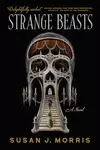
In an alternate Victorian era where paranormal creatures openly exist with human beings. The story's point of view is from Samantha (Sam) the daughter of Mina and Jonathan Harker an archivist of The Royal Society for the Study of Abnormal Phenomena who is drawn into the work of a field agent to search for clues to the disappearance of her grandfather. Her partner in this is investigation of a series of beastly murders in 1903 Paris is Dr. Helena Moriarty, the daughter of Professor Moriarty. and widely reviled within the Society for the aura of death that seems to follow her (and has seen three previous partners dead already). A beast has been killing wealthy, privileged (terrible) men in Paris and The Society is supposed to figure out why. Through in Jakob Van Helsing (cowboy boots really), son of the famed adventurer and a fellow Society member, is convinced that Sam is showing signs of diabolical powers and is determined to make sure she stays pure or dies a monster.
I enjoyed the wide variety of monsters, not just the usual vampires, werewolves but less well known (to many English readers) such as grindlows and carcolhs. The other women in the story are more than just character sketches and the men in the story hold the typical contemptuous attitudes of those times (and even today) so it is a delight when our dynamic duo thwart them.
I have been a fan of these literary mash up ever since I read The Strange Case of the Alchemist's Daughter by Theodora Goss. As Elyse puts it over at Smart Bitches Trashy Books "What makes Strange Beasts so excellent is that it takes three different genres (romance, Gothic mystery, paranormal action-adventure) and blends them together perfectly. The disparate elements in this novel gel together in a way that enhances each other, rather than feeling discordant".
In an alternate Victorian era where paranormal creatures openly exist with human beings. The story's point of view is from Samantha (Sam) the daughter of Mina and Jonathan Harker an archivist of The Royal Society for the Study of Abnormal Phenomena who is drawn into the work of a field agent to search for clues to the disappearance of her grandfather. Her partner in this is investigation of a series of beastly murders in 1903 Paris is Dr. Helena Moriarty, the daughter of Professor Moriarty. and widely reviled within the Society for the aura of death that seems to follow her (and has seen three previous partners dead already). A beast has been killing wealthy, privileged (terrible) men in Paris and The Society is supposed to figure out why. Through in Jakob Van Helsing (cowboy boots really), son of the famed adventurer and a fellow Society member, is convinced that Sam is showing signs of diabolical powers and is determined to make sure she stays pure or dies a monster.
I enjoyed the wide variety of monsters, not just the usual vampires, werewolves but less well known (to many English readers) such as grindlows and carcolhs. The other women in the story are more than just character sketches and the men in the story hold the typical contemptuous attitudes of those times (and even today) so it is a delight when our dynamic duo thwart them.
I have been a fan of these literary mash up ever since I read The Strange Case of the Alchemist's Daughter by Theodora Goss. As Elyse puts it over at Smart Bitches Trashy Books "What makes Strange Beasts so excellent is that it takes three different genres (romance, Gothic mystery, paranormal action-adventure) and blends them together perfectly. The disparate elements in this novel gel together in a way that enhances each other, rather than feeling discordant".

On an isolated island, a small population awakens some mornings with all knowledge of objects as mundane as stamps, valuable as emeralds, omnipresent as birds, or delightful as roses missing from their minds, ribbon, hat, bird. One by one, they all disappear, and soon, the inhabitants of the island forget they ever existed at all. The disappearances are enforced by the Memory Police, who force all to discard physical traces of the idea that has disappeared—often burning the lifeless ones and releasing the natural ones to the elements because “anything that fails to vanish when they say it should inconceivable,” they drop into homes for inspections, seizing objects and rounding up anyone who refuses—or is simply unable—to follow the rules.
Those who can remember when they shouldn’t are taken away, including the woman narrating whose mother was one who was taken early in this tale. She learns that her editor, R, can illegally remember the forgotten things, she fears for his life and secretes him away beneath the floorboards of her home with the help of her elderly neighbour.
It’s literary fiction where the concept transcends the boundaries, which could be difficult to accept for some, I imagined it as a metaphor for what exactly I was unsure. I found it well written, flowing clean, descriptive uncomplicated prose, not sure if that’s the writer or translator or both. By the amount of critical acclaim others regard the writing highly.
I found it a melancholic text, and the juxtaposition of the inner story about the woman and the typewriter and the primary story particularly poignant. I myself find such abstract apocalypses less engaging.
On an isolated island, a small population awakens some mornings with all knowledge of objects as mundane as stamps, valuable as emeralds, omnipresent as birds, or delightful as roses missing from their minds, ribbon, hat, bird. One by one, they all disappear, and soon, the inhabitants of the island forget they ever existed at all. The disappearances are enforced by the Memory Police, who force all to discard physical traces of the idea that has disappeared—often burning the lifeless ones and releasing the natural ones to the elements because “anything that fails to vanish when they say it should inconceivable,” they drop into homes for inspections, seizing objects and rounding up anyone who refuses—or is simply unable—to follow the rules.
Those who can remember when they shouldn’t are taken away, including the woman narrating whose mother was one who was taken early in this tale. She learns that her editor, R, can illegally remember the forgotten things, she fears for his life and secretes him away beneath the floorboards of her home with the help of her elderly neighbour.
It’s literary fiction where the concept transcends the boundaries, which could be difficult to accept for some, I imagined it as a metaphor for what exactly I was unsure. I found it well written, flowing clean, descriptive uncomplicated prose, not sure if that’s the writer or translator or both. By the amount of critical acclaim others regard the writing highly.
I found it a melancholic text, and the juxtaposition of the inner story about the woman and the typewriter and the primary story particularly poignant. I myself find such abstract apocalypses less engaging.

A brief satisfying snack of a story. Too many novels contain a kernel of an idea that would be beautifully expressed in 100 pages but is stretched and made dull. Hache Pueyo story comes in at a little over 100 pages and its world building setting is so eerie—poppy fields, the tarantula as pets everywhere, the isolated and lavish mansion. It’s a lush gothic setting with Miss Anatema isn’t the only monstrous being around in the world, and they’re to be feared but respected. The setting is very claustrophobic with servants being raised into their positions and never leaving and staying on the floors they’re assigned to.
It’s a love story and for those of us who want love but feel we are too monstrous to love it's for them.
A brief satisfying snack of a story. Too many novels contain a kernel of an idea that would be beautifully expressed in 100 pages but is stretched and made dull. Hache Pueyo story comes in at a little over 100 pages and its world building setting is so eerie—poppy fields, the tarantula as pets everywhere, the isolated and lavish mansion. It’s a lush gothic setting with Miss Anatema isn’t the only monstrous being around in the world, and they’re to be feared but respected. The setting is very claustrophobic with servants being raised into their positions and never leaving and staying on the floors they’re assigned to.
It’s a love story and for those of us who want love but feel we are too monstrous to love it's for them.

A gentleman in Moscow was a bookclub book for me so a pleasant choice since it was one I would be unlikely to choose first because it's male author (as a friend I much admire once said "..life is too short to read male authors") and because due to its setting and period I feared it would follow the trend of portraying the Soviet Union in the usual and erroneous western rubric especially since the narrator is Count Alexander Rostov is deemed an unrepentant aristocrat by a Bolshevik tribunal. This nuance in soviet character especially revealed when the young woman the Count cares for in injured and he takes her outside the bounds of the hotel to hospital. I was therefore pleasantly surprised by the more genial tone as in keeping with the Count's attitude of optimism that sees him survive and thrive in his constrained world which is Shakespear spoke "O God, I could be bounded in a nutshell, and count myself a king of infinite space".
A gentleman in Moscow was a bookclub book for me so a pleasant choice since it was one I would be unlikely to choose first because it's male author (as a friend I much admire once said "..life is too short to read male authors") and because due to its setting and period I feared it would follow the trend of portraying the Soviet Union in the usual and erroneous western rubric especially since the narrator is Count Alexander Rostov is deemed an unrepentant aristocrat by a Bolshevik tribunal. This nuance in soviet character especially revealed when the young woman the Count cares for in injured and he takes her outside the bounds of the hotel to hospital. I was therefore pleasantly surprised by the more genial tone as in keeping with the Count's attitude of optimism that sees him survive and thrive in his constrained world which is Shakespear spoke "O God, I could be bounded in a nutshell, and count myself a king of infinite space".

Set in a near future with Korea reunified robots are ubiquitously integrated symbiotically with humans. Seen throughout the novel in various roles servants and staff, daughters, sons, siblings, friends, even lovers.
The story unfolds from different characters. One is that of Jun a detective assigned to the robot crimes unit. He was once a soldier in the “bloodless” unification war and, due to an encounter with an HALO IED that damaged nearly 80% of his body, is mostly bionic. He’s also trans, and the child of a famous roboticist who brought one of his creations home a roboit name Yoyo to be a brother for his two children. Yoyo, is at once a son and a brother, and is the focal point amid a disparate cast of characters who come together via serendipitous meetings, unexpected reunions, and wrenching losses.
Jun’s sister, Morgan, works for Imagine Friends, consumed at work with her the latest secret project, Boy X, but at home, she's fielding robot challenges with her live-in creation, Stephen, whose interactions are becoming increasingly human--devoted, needy, even demanding. "I wanted someone to love me," she admits, unlike their fractured family, but I think she created Stephen more because she is expected by society to have a boyfriend that any expectations/desires of her own, which I found a bit hard on Stephen who I felt sorry for.
Morgan's calls her new project Yoyo, after Morgan and Jun’s robot brother, who just disappeared one day. (And isn't that a whole pile of Freudian headspace that would make a therapist begin scribbling furiously).
Jun hasn’t talked to Morgan for five years, but he’s investigating a missing robot who belongs to one of Morgan’s neighbors. It’s an older model, a child really, and Morgan’s robot, Stephen, had been friends with the missing robot.
The other narrative focuses on a group of kids in summer school hang out at a junkyard next door after school and meet a robot not like any other, whose name is Yoyo. One girl Ruijie is the first to encounter Yoyo. She's not healthy: "the doctors lobbed acronyms, like ALS, PMA, and MMA." None of the letters stuck, but her young body continues to break down, forcing her to resort to customized "robowear" for mobility. Ruijie, a precocious three-time science fair winner, regularly scavenges the salvage yard next door to her school, looking for usable parts to enhance her failing form. Meeting irresistible Yoyo engenders easy friendship. The other children are well realised in their own right and I liked discovering how their backgrounds made them what they are such as one who is from the north and lives for playing soccer, also lives with his uncle, who salvages robots and their parts.
The disparate threads are woven into a credible, but in no way disneyesque 'it’s the friends we make along the way ending' I found it a complex satisfying exploration of these believable and detailed characters.
Set in a near future with Korea reunified robots are ubiquitously integrated symbiotically with humans. Seen throughout the novel in various roles servants and staff, daughters, sons, siblings, friends, even lovers.
The story unfolds from different characters. One is that of Jun a detective assigned to the robot crimes unit. He was once a soldier in the “bloodless” unification war and, due to an encounter with an HALO IED that damaged nearly 80% of his body, is mostly bionic. He’s also trans, and the child of a famous roboticist who brought one of his creations home a roboit name Yoyo to be a brother for his two children. Yoyo, is at once a son and a brother, and is the focal point amid a disparate cast of characters who come together via serendipitous meetings, unexpected reunions, and wrenching losses.
Jun’s sister, Morgan, works for Imagine Friends, consumed at work with her the latest secret project, Boy X, but at home, she's fielding robot challenges with her live-in creation, Stephen, whose interactions are becoming increasingly human--devoted, needy, even demanding. "I wanted someone to love me," she admits, unlike their fractured family, but I think she created Stephen more because she is expected by society to have a boyfriend that any expectations/desires of her own, which I found a bit hard on Stephen who I felt sorry for.
Morgan's calls her new project Yoyo, after Morgan and Jun’s robot brother, who just disappeared one day. (And isn't that a whole pile of Freudian headspace that would make a therapist begin scribbling furiously).
Jun hasn’t talked to Morgan for five years, but he’s investigating a missing robot who belongs to one of Morgan’s neighbors. It’s an older model, a child really, and Morgan’s robot, Stephen, had been friends with the missing robot.
The other narrative focuses on a group of kids in summer school hang out at a junkyard next door after school and meet a robot not like any other, whose name is Yoyo. One girl Ruijie is the first to encounter Yoyo. She's not healthy: "the doctors lobbed acronyms, like ALS, PMA, and MMA." None of the letters stuck, but her young body continues to break down, forcing her to resort to customized "robowear" for mobility. Ruijie, a precocious three-time science fair winner, regularly scavenges the salvage yard next door to her school, looking for usable parts to enhance her failing form. Meeting irresistible Yoyo engenders easy friendship. The other children are well realised in their own right and I liked discovering how their backgrounds made them what they are such as one who is from the north and lives for playing soccer, also lives with his uncle, who salvages robots and their parts.
The disparate threads are woven into a credible, but in no way disneyesque 'it’s the friends we make along the way ending' I found it a complex satisfying exploration of these believable and detailed characters.


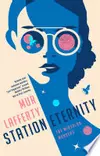
Ever since our protagonist Mallory Viridian was a child she has been around when murders happen, weirdly she sees clues and hints overlooked and can usually solve these cases. But outside of a classic mystery novel, being surrounded by death doesn’t make you a charming amateur detective, it makes you a suspect and a social pariah. Given the chance to stowaway off planet in an attempt to further isolate herself. She petitioned a sentient spaceship known as Station Eternity to allow her passage and surprisingly, Eternity did. The whole aliens are real thing happened a few years ago, different people and groups on Earth are reacting as well as you'd expect. When the station agrees to allow additional human guests, Mallory knows the break from her peculiar reality is over. After the first Earth shuttle arrives, and aliens and humans alike begin to die, the station is thrown into peril. Stuck smack-dab in the middle of an extraterrestrial whodunit, and wondering how in the world this keeps happening to her anyway, Mallory has to solve the crime—and fast—or the list of victims could grow to include everyone on board….
It's a murder mystery in SPAACCCCEEEE. Okay that’s a disservice. It might be why I picked it up but I grew to really enjoy this story and its fascinating worldbuilding, interesting and varied aliens (not just humans with ears and noses modified) All the alien races aboard Eternity are much more advanced, and humanities uniqueness we don't form symbiotic relationships on the scale that other sapients do is not something they find impressive. Also humans are considered gross – too many liquids is the general consensus.
I also was amused by some of the other human characters - not the ambassador Adrian, but Xan whilst I thought was okay but worth it to meet his brother Phineas (always great to include a trans character) but his ex-army buddy the Korean woman Calliope Oh was my favourite.
The disparate facts, characters, and even the ridiculous connections that we see in these murder mysteries do come together with a kinda explanation that I found satisfying - experience will vary.
Its pacing is varied and can seem slow at the beginning but towards the end the narrative 'rockets' along (sorry, not sorry) and I enjoyed this so much I will be buying the rest of the trilogy on Kobo since my local library doesn't carry the next two books.
Ever since our protagonist Mallory Viridian was a child she has been around when murders happen, weirdly she sees clues and hints overlooked and can usually solve these cases. But outside of a classic mystery novel, being surrounded by death doesn’t make you a charming amateur detective, it makes you a suspect and a social pariah. Given the chance to stowaway off planet in an attempt to further isolate herself. She petitioned a sentient spaceship known as Station Eternity to allow her passage and surprisingly, Eternity did. The whole aliens are real thing happened a few years ago, different people and groups on Earth are reacting as well as you'd expect. When the station agrees to allow additional human guests, Mallory knows the break from her peculiar reality is over. After the first Earth shuttle arrives, and aliens and humans alike begin to die, the station is thrown into peril. Stuck smack-dab in the middle of an extraterrestrial whodunit, and wondering how in the world this keeps happening to her anyway, Mallory has to solve the crime—and fast—or the list of victims could grow to include everyone on board….
It's a murder mystery in SPAACCCCEEEE. Okay that’s a disservice. It might be why I picked it up but I grew to really enjoy this story and its fascinating worldbuilding, interesting and varied aliens (not just humans with ears and noses modified) All the alien races aboard Eternity are much more advanced, and humanities uniqueness we don't form symbiotic relationships on the scale that other sapients do is not something they find impressive. Also humans are considered gross – too many liquids is the general consensus.
I also was amused by some of the other human characters - not the ambassador Adrian, but Xan whilst I thought was okay but worth it to meet his brother Phineas (always great to include a trans character) but his ex-army buddy the Korean woman Calliope Oh was my favourite.
The disparate facts, characters, and even the ridiculous connections that we see in these murder mysteries do come together with a kinda explanation that I found satisfying - experience will vary.
Its pacing is varied and can seem slow at the beginning but towards the end the narrative 'rockets' along (sorry, not sorry) and I enjoyed this so much I will be buying the rest of the trilogy on Kobo since my local library doesn't carry the next two books.