
C. J. Daley


Thanks to the publisher and Netgalley for the audio arc! I liked the colors used for the cover, and thought the premise was interesting, so I wanted to give this a go! The narration by Andy Stevenson wasn’t but, but wasn’t my favorite. Just seemed like an odd choice for this mostly one character perspective.
The book opens on Carmen. She’s grieving the loss of her mother, the only true constant in her life. She’s been popping around just sort of adrift. Staying at AirBnBs with no real place to call home. Her stuff is in storage and she doesn’t feel comfortable enough where she’s staying for it anyway. So a bit of a house hunt ensues, and wouldn’t you know it, there’s an undervalued home in the town she wants! It just happens to be the site of a heinously graphic murder, but what could really go wrong? And look at the new appliances!
I remember thinking while listening to this that it felt like a haunted house story with a setup from someone that’s never read one. And I don’t mean that in any way as insulting or to sway readers against it, it just really stuck out as a thought to me. The opening is long, not really slow, but noticeably longer than the actual section of the book where things start happening. In that sense it felt kind of reminiscent of The Haunting of Hill House to me. I enjoyed the setup, and I think the writing was solid, but if you take your time to set up a character, the length of the story should suit their journey.
The second half of the novella, I did struggle a bit with. It felt like the beginning of a larger picture, like it was missing a part three or something. And while I am a fan of writing open endings, I’m not so sure about reading them personally. Carmen’s deterioration needed more explaining in my opinion. I did feel her grief, that desire to speak to someone just one more time, but I never felt like she was spiraling. And I think the reader needed that before there could be a satisfying break.
The more “choose your own” style of, is it possession or is it a mental breakdown, I did enjoy though. However, this does feature a rather rough sexual encounter that I can’t say I’m a fan of. I enjoyed the ghost “incidents” and even the fact that the murder in question was inspired by a true event, but wow was it dark. Even to read it fictionalized was a lot. It did read like setting up a story just to include that real-life murder, which is why I think it just needed a little more. I enjoyed what I listened to, just wish it was longer.
A murder-heavy haunting novella that blends grief and longing with an ending open to interpretation.


Grabbed this on audible on my quest to read through everyone involved with FanFiAddict’s The Book of Spores. The narration by Shakira Shute was solid and I think she was a great fit for Sam.
A mysterious group called The Grays appeared and in one night the status quo had changed. No longer allowed free rein of the world, the vampires have been pushed back to First Light, the last remaining vampire city. And while there is safety in numbers, the relative confinement has let corruption and deceit run rampant. The poor get poorer, drinking only the weakest of blood, making them little more than human. The rich dine on expensive animal bloods, hosting parties and living lavishly, as if their support staff aren’t literally dying. And while all this is bubbling, the city’s ruler finds out his estranged son has been murdered, sending their world into further chaos. Sam, a maid, has an eye for books and is desperate for more. What will happen when their worlds collide?
I know this book is of course marketed with trending comps like Empire of the Vampire and The Justice of Kings (neither of which I’ve read yet), but to me this felt like a partial Agatha Christie novel stumbled on over into a Anne Rice novel. There’s also intrigue on the scale of Game of Thrones, and there’s an eternal cast like the Underworld movie series. The city itself and bleak world had me picturing the likes of Underworld: Rise of the Lycans, but with perhaps a more wolf-like take on the werewolf. And while there is power struggle, this is not a shoot em up story.
So how does it stack up? The characters are strong, and feature vampires, werewolves, and sorcerers as the main cast. Much of this focuses on the mystery or intrigue with characters holding multiple full length discussions that held my attention as much as they moved the plot along. As this is a novel without mortals, meaning ZERO humans, it was interesting to see how they were similar, but especially the little nods of how they were different. I hope in the sequels we get more explanation because I am so on the hook for how they all exist! Aren’t vampires and werewolves turned humans? Or is there something we’ve never seen before at play?
While there is a climactic finish, the story is definitely more of a slow burn. I think the world gets pretty well fleshed out, with even a commentary on capitalism—and/or classism, depending on how you view it—and I found it really unique how the author delivered on it in his world. Vampire servants on the cheapest blood still age over time, not only establishing that the “lowly” can’t live forever but also physically showing their differences. Almost like a group of vampires without access to universal “vampire” rights and healthcare. I mean there’s even an in-world commentary on fixed markets and the greedy gambling on them with the sale of sample flutes of new blood being offered before they go public. While the author does well to not make all this so over the top that you can’t enjoy the book without reading into these things, for me this added so much nuance and depth. It actually felt like there was a functioning city underneath the story.
Wildly unique, this one takes so many pieces of things I love and makes them entirely new. For fans of vampires, werewolves, magic, and intrigue.


As Klaus was a favorite of mine in the series, I’m so glad to have a prequel spinoff!
Klaus’ ability to commune with the dead has always been a struggle for him. He turns to vices to quiet the voices and pain they share, and while that is kind of understandable, dear old dad has certainly had enough. Just 18 years old, and Sir Reginald wants him gone, completely removed from the premises. And all Klaus can think to ask is, “will I still get my allowance?” Now out on his own, he heads to Hollywood where his ability to commune with dead actors keeps him from a life of turning tricks. However, his benefactor takes to enabling him—giving him powerful drugs that take him to the void (kind of like his “other place/mastering the dead” stuff from when he dies in the show)—continuing the cycle of his abuse for her own self gain. And of course, this one can’t get away that easily without its own fair share of weirdness, and features a subplot full of vampires in the Hollywood underbelly.
This miniseries was awesome. Klaus was one of my favorites in the show, mostly for his tortured soul and yet lightheartedness, but I’d also love to see the rest of the Umbrellas get the same treatment. We get a little snippet of Diego and Vanya in the short, Anywhere but Here, and some prequel-style scenes with Five in the past, but a full series would make them even better. There are endless options too! What exactly was Luther doing on the moon? Why exactly is Diego called Kraken—other than him just kind of swimming in Apocalypse Suite? What happened with Allison’s daughter? A miniseries of Five surviving the future? What happened to BEN (I have a feeling this is in Plan B though)? There are so many cool things they could do.
Focusing on Klaus was a great idea, he really is one of the most complex characters. For much of his life, his powers are nothing more than a hinderance, and at worst, a curse. The story allowed Gerard to deep dive into that, not just for character development and depth, but also allowing him a commentary on addiction. Klaus is numbing the pain, and not receiving the best/correct care from his family. After his father has had enough, he immediately falls in with an enabler, someone who looks supportive but is actually supplying his disease. If that wasn’t enough, there’s a chimp-vampire gangster looking for him as well in the hopes of capturing him for the use of his powers (just like the bikers in Hotel Oblivion). Without his siblings to turn to, his pain is just compounded over and over again as each face is another mask hiding selfish desires. And of course, the blood sucking vampires are a great metaphor and commentary on the greedy and dangerous nature of the film industry.
A great standalone that adds so much to our understanding of Seance as a whole. Can’t wait for Plan B to drop!


Volume 3 to me feels the most like an actual superhero comic book, still very much so the Umbrellas, but with a more fleshed out world. It is also somehow the most out there of them all. Completely insane.
The ragtag group that we can’t get enough of is back…and better than ever? As with all heroes, once they emerge, it seems as if there are villains appearing out of the woodwork. Why is it so perfectly timed that when someone has the strength to step up, magically there is someone there to try to bring them down? Well the same goes for the Umbrellas. Over the years, as more villains appeared, Sir Reginald sought a way to contain them so that they would stop coming back—assumably in the revolving door style we so often see in comics. The thing is, his plan worked, but for how long?
While I did enjoy the third season of the show, it differed from volume three much more than the other two and not just by making Hotel Oblivion into Obsidian. It also makes the hotel much more a real world location than a “pocket universe” and it meshed in the Sparrow academy too, which in 2026 is still a releasing volume…so not sure why they did that. I enjoyed the season, but I think I enjoy this volume way more.
Luther is magically fit again and he and Diego head to space—and then an alternate plain of existence—with a character that looks kind of like a caricature of Hayao Miyazaki of Studio Ghibli. Allison has a team up with Five, who is in a full on Agents of Shield-esque costume. Klaus is captured and put into seance work by a biker gang, much like in season 3 of the show. And Vanya is still recovering, but robot Mom is being awfully weird.
Hotel Oblivion is just that: Oblivion. A hotel filled with cockroach dinners and The Umbrella Academy’s very own rogues gallery. Until now, once you arrived at the hotel you were as good as gone, but some people just don’t know how to give it up. And believe it or not, you might see some familiar faces too! This whole volume felt to me like more of a natural superhero story than the first two. Not only does the hotel’s existence (and loaded up capacity) show the Umbrella’s legitimacy, but it also allows for the most climactic ending yet: a full on battle…with of course a Sparrow cliffhanger.
I am happy to see that Volume 4: Plan B is up for preorder. I don’t believe it was announced when I first ordered the 1-3 box set. I think this one would have worked well as an epic send off, not that there weren’t loose ends or anything obviously, and of course I am glad to have more. I hope it’s awesome.
Another solid entry! Onto You Look Like Death.


I’m so glad that I made time to roll right on through these after my rewatch of the show. As season 2 is my favorite, I was particularly excited for this.
After the cost of their “win” in Apocalypse Suite, each of them is a tad off balance. They’re separated, even those not split my distance, and there’s once again something brewing. Luther is drowning himself in sweets, Diego is too steadfast for his own good, so convinced he’s onto something, Allison still can’t speak, Klaus is now kind of famous and fine?? (which is actually atypical), except for the run in with death of course, Five is doing some racetrack betting (and worse), and Vanya is bedridden, barely having survived. Will they be able to reel themselves in, to save the world again?
This is pretty similar to the events of season two, however in a somewhat different order. The Commission and the Temps Aeternalis are heavily involved in this one, and we even get Hazel and Cha-CHA! With their masks they really make a splash on the page and they easily steal the show. The other Commission workers are much more colorful in the comic, popping off the page in stylized yellow and reds. And it makes for a more comic villain feel for sure…and of course, it’s even more wacky.
I always thought the show had Luther stuffing his face because of his giant physique, but he often does it when he’s stressed, so maybe it was actually a nod to this volume and his weight gain. I wonder why Hazel and Cha-Cha were introduced in S1 and they decided to have only Klaus take a stint in Vietnam. I enjoyed how in the comic more than one of them were there and how Diego took the reins. It was a bit strange to have the crew all over the place, but this felt like them spreading their wings.
While Apocalypse Suite introduced the gang and their personalities, Dallas felt more matured and lived in. It may be its own sort of alt-history, but it’s still a commentary on the hyper-violence in American history. It also felt like a step toward building into something that could run for quite a while. I’m excited for more.


A huge thanks to Saga Press for the physical arc. The hardcover with its naked artwork and sprayed edges is a real treat.
I requested this one off the blurb and the fact that it said the author was a writer for Netflix’s The OA series. Not only was I a fan, and it was canceled before its time, but it was also filmed in my high school and the new neighborhood that bordered it, which is a super cool thing to have happen.
A poem on an old rock speaks of a second coming. The sink is filled with floating rocks, clinging to gravity out of the endless friction in the sink. For many, there is only the concept of rising, of bettering themselves, but it is also based on fear. The Sinker has no such fear, and has sank further than many thought possible. If others are so afraid to sink, then next to no one is bringing information back and forth, leaving untold knowledge below. And that just might be important to what’s coming.
I will say off the rip that I think a book with this many terms created in-world has got to come with some sort of index. Maybe because I got it early it didn’t have it, so maybe that’s a me problem, but I just really hope it includes it. Things like “the sink” and the idea of people being “sinkers” or “risers" were pretty easy to pick up on, but there were others I would have liked to have an idea of. Again, that may be a me thing, but when a book—especially one with worldbuilding like this—has that many terms (I’m bringing to mind Toothsucker by Kaden Love) I’d personally read through the key first.
This book is certainly original. Worldbuilding unlike anything I’ve ever read, and I don’t think it can be mimicked either. The idea that right off the edge of your existence is an endless “world,” that all you have to do is take the leap, is really something special. I liked the idea of the sink just being this endless friction between spaces, that people could train on how to traverse it. It is a void much like outside our planet, yet it is unlike space. And while many may wear special uniforms to help with friction, it’s not really like being an astronaut or anything. Each rock has its own way to get by, to survive the void, and with so many staying put, they have different cultures and “codes” too. It was a bit hard to picture at first, but the idea itself leaves this really lush, lived-in feel where one rock can be farmers, the next gladiators.
The characters really shine too. The author has put together a cast that you really can grow to care for. If he was a part of the character growth on The OA, then I can really see why it’s so good. The Sinker, while only going by a moniker, is anything but a caricature. She’s complex with a harsh past, a driven story. She is pushed by anger and yet helps people over and over. She’s compelling, and likewise those she comes into contact with become the same as well. The Construct, a hulking amalgamation of rock, outcroppings, add-ons, and engines, is this wonderfully imaginative space. Led by the Garent, a seemingly ageless man with a fantastic winter wardrobe, and home to a disgusting set of insects. Hiram Goegal, who has probably my favorite name ever (and I loved the fact that he was called his full name almost every time) is also a great character. Technically part of the “villains,” perhaps, but truly thinks he’s on the path of doing what’s right.
Fascinating and unique, this meshing space sci-fi and fantasy into its own little new sub-genre. A bit of a slow start, but by the end you’ll be begging for book two.


Thanks to Macmillan Audio, Tor Nightfire & Netgalley for the audio arc! I thought the cover was cool and was glad to be offered a copy.
This meshes notes of Peter Pan and Lord of the Flies with real world abuse and shared trauma. Riley and her brother, Oliver, are stuck in a troubled home after the death of their mother. A “home” where they are starved, emotionally abused with zero privacy, taught religion that’s wielded like a sledgehammer, and even forced to do hours of heavy lifting. But then there’s a knock at the window, an idea, a dream, taking shape. The idea that they could escape, flee. To make it to Nowhere. All their lives they’ve heard the stories of the Nowhere children, how they live alone, supporting each other and keeping adults and outsiders away. If they could just make it there, could it be the freedom they so desperately crave?
I enjoyed that this story was twofold. The added layer of not only adults, but investigative journalists/podcasters gave the story depth. Not to mention this sort of creepy-crawly feeling as they do their best to get to the bottom of what really happened, and is happening, at Nowhere. A movie star’s old burned down home where secrets abound. The group of children that only slip into the nearest town when they need to steal to keep going. It’s almost as if they’re ghosts.
I enjoyed the characterization of the children. Riley and Oliver in particular. Their familial depiction was a really solid showing of how strong the bother-sister bond can be (I have two) but also how tainted and complicated things can be as well. Because Oliver is so young, the damage caused at the hands of their abuser, their demon, is enough to keep coming back. With no one else but Riley, there’s no one else for him to blame, to lash out at. And Riley is a good depiction of unconditional love, even if that can be tainted too.
Nowhere is a fantastic name. I bounced between believing it was a place and that it was just the idea of safety and escape, that maybe nothing was really happening. And in that exact sense, it really is something along the lines of a very dark Neverland. Some of that darkness comes from Nowhere’s Lord of the Flies-esque past where the kids broke off into tribes that would fight for resources. And that being only briefly mentioned in the past kind of set up this looming threat overhead that it could happen again.
During most of my listen, I did enjoy the story, but I was leaning toward it being just okay/good. I wasn’t being blown away or anything, but the ending twist, to which I had several theories, really ended up getting me good. Like, I could not believe I didn’t see it all along good. And that really bumped up my enjoyment. It’s wild to me when it happens. Not just that I got it wrong, which although I do read horror/thriller/mysteries all the time does happen, but that I was so completely off.
A family drama that packs a punch with its dysfunction and yet also its perseverance.


This was a free comic book day short, and it’s still free to this day on kindle. It is also included in the back of volume one on the 1-3 boxset I own, so I’m glad it’s far from hidden.
This is a prequel short to the series. It really helps set up the tone and art of the series, and I think it’s a fantastic place to start. I almost wish we saw this and some other events (like the Paris rescue) at the opening of the show. I know fans received some flashback scenes, but there was not much in the way of heroics. It could have worked as a brief bit or shorts like the opening “4 years” sequence in the latest Fantastic Four. It would have given some depth I think, and seeing some of their villains would help explain why the world needed 6 child superheroes…
The Murder Magician and his helper felt kind of like a nod to Joker and Harley Quinn but without being a rip. This short gives us a snapshot into the stylized art that we’ll see throughout the rest of the series, and even offers readers an important snippet into how the Rumor’s powers work, which is different from the show. The idea that her sowing lies would actually create altered realities is really neat. I can see how that would get awfully messy for the show though.
Overall a swing-for-the-fences opener.


Huge shoutout to Angry Robot for the physical arc! I really enjoyed book 1 of the Ice Plague Wars series so to be offered the follow up was so cool.
Book 2 takes off running. While some of the South Pole Stationers have survived the climax of book 1, as well as the winter, there’s no reprieve in sight. If they want a chance in hell of getting off the ice they’ll need to put their heads together, to work as as much of a team as possible, and to overcome some pretty wild opposition. The northern McMurdo Station is expecting its summer influx of flights and an arrival of over 1500 workers. The CIA must get boots on the ground, must find out what happened to the symbiotes, and how to contain (or maintain) the problem before time runs out. Faces new and old will face off in this wickedly pulse pounding tale of survival. If this book does get a sequel, which I daresay is the plan, I think it will take on some real-world implications, finally making the big leap off of the ice.
This feels like equal parts Michael Crichton and Thomas Harris. It has the scifi thriller down pat, but it’s also so scientific and specific that it has that layer of detail that feels like Harris’ Hannibal series. If a zombie-adjacent contagion story were crushed into the isolated island-like Jurassic Park with the cannibal killer himself. Truly sharp writing and distinct prose make this hard to put down. Book 2 adds so much politics into the story, from the CIA to snooping reporters—exactly what you’d expect with a plague-level illness that threatens the Antarctic treaty, and it’s layered really well.
Rajan, Siri, and Keyon continue their partnership, and I think the way they move through this new layer of messed up makes sense. While they are now telepathically (or arguably even ‘symbiotically’) linked, they still have their own personalities and journeys. All they want is to make it off the ice. The only problem? Ben is not so gone as they thought, and he has nefarious intentions. This book adds a whole new layer of crazy, dangerously raising the stakes, and pushing these people ever closer to the edge of extinction. There are some climactic scenes that felt World War Z level tense.
Fast, bloody, and irresistibly good, this is one hell of a sequel that should be on every scifi/thriller reader’s TBR. If book one is about survival, book two is asking if those choices and decisions were even worth it.


Thanks to Netgalley, Tor Nightfire, and Macmillan Audio for the arc!
This is my third attempt reading the author, and definitely my best experience to date. There were definitely things of genuine enjoyment in this release! The thing that keeps bringing me back is that the author honestly has some of the best covers in the industry…continuously.
Sonia is a naturalist and illustrator, who, after the death of her father, finds herself struggling for scientific work and recognition. But so is the life of an educated woman in 1899. Still, she has found herself with an offer to illustrate a scientific text, a job that includes lodging, food, and pay—and best of all, is not at the school she’s been forced to take employment with just to exist. She takes the offer and finds herself traveling to North Carolina. The house she is staying in borders on more of a mansion, however, it hardly has anyone living or even working within it. She finds that awfully strange, but gets to work. Her employer, an eccentric hothead, has an extensive collection to work through, but unfortunately, it just so happens to be bugs. So many bugs, in excruciating detail and color. The likes of which may have you questioning ever entering the woods again…and wouldn’t you know it, it just might contain something of a darker nature there too.
So, the positives? The story wasn’t overlong, and I mean that as it helped with pacing, not because it was unenjoyable. Much of this is to the point, with little to no unnecessary or sidebar sequences. The author has given readers a streamlined novel that does flow rather effortlessly. The dialogue is light, and even when it is on the edge of scientific, I at least found it of interest. The character of Sonia, is both an unusual and typical personality for the author. She has a knack for creating strange yet persevering women set in times, places, or at task that may be out of the ordinary. I enjoyed Sonia, and while her father was a naturalist that raised her to be one as well, she still embodies her own being of interests and intellect. There are some nice descriptions throughout the book as well, as the POV allows the narration to depict the world in brushstrokes and paint colors. And also, without spoiling too much, but the “something darker” in the woods was a really interesting take. Kingfisher always has a twist into a somewhat fantastical realm, and I enjoyed that this had a twinge of the vampiric.
On the other hand, the issue I continually come back to with this author is that they have a very distinctive voice in their writing, and while it is fully fledged and hammered to a sort of perfection, I don’t think it’s fitting for some genres. This one in particular, which was or should have been a period piece, felt entirely modern, with the synopsis just stating it was 1899. The narration, by Mary Robinette Kowal, was well produced but felt out of place in its modernity. Take for example author Tanya Pell, whose most recent Her Wicked Roots delivered an entirely different voice and prose from her previous Cicada. It is possible to switch, it just didn’t happen here. There was also so much room for this to be tense and atmospheric. A giant house, moderate isolation, an undertone of nefariousness. These were all the things I expected, were why I tackled this one. While I am not against books stepping away from expectations, I still think this one went too far the other way from a Gothic. Things kind of just happen. The buildup is minimal, the fright not really existent. Maybe Sonia spends too much time in her head? Perhaps the author’s attempt at keeping her levelheaded and scientific simply bleached all the struggle? Overall, I finished this book happy to have read it, I did just want even more out of it.
I’ve seen removal videos online, and I can tell you now after reading these descriptions, if I ever find out I am in an area where botflies inhabit, I am full on sprinting out of there. Not happening.


Believe it or not, this was an instagram ad for me from Hot Topic? Super odd, but once I saw it was real I had to have one.
Delightfully, deliriously different. A love letter to Tolkien’s Legendarium and Edward Gorey’s art style. Each letter of the alphabet representing a person, place, or item, that found, witnessed, or welcomed death.
What a cool idea. One that started as a Inktober idea just as a fan, that then blew up on instagram, and later became an actual book deal. I feel like things like that don’t happen anymore, especially with something as legendary as the Tolkien Estate. This is one of those truly ‘dream big’ moments.
Breezed through this in one sitting. As it’s a stylized poem, with each letter receiving a single sentence, it’s not a time consuming read. However, the paragraph or so describing where each reference came from in the back of the book was awesome. This would be a really cool piece to get someone into the greater, deeper works of Tolkien, and the fact that the author cited his references, this might do just that. Middle-earth is an incredibly vast place with history and lore than many fans have only just scratched the surface on.
Here are two sets of favorites: “C is for Celebrimbor hung out to dry D is for Denethor who elected to fry”
“U is for Ungoliant whose last meal was gory V is for the Valiant “They are coming!” By Ori”
Beautifully, inventively illustrated, with both that Gorey style and yet still a Tolkien feel. A must have for Tolkien shelves.


Huge thanks to the author for the eARC. The final cover is sick!
This is a folk horror that meshes psychological second-guessing with one hell of a buggy creature feature. The writing reminded me of King, and the pace was fast and smooth. Short chapters that almost always ended with something exciting or a hook made this a quick read for me.
Delilah has returned home in order to care for her ailing mother, who is bedridden. The town is one she’d rather avoid, as people stare as if she’s the shiny ‘new thing,’ but things are even darker than they seem. Her barista seems to tolerate her, the grocery store clerk, Mr. Gengi, is the most warmth she can seem to find, and in the midst of things spiraling she finds herself reliant on an old crush, the sheriff. And as much stress as having a parent lose themselves and their personality as sundowing rolls around each day, her mother’s ire is the least of her worries as truly horrific things start to happen.
Are they hallucinations, or are they real? Or perhaps even worse, is this mysterious entity implanting them? While folk horror is something I do delve into, I wouldn’t say it’s my typical read. This somehow nailed both the more creepy dread of the likes of a folk film, as well as the pace and action of a creature feature. While I haven’t read IT, the hallucinations/visions really reminded me of Pennywise’s torment in the movies and Welcome to Derry. Heinous thoughts, creepy voices, and trauma-buried memories are brought to life, and even if Delilah can distinguish what’s real, it still won’t be over.
The novel also features wasps, and lots of them. I’ve noticed an uptick in bee related plots recently, and while I have yet to read more of them, I certainly get it. Why do they have an armored carapace, why can they sting, and why do wasps possess the ability to do so over and over? While I’m not outright afraid it insects, I’m still not a fan! These mud daubers were something new to me entirely, the tube-like mud nests for their young, and how the creature expands on this and makes use of them, was gross and creepy. This loosely reminded me of notes of Cicada by Tanya Pell, with its winged horrors, and how both insects utilize a kind of ‘becoming.’ The entity, which you’ll have to read on your own to find out more about, had me picturing a mesh of a demogorgon and the aliens from A Quiet Place…real creepy stuff.
Overall, the ending nailed it for me. Creepy, fast, and refreshingly different. The connection to the author’s other work was so cool too, I love when people do that, and it made me want to hurry up and get to The Boatman too.


Unfortunately for me, the only thing I really felt during my listen of this one was meh. Not necessarily bad, it just did nothing for me. The narration was good though.
This is an eco thriller and horror that blends commentary on race with family drama, trauma, and woodland terrors. It is a dual timeline that for me kind of killed the pacing. Not to mention, I wanted nothing to do with mentions of a fifteen-year-old grinding on a man’s lap and maste**ating. While it wasn’t terribly detailed, it was entirely unnecessary. The switches in time did come into play later, but instead of a big reveal it changed in tone to almost textbook sounding explanation.
The family drama really has no resolution, and with that, therefore doesn’t ever really come to anything. It’s commenting on anger, loss, grief, changing and becoming, but I didn’t find it to be well handled. I never ended up caring about the characters or the redwood forest.
Not for me sadly.


Thanks to the author for reaching out to FanFiAddict and for giving me an eARC. I love the cover!
This novel is a unique blend. A group of friends and amateur filmmakers have found a the perfect house to film in. The problem is that the snowstorm made it difficult to get there, let alone leave after. And while their host has been nothing but welcoming, even telling them they could stay if the snow got too bad, she was definitely weird the whole time too. Cleo, the script writer and main character, is creeped out from their first meeting. Her cousin, Noah, has them on an incredibly strict filming schedule, and the camera, as well as their eyes, start to pick up on things…out of the ordinary. They brought an actor to play the ghost, but maybe they shouldn’t have bothered.
I love a good haunted house story, and the fact that this blended a film crew/set felt like a modern take on one. It felt similar in that aspect to my novella BestGhost, with the technology being a frontrunner. It also gives readers the trapped ‘vacation’ feel of a snowed in location, as well as added layers of spookiness and cabin fever. At first Cleo just seems jumpy, her camera dies at inconvenient and random times, but then the rest finally catch on. It had some typical ghost notes, jump scares, and then isolation too. I think this worked well because at first the filming is top of mind, then the haunting comes to the front and it almost kind of mirrors some of the script. It’s a unique idea.
I will say, and this is probably a me problem, but the use of the term camcorder made me unsure of when this took place. They have cellphones with the flashlight app, which makes me think smartphone obviously, but I guess for me the term is rooted in the early 2000s when I was growing up. There is also a character with a strange dialogue affectation where they end sentences, especially questions, with “eh?” That I really didn’t know what to make of. It stood out as an almost The Sopranos or even Joe Pesci-esque Italian mannerism that confused me. Neither hampered my enjoyment, but they did stick out each time.
There is some well done integration with art and grief, and even anger and guilt. Where the canvas they borrowed from the homeowner is heavily foreshadowing and involved in what’s to come. The paintings—which allowed the author to show off some horror knowledge—where the artist took famous movie scenes but painted the characters to look more like how they were described in the text is really cool. The kind of thing I would even buy.
There is a forced-proximity romance subplot that I didn’t necessarily need, but was not against either. I think that it does give the novel its more grounded moments, and it is earned by the time things develop. It is also bi representation which we love to see. The character of Isobel had me picturing a kind of mesh of Robin and Vickie from Stranger Things and Cleo felt like Elsie Fisher would play her in a movie.
This one does some interesting things, and most importantly I truly didn’t know what was going to happen in the end.
“But much like a grave, this home is colder.”


Huge thanks to Simon & Schuster for the physical ARC. Love the slice of pie mixed with meat for a more cannibalistic cover.
What readers receive here is a hyper-researched, incredibly detailed dive into all things Hannibal Lecter. The author has broken down these stages of ‘life’ into various parts, starting with his inception, and going all the way into an epilogue-style ending predicting the continued use and further iterations of Hannibal the Cannibal.
The writing is sharp, and while this is, in its own way, biographical material on a fictional character (unless you ask Trump), the author also integrates an insane amount of details on the many people involved in his various depictions. Naturally, this delves the most deeply into Thomas Harris, his author and creator. One of the things that really struck me was how more than once, even though Thomas Harris has always been incredibly secretive and private, he was reported as saying that writing for him often equated to 'writhing on the floor.’ As a writer myself, this really hit home, and he’s even said that sometimes full days in his office would often yield little more than a paragraph. So even the greats feel the same as us, and writing can be a tough process. But as a reader, I kind of wondered if part of that secrecy was preserving the dark monstrosity that Lecter is? Like how pulling back the screen and showing how something’s made can often remove the mystique, so better just avoid it?
Much of my interest in picking this up comes from how much I loved the Hannibal series. Mikkelsen and Dancy are electric together, and while I did read Red Dragon in preparation for this ARC, I do think the show offers up a much more digestible version of Graham. I have also seen Red Dragon and of course The Silence of the Lambs, but I hadn’t read them before. So it was cool to see how the adaptations came to be and to see how much influence or differences they allowed themselves during their making. I find it really interesting how huge and everyday Lecter has become, as my initial read, and several comments from this book, point out how sidelined he is as a character. His evilness is somehow also charismatic, and that is evident even on the page. While many skipped out on Manhunter, and Brian Cox’s portrayal, originally, Anthony Hopkins certainly brought that display to homes. There is something inviting about him, his sophistication, and it has launched him into a pop horror icon.
I was also surprised by the sheer number of insider comments there were surrounding the several adaptations. Author, screenwriter, director commentaries and opinions (not all positive either) on how things ran, how things were received, and how things worked out for them. One of the most revealing, and surprising for me, was Hopkins saying playing Lector more than once may have been a mistake. Which is kind or sad, but I also have yet to see Hannibal (movie). Not that their opinions would shape mine, it was just interesting stuff to be reading, like being included on the inside track.
Overall an interesting read if you enjoy the character or author, or are even curious about how adaptations work, but it can be a heavy read with all its details.


I picked up the trilogy omnibus on audio so I wanted to roll right through all three at once. The fact that they’re all great helped of course, and the narration by Rebecca McKernan was awesome. I love how she somehow molded Ilanna’s voice from a child on and it still felt like the same person for three straight books.
Book three takes off mere minutes from where book two left off. The area of the city where Ilanna’s house is—as well as Ria and her son—is on fire. And strangely, the fire is green, unnatural. Meaning that someone did something to cause it. Someone…well truly anyone involved, is going to pay. Dearly.
The novel that follows meshes so much anger and grief and violent revenge together that this one flew by for me. And this things is ALL GAS. Peloquin does not take his foot off the pedal for a single second. Any scenes with dialogue are filled with lies, deceptions, betrayals and deaths. Even in its quieter moments, which are few to begin with, it has shifted into a sort of pseudo ‘political’ intrigue, where Ilanna does her best to keep her head above water while shifting the tide in her direction/favor.
The Bloody Hand has infiltrated the Night Guild, and while they were repelled at first, the hostile takeover attempt has left too many dead and wounded. With many of the heads of houses killed, as well we their leader, Ilanna has lost many of her friends in high places, and much of the blame is thrown her way. The years of blackmail the author has sprinkled in have finally come into play as all of a sudden there is heaps of evidence condemning several actions by Ilanna. While some of the claims are of course true, the guild should have known better than to believe she’d leave genuine evidence…With little hope of staying free on her own, and even less hope of saving the guild, Ilanna must turn to the least likely, and perhaps most dangerous, person for help within the city.
While I previously remarked on how dark and jaded these books are, and how I usually space out my grimdark reads, this one evolved into something even further. At the supposed loss of her son, Ilanna has become less jaded and more so detached. Her motivation for the entirety of book two was stolen from her, so now there is truly nothing holding her back. We see her become more unhinged, taking to torture and murder to get the answers she requires. She has killed before, but there is no room to argue about self defense here, she is the one that has become the agitator. And for me, that shift worked in her development, although there is less hope than ever. Book three is a natural progression for the building tensions and has almost become a military story in many aspects. The author handles it well, and I enjoyed how the POV still stayed on her, but she wasn’t necessarily the driver, as we know she isn’t a soldier.
I did guess the twists at the end, or at least see them coming, but they were both well plotted, well intertwined, and revealed in really satisfying ways. I think if you are not accustomed to mystery or thrillers this will be a really nice one for you. The second one, which I am purposefully being mum about, felt earned. It was time for a shift in bleakness, and actually it made me want to read even more…which there is a follow up that works as a standalone titled Traitor’s Fate that I will have to get to.
A fantastic grimdark trilogy filled with loss, anger, and so many deaths, but also strength, hope, and borderline preternatural perseverance. Deeply threaded secrets and intricately wound characters make this an absolute must read.
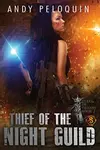

I grabbed the trilogy omnibus, so I figured I’d roll right along after finishing the first book.
Ilanna is back and her world is darker than ever. Still, there is a bright spot. Her torment at the hands of Twelve has given her a child. No matter how dark and traumatic her past has been she’s determined to raise her son with love and light, away from the eyes of the Night Guild. While she squirrels away little visits with him, the city’s defender from all things thievery, Duke Phonnis, continues on his tirade of death and destruction. These deaths, earning cheers from the city’s populace, does nothing but stir the fire within Ilanna as the Duke executes more of her friends. And as she is the one that enraged him by successfully infiltrating his “impenetrable” Black Spire in book one, these deaths feel personal. As she struggles with each new loss, as well as the anxiety of the guild finding out about her son, she looks for a way to buy her freedom. And while the guild accepts and offers terms, the price is exorbitant, leading to yet another unbelievable feat.
As the second book in a trilogy, I think this did well to break from the norm. As the tried and true format is typically a book 2 being all about growth and training (ie., the Empire format) this book actually does away with almost all of the training exercises…at least on the page for the most part. Ilanna has already spent an entire book, and over a decade, doing nothing but pushing herself to peak personal form, therefore, she has the ability and time to focus on her actual goals now. Her targets are rich, even famous, and she is known for being like that of a ghost—entering, stealing, and even leaving without anyone knowing she was ever there to begin with. I loved how the author went into this as it really reminded me of Assassin’s Creed and Ghost of Tsushima, both games I particularly loved for their stealth dynamics.
However if Ilanna wants to pull off this job correctly and live to reap the benefits, she’s going to need help. And a lot of it. While it pains her to let people in, even if she keeps a multitude of secrets from each, she needs a team. This layered in a new dynamic for her character and the story, not only allowing for new faces, but also building in character development that would perhaps have been absent otherwise. She recruits some of the best and brightest from each Guild house, ensuring the odds are at least as tilted in her favor as possible. And with each additional person helping, the chances of Ilanna losing someone else goes up…and House Hawk is dangerously empty already. I particularly liked her relationship with Two/Errik of house Serpent as it allowed the author to show off how she behaved around someone she might actually consider an equal, if not a friend. While she tries to keep him at arms length too, it’s still pretty obvious that she trusts him…and that’s super unique for her. In a way she depends on him, and he her, as he often does what she needs of him without any convincing. Perhaps coming up as tyros together will bond you that way.
The only complaint I have with this book is more of a me thing than anything against the writing. I tend to take quite lengthy breaks from Grimdark in general. The bleakness, the losses, it all begins to add up for me and can become a tad samey. Ilanna has become incredibly jaded in this one (understandably so) so a lot of that lightness and hope from the first that I loved is missing. And while her strength, courage, determination, and perseverance has not diminished for her son’s sake, the losses just stack. And don’t get me wrong—at all—it is not a fault of the author. He has not lost his delivery of these deaths whatsoever, I felt each and every one, it’s just not my typical subgenre. The book’s ending, while most definitely still presenting the most recent loss, is nothing short of heartbreaking—and one that is surely to send you right into book 3 looking for vengeance.
Book Two offers readers a fantasy world heist the likes of Six of Crows meshed with the death-heavy likes of Game of Thrones. This second entry is building up to what I’m sure will end up being an absolutely stellar trilogy.


Grabbed this on my quest to read something by every author I will be sharing the page with in The Book of Spores anthology. And while I have already read some, what a place to start this with this one!
While I like the title a lot, I do think Tootheater would have been more apt. Equally cool too (maybe?). Regardless, this was a really unique blend of fantasy and scifi, giving us a far-flung cyberpunk version of our world that felt like an amped up Blade Runner with its neon-drenched districts. Our group, referred to as the imps, have had a hypothalamic implant—referred to as Bites—added to their neurospaces. This update allows them heightened agility, strength, even intelligence and more, they just have to feed the hunger before it’s drained. The thing is…the cost of that hunger is teeth. Human teeth. And as you can imagine, not many are willing to part with their teeth willingly. The way they lust for them, as well as the buildup to feeding frenzy, is very vampiric in nature. While untraditional, it still follows some of the tropes and adds another layer to how unique this book is.
While we didn’t get too many glimpses into the actual world, the author did a good job explaining how things have become the way they are. Companies, with their ever-growing profits, and civilians’ ever-growing reliance on their products, have realized that they’re the ones with the actual power and resources. This shift has led to deeper subliminal product placement, furthering needs and desires, and even presidencies built upon the backs of the leading companies. Regardless of where you stand (left or right) it’s not that farfetched of an idea when our president is a literal celebrity and companies like Amazon have moved into even pharmaceuticals. While this doesn’t imbue any personal beliefs from the author, this does feel like an extrapolation of a possible future we are seeing now. That, and the change in countries from future wars, kept this book on the side of believable. And it kept it fresh in my mind as an idea that is both science fiction and real.
On the further side of scifi, this book features the existence of physical light. Which color you can buy will decide where you place in the light districts, finding its way into streetlights, advertisements, and even the color of your clothes. The weaponized light felt almost like Star Wars’ vibroblades and the light guns felt like a deep dive in explanation to the commonplace “blaster” we’ve had in books for years. Without saying too much and spoiling it, this also goes into a more spiritual existence to this physical light, which added another layer of uniqueness for me, but you’ll have to read to find out for yourself…
This book is 1st person, and our POV comes from Petya, a character hailing from one of the warring countries. He wants to make things better for refugees from his country, and on his journey to do so, things get much worse at the hands of those that installed the Bite. The author has crafted a well done and meaningful lead. He struggles throughout the book with opening up to the others. Not just in fear of rejection, but due to his disgust with himself over needing to eat teeth. The deaths they cause, as well as the lack of control they exhibit, turns our main from morally grey into much more of a tortured soul. I also think the POV with inner thoughts helped to keep the ball rolling in terms of plot. He is shown as a true friend, a brotherly protector, and even a possible lover, all things that layer him as a character and more than a monster—the exact thing I love about vampire stories.
An intriguing and enLIGHTening first entry into the series. I am looking forward to book two in the future.


The author very kindly sent me a copy of the book, and then with everything that happened with my quick move, I misplaced it. It’s definitely somewhere in my storage unit, which sadly houses my entire book collection, but I grabbed the audiobook to ensure I did get to it.
And DAMN! Peloquin is a solid storyteller. This is a grimdark tale that brought to mind notes of academia (with the Night Guild’s houses and names), the Thieves Guild from Skyrim, and Assassin’s Creed. A world where children are not useless but rather seen as a harnessable commodity, trainable income from the streets of Praamis. Produce of be disposed of.
A debt-ridden father, haunted by the loss of his wife and youngest daughter, offers his oldest, Viola, as a way to cover the debt. The Night Guild agrees, and just like that Viola’s world completely crumbles. As a young girl, and a small one at that, she must struggle through trials unimaginable, swallowing her grief, and working thrice as hard as the others just to get by. While teaming up with another scrawny trainee, she vows to do whatever it takes to survive, to prove everyone wrong.
Viola/Seven/Ilanna was a well crafted main character. Her stubbornness, perseverance, and hope (no matter how small) kept the reader’s eye on the horizon. I’d say it’s the biggest thing that kept much of this novel from feeling too grim. There is lightness in her will to not be extinguished, there is hope in how strong she holds herself. With that said, wow! I have seen reviews/comments of people saying I must hate my main characters, but holy moly this author just keeps the brutality coming. This is a coming of age story that could make just about anyone pessimistic or defeatist…not our main though! The integration of kindness when she finally gets mixed in with the other apprentices of House Hawk was a nice addition. The fact that she wasn’t sure if she should believe it or trust them even more deft.
The psychological torture displayed by Master Velvet to his tyros felt well researched (and heinous). These poor children being forced into hours of work before receiving water, the low protein, high sugar diet, the loss of their names and pasts, the fact that if they messed up or failed they went to bed hungry. Can’t forget the fact that they aren’t allowed outside either, no sun whatsoever. I appreciated the way this was all layered in, creating heavy believability. I did wonder though, how after so much trauma at the hands of those that had taken them in that more of them are not looking for revenge after they receive a modicum of freedom as apprentices or journeymen. But maybe some deep rooted Stockholm syndrome?
While much of this is training, which can be repetitive, the author show’s his strength by keeping the reader entwined with the hint of danger around every corner, and there is a lot of it. You really do go through each of the coming of age tropes, and with the attempted thieveries, this even feels like some “leveling up” tropes coming into play. Any time an author meshes genres or tropes of any kind, I feel like that’s when things truly shine. And this one did.
The ending, which I have seen some mixed reception of, I think was the final hammering to remind us all of how grim the world really is. While I am not a fan of SA scenes of any kind, the author did do well in skirting the “showing” while still delivering the harshness and hurt of the violation itself. And that I can accept for what it is. Ilanna’s quick revenge also offers a payoff that I feel was necessary, and it’s a reminder that if something is continuously coming for you in the city of Praamis, the only way for it to end is the removal of the obstacle wholly.
Grim, dark, and even shockingly brutal. Peloquin offers readers more than a glimpse at the depravity of his world, and yet there are still characters here to root for.


Thanks to Scholastic for the physical ARC! The matte and gloss mixed together on the cover really makes it that much cooler.
This is kind of Arachnophobia (the movie) but in a middle grade style. There is a sort of Chamber of Secrets thread with its “follow the spiders” comments dropped in, but also, how could you not? Otherwise, it is a mashup of horror and scifi actually, and kind of had me thinking of Eight Legged Freaks too.
Best friends Andi, Carly, and Devon, have decided to ditch what very well may have been their last Halloween trick or treating in order to go to Clementine’s—an eighth grade girl—for a huge party. A cool one. Andi, who’s still clinging on to being a kid, is only tempted out of her stubbornness when Carly tells her that Clementine’s dad, the science teacher, has a serious spider collection. Living, breathing specimen for her entertainment. After that, she couldn’t agree fast enough. At the party though, right as her dad is about to bring Andi upstairs, a fight breaks out, pulling him away and leaving her without a chaperone. When Andi convinces Carly and Devon to bring her upstairs anyway, things get a bit weird… and maybe she let something out?
The farm setting with the partying kids going out to the barn and fields also brought to mind Clown in a Cornfield. Instead of clowns terrorizing young adults though, it’s thousands of spiders after middle schoolers. And for a book filled with so many creepy crawlies this really did a good job of not demonizing them. Andi reminds her friends multiple times that spiders are most often more afraid of us than we are of them. And while there is plenty of things that made my skin crawl (and the cast of characters sprint around checking their skin and hair) there’s not actual arachnophobia on display here.
I liked how this brought in some newer discoveries and theories as well, each of which caught my eye. The different species of spiders coexisting in a giant web. The theory that spiders outnumber humans to the point that if they teamed up together, they could devour us all…and it wouldn’t even take long. The stuff you see while doomscrolling, right?
What hurt it overall for me, was that the climax kind of fizzled. Not even in the middle grade sense of everyone being alright in the end, which would have been fine for me. This just kind of felt like setup with little payoff. Now if there’s a sequel, that would make sense, and I would be interested in reading it still, but I don’t want to finish a book and feel like it solely exists for there to be another one. Otherwise, strong characterization, creepy conflict, and a well done setup for some spooky horror.


Grabbed this audible original for a little holiday listening. Narration by Hayley Atwell was certainly a solid selling point too.
Emma joins her boyfriend and his best friends on a Christmas-break ski trip. Truth be told, she was hoping the request to go away meant just her and Michael, but this is a full on Friendmas. Her boyfriend is a politician and all of his friends are in one way or another wealthy. A private chateau in the Alps sounds like a hell of a trip, too bad her boyfriend’s best friends are all snobs. Backhanded and outright hostile comments and insults are hurled even on the first day of the trip. But then the night a snowstorm blows in, virtually trapping them, one of the woman—who has a NOT-so-distant past with Michael—winds up dead in the hot tub outside, either drowned or strangled.
When Emma’s necklace is found outside with a few hairs of the deceased stuck in its clasp, the friends spare no time at all turning on the person they know the least. The author does a good job of handling how alienated you’d feel if this were to happen. There is a class difference (as well as some gross comments), there is a life filled with secrets and inside jokes she’s missed, and worse, she realizes she doesn’t actually know any of them enough to rule them out as killers—Michael sadly included. It also dips into how far money can take you in terms of covering up tragedies AND murders.
The characters are rich business owners, influencers and even a film director. Even though some of them came from nothing, they show a serious lack of understanding and Emma remarks upon the waste of the wealthy more than once. A cleaning staff, that also prepares the food and shops, is told not to speak to the people and Emma is even told to ignore them. They only drink champagne worth hundreds of dollars a bottle and make snide remarks when it’s gone. They show a clear disregard for anyone they consider lesser, and this does a fantastic job of introducing a group of people that you could easily see blaming a murder, even when it was one of their friends, on someone they view as other.
Emma’s trapped on the mountain and all she knows for certain is that there is a murderer among them. As she said yes to the trip more for her boyfriend’s sake than any idea of actual fun, she’s the least skilled skier, and the only chance of escape is down the snowed out mountain. Still she has to try. The ending kind of took me by surprise. Not just in the typical, thriller twist-ending sense, but also the choice the author made. I won’t say more and spoil it, but I think the additional twist at the end, the sort of “I can trust no one but myself” change is what saved it. I don’t mind the more open ending too, as I can imagine what I wanted to happen just fine.


Huge thanks to Atria & Emily Bestler Books for the physical ARC. I’m stoked I had it for a seasonal read.
I started this a bit into December, so I didn’t read a chapter a day as an advent calendar as the author offers. I think personally I preferred reading it at my own desired speed. While the first few certainly felt like a dark and devious advent gift, once the book and certainly the climax get under way it just became your typical plot-moving-device chapter endings. Don’t get me wrong, they definitely up the tension and made me want to keep reading, it just didn’t fit the previous advent feel as well.
Adam has planned a December getaway for his family. A remote, mountainous cabin setting is scheduled in the hopes of restoring and rejuvenating the family mojo. Adam has been less present, his wife Beth has been disinterested, and their girls are the ones that feel the tension. But this trip will change things, right?
From the first night the tension builds. As much as a weeklong stay somewhere where the only responsibility is ensuring the animals in the barn (and yourselves) don’t starve seems cozy, the idea of no cell service and frequent snow storms that block the only route up the mountain would be an immediate “no thanks” from me. This family should have said the same. A Christmas stocking appears nailed to the barn door. When they search it, there’s a single slide in it. The kind of photo slide that fits into old school projectors…which they just so happen to have. The picture within, is of the house they’re staying in…but where did it come from? These “gifts” continue, some closer, some proving they were taken while the family was present. Then the gifts grow creepier. One thing the author does well is the tension for me. Even when the family is forced from the cabin and struggles to find safety, there is this air of terror about it that worked well.
Ultimately, the ending took on a tonal shift that I’m not quite sure actually works. The maniacal advent-gifter is actually a torture glutton, taking pleasure and pride in his assumed power and causing suffering. And while this certainly delivered on continued tension, it did feel like a thriller turned straight horror because someone didn’t exactly know where to take the plot. There are some injuries that seem too much to come back from and yet the cast is all plot armor…not that I wanted them dead though, the author did earn my caring for them…
I think the ending was supposed to instill fear. That sometimes horror and evil just happens. That sometimes terrible things just take place around us. I can understand the concept, but overall in terms of a story, I think readers just expect the big reveal too much. A story with no identity or motive is kind of hard to digest. If this was launching into a sequel or series, I could see it working out more, but as it stands I felt a little cheated.
3.5


Book 4 in this seasonal series I didn’t expect to like but now can’t get enough of.
The town of Mistletoe, Maine is gearing up for Christmas again and it’s busier than ever. Not only are Holly and Sheriff Evan getting married on the big day, but the mayor has secured a series of shows from a dance troupe performing the Nutcracker. But on the day of the town’s big parade, the lead dancer is poisoned—and worse, it appears to be foul play again in their little town. The group is shacking up at Reindeer Games Inn though, allowing Holly all the nosy, amateur sleuthing her heart desires. Red herrings, complaints from the sheriff, and the all too familiar threats to Holly’s life and livelihood begin all over again.
I’m really not sure what it is about these that works for me so well, but at least in part, it’s the fact that while they are cozy in nature, the author maintains the thread of stakes and suspense. The deaths, threats, and life-taking attempts all hold a level of darkness that some others I’ve tried don’t have. And book four is no different for me, I fell right back in with the cast and crew.
While Holly runs around managing the Inn, her side business of glass jewelry making, her Christmas shopping and detective work—all of which are familiar to readers at this point—the author also serves up a fresh mystery, taking some things left unfinished from helping out Libby to add another layer of tension. Oh, and don’t forget that she’s also trying to get things in order to get married. While I personally think making friends and family travel and turn their holiday into something all about you is a little much, it definitely makes sense for these characters, and most importantly in a book four, it feels like earned screen time.
This mystery had me going, with Holly really digging her heels in for a character that felt destined to be the murderer. I also thought the way the dancer was poisoned was unique and made sense, how something not necessarily deadly could turn that way when you don’t know the full picture of someone’s health/lifestyle. The ending does get tied up into a neat little bow as you’d expect for the genre, but I once again enjoyed my time with the characters.


While I did look it up to see that you can read this series in any order, and many say that they do, I should have known that starting with Discworld #20 and Death #4 would be a lot to handle.
I really enjoyed a lot of the Christmas elements and how they were changed to work with the Hogfather. It added humor and it does work for a seasonal read.
But otherwise this is an incredibly eclectic style of writing, hot damn. It’s not even that I didn’t like it all, so much as I had absolutely no idea what was going on.
I remember thinking at around chapter 41 “I am not enjoying this.” And while I did enjoy Death as the Hogfather and Teatime, I went with the audio and some of the voices were so grating that it drove me up a wall.
Perhaps I will try again some day.

