
Daren

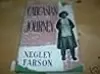
Until I read this book, I had not heard of Negley Farson. He is an American author and explorer who has published many books. Here he travels with Alexander Wicksteed, an eccentric Englishman who is domiciled in Moscow, living in a run down tenement with a 'rose-tinted glasses' view of Russia. Their journey takes them from Moscow to and through the Caucasus - the strategically vital, mountainous region between the Black and Caspian Seas, serving as a boundary between Europe and Asia. Primarily the journey takes place in Russian lands, although it crosses into Georgia for a time.
Most importantly, the journey takes place in 1929, (so some seven years after the formation of the USSR) but Farson wrote this book much later, publishing only in 1952. This means it is constantly written with knowledge of future events, to which the author refers or mentions. Interesting this largely consists of comments such as this example on P127:
A footnote to history may be added here: the Karachaites (population 150,000) sided with the German drive into the Caucasus, in 1942, in the Second World War. As a result their autonomous semi-republic was abolished, Georgia being given the major part of it; its population was deported to Siberia in 1944 - along with the entire Tchetchen, Balkar and Inguish tribes - and Utsch-Kalan is now called Klukhori, and belongs to the Georgian SSR. Another gift from Stalin to his own people; who, with these other fantastically freedom-loving tribesmen deported, have now become the master people of the Caucasus.
This was such a repetitive theme, where people were noted as having been all deported to Siberia.
I have to admit I found this slender book quite hard work for the first 50 pages. It was really a lot of scene setting, preparation, establishment, travelling from Moscow by train and riverboat and the horse riding journey took a long time to begin. Perhaps it is that I appreciated the wonderful mountain descriptions more that the rivers? There is a density to the text, and Farson tends to talk of events other than his journey - bringing a wide sweep of history into his narrative, but often confusing me - albeit I was probably not focusing as much as was necessary. Certainly after the horse journey began it became much more readable. There were interesting aspects all through, but there was a tendence to repetition that a constant journey often suffers from.
The following was a page of the book I found was a telling reflection.
P121
I take this from my notebook, just as most of this book is transposed from notes written by the light of campfires in the Caucasus. If, in the light of later events, it may seem a naive appreciation of the Communists, it at least has the veracity of being true to the time: no one, not even the leaders, could have foreseen the way the Kremlin, perhaps as an inevitable outcome of the police state, would abolish all liberties in the name of liberty. After a few days in Utsch-Kalan I wrote:
"When it comes to dealing with the inherent stupidity , the greed, and the shiftlessness of the average Russian peasant, I am on the side of the Communists. They are at least trying to show him the way to a better life; and if the peasant resists - like the stupid cow which just won't believe it is being led to better pasture - and the Communists appear brutal in their methods of forcing him, their intentions are unquestionably honest. If they are going to have the last word in this struggle, the peasant is going to progress - and it is refreshing to see what a handful of Russians are doing in Utsch-Kalan."
Here is the way fellow-travellers are made: for although those Russian instructors we met in the Kaachaite capital, most of them from Moscow, were almost unbearably arrogant, even infuriating with their assumption of having the answers to everything, they were all inspired by their cause. And this inspired anyone who watched them work. I have not the least doubt, even now, that the lower ranks of these Communists in the Caucasus, the 'workers in the field,' all believed that they were leading the mountaineers to a new and glorious life; a communal existence in which each person worked for the good of all, and in which - here is where the naivety came in - human nature was going to be reformed and all greed would vanish.
Farson's descriptive writing of the fantastic scenery is a highlight, and his wrapping in of Russian literature (albeit much unknown to me) seemed very astute and clever.
4 stars.
Until I read this book, I had not heard of Negley Farson. He is an American author and explorer who has published many books. Here he travels with Alexander Wicksteed, an eccentric Englishman who is domiciled in Moscow, living in a run down tenement with a 'rose-tinted glasses' view of Russia. Their journey takes them from Moscow to and through the Caucasus - the strategically vital, mountainous region between the Black and Caspian Seas, serving as a boundary between Europe and Asia. Primarily the journey takes place in Russian lands, although it crosses into Georgia for a time.
Most importantly, the journey takes place in 1929, (so some seven years after the formation of the USSR) but Farson wrote this book much later, publishing only in 1952. This means it is constantly written with knowledge of future events, to which the author refers or mentions. Interesting this largely consists of comments such as this example on P127:
A footnote to history may be added here: the Karachaites (population 150,000) sided with the German drive into the Caucasus, in 1942, in the Second World War. As a result their autonomous semi-republic was abolished, Georgia being given the major part of it; its population was deported to Siberia in 1944 - along with the entire Tchetchen, Balkar and Inguish tribes - and Utsch-Kalan is now called Klukhori, and belongs to the Georgian SSR. Another gift from Stalin to his own people; who, with these other fantastically freedom-loving tribesmen deported, have now become the master people of the Caucasus.
This was such a repetitive theme, where people were noted as having been all deported to Siberia.
I have to admit I found this slender book quite hard work for the first 50 pages. It was really a lot of scene setting, preparation, establishment, travelling from Moscow by train and riverboat and the horse riding journey took a long time to begin. Perhaps it is that I appreciated the wonderful mountain descriptions more that the rivers? There is a density to the text, and Farson tends to talk of events other than his journey - bringing a wide sweep of history into his narrative, but often confusing me - albeit I was probably not focusing as much as was necessary. Certainly after the horse journey began it became much more readable. There were interesting aspects all through, but there was a tendence to repetition that a constant journey often suffers from.
The following was a page of the book I found was a telling reflection.
P121
I take this from my notebook, just as most of this book is transposed from notes written by the light of campfires in the Caucasus. If, in the light of later events, it may seem a naive appreciation of the Communists, it at least has the veracity of being true to the time: no one, not even the leaders, could have foreseen the way the Kremlin, perhaps as an inevitable outcome of the police state, would abolish all liberties in the name of liberty. After a few days in Utsch-Kalan I wrote:
"When it comes to dealing with the inherent stupidity , the greed, and the shiftlessness of the average Russian peasant, I am on the side of the Communists. They are at least trying to show him the way to a better life; and if the peasant resists - like the stupid cow which just won't believe it is being led to better pasture - and the Communists appear brutal in their methods of forcing him, their intentions are unquestionably honest. If they are going to have the last word in this struggle, the peasant is going to progress - and it is refreshing to see what a handful of Russians are doing in Utsch-Kalan."
Here is the way fellow-travellers are made: for although those Russian instructors we met in the Kaachaite capital, most of them from Moscow, were almost unbearably arrogant, even infuriating with their assumption of having the answers to everything, they were all inspired by their cause. And this inspired anyone who watched them work. I have not the least doubt, even now, that the lower ranks of these Communists in the Caucasus, the 'workers in the field,' all believed that they were leading the mountaineers to a new and glorious life; a communal existence in which each person worked for the good of all, and in which - here is where the naivety came in - human nature was going to be reformed and all greed would vanish.
Farson's descriptive writing of the fantastic scenery is a highlight, and his wrapping in of Russian literature (albeit much unknown to me) seemed very astute and clever.
4 stars.