
Daren


Fraser's Flashman #8 in the order published, which is how I am reading them... this time set in Hong Kong and China, 1860. As usual Fraser does a fantastic job of describing a series of real historic events with real people and shoehorning Flashman into the thick of it, making him key to influencing history and shaping the outcomes.
In Hong Kong, Flashman awaits his ship back to Britain, but can't help being wrapped up in a voyage up river to deliver opium to Canton, courtesy of a reverend and his wife who completely pull the wool over Flashy's eyes, as it isn't opium he helps ship, but guns to the Taiping rebels. Captaining the boat is Frederick Townsend Ward, an American mercenary who pops up again later in the book. As he discovers the guns, the ship is apprehended by the British and Flashman improvises into pretending he is undercover and does enough to convince Harry Parkes, British Consul in Canton he was on the right side of the law! Sent to negotiate with the Taiping rebels, he is captured by the Chinese Imperials, wrapping up in the British & French taking Peking and burning the Summer Palace.
There are literally too many twists and turns for me to map out all Flashman's twists and turns. As well as Ward and Park already mentioned, Flashy comes into contact with so many real life characters it is hard to credit. They include James Hope Grant, Fisher and Wolseley (who both go on to bigger things later in life), Lord Elgin, 'Chinese' Gordon. On the Chinese side we meet Hung Hsiu-Chuan (leader of the rebellion), Loyal Prince Li, Chen Yucheng, Prince Yi, Sushun, the formidable Sang Kol-in-sen, Emperor Hsienfeng, Yehonala -the imperial concubine, who later becomes Empress Dowager Cixi.
Flashman, as is par for the course, find plenty of ladies, but amusingly in this book they tend to get the better of him; Szu-Zhan (a very tall bandit, described as Amanzonian) physically, and Yehonala literally has him prisoner!
The final third of the book in particular was a hectic, edge of the seat build up to a thrilling crescendo.
Another highly enjoyable episode. 4****
Fraser's Flashman #8 in the order published, which is how I am reading them... this time set in Hong Kong and China, 1860. As usual Fraser does a fantastic job of describing a series of real historic events with real people and shoehorning Flashman into the thick of it, making him key to influencing history and shaping the outcomes.
In Hong Kong, Flashman awaits his ship back to Britain, but can't help being wrapped up in a voyage up river to deliver opium to Canton, courtesy of a reverend and his wife who completely pull the wool over Flashy's eyes, as it isn't opium he helps ship, but guns to the Taiping rebels. Captaining the boat is Frederick Townsend Ward, an American mercenary who pops up again later in the book. As he discovers the guns, the ship is apprehended by the British and Flashman improvises into pretending he is undercover and does enough to convince Harry Parkes, British Consul in Canton he was on the right side of the law! Sent to negotiate with the Taiping rebels, he is captured by the Chinese Imperials, wrapping up in the British & French taking Peking and burning the Summer Palace.
There are literally too many twists and turns for me to map out all Flashman's twists and turns. As well as Ward and Park already mentioned, Flashy comes into contact with so many real life characters it is hard to credit. They include James Hope Grant, Fisher and Wolseley (who both go on to bigger things later in life), Lord Elgin, 'Chinese' Gordon. On the Chinese side we meet Hung Hsiu-Chuan (leader of the rebellion), Loyal Prince Li, Chen Yucheng, Prince Yi, Sushun, the formidable Sang Kol-in-sen, Emperor Hsienfeng, Yehonala -the imperial concubine, who later becomes Empress Dowager Cixi.
Flashman, as is par for the course, find plenty of ladies, but amusingly in this book they tend to get the better of him; Szu-Zhan (a very tall bandit, described as Amanzonian) physically, and Yehonala literally has him prisoner!
The final third of the book in particular was a hectic, edge of the seat build up to a thrilling crescendo.
Another highly enjoyable episode. 4****
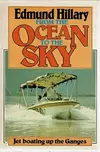
In 1977 Hillary led an expedition that he had been planning for a long time. It has been one that he was able to include his wife on, as it was not mountaineering (until the end), but a jet boating expedition up the Ganges River in India. Sadly, two years before this expedition came to fruition, Hillary's wife Louise and daughter Belinda had been killed in a small plane crash in Nepal. Hillary saw this expedition as completing a plan, but also to spend time with son Peter (23 at the time).
The boats for the expedition were specially modified Hamilton Jet boats - the Hamilton Jet being a New Zealand design which uses propulsion of the water from an intake below the boat and forced out the back which uniquely leaves the bottom of the boat free of obstruction, and therefore able to operate in very shallow water. Accompanying Hillary and his were Jon Hamilton, son of the inventor of the jet, and his son Michael.
Also joining the cast of many were Hillary's friends and contemporaries (many of who are authors of their own books) - climbers Dr Mike Gill, Graeme Dingle, Jim Wilson & Murray Jones. As the Ocean to Sky expedition was a joint Indian and New Zealand effort (mostly because of money contributed) they were joined by Joginder Singh and Mohan Kohli, and by Sherpa's Mingma Tsering and Pemma. To capture the events on film (the making of a film was part of the deal) Mike Dillon and Waka Attewell were joined by India cameramen Prem Vaidya and BG Dewari. Max Pearl joined as the official doctor on the journey.
Three jetboats were used to transport this extensive crew, although for a large part they were assisted by the army with trucks as for much of the time the river conditions necessitated practically empty boats. The boats were named Kiwi, Air India and Ganga.
The Journey begins with some zipping around the Sundarbans - a wetlands mangrove forest at the mouth of the Ganga - where despite the rarity, they see and film not one but two tigers! For much of the journey upriver they are swamped by many thousands of people lining the river to catch a glimpse of the famous mountaineer. The press were rampant, and Hillary spent much of his time signing autographs and being available to the people. The other members not so much, although because Jim Wilson had a massive beard he was thought to be a foreign sadhu and was given plenty of attention as the primary driver of one of the boats.
The jet boat trip is described in detail, each major rapid get a sketch. Mixed in with this are the interactions with the people, and the significant assistance rendered by the sponsors and people in general. There is lots of information about the river, the lives of Indians on the river side as well as aspects of the history of the areas they pass through.
I would describe the writing as thorough, well researched and well put together in Hillary's typical style which is not overtly overwritten or embellished in any way, and is perhaps a bit 'workman like' in its polish.
As the boats inevitably reach a point where they cannot continue. They had travelled 1500 miles, every foot on the water, in all three boats. The press gave them, quite unfairly, a hard time about abandoning their expedition or failing, but of course they never expected to reach the top of a mountain in the jet boats!
The goal always to was to get as far as they could and then make an ascent on a mountain in the Himalaya near the source. And so as the team split up - the boats and the Hamilton's returning to Delhi (by truck); Max Pearl heading to Hillary's hospital in Nepal; the Indian contingent (although they continued to have a local liaison officer to assist) returned to undertake another expedition. The rest (except Murray and Peter who had a few weeks earlier gone on ahead to investigate the climbing options) continued on foot to Badrinath, a climb from 3,000 up to 10,000 feet over sixty miles.
The mountaineering however was of more modest success - originally targeting Narayan Parbat, this was quickly deemed very difficult, and beyond the capacity of the team. The nearby Nar Parbat was then identified as a more achievable goal. The short version is they pushed hard, carried heavy loads and did not take time to acclimatise. Hillary was particularly badly effected and required assistance to descend urgently, suffering from pulmonary or cerebral oedema (Mike Gill never really determined which), and practically unconscious. He ended up being lifted by helicopter away to hospital to recover.
After Hillary was safely removed, others in the team, Peter Hillary included carried on to complete the climb, and in eh few days this took, Sir Ed was well enough to rejoin them at Badrinath, concluding the expedition.
4 stars.
In 1977 Hillary led an expedition that he had been planning for a long time. It has been one that he was able to include his wife on, as it was not mountaineering (until the end), but a jet boating expedition up the Ganges River in India. Sadly, two years before this expedition came to fruition, Hillary's wife Louise and daughter Belinda had been killed in a small plane crash in Nepal. Hillary saw this expedition as completing a plan, but also to spend time with son Peter (23 at the time).
The boats for the expedition were specially modified Hamilton Jet boats - the Hamilton Jet being a New Zealand design which uses propulsion of the water from an intake below the boat and forced out the back which uniquely leaves the bottom of the boat free of obstruction, and therefore able to operate in very shallow water. Accompanying Hillary and his were Jon Hamilton, son of the inventor of the jet, and his son Michael.
Also joining the cast of many were Hillary's friends and contemporaries (many of who are authors of their own books) - climbers Dr Mike Gill, Graeme Dingle, Jim Wilson & Murray Jones. As the Ocean to Sky expedition was a joint Indian and New Zealand effort (mostly because of money contributed) they were joined by Joginder Singh and Mohan Kohli, and by Sherpa's Mingma Tsering and Pemma. To capture the events on film (the making of a film was part of the deal) Mike Dillon and Waka Attewell were joined by India cameramen Prem Vaidya and BG Dewari. Max Pearl joined as the official doctor on the journey.
Three jetboats were used to transport this extensive crew, although for a large part they were assisted by the army with trucks as for much of the time the river conditions necessitated practically empty boats. The boats were named Kiwi, Air India and Ganga.
The Journey begins with some zipping around the Sundarbans - a wetlands mangrove forest at the mouth of the Ganga - where despite the rarity, they see and film not one but two tigers! For much of the journey upriver they are swamped by many thousands of people lining the river to catch a glimpse of the famous mountaineer. The press were rampant, and Hillary spent much of his time signing autographs and being available to the people. The other members not so much, although because Jim Wilson had a massive beard he was thought to be a foreign sadhu and was given plenty of attention as the primary driver of one of the boats.
The jet boat trip is described in detail, each major rapid get a sketch. Mixed in with this are the interactions with the people, and the significant assistance rendered by the sponsors and people in general. There is lots of information about the river, the lives of Indians on the river side as well as aspects of the history of the areas they pass through.
I would describe the writing as thorough, well researched and well put together in Hillary's typical style which is not overtly overwritten or embellished in any way, and is perhaps a bit 'workman like' in its polish.
As the boats inevitably reach a point where they cannot continue. They had travelled 1500 miles, every foot on the water, in all three boats. The press gave them, quite unfairly, a hard time about abandoning their expedition or failing, but of course they never expected to reach the top of a mountain in the jet boats!
The goal always to was to get as far as they could and then make an ascent on a mountain in the Himalaya near the source. And so as the team split up - the boats and the Hamilton's returning to Delhi (by truck); Max Pearl heading to Hillary's hospital in Nepal; the Indian contingent (although they continued to have a local liaison officer to assist) returned to undertake another expedition. The rest (except Murray and Peter who had a few weeks earlier gone on ahead to investigate the climbing options) continued on foot to Badrinath, a climb from 3,000 up to 10,000 feet over sixty miles.
The mountaineering however was of more modest success - originally targeting Narayan Parbat, this was quickly deemed very difficult, and beyond the capacity of the team. The nearby Nar Parbat was then identified as a more achievable goal. The short version is they pushed hard, carried heavy loads and did not take time to acclimatise. Hillary was particularly badly effected and required assistance to descend urgently, suffering from pulmonary or cerebral oedema (Mike Gill never really determined which), and practically unconscious. He ended up being lifted by helicopter away to hospital to recover.
After Hillary was safely removed, others in the team, Peter Hillary included carried on to complete the climb, and in eh few days this took, Sir Ed was well enough to rejoin them at Badrinath, concluding the expedition.
4 stars.

An early book from the Detective Inspector Napoleon Bonaparte series from Arthur Upfield, published in 1938. This is number 6 in the series, and the fifth book I have read (not being read in order).
I have decided to plant the following on author and character in each of my 'Bony' reviews as background: - Upfield is an interesting writer, British by birth, emigrated to Australia at the age of twenty. He fought in the Australian Army in WWI. Following the war he travelled extensively in Australia working with stock and farming and developed an understanding of the Aboriginal culture which was to inform much of his writing. His 'Bony' character is a Detective Inspector in the Queensland Police Force, and is of mixed parentage - his mother an Aboriginal and his father white. It is rare to have a mixed race Aboriginal character held in high regard, and protagonist of a series of books.
In this book Bony is sent to a remote Queensland outback to a station where a worker has been missing for 5 months. In bad weather, station worker Jack Anderson was out riding fences but went missing, his horse returning without him. He was not a well liked man, cruel, and with a fierce temper, but despite extensive searching, not trace was found, so foul play was assumed. Eventually Bony is sent to investigate - given two weeks, which he immediately says is inadequate, expecting to take months to resolve.
Using his investigative skills, mixed with his understanding of human nature (Aboriginal and white man) he begins the time consuming task of searching for clues a long time after the event. There are those who know more than they will let on, and those who work actively against his investigation, but what is it they are covering up?
As obvious from the name of the novel, the local Aboriginal tribe resent Bony's intrusion, and 'point the bone' at him in a ritual to cause his death through a curse. I am not too sure about the accuracy of the description of this, having not heard much about mental telepathy by Aboriginals, but it is an interesting turn in the novel where he literally becomes too unwell to progress his case.
Another feature of the book, the rabbit migration, leaves me skeptical of the accuracy of the book. I wasn't able to find another reference to this phenomenon when I looked...
I wont spoil the twists and turns for other readers, but this was another interesting book in the series, albeit a little longer than the others I have read.
3 stars.
An early book from the Detective Inspector Napoleon Bonaparte series from Arthur Upfield, published in 1938. This is number 6 in the series, and the fifth book I have read (not being read in order).
I have decided to plant the following on author and character in each of my 'Bony' reviews as background: - Upfield is an interesting writer, British by birth, emigrated to Australia at the age of twenty. He fought in the Australian Army in WWI. Following the war he travelled extensively in Australia working with stock and farming and developed an understanding of the Aboriginal culture which was to inform much of his writing. His 'Bony' character is a Detective Inspector in the Queensland Police Force, and is of mixed parentage - his mother an Aboriginal and his father white. It is rare to have a mixed race Aboriginal character held in high regard, and protagonist of a series of books.
In this book Bony is sent to a remote Queensland outback to a station where a worker has been missing for 5 months. In bad weather, station worker Jack Anderson was out riding fences but went missing, his horse returning without him. He was not a well liked man, cruel, and with a fierce temper, but despite extensive searching, not trace was found, so foul play was assumed. Eventually Bony is sent to investigate - given two weeks, which he immediately says is inadequate, expecting to take months to resolve.
Using his investigative skills, mixed with his understanding of human nature (Aboriginal and white man) he begins the time consuming task of searching for clues a long time after the event. There are those who know more than they will let on, and those who work actively against his investigation, but what is it they are covering up?
As obvious from the name of the novel, the local Aboriginal tribe resent Bony's intrusion, and 'point the bone' at him in a ritual to cause his death through a curse. I am not too sure about the accuracy of the description of this, having not heard much about mental telepathy by Aboriginals, but it is an interesting turn in the novel where he literally becomes too unwell to progress his case.
Another feature of the book, the rabbit migration, leaves me skeptical of the accuracy of the book. I wasn't able to find another reference to this phenomenon when I looked...
I wont spoil the twists and turns for other readers, but this was another interesting book in the series, albeit a little longer than the others I have read.
3 stars.

Added to listOwnedwith 2797 books.


A novella from New Zealand author FE Beyer, his third major publication, this time set in early 2000s Shanghai. The story takes place over a short period (a month perhaps) following protagonist Kurt - a 24 year old Australian teaching English as a second language.
While I have not participated in the experience of teaching English as an ex-pat, this reads as a very authentic descriptions of that life - the isolation factor, minor debauchery, Chinese girlfriends, the repetition of teaching life, the expat community.
As the blurb outlines, when his friend and fellow teacher Reece abruptly leaves Shanghai for Indonesia, Kurt takes over his apartment, and inherits his Chinese girlfriend. While she is convenient, she comes with her own problems which threaten to also become inherited. Kurt is also juggling his discomfort at not being an interesting enough teacher, and his guilt at visiting 'hairdressers'.
Very good.
4 stars
A novella from New Zealand author FE Beyer, his third major publication, this time set in early 2000s Shanghai. The story takes place over a short period (a month perhaps) following protagonist Kurt - a 24 year old Australian teaching English as a second language.
While I have not participated in the experience of teaching English as an ex-pat, this reads as a very authentic descriptions of that life - the isolation factor, minor debauchery, Chinese girlfriends, the repetition of teaching life, the expat community.
As the blurb outlines, when his friend and fellow teacher Reece abruptly leaves Shanghai for Indonesia, Kurt takes over his apartment, and inherits his Chinese girlfriend. While she is convenient, she comes with her own problems which threaten to also become inherited. Kurt is also juggling his discomfort at not being an interesting enough teacher, and his guilt at visiting 'hairdressers'.
Very good.
4 stars

Probably Alan Booth's second most popular book after Roads to Sata, which was a 5 star book for me. I had expected more of the same from this book, published some ten years after the success of his first.
In many way it was more of the same - I enjoyed the quirky conversations, the tidbits of odd Japanese social history, history and the psyche of the Japanese as assessed by Booth, by this point a long time resident of Japan. Speaking fluent Japanese he gains great benefits over other foreign travellers in Japan.
I also enjoyed the fact that Booth is a committed walker - he walks at all times, in all weather, and will not accept a lift or assistance with transport - and this alone confuses the Japanese he comes into contact with, most assuming he has not communicated his intention correctly in a language he is new to... and leads to some awkward moments like the courtesy van from the hotel that has come to collect him that follows him along the road for the several kilometres back to the hotel (at walking pace).
The final recurring feature is Booth's enjoyment of beer. Whether lunchtime or afternoon, with dinner or later in the evening, Booth will have a bottle (or two, sometime three) to rehydrate (don't take hydration advice from my review please). While still in transit, they are usually obtained form a vending machine or a bottle shop (most of these allow him to drink these on site). Booth mentions in this book that he received criticism for his beer consumption, described as his 'pub crawl of Japan' and wasn't very impressed, considering it was a very minor part of his narrative - the problem with his displeasure at this is that he makes it such a regular feature of his narrative that it stands out if he doesn't break his day up with beer! Of course, I had no issue with being a part of the narrative.
As for where it is that Booth walks, he breaks the book into three distinct parts. The first is Tsugaru where ostensibly he follows the footsteps of author Osamu Dazai, a novelist from the local area famous for his booze fueled life and many suicide attempts, the last of which (obviously) was successful. Booth hikes about Amori Prefecture following the route taken by the author some 50 years prior.
In the second section, Saigo's Last March, Booth follows in the footsteps of Saigo Takamori's famous retreat from Mount Enodake in the northern part of Miyazaki prefecture through mountains down to his home town of Kagoshima (Kagoshima Prefecture). Saigo was a famous samurai and politician who lived from 1828-1877, and was an influential figure in the Meiji Restoration which overthrew the Tokugawa shogunate. Following Saigo's route, Booth is unable to keep up with the timeline, but fits in lots of beer and interactions en route.
The third section, Looking for the Lost Booths intent is to follow the retreat of the Heike (samurai) clan who were chased from Kyoto in the 12th century, occurring mostly in the Gifu Prefecture. In this section Booth also shares a bit more about his own story.
So very much 'more of the same', and overall an enjoyable read, but for me definitely a slow read. I picked up another book between each of the sections, just to break it all up more for me. There is an element of repetition, and while it is well deal with by the author, there was still enough slow paced travelling to leave me looking for something else in between.
Recommended to those who like Roads to Sata, and enjoy a leisurely paced read.
4 stars
Probably Alan Booth's second most popular book after Roads to Sata, which was a 5 star book for me. I had expected more of the same from this book, published some ten years after the success of his first.
In many way it was more of the same - I enjoyed the quirky conversations, the tidbits of odd Japanese social history, history and the psyche of the Japanese as assessed by Booth, by this point a long time resident of Japan. Speaking fluent Japanese he gains great benefits over other foreign travellers in Japan.
I also enjoyed the fact that Booth is a committed walker - he walks at all times, in all weather, and will not accept a lift or assistance with transport - and this alone confuses the Japanese he comes into contact with, most assuming he has not communicated his intention correctly in a language he is new to... and leads to some awkward moments like the courtesy van from the hotel that has come to collect him that follows him along the road for the several kilometres back to the hotel (at walking pace).
The final recurring feature is Booth's enjoyment of beer. Whether lunchtime or afternoon, with dinner or later in the evening, Booth will have a bottle (or two, sometime three) to rehydrate (don't take hydration advice from my review please). While still in transit, they are usually obtained form a vending machine or a bottle shop (most of these allow him to drink these on site). Booth mentions in this book that he received criticism for his beer consumption, described as his 'pub crawl of Japan' and wasn't very impressed, considering it was a very minor part of his narrative - the problem with his displeasure at this is that he makes it such a regular feature of his narrative that it stands out if he doesn't break his day up with beer! Of course, I had no issue with being a part of the narrative.
As for where it is that Booth walks, he breaks the book into three distinct parts. The first is Tsugaru where ostensibly he follows the footsteps of author Osamu Dazai, a novelist from the local area famous for his booze fueled life and many suicide attempts, the last of which (obviously) was successful. Booth hikes about Amori Prefecture following the route taken by the author some 50 years prior.
In the second section, Saigo's Last March, Booth follows in the footsteps of Saigo Takamori's famous retreat from Mount Enodake in the northern part of Miyazaki prefecture through mountains down to his home town of Kagoshima (Kagoshima Prefecture). Saigo was a famous samurai and politician who lived from 1828-1877, and was an influential figure in the Meiji Restoration which overthrew the Tokugawa shogunate. Following Saigo's route, Booth is unable to keep up with the timeline, but fits in lots of beer and interactions en route.
The third section, Looking for the Lost Booths intent is to follow the retreat of the Heike (samurai) clan who were chased from Kyoto in the 12th century, occurring mostly in the Gifu Prefecture. In this section Booth also shares a bit more about his own story.
So very much 'more of the same', and overall an enjoyable read, but for me definitely a slow read. I picked up another book between each of the sections, just to break it all up more for me. There is an element of repetition, and while it is well deal with by the author, there was still enough slow paced travelling to leave me looking for something else in between.
Recommended to those who like Roads to Sata, and enjoy a leisurely paced read.
4 stars

Carrie Vaughn's Graff #4 available from tor.com for free.
This was was just a background filler, structured as a flashback to a mission on which Dr Ell accompanies Graff to visit an asteroid that is all mined out and due to be destroyed. The mission is to "retrieve off-network data and tissue samples from a lab in 67B’s office section', except that tissue sample isn't a thing in a Petrie dish...
It is a bit of a cutesie romantic story, it is when Graff fell in love with Ell, and while it was 'not the most romantic thing' the flashback setup manipulates to to be, a bit.
This one didn't reach the expectation based on the more solid action of the previous stories in the series. Hoping the next (at this point last, although here's hoping for more) ramps back up the action.
2.5 stars
Carrie Vaughn's Graff #4 available from tor.com for free.
This was was just a background filler, structured as a flashback to a mission on which Dr Ell accompanies Graff to visit an asteroid that is all mined out and due to be destroyed. The mission is to "retrieve off-network data and tissue samples from a lab in 67B’s office section', except that tissue sample isn't a thing in a Petrie dish...
It is a bit of a cutesie romantic story, it is when Graff fell in love with Ell, and while it was 'not the most romantic thing' the flashback setup manipulates to to be, a bit.
This one didn't reach the expectation based on the more solid action of the previous stories in the series. Hoping the next (at this point last, although here's hoping for more) ramps back up the action.
2.5 stars

This book falls in with The Young Team and Londonstani. It was contemporary with The Young Team but followed Londonstani by 14 years.
Like these it is written in a combination of dialect and slang, some of the slang took a while to adjust to, being largely Jamaican patois, mixed with lax pronunciation into a written form. I suspect I understood 95% of it, but there were a few instances where I wasn't fully following, but the context usually makes it clear enough.
This book is considered autofiction - meaning basically it is autobiography with fictionalised elements - something I generally dislike because as a reader I quickly lose trust on what is real and what is embellished, as clearly there is no way to tell. The narrative flicks between how appalling the lifestyle is to fully glamorises the lifestyle of these criminal scumbags, and in most cases makes it hard for he reader (or at least me) to sympathise with the characters, because they make so little effort to improve their lot. Other reviewers point to a social underclass, a governmental failing, social inequities, lack of services or support, but this is distant to me, so I can't comment beyond my own perception of what it written in this book.
To achieve income, they deal drugs and carry out robberies, generally mugging people on the street taking cash, jewellery and catches. Victims are chosen by how much bling the put on show as they walk the streets, so again hard to sympathise with people who insist on wearing watches worth a months income.
Fast money is spent fast, usually buying fashion and, yes more watches, diamond grillz or gold/silver teeth overlays with diamonds or other stones set into them. Real good investments... not. Also there are running arguments between the gangs of thugs, with beatings, stabbings and regular murders carried out with arguments over territory, or just where they live, real or perceived injustices.
Even within their own groups there are betrayals and fallings out. Krause, known as Snoopz in the narrative runs through best mates as they cycle in and out of prison or remand, or just disappear from the scene. I won't spoil key events for other people, but Krause is somewhat different in that he is at University studying for an English degree, so he also juggles a sort of double life in that respect. Women earn little respect, are treated as commodities or worse. The legal and prison systems are ineffective or corrupted. He appears to be a continual disappointment or burden on his parents, although I would mention he does isolate them from his criminal life as much as possible for their own protection (in that he doesn't let anyone know where they live).
It is a pretty grim read. In terms of narrative it is non-linear in that it jumps around, but it it narrated jumping, not left for the reader to determine, and towards skips forward a few years. Krause, or Snoops doesn't explain fully at the end whether he fully separates his from this life, but obviously he writes this book. From the author bio it appears he may have moved on from his South Kilburn life.
I enjoyed this book, but as mentioned above found any form of sympathy hard, and really disliked most of the people involved.
4 stars.
This book falls in with The Young Team and Londonstani. It was contemporary with The Young Team but followed Londonstani by 14 years.
Like these it is written in a combination of dialect and slang, some of the slang took a while to adjust to, being largely Jamaican patois, mixed with lax pronunciation into a written form. I suspect I understood 95% of it, but there were a few instances where I wasn't fully following, but the context usually makes it clear enough.
This book is considered autofiction - meaning basically it is autobiography with fictionalised elements - something I generally dislike because as a reader I quickly lose trust on what is real and what is embellished, as clearly there is no way to tell. The narrative flicks between how appalling the lifestyle is to fully glamorises the lifestyle of these criminal scumbags, and in most cases makes it hard for he reader (or at least me) to sympathise with the characters, because they make so little effort to improve their lot. Other reviewers point to a social underclass, a governmental failing, social inequities, lack of services or support, but this is distant to me, so I can't comment beyond my own perception of what it written in this book.
To achieve income, they deal drugs and carry out robberies, generally mugging people on the street taking cash, jewellery and catches. Victims are chosen by how much bling the put on show as they walk the streets, so again hard to sympathise with people who insist on wearing watches worth a months income.
Fast money is spent fast, usually buying fashion and, yes more watches, diamond grillz or gold/silver teeth overlays with diamonds or other stones set into them. Real good investments... not. Also there are running arguments between the gangs of thugs, with beatings, stabbings and regular murders carried out with arguments over territory, or just where they live, real or perceived injustices.
Even within their own groups there are betrayals and fallings out. Krause, known as Snoopz in the narrative runs through best mates as they cycle in and out of prison or remand, or just disappear from the scene. I won't spoil key events for other people, but Krause is somewhat different in that he is at University studying for an English degree, so he also juggles a sort of double life in that respect. Women earn little respect, are treated as commodities or worse. The legal and prison systems are ineffective or corrupted. He appears to be a continual disappointment or burden on his parents, although I would mention he does isolate them from his criminal life as much as possible for their own protection (in that he doesn't let anyone know where they live).
It is a pretty grim read. In terms of narrative it is non-linear in that it jumps around, but it it narrated jumping, not left for the reader to determine, and towards skips forward a few years. Krause, or Snoops doesn't explain fully at the end whether he fully separates his from this life, but obviously he writes this book. From the author bio it appears he may have moved on from his South Kilburn life.
I enjoyed this book, but as mentioned above found any form of sympathy hard, and really disliked most of the people involved.
4 stars.

The Caves of the Ten Thousand Buddha's or the Mongao Caves sit on the edge of two massive deserts, the Taklamakan and the Gobi in Gansu Province or Chinese Turkestan as it was known at the turn of the (20th) century. It is a perfect climatically controlled and dry place to have housed paper scrolls, providing they were to remain undisturbed. For around a thousand years they were undisturbed, but shortly before Aurel Stein travelled to Chinese Turkestan thousands of paper scrolls and silk paintings were discovered in one of the caves, banked up by sand for centuries, and were minded by a caretaker Abbot established at the caves.
Aurel Stein (later to become Sir Aurel Stein), Hungarian born, British archaeologist who had made an expeditionary journey into Turkestan in 1900/1901 made a longer expedition in 1906 to 1908 - and this is the primary topic of this biography by author couple Joyce Morgan and Conrad Walters.
While Stein was not the only European treasure hunter in Chinese Turkestan in the decades before or after this expedition, he is recognised as one of the most successful ones - and therefore is accused of theft of the Chinese artifacts and the removal of these from China. Stein, of course, is not the only one accused of this, he was simply more successful than Le Coq, Pelliot, Warner and the others. The counter argument for the pillaging of another country's artifacts (scrolls, but also wall murals of which a number were removed) is that they would have been destroyed by looters seeking treasure, or religious objectors incensed by images, or destroyed by soldiers etc, etc as the country in question was unable or unwilling to protect them from harm, had the British (etc) not taken them to protect them.
The authors suggest that Stein is not well remembered as an explorer and archaeologist, but I have certainly heard plenty about him... but maybe I read this location and topic more than the average reader! P241-242
Indestructible as Stein appeared in life, in death his name has not been so enduring. He has sunk from memory as quietly and almost as thoroughly as one of his sand-buried cities.
Many factors have contributed to this. At the time of his death, the world's attention was focused elsewhere, convulsed by the Second World War. His death was hardly dramatic, untimely explorer's demise, even if he was poised to embark on a journey few octogenarians would contemplate today. He was not murdered on a Hawaiian beach like Captain James Cook or frozen in the Antarctic like Robert Scott. He remained a reserved, conservative, scholarly man and his writings reflect that. Even his 'popular' accounts are largely devoid of the colorful adventures and anecdotes of Albert von Le Coq or Sven Hedin... the public was far more dazzled by the discoveries of others than by what Stein found.
Agamemnon's mask has immortalised Heinrich Schliemann's name, Tutankhamen's tomb Howard Carter. Stein did not return with gold, jewels or richly decorated sarcophagi. His greatest finds were scrolls. He dies just as the sun set on colonialism, imperialism and the British Empire, which left their own troublesome legacy. The Great Game ended, India became independent, China and Russia locked their doors and Central Asia was off-limits to the West.
A wide-sweeping quote, and no doubt accurate, but one of the scrolls Stein recovered (of several thousand he convinced the caretaker to part with, in exchange for silver with which to refurbish the caves) was the Diamond Sutra, a Buddhist religious text - not especially important for the sutra, but because it was block-printed and is thought to be the oldest surviving example of a printed book, dated at 868. As such this is one of the most valued of the scrolls in possession of the British Museum.
As well as a reasonably full biography of Stein, including more briefly his expeditions before and after the 1906-08 one to Chinese Turkestan, this book covers the movements of the museum collections during the war, when London was (correctly) considered at risk of enemy bombing - the collection was moved to a Welsh library, and later a climate controlled cave! It also covers some of the impact the Diamond Sutra had on society, the arts and culture after it's discovery, some light history of the Silk Road and Steins travel routes and methods. As well as being shown to be organised, thorough and meticulous in his planning and work, Stein is also shown to be thoroughly devoted to his goals (and dog(s) Dash), often at the expense of personal relationships and his health, although he thought very highly of his Chinese assistant Chiang and the friendship he built with him.
But this review is becoming excessively long, so I will cease!
5 stars
The Caves of the Ten Thousand Buddha's or the Mongao Caves sit on the edge of two massive deserts, the Taklamakan and the Gobi in Gansu Province or Chinese Turkestan as it was known at the turn of the (20th) century. It is a perfect climatically controlled and dry place to have housed paper scrolls, providing they were to remain undisturbed. For around a thousand years they were undisturbed, but shortly before Aurel Stein travelled to Chinese Turkestan thousands of paper scrolls and silk paintings were discovered in one of the caves, banked up by sand for centuries, and were minded by a caretaker Abbot established at the caves.
Aurel Stein (later to become Sir Aurel Stein), Hungarian born, British archaeologist who had made an expeditionary journey into Turkestan in 1900/1901 made a longer expedition in 1906 to 1908 - and this is the primary topic of this biography by author couple Joyce Morgan and Conrad Walters.
While Stein was not the only European treasure hunter in Chinese Turkestan in the decades before or after this expedition, he is recognised as one of the most successful ones - and therefore is accused of theft of the Chinese artifacts and the removal of these from China. Stein, of course, is not the only one accused of this, he was simply more successful than Le Coq, Pelliot, Warner and the others. The counter argument for the pillaging of another country's artifacts (scrolls, but also wall murals of which a number were removed) is that they would have been destroyed by looters seeking treasure, or religious objectors incensed by images, or destroyed by soldiers etc, etc as the country in question was unable or unwilling to protect them from harm, had the British (etc) not taken them to protect them.
The authors suggest that Stein is not well remembered as an explorer and archaeologist, but I have certainly heard plenty about him... but maybe I read this location and topic more than the average reader! P241-242
Indestructible as Stein appeared in life, in death his name has not been so enduring. He has sunk from memory as quietly and almost as thoroughly as one of his sand-buried cities.
Many factors have contributed to this. At the time of his death, the world's attention was focused elsewhere, convulsed by the Second World War. His death was hardly dramatic, untimely explorer's demise, even if he was poised to embark on a journey few octogenarians would contemplate today. He was not murdered on a Hawaiian beach like Captain James Cook or frozen in the Antarctic like Robert Scott. He remained a reserved, conservative, scholarly man and his writings reflect that. Even his 'popular' accounts are largely devoid of the colorful adventures and anecdotes of Albert von Le Coq or Sven Hedin... the public was far more dazzled by the discoveries of others than by what Stein found.
Agamemnon's mask has immortalised Heinrich Schliemann's name, Tutankhamen's tomb Howard Carter. Stein did not return with gold, jewels or richly decorated sarcophagi. His greatest finds were scrolls. He dies just as the sun set on colonialism, imperialism and the British Empire, which left their own troublesome legacy. The Great Game ended, India became independent, China and Russia locked their doors and Central Asia was off-limits to the West.
A wide-sweeping quote, and no doubt accurate, but one of the scrolls Stein recovered (of several thousand he convinced the caretaker to part with, in exchange for silver with which to refurbish the caves) was the Diamond Sutra, a Buddhist religious text - not especially important for the sutra, but because it was block-printed and is thought to be the oldest surviving example of a printed book, dated at 868. As such this is one of the most valued of the scrolls in possession of the British Museum.
As well as a reasonably full biography of Stein, including more briefly his expeditions before and after the 1906-08 one to Chinese Turkestan, this book covers the movements of the museum collections during the war, when London was (correctly) considered at risk of enemy bombing - the collection was moved to a Welsh library, and later a climate controlled cave! It also covers some of the impact the Diamond Sutra had on society, the arts and culture after it's discovery, some light history of the Silk Road and Steins travel routes and methods. As well as being shown to be organised, thorough and meticulous in his planning and work, Stein is also shown to be thoroughly devoted to his goals (and dog(s) Dash), often at the expense of personal relationships and his health, although he thought very highly of his Chinese assistant Chiang and the friendship he built with him.
But this review is becoming excessively long, so I will cease!
5 stars

Another of Clune's fairly mundane travel journeys where he describes his route, his experiences and every single person he meets in minute detail, whether they are of any interest or not... interspersed with fairly dull local history. This one was published in 1951, and joins the list of the formulaic, almost advertorial books of Clune's. I have hopes that there are much better Clune books coming up, hopefully ones which don't include more drivel about his 'white Australia policy'.
So this journey takes Clune, accompanied by his wife (a rare occurrence) from Sydney to Fiji, then to Canton Island (a part of the Phoenix Islands), now part of the Kiribati Group. From there to Hawaii, and on to the main course, which is Canada. In Canada he traves extensively, meets lots of people, sees a lot of primary industry (lots of mining, an oil refinery).
Pretty hard to pull any real positives, other than this is another Clune book crossed off which get me closer to some better looking books (I am reading his books I have in published order).
2 stars
Another of Clune's fairly mundane travel journeys where he describes his route, his experiences and every single person he meets in minute detail, whether they are of any interest or not... interspersed with fairly dull local history. This one was published in 1951, and joins the list of the formulaic, almost advertorial books of Clune's. I have hopes that there are much better Clune books coming up, hopefully ones which don't include more drivel about his 'white Australia policy'.
So this journey takes Clune, accompanied by his wife (a rare occurrence) from Sydney to Fiji, then to Canton Island (a part of the Phoenix Islands), now part of the Kiribati Group. From there to Hawaii, and on to the main course, which is Canada. In Canada he traves extensively, meets lots of people, sees a lot of primary industry (lots of mining, an oil refinery).
Pretty hard to pull any real positives, other than this is another Clune book crossed off which get me closer to some better looking books (I am reading his books I have in published order).
2 stars

Added to listNepalwith 92 books.


Mickey Spillane's Tiger Mann #4, the last of this series that was published - not that is has a conclusion any differently to the other three - I suppose Spillane was keeping his options open with his espionage / counter espionage character he ran in parallel with Mike Hammer, the detective. Published in 1966.
Tiger Mann, by the time we get to book 4 is pretty slick - far cleverer than book one, where quite frankly, he came across as not being able to see the most obvious things. He pits his skills against Russia's top assassins, one being killed on page 1 of this book, another at the end. The Russian assassins are not only after Tiger Mann (he is top of their list of hits generally) but are after the other main antagonist of this story, a scientist who has embedded the titular 'by-pass control' in the American Intercontinental Ballistics Missile system, whereby he can deny the authorities control or set the missiles off himself.
Tiger gets embroiled again with IATS (the government spy agency), who ostensibly are out to close down Martin Grady's private spy agency, but are again forced to work with Tiger, as nobody else has the leads he does. Rondine features, but only very briefly in this story, but Tiger picks up another ladyfriend to keep him amused on the way.
Overall, this series is easy to read, amusing enough, but never really challenges the reader to much. It makes a nice break from Mike Hammer, but must admit, I am keener for another Hammer episode.
3 stars
Mickey Spillane's Tiger Mann #4, the last of this series that was published - not that is has a conclusion any differently to the other three - I suppose Spillane was keeping his options open with his espionage / counter espionage character he ran in parallel with Mike Hammer, the detective. Published in 1966.
Tiger Mann, by the time we get to book 4 is pretty slick - far cleverer than book one, where quite frankly, he came across as not being able to see the most obvious things. He pits his skills against Russia's top assassins, one being killed on page 1 of this book, another at the end. The Russian assassins are not only after Tiger Mann (he is top of their list of hits generally) but are after the other main antagonist of this story, a scientist who has embedded the titular 'by-pass control' in the American Intercontinental Ballistics Missile system, whereby he can deny the authorities control or set the missiles off himself.
Tiger gets embroiled again with IATS (the government spy agency), who ostensibly are out to close down Martin Grady's private spy agency, but are again forced to work with Tiger, as nobody else has the leads he does. Rondine features, but only very briefly in this story, but Tiger picks up another ladyfriend to keep him amused on the way.
Overall, this series is easy to read, amusing enough, but never really challenges the reader to much. It makes a nice break from Mike Hammer, but must admit, I am keener for another Hammer episode.
3 stars
As a graduate from Cambridge, Andrew Eames left his life in London to travel in South East Asia. He gave himself a time limit of two years, and this book captures those travels, and his return home about two and a half years later. It was published in 1986, so safe to assume the travel was in the 1983-85 range, so now around 40 years ago!
These are the adventures of the traveller still finding his way; taking risks he probably wouldn't if he had a few years experience under his belt. He shares the highs and lows, owns his mistakes and revels in his glories. Overall it is very readable, although it drags on a little in a couple of spots - he is also an author finding his way! Some might know him now from his travel articles appearing in the Daily Telegraph and The Times.
The book commences in Bangkok, then a trip to the hilltribes of Thailand, then the beaches and islands of Thailand. He then carries on south through Malaysia including Tioman Island out of season, and on to Singapore. In Singapore he sets himself up with a place to live (an expat doss house) and a job (teaching English). Eames also starts writing articles, having a few published in the Straits Times.
When it is time to head off travelling again, Eames leaves Singapore in an old Indonesian boat which appeared to be a smuggling vessel, bound for Tanjung Pinang, in Indonesia's Bintan Island, not far from Singapore. As well as climbing a mountain (that ended up being far from a challenging climb) he went on a seven island journey on an old Dutch cargo ship. Generally for inter island travel and trade for the locals this gave me at least a look around some of Indonesia.
He enjoyed his time on the seas, which led to his next adventure - joining as crew on a prahu, or Indonesian sailing boat on the island of Flores who were sailing along the island chain to end in Darwin, Australia. The crew were made up of two Australians, two Americans, two Italians, a New Zealander and Eames. The boat was owner by the Australian's who also had a baby daughter. The voyage is well described, and falls into the category above noted as risk taking. Plenty went wrong, and preparations were fairly low level!
The balance of the book charts more travels back to Singapore then out again and home, taking in another visit to Thailand and the train journey south to Singapore on the International Express, then time in Nepal around the Annapurna's, time in Calcutta, then up to the Thar Desert in Rajasthan before meandering to New Delhi to take a flight to Moscow and on to London and right to the last there were travel issues!
Overall a readable first book of travel from the author.
3 stars.
As a graduate from Cambridge, Andrew Eames left his life in London to travel in South East Asia. He gave himself a time limit of two years, and this book captures those travels, and his return home about two and a half years later. It was published in 1986, so safe to assume the travel was in the 1983-85 range, so now around 40 years ago!
These are the adventures of the traveller still finding his way; taking risks he probably wouldn't if he had a few years experience under his belt. He shares the highs and lows, owns his mistakes and revels in his glories. Overall it is very readable, although it drags on a little in a couple of spots - he is also an author finding his way! Some might know him now from his travel articles appearing in the Daily Telegraph and The Times.
The book commences in Bangkok, then a trip to the hilltribes of Thailand, then the beaches and islands of Thailand. He then carries on south through Malaysia including Tioman Island out of season, and on to Singapore. In Singapore he sets himself up with a place to live (an expat doss house) and a job (teaching English). Eames also starts writing articles, having a few published in the Straits Times.
When it is time to head off travelling again, Eames leaves Singapore in an old Indonesian boat which appeared to be a smuggling vessel, bound for Tanjung Pinang, in Indonesia's Bintan Island, not far from Singapore. As well as climbing a mountain (that ended up being far from a challenging climb) he went on a seven island journey on an old Dutch cargo ship. Generally for inter island travel and trade for the locals this gave me at least a look around some of Indonesia.
He enjoyed his time on the seas, which led to his next adventure - joining as crew on a prahu, or Indonesian sailing boat on the island of Flores who were sailing along the island chain to end in Darwin, Australia. The crew were made up of two Australians, two Americans, two Italians, a New Zealander and Eames. The boat was owner by the Australian's who also had a baby daughter. The voyage is well described, and falls into the category above noted as risk taking. Plenty went wrong, and preparations were fairly low level!
The balance of the book charts more travels back to Singapore then out again and home, taking in another visit to Thailand and the train journey south to Singapore on the International Express, then time in Nepal around the Annapurna's, time in Calcutta, then up to the Thar Desert in Rajasthan before meandering to New Delhi to take a flight to Moscow and on to London and right to the last there were travel issues!
Overall a readable first book of travel from the author.
3 stars.
Carrie Vaughn's Graff #4 available from tor.com for free.
This was was just a background filler, structured as a flashback to a mission on which Dr Ell accompanies Graff to visit an asteroid that is all mined out and due to be destroyed. The mission is to "retrieve off-network data and tissue samples from a lab in 67B’s office section', except that tissue sample isn't a thing in a Petrie dish...
It is a bit of a cutesie romantic story, it is when Graff fell in love with Ell, and while it was 'not the most romantic thing' the flashback setup manipulates to to be, a bit.
This one didn't reach the expectation based on the more solid action of the previous stories in the series. Hoping the next (at this point last, although here's hoping for more) ramps back up the action.
2.5 stars
Carrie Vaughn's Graff #4 available from tor.com for free.
This was was just a background filler, structured as a flashback to a mission on which Dr Ell accompanies Graff to visit an asteroid that is all mined out and due to be destroyed. The mission is to "retrieve off-network data and tissue samples from a lab in 67B’s office section', except that tissue sample isn't a thing in a Petrie dish...
It is a bit of a cutesie romantic story, it is when Graff fell in love with Ell, and while it was 'not the most romantic thing' the flashback setup manipulates to to be, a bit.
This one didn't reach the expectation based on the more solid action of the previous stories in the series. Hoping the next (at this point last, although here's hoping for more) ramps back up the action.
2.5 stars
Added to listDigitalwith 117 books.


Added to listUsa Authorwith 562 books.


Added to listFictionwith 1107 books.


Added to listFiction Short Story Ieswith 231 books.


