
Ryan


One of my favourite concepts in science fiction literature is that of the sentient planet - a planet that has evolved a global consciousness and even a personality. It's a great concept partially because, like the idea of time travel, it makes perfect sense if you accept it at face value, but the more you think about the details, the more mind-boggling and convoluted it gets.
The Star Wars EU has a sentient planet - Zonama Sekot, which we first met during the New Jedi Order series. This series, however, takes place 40 years or so earlier, and marks the first time that the Jedi encounter Sekot, and has lots of foreshadowing about Vegere and the Yuuzhan Vong, which was pretty cool. If anything, I would have liked more of that - ditch the Anakin and Obi-Wan stuff and focus entirely on Vegere and Sekot. That would have been cool.


There were some parts of this book that I would rate at four stars, and some at two stars, so I split the difference and gave it three.
There's a lot of interesting stuff going on here - there's the obvious ecological parable contained within the story, with the problems faced by those under the Dome being similar to the ones we all face in terms of global climate change and global warming. King's also commented that the story could be taken as a 9/11 parallel, with the first and second selectmen of Chester Mills filling in for Bush and Cheney. It also works as an exploration of the Stanford Prison Experiment and its real-life examples of Abu Ghraib and Guantanamo Bay.
At the end of the book, though, it kind of all falls apart. We go through hundreds and hundreds of pages about how horrible people can be when the constraints of society fall apart, and how we are, ultimately, our own worst enemies. Then we find out that we are our own worst enemies - except for the god-like alien beings that can place us under a dome at will and destroy an entire city. It's completely inconsistent with the rest of the book, and for me it cheapened the entire story.


I can see what they were attempting with this - a marriage of indie comic sensibilities with traditional superhero type stuff. Theoretically, the type of thing that's right up my alley, but in practice I found it kind of joyless - the problem with giving a character who's a bit of an ass superpowers is that, well, he's still a bit of an ass.
One thing I absolutely loved about this, though, was the colour palette they used throughout the series.


It's rare that a comics crossover series actually lives up to its own hype about how world-changing it would be, but the Crisis lived up to that hype at the time. Prior to it, DC had a multiverse - a bunch of different Earths, each with their own stable of superheroes and villians. Then the Crisis happened, and DC was left with one Earth, with all of those heroes living on it, and central characters like Superman, Hawkman, and Wonder Woman had their histories completely rebooted.
I can appreciate the concept of a multiverse; from a writing standpoint, it gives the writers at DC comics an opportunity to tell a bunch of different types of stories with a bunch of different characters. My problem with it, though, is that in practice you end up with a bunch of different Supermen and Supermen analogues, and essentially the same stories beiing told with different window-dressing. It seems like a waste of a great concept, so I like the fact that they tried to simplify that into a single timeline. My first exposure to DC was all post-Crisis, as well, so the whole thing just seemed convoluted.
Of course, now DC's back to having a multiverse again, so the entire thing's been rendered moot.


Let's put aside a few things when considering China Mieville's Perdido Street Station. We won't worry about all the awards he's won for the book, or the fact that the book is coherently built and densely plotted enough that this could have been an entire trilogy, but he weaves it all together into one narrative. Let's even put aside the fact that “extradimensional moth that eats consciousness and shits nightmares” may be one of the most terrifying concepts I've ever encountered in a novel.
This is a man who knows how to WRITE. Even if we, as I said, put aside everything else about this book, it's worth reading just to watch Mieville stringing words together so that they flow like honey, but without feeling overly sweet. He's similar, in that regard, to someone like Anthony Burgess or Chuck Palahnuik - the message is almost secondary to how artistically they're expressing it.


I made a comment on an earlier book in this series that Horatio tended to not make mistakes. It appears that I may have been mistaken in that pronouncement, because he makes some rather serious ones in this volume. He also, as the title implies, becomes captain of his own ship, and has to try to whip them into the kind of shape he's come to expect of a ship he works on.
The story was interesting as a coda to the Share series. Not something for someone who's never read another Lowell book, but rewarding for someone who's worked their way through the entire series.
It was also interesting to do some mental calculations while listening to the audiobook of this and realizing that Captain Wang is around my age at the time of this book. I'm not one to second-guess my life choices too often, but I am definitely not a starship captain yet!


Re-read in honour of the man's passing in late January.
When I first started thinking that I wanted to be a writer (starting at around 15 or 16), I was at the same time going through a JD Salinger phase, although in retrospect I don't think I really fully understood what I was reading at the time. Regardless, Salinger became my mental model of what “a writer” was, and the contents Nine Stories became (and in some ways, remains) the model of what I thought a short story was supposed to be - a vignette into a person's life that shows a moment of crisis or change, the type of event they'll remember for the rest of their lives.
Usually when I read short story collections, I'm happy if there's just a few stories that I absolutely love. This one's far better than that - they all range from really good to wonderful, all for different reasons.


Sample sizes are tricky things. Reading the first three books of Nathan Lowell's Solar Clipper series, one was left at times with a feeling that the characters were in the positions they were in, and the ship was operated the way it was, because that was just the way things had to be to survive, and thrive, in the Deep Dark.
Then along comes Double Share, which blows all that out of the water. Ishmael gets out of the Academy, and upon a ship that's as opposite the Lois McKendrick as could be possible, and which must be something of his personal form of hell. The captain's almost debilitatingly paranoid, the first mate (who, if there's ever a movie made of this, should be played by Daniel Day Lewis for sure) is a sadist, and a crew that is at best disinterested or at worst despondent. He approaches all this with his typical Wang charm, though, and starts shaking things up almost immediately.
More than any of the previous stories in the series, this one felt like a more traditional story than others in the series, in that there was an antagonist, and a climax that is nicely foreshadowed by a characteristic of the protagonist's that we see in the first act. It's not formulaic, by any means, but more conventional, although Lowell balances that by experimenting a bit more with his delivery voice - this Ishmael sounds appropriately older and more mature than the Ishmael of the previous books, which was a nice, subtle choice on his part.


Apparently this is one of the longest running and most successful webcomics of the past decade, although I'd never heard of it before picking it up at the library.
It was ...meh. The art style switched halfway through, from an interesting four-panel square layout to a more generic manga one; the characters weren't really developed very much throughout it, and the humour fell flat more often than not. It could just be that, while I've been a life-long fan of video games, I've never been a “gamer” per se and therefore a lot of the jokes were beyond me, but I found myself getting progressively more bored as the book progressed.


The best way to describe Eden would be to envision the harsh setting of Clarke's Odyssey novels infused wit Lovecraftian suspense. That infusion means the sci-fi aspects aren't necessarily as “hard” as in Clarke's work, but that ultimately doesn't matter, because you're left with a scary, suspenseful tale that really reminds you of how frightening the deep dark would be.
The only drawback to the story would be its brevity - it feels like Rossi wanted to tell a longer, deeper story, so Eden only really hits the high spots. It would be interesting to see him explore this concept and setting further.


What if you woke up tomorrow and everyone around you had gone mad? How would you know you were the one who was sane? To an extent it's a bit of a “first year university philosophy class” kind of question, but that's kind of the situation that celebrity Jason Taverner finds himself in this novel. It goes beyond that, though - what if everyone was sharing in the same mass delusion that you didn't exist? Could you really still say that you exist? Is reality more than a set of agreed-upon hallucinations?
PKD's work has been riffed on so often in the past 25 years (both in print and film) that those questions have started to seem a little cliche, but the way that he's asking them and the answers that he comes up with tend to be more satisfactory than the usual version of them.
As much as I enjoyed the latter portion of this book, it has some fairly serious pacing problems - I found the first 2/3 of it to be somewhat plodding, but once it reached that “aha!” moment that most PKD books have, it got REALLY good.
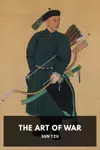


Meh.
This is classically treated as a super-awesome treatise on how to wage a war, but it seems awfully obvious to me - attack when you have the advantage, retreat when you can't win, recognize the social and economic effects of the war you're fighting. I can't say that having read this improves my understanding of the whys and wherefores of war at all.


Like many people, I was familiar with the film, but had never read any of the books in the OZ series, so I gave this one a shot. I was pleasantly surprised to discover hos different is was. The plot's essentially the same, but expanded on, and we get a lot more world-building. Dorothy, also, comes across as a much stronger, more realized character, and her increased self-assurance really makes for a more enjoyable story.


Doctorow's first YA novel is a post 9/11 story looking at the effects of the “war on terror” and the increased surveillance North Americans have been under since then. It's a good, fun story with a punky, “stick it to the man” kind of attitude that teaches its youthful audience to be healthily cautious of authority.
Of course, this being a Cory Doctorow novel, you at times get the feeling that you'‘re reading an essay on internet privacy issues as much as you are a sci-fi story, but that's simply the man's style - either you accept it or you don't. It seems to stick out a little more because the protagonist, Marcus, is only 17, and he seems to be one of the smartest, more well-informed 17 year olds you'll ever meet, but I think that's because he's meant to be seen as a heroic figure for the primary audience.


Note: I received a free copy of this book via Goodreads' “First Reads” program.
The memoirs of Kris Courtney, an American artist born with several physical limitations that set him apart as an outsider growing up in middle-of-the-century rural America.
It's not the most complimentary of memoirs - Courtney spares no details in outlining how both his physical differences and family difficulties led him into a descending spiral of depression and substance abuse.
It's clear from reading it that Courtney's an inexperienced author; the prose seems clunky at some times, and he seems at times to be trying to make amends with his past as much as he is telling a compelling story. He bares his soul to the world with it, though, which is a courageous thing to do.


Ishmael Wang gets another promotion in this book, as you might have guessed from the title, and starts to think about life after his tour of duty on the Lois McKendrick.
If you've listened to the first two boks in the series, you more or less know what to expect here, although things to get taken to the “next level” to an extent; the ship is put in some very real danger this time around, some of the interpersonal issues raised in the earlier books come to a head, and we're left with a strong feeling of the end of a phase in Ish's life, rather than just it being another part of his journey.
I've come to realize that, more than pretty much any one else working in the medium, Lowell is clearly thinking about the ‘podiobook' as a separate medium of storytelling and is writing for that, rather than writing a novel and then recording an audio version of it.


This was my first real exposure to Harwood's work in audio form - despite his making his name for himself as a podcaster, I read the first book in print before checking out the podcast of this one.
It was an interesting experience, going from print to audio - Harwood uses a distinctive first-person-present voice throughout the Palms books, and it felt a little awkward at first due to it. I got over it eventually - Harwoods sense of humour and great story pacing skills overcome it easily, but for the first little bit it feels like wearing shoes on the wrong foot.
Plotwise, this book deals with the fallout of the first book: Jack comes back to San Fransisco and has to deal with the Russian mobsters that he crossed in the first book, and the sex slave ring they've established in SF.


Very clearly inspired by Clarke's Odyssey novels - it's hard to write a novel about alien life on Europa without being inspired by Clarke's work, of course, Where Clarke's aliens were benevolent protectors of the evolution of life, these ones are murderous psychopaths who may try to destroy humanity if they're allowed to leave Europa.
The whole story felt kind of rushed - quick handwavy explanations, sudden shifts in characterization with no real reason behind it, and a weak ending. Disappointing given the subject matter and Ellis' writerly abilities.


One of the problems with royalty is that it's heriditary. Which means that, even if you end up with a really good king, like say as good as King Bruno de Towaji of Sol, you still have to end up dealing with his kids eventually. And the children of royalty, more often than not, end up being spoiled little shits.
Of course, while this is very much the story of Prince Bascal, son of royalty and scientific genius, it also deals on a larger scale by looking at the sociological implications of the technology that McCarthy introduced in the first book in the series: when you've eliminated death and aging from society, what happens to the next generation? Those kids who will never get to come into their own, and will never get to replace those who came before.
There's a lot of interesting stuff brought up by McCarthy here; the only problem is he doesn't quite deal with it all, and as a result this feels like only half of a story.


I took a sociology class in university in which we learned about two basic methods of societies becoming organized: either by common location, or by common interest. Eastern Standard Tribe takes that concept, as well as the fact that people use computers and other communication technologies more often in their personal lives than in previous generations, and takes them to an extreme conclusion. This novel is full of “tribes”, groups organized by common interest and the time zone that they live in - so while someone might physically live in London, if their mindset and peer group are centred in the Eastern time zone, they're going to adjust their schedule to fit that. And, since most communication is done via email and most people work from home, it's perfectly easy to do so.
That's where the novel falls a bit flat - in some ways, it's less a coherent, sustaining world and more Cory Doctorow's idea of a utopia; and, like most utopian novels, it allows him to express his ideas on what an ideal society should be like. Now, personally, I tend to appreciate a lot of the things that Doctorow advocates for, so that's not entirely a bad thing, and I can follow along as he switches gears between narrative and soapbox.


Now, if you're someone who's familiar with a lot of the minutiae of Marvel comics, you might say “But Ryan, there's already a Spider-Girl. She's an alternate-reality daughter of Peter and Mary-Jane Parker, in a reality where she didn't disappear to never be mentioned again after being kidnapped by the Green Goblin.” You'd say that, and you'd be right - but this isn't Spider-Girl, this is Arana, because one teenaged girl with spider-based powers apparently isn't enough for Marvel comics.
I should clarify - while Arana shares some thematic elements with JMS' Spider-Man work, there's no connection to Parker in the story, and it's never actually confirmed the the story takes place in the MU proper; rather, we have a story of secret societies, and spider-spirits, and chosen ones, and it all sounds really interesting, but the story never gets off the ground.


A lovely little short story chapbook set in Selznick's Sovereign era. I don't want to say too much about the actual content of story, because it is a short read and I don't want to spoil anything about it, but I will say that he explores an idea that I'd been thinking about for awhile myself - that there's a relationship between an individual's psychology and the superpowers that they exhibit. It's an interesting idea, and one that I'd like to see explored further in the future (either by Selznick or someone else).


The thing I like about Selznick's stories is that they're not actually stories of magic, or superpowers; they're instead stories about people that feature magic and superpowers in them. It's a subtle difference, but an important one, and it's one that's often easily overlooked when people read stories of the fantastic.


Volume 2 of the story of Ishmael Wang features him getting a promotion, transferring to a new department, and becoming a bit of a mentor to one of his coworkers. As in the first book, not exactly the kind of stuff you would usually associate with either “space opera” or “science fiction”, but rather just a damn good story in a space operaesque setting.
At the same time, one of the things that Lowell does here is balance the scales of Wang's meteoric rise by having him make some mistakes, especially in his personal life, which was nice - he was starting to feel like he was too perfect of a character at times, so it's good to see he's just as flawed as the rest of us.


A tale of conspiracy and theft, stretching from India to England. An interesting enough tale, that helps round out Holmes' character a bit more through its telling. It's always fascinated me how media adaptations of Holmes get certain aspects of his character right, while ignoring others, so it's good to get the full feel for him.Note: I haven't yet seen the Robert Downey Jr interpretation of the character.