

@FelipeCittadino
Felipe
Felipe's Books by Status
2 Books
See all

Felipe's Reading Goals
Felipe's Pinned Lists






Felipe's Most Popular Reviews


The masterpiece of Katsuhiro Otomo continues.
Vol.2 expands what it was set in the first one but at the same time still carries the same problems that we saw before.
In this second volume we discover more about the military conspiracy that was introduce to use earlier, what whould be the roll of Tetsuo and the other childrens and who is Akira. Also, we continue following Kaneda and Kei while they try to found out what's happening. And this are without question the best parts of the manga. Trying to figure out what's going on and tying what little information they give us makes this a more complete reading that the first volume. With more information on the conspiracys we can understand a lot more about the themes but without going to much in depth yet.
As the mistery grows in complexity and give us more to be exited about what's to come, the characters don't. We don't see a lot of depth neither in their relatonships or personalites. While they maintain the charismatic dialogue and expresion, this doesn't help to create a real conection with the reader and instead work more as a way to show us what's happening.
Akira Vol.2 is a very enjoyable reading and of course the amazing artwork continues, with excelent us of light and perspective to create depth, but suffers with its cast of characters as they are not the most complex ones.


After the events of the first 2 volumes, we continue following Kaneda and the rest of the characters trying to understand and react to everything that's happening.
This volume focus a lot more of its time in the political and military aspect of the story, which raises interesting topics and give a lot more depth to the aspects we were introduce before.
We see more talks about the political landscape, what are the moves of the military and the motivations for characters like Mr. Nezu and Colonel Shikishima. This help to enhance and give more meaning to all of what's happening and its themes.
At the same time, the mystery grows in complexity and involves aspects as religion and war, another thing that helps give more depth to the series.
But continues with problems of characterization on Kaneda and the others, feeling more like just charismatic and comedic entities and less than complex characters with different motivations. At this point, I feel the manga doesn't want to give them alot more depht and just focus itself on the themes and mistery of the story. This can alianate some readers but gain anothers, so it's really a matter of preferences.
To conclude, I think this is the best volume yet and the one that raises the stakes of the story a lot more, given more complexity to its themes and the one that start separate Akira from other works.


Dune Messiah is the sequel of Frank Herbert's masterpiece, Dune. It takes place 12 years after the events of the first book.
Paul “Muad'Dib” Atreides is now the Emperor of the universe and religious figure to many. After taking this position, a Jihad in his name occur that claims the lives of billions of people. This leads Paul to question his role in all of this, after vision of the future presented to him.
Frank Herbet utilize this premise to develop one of the most important themes in all of Dune, distrust of power figures. During most of the book, Herbert deconstructs the image of Paul as the Messiah (something that was already tackled in the first book, but is given for more emphasis in this one), achieving an interesting development of his protagonist, which the reader can appreciate thanks to the omniscient prose of the author, giving us the chance of seeing the point of view of several characters in the same scene.
This makes the dialogue between them fundamental to appreciate these aspects. At the same time, it generates that the reader can follow the decisions of the characters being aware of their future consequences. This is helpful considering Dune Messiah focuses most of his time on conspiracies and different political and religious factions. Thanks to this, the already interesting universe of Dune is expanded even further, without mentioning the introduction of new concepts and characters.
Like the first novel, Dune Messiah develops its characters depending on what the story needs, which can make some secondary characters feel flat and even give them no closure in their arc. This is not always the case, but it's something that the first book also have. But Messiah still manages to develop interesting main characters with internal conflicts that are tied to the main themes of the novel even with this.
This is achieved with an excellent pacing in the first ¾ of the book, giving us time to observe and understand the different situations, while allowing the characters to reflect on their actions. But Dune Messiah betrays itself in the last stretch of the novel. The pacing in this portion of the book is accelerated, without allowing us to digest what is happening or giving time to scenes that should be far more important, both for the plot and for the characters. I think it could have benefited if this section had taken up more time, even if it caused it to extended the book.
In conclusion, Dune Messiah is a good sequel to Frank Herbert's first novel in this universe, although at times it feels more like a transition to the third book. With a very good development for its main characters such as Paul and others but that suffers in its secondary ones, without giving them time to shine. Messiah manages to immerse us in this interesting universe of political and religious conflicts.
As I said with the first one, I can't wait to read the next instalment (Children of Dune) in this great saga.


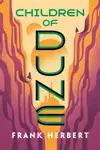
Children of Dune is the thirth book on the Dune saga, Frank Herbert's masterpiece.
The story occurs 9 years after the events of Messiah. Paul Atreides went into the desert and left Alia, his sister, in charge of Arrakeen until, his two children, Leto and Ghanima grow up and be ready to take command.
With this as a base, Herbert takes us into a journey of self introspective, political manipulations, religion and understanding of the past to learn from it. All of this while, obviously, still takling the most present theme on all the saga, distrust of power figures.
This themes are all introduced in the very beginning and continue to be expanded through the conflict of our characters and the story. This leads to a very well manage set of characters that expand and develop in a very particular way throughthout the book while managing a very consistent pacing that doesn't feel rush or slow in any moment, but one that flows with what the story needs.
And, as we already seen with the previous two books, Frank Herbet always puts the story first, and what story he made.
Full of conspiracies, different cultures and religious groups, the story of Dune continues to impress and astonish with its ideas and concepts while at the same time, executing them in a perfect way. All of it feels like a chess match, with every move happening at the appropriate time while still surprising in the right way. The characters also fall into this structure, serving a specific purpose but with personal conflics involve that helps to develop every single one of them, making a very complex set of characters and with who we can sympathize.
There is almost nothing bad I could say about this book, it even “fix” some development problems the previous two had but if I'm push to say something it would be that this isn't for everyone. Children of Dune requieres of the reader to buy into some ideas and concepts that they can feel “to much” for some people, but they are also the strongest points of the books and Herbert uses them to developt its main themes.
So, to conclude, Children of Dune is a fantastic book, with a great planned story and very well-written and develop characters that always has in mind its themes and one that, if we buy into it, we will be astonish with the level of complexity and ideas it presents.
This books proves that Dune is a saga as no other and one that still, after three books, leaves us excited for the next one.
I can't wait to start God Emperor of Dune