
Kim Miller


Imagine you wrote a story with a twist at the end, but moved that twist to the very early part, and then added in another twist a little further on, and then another and another and another. That is this book.
At its heart it's the story of identical twin brothers who, after winning a bronze medal for rowing in the 1936 Munich Olympics, find their strongly held political differences over the coming war force them apart. One becomes a RAF pilot and the other a conscientious objector. But this is not an 'at the heart' kind of novel. It is filled with distractions, body doubles, alternate histories, hallucinations, personal insecurities, power struggles, romance and jealousies, and probably other conflicts that I have missed.
The twins are both J.L. Sawyer, Joe and Jack. Rudolph Hess presents their medals and jokes about twins playing tricks on people, but it's Hess (and Churchill) who later don't effectively separate them. Then we add in that Churchill recruits Jack as Aide de Camp on his trips through bombed out London to encourage the locals and Jack soon realises he's working for a body double. Ironically, the real Churchill sends Jack to interrogate a high ranking German prisoner, especially to determine if the man is who he said he is. The prisoner is Hess who had flown to Britain trying to broker a peace accord. Jack determines that it's not the real Hess, but another body double.
Priest uses memoirs, press reports, private papers, and release war documents to build up the story. Jack and Joe each have long sections telling of their experiences, one flying bombing missions into Germans and the other driving an ambulance after bombing raids on London. The reader notices that certain dates don't match, such as the war ending in 1941, but later the war ended in 1945. We realise that there are two histories running parallel through the novel and Priest has woven them into the story so well that we hardly notice the transition. So we start to take much more notice of the documents he's quoting, trying to see where the following narrative falls.
Both brothers are injured. Jack is shot down returning from a raid and rescued after hours in a life raft. But his navigator later says that he was the only survivor of the crash. Joe's ambulance is hit by a bomb and in one portion of the story he's killed but in another place he's knocked out and later found in a hostel in London with severe concussion which results in severe and repeated hallucinations. The movement between these different histories is sometimes subtle and sometimes jarring, but they weave in and out of the novel like strands of a rope.
It is as if Priest wanted to tell a story that was at once clear and at the same time confusing. He succeeded. The book is fascinating and engaging and it's no wonder that it was awarded literary prizes on publication.
Imagine you wrote a story with a twist at the end, but moved that twist to the very early part, and then added in another twist a little further on, and then another and another and another. That is this book.
At its heart it's the story of identical twin brothers who, after winning a bronze medal for rowing in the 1936 Munich Olympics, find their strongly held political differences over the coming war force them apart. One becomes a RAF pilot and the other a conscientious objector. But this is not an 'at the heart' kind of novel. It is filled with distractions, body doubles, alternate histories, hallucinations, personal insecurities, power struggles, romance and jealousies, and probably other conflicts that I have missed.
The twins are both J.L. Sawyer, Joe and Jack. Rudolph Hess presents their medals and jokes about twins playing tricks on people, but it's Hess (and Churchill) who later don't effectively separate them. Then we add in that Churchill recruits Jack as Aide de Camp on his trips through bombed out London to encourage the locals and Jack soon realises he's working for a body double. Ironically, the real Churchill sends Jack to interrogate a high ranking German prisoner, especially to determine if the man is who he said he is. The prisoner is Hess who had flown to Britain trying to broker a peace accord. Jack determines that it's not the real Hess, but another body double.
Priest uses memoirs, press reports, private papers, and release war documents to build up the story. Jack and Joe each have long sections telling of their experiences, one flying bombing missions into Germans and the other driving an ambulance after bombing raids on London. The reader notices that certain dates don't match, such as the war ending in 1941, but later the war ended in 1945. We realise that there are two histories running parallel through the novel and Priest has woven them into the story so well that we hardly notice the transition. So we start to take much more notice of the documents he's quoting, trying to see where the following narrative falls.
Both brothers are injured. Jack is shot down returning from a raid and rescued after hours in a life raft. But his navigator later says that he was the only survivor of the crash. Joe's ambulance is hit by a bomb and in one portion of the story he's killed but in another place he's knocked out and later found in a hostel in London with severe concussion which results in severe and repeated hallucinations. The movement between these different histories is sometimes subtle and sometimes jarring, but they weave in and out of the novel like strands of a rope.
It is as if Priest wanted to tell a story that was at once clear and at the same time confusing. He succeeded. The book is fascinating and engaging and it's no wonder that it was awarded literary prizes on publication.
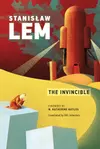
The Condor has not returned from a distant planet and so her sistership, The Invincible, is sent out to find answers. They land on the planet and immediately it becomes apparent that there is disharmony between the crew. The commander is distant, his second in command is wary, various crew communities such as the scientists have differing views from the technicians.
The covers of many of the various editions of the book show a space helmet with a skull inside, so it's no surprise that they find the Condor crew dead. It's the why and the how that form the rest of the novel. The book is reminiscent of Lem's Solaris in that the humans are on a strange planet thinking they can overcome anything that comes against them. But, once again, they can only guess at the reality of the alien intelligence that they find. Just as in Solaris we have a divided crew, an enemy that can take over the minds of the humans, and a crew that does not have any women but differs from Solaris in that the planet does not conjure any into existence.
Portions of the later story are taken up with longish discussions between crew members of what is really happening on the planet and Lem goes deeply into a similar philosophical position as in Solaris that just because a planet is there does not mean that humans have the right or the ability to take it. Calling the ship Invincible is part of his ironic look at such human endeavour. And the final image is one of failure and defeat.
The Condor has not returned from a distant planet and so her sistership, The Invincible, is sent out to find answers. They land on the planet and immediately it becomes apparent that there is disharmony between the crew. The commander is distant, his second in command is wary, various crew communities such as the scientists have differing views from the technicians.
The covers of many of the various editions of the book show a space helmet with a skull inside, so it's no surprise that they find the Condor crew dead. It's the why and the how that form the rest of the novel. The book is reminiscent of Lem's Solaris in that the humans are on a strange planet thinking they can overcome anything that comes against them. But, once again, they can only guess at the reality of the alien intelligence that they find. Just as in Solaris we have a divided crew, an enemy that can take over the minds of the humans, and a crew that does not have any women but differs from Solaris in that the planet does not conjure any into existence.
Portions of the later story are taken up with longish discussions between crew members of what is really happening on the planet and Lem goes deeply into a similar philosophical position as in Solaris that just because a planet is there does not mean that humans have the right or the ability to take it. Calling the ship Invincible is part of his ironic look at such human endeavour. And the final image is one of failure and defeat.
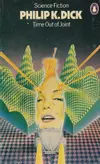
This is a novel of quiet sanity compared to much of PKD's work. Ragle Gumm spends his day working on a daily puzzle in the local newspaper called, Guess Where the Little Green Man Will Appear Next. He lives with his sister and her husband and son. Next door lives the nuisance couple who are always visiting at inopportune times. But there are times when Ragle 'sees through to the other side of the world' and it's not like his normal reality. He worries that those moments are signs of mental illness.
The story is rather benign until the 25% mark, at which point a conversation happens between two characters who should not know each other. Their conversation points to not only a link between them but a common purpose, and that purpose concerns Ragle Gumm. From there the story darkens and the reader is slowly fed grains of the truth behind these various characters.
'Ragle' is the reverse of Elgar, the composer of the work The Enigma Variations, a musical work depicting several of his friends, but he never told anyone which variation portrayed which friend. And this is the theme that Dick follows through the novel. We slowly realise that the characters are not who they say they are, and not who Ragle believes they are. Just as The Truman Show portrayed a town set up solely to be the backdrop to one man's story, so Ragle and his daily competition is the centre of a military project that is keeping the world safe.
PKD's oft repeated exploration of human consciousness often takes us into the weird and crazy. Here the theme is explored but with a quiet subtlety as Ragle Gumm awakens to his own reality. And once awake he faces an old decision.
This is a novel of quiet sanity compared to much of PKD's work. Ragle Gumm spends his day working on a daily puzzle in the local newspaper called, Guess Where the Little Green Man Will Appear Next. He lives with his sister and her husband and son. Next door lives the nuisance couple who are always visiting at inopportune times. But there are times when Ragle 'sees through to the other side of the world' and it's not like his normal reality. He worries that those moments are signs of mental illness.
The story is rather benign until the 25% mark, at which point a conversation happens between two characters who should not know each other. Their conversation points to not only a link between them but a common purpose, and that purpose concerns Ragle Gumm. From there the story darkens and the reader is slowly fed grains of the truth behind these various characters.
'Ragle' is the reverse of Elgar, the composer of the work The Enigma Variations, a musical work depicting several of his friends, but he never told anyone which variation portrayed which friend. And this is the theme that Dick follows through the novel. We slowly realise that the characters are not who they say they are, and not who Ragle believes they are. Just as The Truman Show portrayed a town set up solely to be the backdrop to one man's story, so Ragle and his daily competition is the centre of a military project that is keeping the world safe.
PKD's oft repeated exploration of human consciousness often takes us into the weird and crazy. Here the theme is explored but with a quiet subtlety as Ragle Gumm awakens to his own reality. And once awake he faces an old decision.

This novella takes us into a surealist noir-like detective story where unexplained strangeness is the order of the day.
A famous architect builds a house that runs on an artificial intelligence. In this way the house continues as the repository of all his major work after his death. Think of HAL in 2001 A Space Odyssey, but less murdery. The house remains locked except for one person the AI will allow in as an archivist, but only for seven days each year.
One day the house calls the local police station to say there is a dead body inside. How did that guy get inside? Who killed him and how? How will the police investigate when they can't get inside to examine the scene?
The story is part locked room mystery, part gothic horror, part police procedural, part sardonic poke at one of the detectives who keeps wondering if he's in some noir detective story at last.
Overall it's a rather brittle story, as if reality is being bent almost to snapping point. Martine doesn't give anything away and the reader is left to work out their own take-away from it all. Nothing is really explained, the tension builds and falls away in unexpected moments, and the ending doesn't resolve the questions that the book presents.
This novella takes us into a surealist noir-like detective story where unexplained strangeness is the order of the day.
A famous architect builds a house that runs on an artificial intelligence. In this way the house continues as the repository of all his major work after his death. Think of HAL in 2001 A Space Odyssey, but less murdery. The house remains locked except for one person the AI will allow in as an archivist, but only for seven days each year.
One day the house calls the local police station to say there is a dead body inside. How did that guy get inside? Who killed him and how? How will the police investigate when they can't get inside to examine the scene?
The story is part locked room mystery, part gothic horror, part police procedural, part sardonic poke at one of the detectives who keeps wondering if he's in some noir detective story at last.
Overall it's a rather brittle story, as if reality is being bent almost to snapping point. Martine doesn't give anything away and the reader is left to work out their own take-away from it all. Nothing is really explained, the tension builds and falls away in unexpected moments, and the ending doesn't resolve the questions that the book presents.
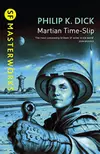
This is one of PKD's most coherent novels. Two characters vie for the role as main protagonist. There is Jack, an electrical repair man and there is Manfred, a boy locked up in an institution for being 'anomolous'. For that we can read non neurotypical. Dick refers to autism on some occasions but the boy is not seen as that by those around him. And for a book written in the early 60s we should not expect a modern understanding.
Jack is called to a repair and gets involved with a powerful local union boss, Arnie, who is impressed with his work. Running parallel is the discovery that Jack's neighbours have a son, the boy in the institution whose father has just died. Jack's family gets involved with Manfred and through that Arnie makes a claim on the boy as he believes people with such brain function can see the future. Arnie recruits Jack to build a facility/machine that will allow them to communicate with Manfred so Arnie can interrogate the future.
Through a web of family relationships and power games, Dick explores the themes of isolation, shared hardship, mental illness and psychosis, and the human need to have mastery over our environment and community.
As the story develops we find that Manfred can communicate almost telepathically with the indigenous martian people. In a last ditch attempt to gain control over a situation that has escaped him, Arnie and Manfred set off on a pilgrimage inspired by the indigenous culture. Once again, Arnie can't quite keep control of things as we approach the climax of the story.
And then at the closing pages PKD hits us with a brick between the eyes. "I bet you didn't see that coming," he says as the book come to a close.
This is one of PKD's most coherent novels. Two characters vie for the role as main protagonist. There is Jack, an electrical repair man and there is Manfred, a boy locked up in an institution for being 'anomolous'. For that we can read non neurotypical. Dick refers to autism on some occasions but the boy is not seen as that by those around him. And for a book written in the early 60s we should not expect a modern understanding.
Jack is called to a repair and gets involved with a powerful local union boss, Arnie, who is impressed with his work. Running parallel is the discovery that Jack's neighbours have a son, the boy in the institution whose father has just died. Jack's family gets involved with Manfred and through that Arnie makes a claim on the boy as he believes people with such brain function can see the future. Arnie recruits Jack to build a facility/machine that will allow them to communicate with Manfred so Arnie can interrogate the future.
Through a web of family relationships and power games, Dick explores the themes of isolation, shared hardship, mental illness and psychosis, and the human need to have mastery over our environment and community.
As the story develops we find that Manfred can communicate almost telepathically with the indigenous martian people. In a last ditch attempt to gain control over a situation that has escaped him, Arnie and Manfred set off on a pilgrimage inspired by the indigenous culture. Once again, Arnie can't quite keep control of things as we approach the climax of the story.
And then at the closing pages PKD hits us with a brick between the eyes. "I bet you didn't see that coming," he says as the book come to a close.

An easy reading romp of a novel that swaps between being a tribute to Raymond Chandler's noir detectives and mildly dystopian science fiction. It was a single sitting rainy Saturday read for me that was undemanding as long as I kept track of the weird stuff.
Metcalf is a gritty and cynical private 'inquisitor', the change in his job title represents the dystopic culture of the time. He's employed by a client, the client turns up dead and another man asks him to investigate it as he's in the firing line to be charged with the murder. The 'Inquisitor Office' gets in the way of his investigation and the novel proceeds as a game of cat and mouse as the facts of the case slowly get revealed. Along the way his 'karma' card keeps being docked by the Office to scare him off. Zero karma points could see him taken out of the society.
There are the normal noir detective tropes of cynical banter, women to be ogled, people being followed into dark places, bars with cigarette butts in pools of beer on the floor, all the expected stuff. There are also 'evolved' animals, modified animals that mimic humans, walking upright, wearing clothes, talking, carrying guns. And everybody is snorting drugs variously named as Forgettol, Avoidol, Acceptol, to smooth out their experience of living.
The book won the Locus Award for best first novel in 1995 so it came with a pedigree. However, the thirty years since has pushed the misogyny into the 'no go' zone. And even for a 1995 novel to hark back fifty years was pushing it. The weirdness of the characters held my attention and I was less interested in the 'who dunit' aspect as I was in the play between the human and animal power tripping. OK, as an Australian I wanted to know more about that kangaroo on the cover.
As things came to a head between Metcalf and the Office the story took an unexpected u-turn and the whole endeavour seemed lost. The final chapters take us into a new world and Metcalf has to adapt with instant reflexes to bring the investigation to a close. This final part of the story elevated it up a notch and gave a sense of satisfaction to my day of reading.
PS. The novel took inspiration from a quote by a Chandler character, "... the subject was as easy to spot as a kangaroo in a dinner jacket."
An easy reading romp of a novel that swaps between being a tribute to Raymond Chandler's noir detectives and mildly dystopian science fiction. It was a single sitting rainy Saturday read for me that was undemanding as long as I kept track of the weird stuff.
Metcalf is a gritty and cynical private 'inquisitor', the change in his job title represents the dystopic culture of the time. He's employed by a client, the client turns up dead and another man asks him to investigate it as he's in the firing line to be charged with the murder. The 'Inquisitor Office' gets in the way of his investigation and the novel proceeds as a game of cat and mouse as the facts of the case slowly get revealed. Along the way his 'karma' card keeps being docked by the Office to scare him off. Zero karma points could see him taken out of the society.
There are the normal noir detective tropes of cynical banter, women to be ogled, people being followed into dark places, bars with cigarette butts in pools of beer on the floor, all the expected stuff. There are also 'evolved' animals, modified animals that mimic humans, walking upright, wearing clothes, talking, carrying guns. And everybody is snorting drugs variously named as Forgettol, Avoidol, Acceptol, to smooth out their experience of living.
The book won the Locus Award for best first novel in 1995 so it came with a pedigree. However, the thirty years since has pushed the misogyny into the 'no go' zone. And even for a 1995 novel to hark back fifty years was pushing it. The weirdness of the characters held my attention and I was less interested in the 'who dunit' aspect as I was in the play between the human and animal power tripping. OK, as an Australian I wanted to know more about that kangaroo on the cover.
As things came to a head between Metcalf and the Office the story took an unexpected u-turn and the whole endeavour seemed lost. The final chapters take us into a new world and Metcalf has to adapt with instant reflexes to bring the investigation to a close. This final part of the story elevated it up a notch and gave a sense of satisfaction to my day of reading.
PS. The novel took inspiration from a quote by a Chandler character, "... the subject was as easy to spot as a kangaroo in a dinner jacket."

Deadbeat Chuck is being divorced by his more successful marriage counselor wife. He's a programmer for simulacrum robots for the CIA but it seems he's better at writing lifelike code for robots than he is at living his own life. Chuck sees two possibilities, suicide or murder his ex wife.
His wife decides to go off to one of the moons in the Alphane star system to work with the communities that have formed since the psychiatric hospital closed down. The patients have gathered into villages according to their shared psychoses and suddenly Earth has decided they need 'help' - ie. We'd like to take their moon.
Chuck wangles his way into taking charge of the CIA robot that will accompany his wife on the mission, planning for the robot to kill her. Trouble is, a new second job he's been offered writing comedy scripts for a TV personality wants him to write a script where a man programs a robot to murder his wife. This is beginning to sound very suspicious to Chuck.
This novel is a comedic look at the human personality when it splits into its many components. The various moon dwellers, Chuck's current mental state, his wife's incipient violence, a couple of other female characters, the CIA management, there's an intelligent telepathic slime mold alien life form, are all metaphors for the aspects of the inner life that PKD has been setting out in his books from the beginning. As a self-referential look at the ridiculousness of human life, this is PKD saying, "If your life is anything like mine, welcome to the crazy club."
Deadbeat Chuck is being divorced by his more successful marriage counselor wife. He's a programmer for simulacrum robots for the CIA but it seems he's better at writing lifelike code for robots than he is at living his own life. Chuck sees two possibilities, suicide or murder his ex wife.
His wife decides to go off to one of the moons in the Alphane star system to work with the communities that have formed since the psychiatric hospital closed down. The patients have gathered into villages according to their shared psychoses and suddenly Earth has decided they need 'help' - ie. We'd like to take their moon.
Chuck wangles his way into taking charge of the CIA robot that will accompany his wife on the mission, planning for the robot to kill her. Trouble is, a new second job he's been offered writing comedy scripts for a TV personality wants him to write a script where a man programs a robot to murder his wife. This is beginning to sound very suspicious to Chuck.
This novel is a comedic look at the human personality when it splits into its many components. The various moon dwellers, Chuck's current mental state, his wife's incipient violence, a couple of other female characters, the CIA management, there's an intelligent telepathic slime mold alien life form, are all metaphors for the aspects of the inner life that PKD has been setting out in his books from the beginning. As a self-referential look at the ridiculousness of human life, this is PKD saying, "If your life is anything like mine, welcome to the crazy club."