
Fee


Despite being an absolute chonker, John Guy's biography of Mary Queen of Scots never feels like a slog. This book thoroughly re-examines the original sources and presents them in such a way that humanises oor Mary, revealing her personality quirks, putting her lowland Scots accent back in her mouth, and portraying her as a canny and astute wumman that tried her best to hold her country together. There's no doubt that this is an absolutely brilliant book, I only wish Guy had trusted his readers a bit more. We don't need the same snippet of information repeated over and over again. By the time I got to the end of the book, the mere mention of ‘Andrew Ker of Fawdonside, who levelled his pistol at Mary' was absolutely cracking me up. Sorry Andrew.


Honestly, I thought this was going to be about rivers in general but it turned out to be an exploration of the River Ouse in Sussex, the length of which Olivia Laing walks throughout this book. Part memoir, part nature writing, part local history, this was interesting enough, especially the parts about Virgina Woolf, who drowned herself in the river in 1941. I'll definitely read more by Olivia Laing, preferably about something that I'm more invested in. Derp.


A thorough primer on the history of the remote Scottish island of St Kilda, from its first settlers in Neolithic times to its evacuation in 1930. MacLean's accounts of day to day life on the island are fascinating, particularly the tales of the daily parliaments and the fulmar hunts. This was a simple society, thriving in the harshest of environments, until organised religion arrived in the 1800s and disrupted its well-established routines, and the advent of the tourist trade brought new diseases that the isolated St Kildans had no immunity against. A compelling and ultimately heartbreaking story, and one we should take care to learn from.


The horror classic that I'd never gotten round to reading. I suspect it would have made more of an impact on me if I'd read it in my teens because reading it at forty-one, it all seems faintly ridiculous. I laughed out loud at several points and was left feeling more bemused than terrified. Still, the writing was good and the intertwining narratives well crafted. Definitely one of those rare cases of the movie being better than the book.


A family are enjoying a short break in an Airbnb, just outside NY, when the owners turn up, seeking refuge after a blackout in the city. As communications systems fail and they're completely cut off, an omniscient narrator feeds us snippets of information about what's happening in the outside world that the characters aren't party to, giving us a unique overview of the story. So eerily quiet, the creeping dread in this novel almost makes it a horror. Loved it.


Ling Ma's post-apocalyptic, anti-capitalist debut about life before, during, and after a global pandemic has so many similarities with the circumstances of the current pandemic it's uncanny, and makes what might just have been a dystopian fantasy entirely relatable. Perhaps too relatable. There is a palpable feeling of rising panic throughout this book but it's well balanced with flashes of optimism and resilience, much like current times. Loved it, and will definitely be looking out for Ma's next novel.


I picked this up because it was on the Women's Prize longlist and the premise sounded interesting - an investigation of a claim of a virgin birth. Unfortunately, I found it really boring. The writing felt forced and heavy-handed, and the ending was the most ridiculous thing I've read in a long time. Thumbs down.


My second Tom McCarthy, which confirmed the tentative opinion I'd formed after the first that Tom McCarthy might be a proper nutter. This is the brilliant but maddening story of a man who, with more money than sense perhaps, engages a team of enablers to help him re-enact, down to the minutest detail, inane events from his life. Completely bizarre. McCarthy's writing is brilliant, pin-sharp, and reminds us of the old adage that absolute power corrupts absolutely.


This book will make you want to save for the future, and get your pension sorted out if you haven't already. An eye-opening look at the growing population of retirees in the US that are reduced to living a nomadic life travelling around the country to find seasonal work to make ends meet. The sections on Amazon and their ‘camperforce' were particularly interesting, and the behind the scenes look at their robot-assisted warehouses just reinforced the suspicions we all have that they couldn't care less about their employees. Well researched, engaging, and unsettling.


Yaa Gyasi's epic debut begins with the stories of two half-sisters in Ghana, or the Gold Coast as it was then, in the 1700s, one married off to a white British officer, the other enslaved and shipped to America. The structure of this novel almost makes it read like a collection of short stories, with chapters moving swiftly forward through the generations of the branching family and alternating between the two separate family lines. Gyasi's writing is incredible and so evocative that it's often difficult to read. That aside, this is a must-read for the year and I can't recommend it highly enough.


Probably my most anticipated release of the year, Piranesi did not disappoint. Once you've oriented yourself in the labyrinth of vestibules and halls and staircases (and it does take some time, be patient), this is an engrossing read. The whole thing feels like a dream about a tangled pile of string you need to unravel before winding it all back up into a neat ball. Reminiscent of Borges, Pale Fire, and Invisible Cities, with just a sprinkling of House of Leaves. Don't read anything about this book before you pick it up; just pick it up.


I stumbled across this beautiful book while I was searching for the Walt Whitman collection that shares its name, and I had no idea what to expect from it. As it turned out, I fell for it hard. This is (these are?) three novellas set in Whitman's beloved New York, past, present, and future, and linked by the same three characters reincarnating in each disparate narrative. Whitman's poetry and themes loom large throughout the whole book and his unexpected appearance and Cunningham's characterisation of him made me cry like a wean.


I was looking forward to reading another JCO after loving Foxfire a couple of years ago but this collection of short stories was underwhelming. I wonder if she just needs more room to write, as it often seemed like what might have been a good idea didn't have the space to be fleshed out properly. It all felt a bit half-arsed. I'll definitely try another of her characteristically huge books but her short stories aren't for me.


The Wife is an examination of the dynamics of a marriage and the compromises made to maintain it, for better or for worse. Mostly worse. There were several times that I wanted to reach into the page and shake Joan for not acknowledging that her husband was so blatantly a complete shitebag of a man but that frustration aside, I really enjoyed this. Meg Wolitzer does character studies very well.


My first re-read of this book since my early twenties - I loved it then, and I love it even more now. This is the story of Dr Wilbur Larch, an abortionist who also runs an orphanage, and the life of his protege, the unadoptable Homer Wells. John Irving's beautiful writing is alchemical, taking ordinary lives and turning them into something magical and infinitely valuable. I hope I'll find the time to read this book again but regardless, I will never forget it. ‘Goodnight you princes of Maine, you kings of New England.'


This is a wandering story touching on so many different wandering topics, but at its core this is a story about the day to day workings of a marriage. I am completely in love with Jenny Offill's writing. Her short vignettes often seem disjointed and unconnected but as you press on through the book they slot together like jigsaw pieces, and by the time you get to the last page the whole picture has been revealed in all its glory. Skillful, deft, and pretty much perfect.


Having exhausted all of Kazuo Ishiguro's back catalogue, I was really looking forward to this. Klara and the Sun is a vaguely dystopian story of the life of a solar-powered ‘artificial friend', the eponymous Klara, and her observations on human behaviour as she comes to understand the world around her. Sci-fi has never been my bag and unfortunately even the clout of Ishiguro couldn't change that for me. The writing felt like it was keeping the reader at arm's length throughout, and I didn't find anything new in the somewhat tired trope of the AI that's just a little too human.
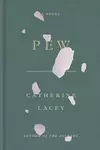

This unsettling novella examines the choices and motivations of an insular and god-fearing community in the American south after they find a voluntarily mute stranger of ambiguous race and sex sleeping on a pew in their church. It raises questions around identity, conformity, fear of the unknown, and the need to control and categorise our environments. Reminiscent of The Lottery by Shirley Jackson.


This is the story of 10 Luckenbooth Close, a tenement building in Edinburgh that's been cursed by the Devil's daughter. We follow the lives of its inhabitants over the course of a century from the perspectives of nine different characters and in three parts. Some parts worked better than others - the middle section featuring William Burroughs was a real slog, for example - but other parts were so incredibly brilliant, and one simple sentence in particular bloody terrified me, so swings and roundabouts.


This is Colson Whitehead's debut novel, and much more fanciful than his most recent books - not that that's a complaint. The Intuitionist is a hard-boiled, pulpy noir, almost postmodern story about conflict and corruption in the world of elevator inspectors as an allegory for the struggle for racial and gender equality, framed in a conflict between the two main factions of elevator inspecting, The Empiricists and the Intuitionists, and underpinned by the search for a legendary book about theoretical elevators. It's just as bizarre as it sounds, incredibly clever, and unexpectedly funny. Thank you @russell for the recommendation <3


The Old Ways is a philosophical examination of the act of walking and how the landscape that surrounds us impacts who we are, following MacFarlane in his travels around the British Isles and further afield to Spain, Palestine, and Tibet. Robert MacFarlane is a generous writer, and his deep-dive style of presentation along with his beautiful prose makes his books a completely immersive experience. I read it twice in quick succession because there was so much information to take in I was worried I'd miss something, and I have no doubt I'll read it again.


Such a great book to start the year with! This is a complex story told through vignettes, short snippets of thoughts and observations about the minutiae of everyday life that all add up to a commentary on some much bigger themes: the climate crisis, the US healthcare system, the state of US politics, the inherent difficulties that accompany family dynamics. Jenny Offill's writing is witty and insightful, often funny, and really beautiful. I will be picking up more from her ASAP.


