
Jimmy


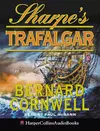
Sharpe's Trafalgar puts a twist on the usual Sharpe formula by putting him at sea. I've not read the Hornblower series, which many people seem to compare this to, but while the plot does have its slightly slow moments, this entry still contains gripping and exhilarating action sequences showing the full brutality of gunpowder conflict, as Cornwell is known for crafting, which is paired with a host of equally likeable and dislikeable characters to keep Sharpe company. The resulting story gives a realistic taste of what a maritime voyage halfway around the world would have been like, and vividly brings to life one of the most famous naval battles in history. Nothing mind-blowing, but a solid entry in the series.
Sharpe's Trafalgar puts a twist on the usual Sharpe formula by putting him at sea. I've not read the Hornblower series, which many people seem to compare this to, but while the plot does have its slightly slow moments, this entry still contains gripping and exhilarating action sequences showing the full brutality of gunpowder conflict, as Cornwell is known for crafting, which is paired with a host of equally likeable and dislikeable characters to keep Sharpe company. The resulting story gives a realistic taste of what a maritime voyage halfway around the world would have been like, and vividly brings to life one of the most famous naval battles in history. Nothing mind-blowing, but a solid entry in the series.


It's easy to see why this tale has become a classic, and feels satisfying to have finally read the whole book in its entirety. While there were indubitably parts of the plot which became a bit convoluted, the core story is so engaging and the characters so larger than life that the book remained very difficult to put down for most of its length. It was a particularly special experience to be reading this while on holiday in southern France, and being physically in Marseilles, Avignon, Arles and other locations in the book really added to the immersion. Bonus points for its timelessness, and that makes it a 5 star for me.
It's easy to see why this tale has become a classic, and feels satisfying to have finally read the whole book in its entirety. While there were indubitably parts of the plot which became a bit convoluted, the core story is so engaging and the characters so larger than life that the book remained very difficult to put down for most of its length. It was a particularly special experience to be reading this while on holiday in southern France, and being physically in Marseilles, Avignon, Arles and other locations in the book really added to the immersion. Bonus points for its timelessness, and that makes it a 5 star for me.


What a behemoth of a book.
Expectations were high for this culimination of the first arc of The Stormlight Archive, but although finishing the book left me feeling as though I had experienced something momentous, ultimately it did not land as convincingly or as powerfully as some of the earlier entries in the series.
The structure of Wind and Truth was essentially set up by how Rhythm of War ended. The book would need to cover 10 days, and there would be a gradual build-up until the final showdown at the end of that period. However, it was difficult for me to come to terms with how much the characters do and go through in this book (the longest of the series so far) with it being the shortest overall time period. It didn't feel slow in the sense that not enough was happening, but rather the opposite, in that there was so much going on with the detail of each perspective throughout the 10 days, that the momentum of the ultimatum felt a bit lost. This was not helped by a number of the perspectives involved the characters going through somewhat repeated experiences.
As others have also pointed out, the ‘therapy' aspects of this book also felt a bit heavy handed to me. The way that Sanderson interweaves the realistic mental and emotional struggles of the characters with their personality development and their experiences in the plot is to me one of the most masterful aspects of the earlier books in the series. In Wind and Truth, this is a lot less organic, with a number of plotlines involving characters largely talking either others or themselves through psychological issues, and this more ‘tell' rather than ‘show' approach made the emotional breakthroughs less rewarding, as well as feeling more unrealistic given the short timeframe of the plot.
That is not to say the book as whole was not enjoyable - there are some spectacular moments for all of the main character perspectives, and I especially thought the Adolin storyline (which was probably the most grounded) was very engaging and provided a compelling viewpoint from a non-Radiant in a world where powers have become dominant. The continued worldbuilding through the visions in the Spiritual Realm were also engrossing, and I enjoyed learning more about this history of Roshar and what led to the present day state of affairs. The stakes feel appropriately high and there are momentous occurences across all the points of view with a lot of unexpected results leaving the fate of many of the main characters as well as the world as whole truly uncertain. I'll still definitely be coming back for the rest of The Stormlight Archive when Sanderson picks it up again, but hoping that he can recapture some of the more nuanced storytelling magic from the earlier books.
What a behemoth of a book.
Expectations were high for this culimination of the first arc of The Stormlight Archive, but although finishing the book left me feeling as though I had experienced something momentous, ultimately it did not land as convincingly or as powerfully as some of the earlier entries in the series.
The structure of Wind and Truth was essentially set up by how Rhythm of War ended. The book would need to cover 10 days, and there would be a gradual build-up until the final showdown at the end of that period. However, it was difficult for me to come to terms with how much the characters do and go through in this book (the longest of the series so far) with it being the shortest overall time period. It didn't feel slow in the sense that not enough was happening, but rather the opposite, in that there was so much going on with the detail of each perspective throughout the 10 days, that the momentum of the ultimatum felt a bit lost. This was not helped by a number of the perspectives involved the characters going through somewhat repeated experiences.
As others have also pointed out, the ‘therapy' aspects of this book also felt a bit heavy handed to me. The way that Sanderson interweaves the realistic mental and emotional struggles of the characters with their personality development and their experiences in the plot is to me one of the most masterful aspects of the earlier books in the series. In Wind and Truth, this is a lot less organic, with a number of plotlines involving characters largely talking either others or themselves through psychological issues, and this more ‘tell' rather than ‘show' approach made the emotional breakthroughs less rewarding, as well as feeling more unrealistic given the short timeframe of the plot.
That is not to say the book as whole was not enjoyable - there are some spectacular moments for all of the main character perspectives, and I especially thought the Adolin storyline (which was probably the most grounded) was very engaging and provided a compelling viewpoint from a non-Radiant in a world where powers have become dominant. The continued worldbuilding through the visions in the Spiritual Realm were also engrossing, and I enjoyed learning more about this history of Roshar and what led to the present day state of affairs. The stakes feel appropriately high and there are momentous occurences across all the points of view with a lot of unexpected results leaving the fate of many of the main characters as well as the world as whole truly uncertain. I'll still definitely be coming back for the rest of The Stormlight Archive when Sanderson picks it up again, but hoping that he can recapture some of the more nuanced storytelling magic from the earlier books.

Added to listRead, Unownedwith 1 book.


“What has Hector ever done to me?”
I think this was the line in the book that really got me. The latent foreshadowing in this question is so incredibly powerful, and encapsulated so much of what makes the Achilles and Patroclus relationship such an engaging perspective through which to tell the story of the Trojan War. We know Achilles will die, but it's not because he kills Hector; it's not Achilles dying that kills Patroclus, it's Patroclus dying that kills Achilles; the one that hopes Achilles will live for longer is the one that brings his demise faster - and at the crux of that is that love which continues past death.
4.5 is my actual rating for this book. This was a masterful retelling of the Trojan War. For a tale that's almost as old as time, Miller has done a wonderful job of bringing Patroclus and Achilles to life in a way that connects with the modern society and reflects the timelessness of Homer's epic. As a casual ancient scholar, I greatly appreciated all the many ways in which Miller engaged with her source material, from the manifold nuances of the book's name, to the special selection of scenes like Phoinix's storytelling and Priam's ransom of Hector's body, and down to individual character descriptions like Hector standing with his feet like roots driving deep into the soil. This homage to Homer, combined with the uniquely humane perspective of the characters which is rather more difficult to grasp in an epic poem, made the book a very enjoyable read.
The reason I couldn't quite give this a five star rating was that the intensity of the focus on Patroclus and his connection to Achilles sometimes detracted from the sense of realism which I expected a more down to earth and human perspective of the story would bring. For instance, Patroclus seems so completely unremarkable at the start of the book that Achilles' sudden decision to choose him as his companion is almost silly. I understand it works as a great set up to pair the most unlikely candidate with the greatest of Greeks, only for him to become the true Aristos Achaion, but it did seem a little forced, especially as Patroclus, though never Achilles' equal, is usually not seen as incapable. Also, I would have liked to see more of how the 10 year length of the war impacted both the soldiers and the characters. Admittedly, the story is Achilles and Patroclus focused, and there is also far less source material for the first nine years, but I thought this would have been the perfect place for Miller to exercise some creative licence and develop Achilles and Patroclus' relationship with each other and with the other Greek characters more progressively, rather than in vignettes rushing into the denouement.
Ultimately though, these are minor and personal quibbles with an expressive and evocative story told in clean yet emotive prose, and as a self-professed connoisseur of ancient historical fiction, this book stands undoubtedly as one of the highlights of the genre.
“What has Hector ever done to me?”
I think this was the line in the book that really got me. The latent foreshadowing in this question is so incredibly powerful, and encapsulated so much of what makes the Achilles and Patroclus relationship such an engaging perspective through which to tell the story of the Trojan War. We know Achilles will die, but it's not because he kills Hector; it's not Achilles dying that kills Patroclus, it's Patroclus dying that kills Achilles; the one that hopes Achilles will live for longer is the one that brings his demise faster - and at the crux of that is that love which continues past death.
4.5 is my actual rating for this book. This was a masterful retelling of the Trojan War. For a tale that's almost as old as time, Miller has done a wonderful job of bringing Patroclus and Achilles to life in a way that connects with the modern society and reflects the timelessness of Homer's epic. As a casual ancient scholar, I greatly appreciated all the many ways in which Miller engaged with her source material, from the manifold nuances of the book's name, to the special selection of scenes like Phoinix's storytelling and Priam's ransom of Hector's body, and down to individual character descriptions like Hector standing with his feet like roots driving deep into the soil. This homage to Homer, combined with the uniquely humane perspective of the characters which is rather more difficult to grasp in an epic poem, made the book a very enjoyable read.
The reason I couldn't quite give this a five star rating was that the intensity of the focus on Patroclus and his connection to Achilles sometimes detracted from the sense of realism which I expected a more down to earth and human perspective of the story would bring. For instance, Patroclus seems so completely unremarkable at the start of the book that Achilles' sudden decision to choose him as his companion is almost silly. I understand it works as a great set up to pair the most unlikely candidate with the greatest of Greeks, only for him to become the true Aristos Achaion, but it did seem a little forced, especially as Patroclus, though never Achilles' equal, is usually not seen as incapable. Also, I would have liked to see more of how the 10 year length of the war impacted both the soldiers and the characters. Admittedly, the story is Achilles and Patroclus focused, and there is also far less source material for the first nine years, but I thought this would have been the perfect place for Miller to exercise some creative licence and develop Achilles and Patroclus' relationship with each other and with the other Greek characters more progressively, rather than in vignettes rushing into the denouement.
Ultimately though, these are minor and personal quibbles with an expressive and evocative story told in clean yet emotive prose, and as a self-professed connoisseur of ancient historical fiction, this book stands undoubtedly as one of the highlights of the genre.