
None Ofyourbusiness ❤️ 🇮🇱

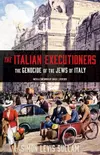
Italy has a charming national hobby: rewriting its own résumé. Simon Levis Sullam's The Italian Executioners rips that résumé apart.
The year is 1943, Mussolini has fallen, and the newly reborn Republic of Salò, that grotesque puppet state dangling from a German fist, has made Jew-hatred its founding ideology. Article 7 of the Manifesto of Verona formally declares Jews foreigners and enemies.
Giovanni Preziosi, a defrocked priest who had already gifted Italy its first translation of the Protocols of the Elders of Zion back in 1921, returns from Berlin having been personally received by Hitler, and takes charge of the General Inspectorate of Race. His twenty-one-person staff catalogs "racial status," spreads antisemitic propaganda in schools, oversees property confiscations, and publishes a journal devoted to the study of Jews as a civilizational threat. The country that today wrings its hands about Zionism was, at this moment, running a meticulously Italian genocide, and Sullam intends to introduce you to every smiling bureaucrat behind it.
Meet the cast of enthusiasts. Giovanni Martelloni, head of the Office of Jewish Affairs in Florence, moonlights as both a writer of scholarly-toned antisemitic newspaper articles and a hands-on confiscator who personally kicks in doors.
Giocondo Protti, a distinguished Venetian radiologist, takes to the lecture circuit describing Jews as "a spiritual monstrosity afflicting the soul of the world in the same way that cancer is a biological monstrosity," to public acclaim and possible Nazi funding.
In Venice on December 5, 1943, as young pianist Arturo Benedetti Michelangeli enchants an audience at La Fenice, Italian police are compiling the final arrest lists for the following night's roundup of over 160 Jews, conducted street by street with the help of racial registers the state itself had built since 1938. Brescia's local newspaper greets the operation as cause for "great satisfaction."
A Resistance-adjacent network near the Swiss border turns out to be a criminal enterprise selling Jews to the Germans at 2,000 lire per head. The informers include business partners, students who denounce their own teachers, a sixteen-year-old who plants a Communist flyer in a Jewish professor's briefcase, and a stage designer named Bruno Pastacaldi who cheerfully passes the anonymous mail along each morning.
The postwar settlement is where the story achieves its particular flavor of comedy. Gaetano Azzariti, president of the tribunal that administered the racial laws from 1938 to 1943, goes on to become minister of justice, then a judge on Italy's Constitutional Court, then its president, a position he holds until his death in 1961.
Mario Cortellini, Venice's Deputy Commissioner for Jewish property seizures, is appointed postwar head of the Office for the Recovery of Jewish Property, making him the designated guardian of the treasure he personally looted.
Giovanni Martelloni's 1950 trial ends in acquittal for all sixty-eight defendants. The Resistance, lasting eighteen months and involving a minority of Italians, spawns dozens of commemorative centers; Fascism, a two-decade mass phenomenon, spawns very few.
Italy glides from the "era of the witness" straight to the "era of the savior," celebrating the courageous few who hid Jews, and conveniently bypassing the era in which tens of thousands of Italian police officers, clerks, journalists, doctors, and neighbors decided, often voluntarily and for a fee of up to 9,000 lire per head, to do exactly the opposite. A country now vocal about the “crimes” of Zionism has yet to officially acknowledge its own.
Simon Levis Sullam is a professor of contemporary history at Ca' Foscari University in Venice, a fitting perch for a scholar excavating the city where Italian police rounded up Jews in December 1943 while the opera house stayed open for business.
His book is a short, furious act of historical accounting, and its central message is as uncomfortable as a Fascist bust in a constitutional court hallway. Italy did this to its own Jews, Italy enjoyed doing it, and Italy then hired the people who did it to run the postwar republic.
A country whose officials today drape anti-Zionist rhetoric in the language of human rights, while their own Holocaust Remembrance Day legislation carefully avoids naming the Italian police forces responsible for the deportations, is a country still deep in the business of selective memory. The hypocrisy is architectural in its ambition: condemn Israel, skip the chapter on Preziosi.
The book is thin, the indictment is fat, and the gap between them is where Italy's moral reckoning went missing decades ago and apparently has no forwarding address.
❤️ 🇮🇱
Italy has a charming national hobby: rewriting its own résumé. Simon Levis Sullam's The Italian Executioners rips that résumé apart.
The year is 1943, Mussolini has fallen, and the newly reborn Republic of Salò, that grotesque puppet state dangling from a German fist, has made Jew-hatred its founding ideology. Article 7 of the Manifesto of Verona formally declares Jews foreigners and enemies.
Giovanni Preziosi, a defrocked priest who had already gifted Italy its first translation of the Protocols of the Elders of Zion back in 1921, returns from Berlin having been personally received by Hitler, and takes charge of the General Inspectorate of Race. His twenty-one-person staff catalogs "racial status," spreads antisemitic propaganda in schools, oversees property confiscations, and publishes a journal devoted to the study of Jews as a civilizational threat. The country that today wrings its hands about Zionism was, at this moment, running a meticulously Italian genocide, and Sullam intends to introduce you to every smiling bureaucrat behind it.
Meet the cast of enthusiasts. Giovanni Martelloni, head of the Office of Jewish Affairs in Florence, moonlights as both a writer of scholarly-toned antisemitic newspaper articles and a hands-on confiscator who personally kicks in doors.
Giocondo Protti, a distinguished Venetian radiologist, takes to the lecture circuit describing Jews as "a spiritual monstrosity afflicting the soul of the world in the same way that cancer is a biological monstrosity," to public acclaim and possible Nazi funding.
In Venice on December 5, 1943, as young pianist Arturo Benedetti Michelangeli enchants an audience at La Fenice, Italian police are compiling the final arrest lists for the following night's roundup of over 160 Jews, conducted street by street with the help of racial registers the state itself had built since 1938. Brescia's local newspaper greets the operation as cause for "great satisfaction."
A Resistance-adjacent network near the Swiss border turns out to be a criminal enterprise selling Jews to the Germans at 2,000 lire per head. The informers include business partners, students who denounce their own teachers, a sixteen-year-old who plants a Communist flyer in a Jewish professor's briefcase, and a stage designer named Bruno Pastacaldi who cheerfully passes the anonymous mail along each morning.
The postwar settlement is where the story achieves its particular flavor of comedy. Gaetano Azzariti, president of the tribunal that administered the racial laws from 1938 to 1943, goes on to become minister of justice, then a judge on Italy's Constitutional Court, then its president, a position he holds until his death in 1961.
Mario Cortellini, Venice's Deputy Commissioner for Jewish property seizures, is appointed postwar head of the Office for the Recovery of Jewish Property, making him the designated guardian of the treasure he personally looted.
Giovanni Martelloni's 1950 trial ends in acquittal for all sixty-eight defendants. The Resistance, lasting eighteen months and involving a minority of Italians, spawns dozens of commemorative centers; Fascism, a two-decade mass phenomenon, spawns very few.
Italy glides from the "era of the witness" straight to the "era of the savior," celebrating the courageous few who hid Jews, and conveniently bypassing the era in which tens of thousands of Italian police officers, clerks, journalists, doctors, and neighbors decided, often voluntarily and for a fee of up to 9,000 lire per head, to do exactly the opposite. A country now vocal about the “crimes” of Zionism has yet to officially acknowledge its own.
Simon Levis Sullam is a professor of contemporary history at Ca' Foscari University in Venice, a fitting perch for a scholar excavating the city where Italian police rounded up Jews in December 1943 while the opera house stayed open for business.
His book is a short, furious act of historical accounting, and its central message is as uncomfortable as a Fascist bust in a constitutional court hallway. Italy did this to its own Jews, Italy enjoyed doing it, and Italy then hired the people who did it to run the postwar republic.
A country whose officials today drape anti-Zionist rhetoric in the language of human rights, while their own Holocaust Remembrance Day legislation carefully avoids naming the Italian police forces responsible for the deportations, is a country still deep in the business of selective memory. The hypocrisy is architectural in its ambition: condemn Israel, skip the chapter on Preziosi.
The book is thin, the indictment is fat, and the gap between them is where Italy's moral reckoning went missing decades ago and apparently has no forwarding address.
❤️ 🇮🇱