
Adrienne


Added to listBookclub Lambda Scifiwith 2 books.

A fun gay hockey romance. If was weird to be that Kip seemed to have no real conception of the closet, but I'm also ~15 years older than him. (Although you'd think a wannabe historian with an interest in marginalized identities would have some idea.)
In any case because the show follows the book Heated Rivalry so closely, I was surprised by how it differed here. The changes seem largely reasonable for an adaption of a book to a TV episode and a couple of scenes in a later episode.
I liked Scott and Kip as characters, although I'm not clear that Scott likes Kip as much as he likes having an actual human relationship, but sometimes that's enough.
Most of the sex scenes felt like they were doing story work, although a couple of the playoffs ones felt like over egging the pudding.
This is a nice enough story, but it's really memorable because of its connection to the show.
A fun gay hockey romance. If was weird to be that Kip seemed to have no real conception of the closet, but I'm also ~15 years older than him. (Although you'd think a wannabe historian with an interest in marginalized identities would have some idea.)
In any case because the show follows the book Heated Rivalry so closely, I was surprised by how it differed here. The changes seem largely reasonable for an adaption of a book to a TV episode and a couple of scenes in a later episode.
I liked Scott and Kip as characters, although I'm not clear that Scott likes Kip as much as he likes having an actual human relationship, but sometimes that's enough.
Most of the sex scenes felt like they were doing story work, although a couple of the playoffs ones felt like over egging the pudding.
This is a nice enough story, but it's really memorable because of its connection to the show.

I struggled with the structure and themes of this book. Maybe I'm just reading it years too late, when the horrors of conversion practices are already clear.
I'm not sure why this was written (a) out of chronological order or (b) tied so closely to Conley's perspective at the time, without more reflection on either the lingering damage or the healing done since (whichever is more true for him).
The prose sometimes feels overwritten, pretty or lyrical or metaphorical to draw attention to itself, rather than more clearly depict what happened.
The story seems eager to exonerate the author's parents in a way that I don't think is warranted. OTOH, they're not my parents and mine have never been that horrible to me. He gets to pick his own relationship with them, going forward.
In my book club, I was asked if I would recommend this book to teenagers. I wouldn't. I didn't know what they would get out of it. Maybe if we manage to go a generation without conversation practices and this becomes a vital historical document. Right now I feel like the info is better presented elsewhere and the prose doesn't make it interesting enough on its own.
I struggled with the structure and themes of this book. Maybe I'm just reading it years too late, when the horrors of conversion practices are already clear.
I'm not sure why this was written (a) out of chronological order or (b) tied so closely to Conley's perspective at the time, without more reflection on either the lingering damage or the healing done since (whichever is more true for him).
The prose sometimes feels overwritten, pretty or lyrical or metaphorical to draw attention to itself, rather than more clearly depict what happened.
The story seems eager to exonerate the author's parents in a way that I don't think is warranted. OTOH, they're not my parents and mine have never been that horrible to me. He gets to pick his own relationship with them, going forward.
In my book club, I was asked if I would recommend this book to teenagers. I wouldn't. I didn't know what they would get out of it. Maybe if we manage to go a generation without conversation practices and this becomes a vital historical document. Right now I feel like the info is better presented elsewhere and the prose doesn't make it interesting enough on its own.


This is not cozy.
However, it is still a good book about women's relationships and discerning the next direction of one's life. There's humor, people growing in ways they didn't expect, and getting by with a little help from our friends.
I enjoyed this book and I think those who enjoyed the previous two Baldree books will enjoy it, too.
But it's absolutely not cozy.
This is not cozy.
However, it is still a good book about women's relationships and discerning the next direction of one's life. There's humor, people growing in ways they didn't expect, and getting by with a little help from our friends.
I enjoyed this book and I think those who enjoyed the previous two Baldree books will enjoy it, too.
But it's absolutely not cozy.
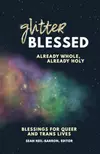
Some of the works feel more like poetry than prayer, but overall recenters me as both queer and enough.
What I need now:
- You are queer enough
- Hope follows us
- Parking lot mantra (An actual ritual)
Some useful themes
- Your queerness counts. Even if you can't name or map it
- You are whole and loved
- You can come out on your own schedule
- We are the ones we've been waiting for
- We don't fight to win. We fight because we love each other
Some of the works feel more like poetry than prayer, but overall recenters me as both queer and enough.
What I need now:
- You are queer enough
- Hope follows us
- Parking lot mantra (An actual ritual)
Some useful themes
- Your queerness counts. Even if you can't name or map it
- You are whole and loved
- You can come out on your own schedule
- We are the ones we've been waiting for
- We don't fight to win. We fight because we love each other

Added to listBookclub Davies Banned Bookswith 3 books.


Added to listGoobers Who Read Bookclubwith 1 book.
This book breaks down habit change at a very granular level. If you read a lot of productivity content, it may feel repetitive. Also, Foggy has a habit of creating new technology to describe things we already have words for at of they are unique. (A Swarm of Behaviors is just a brainstorm, man.)
Things I found really insightful
- Once you've clarified a general ambition, brainstorm many potential behaviors that could support it and select for the ones that are both impactful and things you'd actually do.
- Cement new habits by immediately creating a positive emotion after performing them
- Rehearse prompt › action › celebration so you can remember the prompt that should trigger the new habit
- Help people do what they want to do. Help people feel successful
- Approach new habit formation with a spirit of experimentation
- Since your start your habits tiny, they can go grow either in intensity or by accumulating more signed behaviors, but keep your momentum going by always accepting the tiny version of the habit as fulfilling the habit.
Readers may find the book a bit repetitive, but most of the repetitions are expansions or variations. Also, the repetitions help clarify how all of the parts of the theory relate.
I can imagine myself reading again for a tune up in a few years
This book breaks down habit change at a very granular level. If you read a lot of productivity content, it may feel repetitive. Also, Foggy has a habit of creating new technology to describe things we already have words for at of they are unique. (A Swarm of Behaviors is just a brainstorm, man.)
Things I found really insightful
- Once you've clarified a general ambition, brainstorm many potential behaviors that could support it and select for the ones that are both impactful and things you'd actually do.
- Cement new habits by immediately creating a positive emotion after performing them
- Rehearse prompt › action › celebration so you can remember the prompt that should trigger the new habit
- Help people do what they want to do. Help people feel successful
- Approach new habit formation with a spirit of experimentation
- Since your start your habits tiny, they can go grow either in intensity or by accumulating more signed behaviors, but keep your momentum going by always accepting the tiny version of the habit as fulfilling the habit.
Readers may find the book a bit repetitive, but most of the repetitions are expansions or variations. Also, the repetitions help clarify how all of the parts of the theory relate.
I can imagine myself reading again for a tune up in a few years
