
beaneater


“How do you say 'We come in peace' when the very words are an act of war?”
Blindsight is such a unique book, not just for its plot but for the complexity of the philosophical questions the author raises. A spaceship of five, including a vampire as the leader, sets out on a mission to explore deep space beyond the Kuiper belt after the Firefall phenomenon happens on Earth. A synthesist and our main protagonist, Siri Keeton, guides us through the events of the mission. The story can become hazy and overwhelming at times, because Siri Keeton lost half his brain to an intensive medical procedure as a child, leaving him cut off from his own emotions. He can read and predict other people perfectly, but he experiences even his own feelings as something to observe from the outside rather than live from within. That distance, combined with his job as a synthesist (someone trained to translate and report on things he isn't required to actually understand) makes him a narrator you can never fully trust, not because he lies, but because he might not grasp the meaning of what he's accurately describing.
Peter Watts touches on some genuinely heavy philosophical questions for a sci-fi book: what is consciousness, and is it even necessary for intelligence? On top of that, Watts introduces vampires, not the Dracula or Twilight kind, but a scientifically reverse-engineered kind, where even the old folklore gets a cold biological explanation instead of being thrown out. They're unsettling in the same way the unknown source of the Firefall is unsettling, and in the same way everything in this book that makes you ask "why?" is unsettling.


"Bored bored bored bored bored bored bored bored," is a great summary of how I felt about this book. I was baited by its plot where astronauts travel for two years to Titan, but the authors decided to completely skip the travel there and back and all we got were just mere 10 pages or so. Not to mention the plot holes and the science that did not quite scienced.
When the plot finally started going somewhere, it ended suddenly and I realized that it was always the plan for the book to end on a major cliffhanger. I think it would work perfectly as a TV show as it was originally supposed to be, but even as that I would probably trash talk about it, because it is simply not good and not worth waiting for the sequel. It could entertain people who like soft sci-fi or people who typically don't read sci-fi at all.
Detour had a very promising start to be a new awesome sci-fi series, but unfortunately the first book got boring really quick as it is bland and pretty stereotypical with every cliché you could think of.


I was a little afraid Project Hail Mary would be too similar to The Martian. It has the same DNA, but PHM is actually so different, even on its own as a sci-fi book.
What makes it unique is the friendship between two different species from very different worlds that happens to bump into each other because of their shared mission. Weir lets Rocky stay genuinely alien throughout, yet the friendship is completely real anyway. Connection doesn't require sameness.
I saw the movie first and I think it actually worked in my favor (and I might be a little bit biased by it). The movie depicted Rocky perfectly too, definitely best film of the year so far for me.


I can see why Sally Rooney is popular, her prose is fluid and well written, you can tell she is a skilled writer and knows what she's doing.
The backstory of Connell and especially Marianne was missing a lot, their absence leaves too many unanswered questions. However, I think the ending was great. Despite their deep connection, they were never emotionally in the same place, and their repeated missed connections make the ending feel like the right and healthy conclusion for both.
On the other hand, I found all the characters a little bit one sided, sharing the same voice and worldview. The political undertones feel forced as well, as if Rooney couldn't resist inserting her own views into what is ultimately a love story. In the end, all the characters feel like the same person, they are all Sally Rooney.
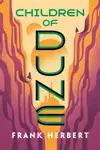


Contains spoilers
"Now he knew himself to be embarked upon a path of no return. Ahead lay the trap in Time and Space which had been prepared as an unforgettable lesson for himself and all of mankind."
Plot within plot within plot, this was such an epic ride. If you thought that Messiah complements the first book perfectly, wait for Children of Dune. Is it better than the second book? Probably not, but it is definitely getting more interesting and a little bit weirder. I absolutely loved the dialogue between Leto and The Preacher in chapter 54, it added so much more detail to why Paul went to the desert and what was that horrible vision he passed on to his descendants.


I decided to return to this series after more than a decade, and it’s clear I’m no longer the target audience. The book was extremely action-packed, and the author kept randomly introducing (often famous) historical figures that weren’t actually important to the plot at all. There were also very long dialogues that felt like the characters were talking just to fill space.


Contains spoilers
"Name. He made a reaching, a flash of demand, and it returned to him carrying what might be called definiton. It came, though, as pure concept. "Name" is the single thing which is me and what I have done and been and learned.
It was all there, waiting for that single symbol, a name. All the wandering, the hunger, the loss, the thing which is worse than loss, called lack. There was a dim and subtle awareness that even here, with the Prodds, he was not a something, but a substitute for something.
All alone."
A complex novel about beings living on the margins of society who, outside human community, gradually form a new organism homo gestalt. Sturgeon doesn't focus on their exceptional abilities, but rather on their isolation, quiet suffering, and long existence beyond ordinary human relationships. The emergence of homo gestalt therefore feels not like a rescue, but like a consequence of evolution: an answer to a world in which there was no place for them.
Sturgeon’s prose is known for its lyrical and poetic style, already evident in the book’s opening section, The Fabulous Idiot. At the time of its publication, More Than Human presented a striking vision that was atypical even for the sci-fi of its era, and in many ways remains so today. In creating this novel, Sturgeon pointed toward a new direction in which science fiction could evolve.


Contains spoilers
"They must bear the weeks, while the geological epochs passed by outside."
Tau Zero grimly depicts the fate of fifty people aboard a spaceship, accidentally accelerated to near-light speed, leaping through time. Beyond the characters or the end of the universe, the book explores deep questions about existence: what it means to truly be, how to inhabit a moment, and how to maintain humanity when the universe itself seems indifferent.
I wish I could love this piece of classic hard sci-fi more, but the era in which it was written shows through in its stereotypical portrayal of women.


"What is it like to spend hundreds of thousands of years in space? It is, literally, nothing at all."
I didn’t expect that much from a short story, but wow. John Scalzi really does know how to write in a gripping way without making the reader feel bored. I'd like to imagine that this is something Voyager 1 could experience.


I’m glad that I chose to give the Murderbot Diaries another chance, as this installment marks a satisfying return to the original PreservationAux crew. That sense of familiarity and continuity brought a depth I had missed in the previous volumes. My one reservation, however, is in the author’s constant use of slash-phrases. It read like she couldn’t settle on which wording worked best, so she just went with both, leaving the reader to pick their favorite.


"The sky above the port was the colour of television, tuned to a dead channel."
I understand why Neuromancer caused such a boom and why it’s considered a masterpiece of sci-fi literature. William Gibson played a huge role in defining cyberpunk as we know it today. The first few pages were really tough to crack because Gibson used slang-heavy language full of neologisms and tech-sounding terms. But as I sank deeper into the story, I started recognizing the words and getting used to his writing style, which at first glance can seem chaotic. For some readers, that might be the reason to put the book down after a few pages, but if they give the author a chance, the plot starts to pull them in more and more and won’t let go until the end.
The book isn’t just about “cool” tech lingo. It also offers philosophical layers and reflections on human nature. Gibson didn’t just write a sci-fi classic and give shape to the cyberpunk subgenre... he also strikingly foresaw aspects of our present day: people glued to screens watching creations of AI almost indistinguishable from reality, and the power of billionaires controlling megacorporations capable of influencing entire cities.
With his debut novel, Gibson set the bar incredibly high, and it’s no wonder Neuromancer made him so famous.
Neuromancer is a fascinating blend of technothriller, thought-provoking ideas, and visions of the future that, even forty years later, still feel surprisingly relevant.
"... Neuro from the nerves, the silver paths. Romancer. Necromancer. I call up the dead."


The idea behind the story is great, but I felt there were some plot holes and events that didn’t quite make sense, which took away from the overall experience. The book is easy to read, but at times it felt like it was written by a high school student with an interest in science who didn’t do much research on the topics they were writing about. Overall, the book reads more like a rough draft than a finished work.
I was genuinely looking forward to reading it, but in the end, it left me disappointed and I didn’t really enjoy how it all came together.


To tell you the truth, I was never a big fan of the film adaptation and it may have distorted my perception of the book a bit. But I'll try to be objective and see this first installment of the trilogy in all its glory, which everyone is rightfully praising.
The story is definitely out of its time, for which the author deserves a bow and a standing ovation. The first volume is so enriched with the history of a non-existent world that it feels almost real in places. History described in such depth that it may bore some readers to death, but extremely important to understanding the storyline.
I'm not rushing into the second volume, but it would be a shame to walk away from such a fantasy at the outset.


Nathaniel as the main young protagonist is stubborn and at times indecisive. But his stubbornness and indiscretion often pays off. He crosses paths with the (not so) powerful genie Bartimaeus - a demon with a narcissistic nature that doesn't irritate the reader with its hubris, but instead greatly amuses and makes us adore him even more.
So we have two characters with completely different characteristics, but who complement each other so beautifully and go hand in hand. Although they would sometimes prefer to strangle each other, there is a strong bond between them and we as readers witness some bromance moments.
The trilogy had me laughing so many times that I was clapping at some passages for a week. It's been a while since I've read the series, but I remember it with a smile, and maybe I'll read it again sometime to remind myself of Bartimaeus' colossal drama.
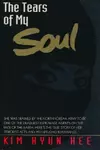

"And I noticed that when I prayed to God for mercy, I had not, as had been my habit, prayed to the Great Leader, Kim Il Sung, who was the closest thing to a deity that I had ever known."
I'm surprised this biography isn't more well-known, and it's sad that not many people know about this significant piece of history. Reading from Kim Hyun Hee's pov, I couldn't help but feel deep sympathy for her and her incomprehension, she truly believed that carrying out the act would unify Korea. She honestly did not, and could not, know better. Even if she had, it's not as if she would have had the choice to say no. Kim Hyun Hee mentioned 1984's similarities to the regime of North Korea and rightfully so.
It has been 38 years since the Korean Air Flight 858 tragedy, yet North Korea does not seem to have made any progress over the years. The unification of Korea still feels like a distant reality... one that may never happen.


Contains spoilers
Never in my life I felt so sorry for a spider... safe to say I'm really a human (not a flex). I know back in 70s the sexism was pretty "normal" but oof. Besides that, PKD had really beautiful and terrifying visuals of the future. Started reading cause of the movie adaptations, stayed for the philosophical aspect.


“They think I'm a wizard. They think I'm a fucking wizard.”
I was in a reading slump and needed something short to boost me. Elder Race was definitely the perfect choice, and I wanted to read something from Tchaikovsky forever.At first, the story might seem more like a fantasy than sci-fi, but do not be fooled. It's actually part of the clever and dark twist. In just a few pages, Nyr -an anthropologist, sort of a “wizard” if you will- and his humaneness really grew on me. His humor is just a bonus to his misadventures on Sophos 4.


Even when I struggle to read such complex series as Dune and it always gets me into a reading slump whenever I decided to open the book, I just enjoy the lore sometimes so damn difficult that my little pea brain cannot comprehend it.
Anyway, the 2nd book was slightly different from the first one not just by the length nor complexity of the story. Second book is much more focused on the politics of Dune rather than grandiosity of Paul Atreides. In my opinion Messiah is way better than Dune, It adds greater depth and understanding to the first book. If you read the first book, then Dune Messiah is just a must because you will learn that Paul was just a mere human after all.


Nietzsche had a brilliant mind, though his views were often controversial and, I believe, frequently misunderstood or misrepresented. His philosophy can be quite challenging, even for more advanced readers. Twilight of the Idols is a good starting point for understanding Nietzsche's broader body of work, as well as his perspective on the world.It seems misguided to label Nietzsche as a fascist (a movement that didn't arise until 30 years after his death), anti-Semitic (unlike his sister, who edited his texts to align with her own beliefs), or even misogynistic (he had a close friendship with the writer Lou Andreas-Salomé). Nietzsche was indeed many things, but none of these. Yet, it is precisely on these issues that Nietzsche remains vilified and misunderstood by many to this day.I mentioned earlier that Nietzsche possessed a brilliant mind-this also includes his use of irony and sarcasm, which isn't always immediately apparent in his writings. Once a reader becomes more familiar with Nietzsche, they may come to see him as quite the joker.


This was a very slow burn read. It was as slow as it could get, and you might think it would bore you to death! Well, what luck that Ishiguro wrote it. He could literally write a thousand pages about one unimportant event, and I would still read it because of how grippingly he writes.You might think that all the details seemed unnecessary for the plot or character development, but after the big secret is revealed at the end, you'll understand what it was really about, and those unimportant events will suddenly feel very important.I loved how the author teased you about the secret, like ‘you'll know it in the right time,' and always revealed just enough to keep you reading.As a sci-fi fan, I found the sci-fi elements in this book to be very subtle-really just a dash of it. It could also be a good starting point for readers who want to get more into this genre.


It was natural to assume that BNW would be as much to my liking as the notorious classic 1984. Mr. Huxley did build a very interesting idea of an anti-utopian world that might not be that far from the one we have today, but somehow his ideas didn't fully transcribe to paper.If I were to rate the work purely from a philosophical point of view, I would certainly have to give it one star more.
“But that's the price we have to pay for stability. You've got to choose between happiness and what people used to call high art. We've sacrificed the high art.”


“Godspeed, little taters. My life depends on you.”
Oh my, easily five stars. I was little bit sceptical about the humor that it would be too much and it will end up lame. But in a very long, long, loooong time the book actually made me laugh. And it was this amazing book! Matt Damon as a Mark Watney is just such an excellent choice.Just from the first sentence I was immediatelly hooked. I already knew how it would end but I needed the details that didn't get to the movie adaptation. And honestly, being in Mark's head through his unfortunate adventures on Mars was so much fun. The way this character was written is simply amazing, the reactions in some situations were pretty realistic, funny and on point.
“Yeah, that's right, Mars, I'm gonna piss and shit on you.”