
Brennan Flentge


TL;DR
— Someone finally read the Bible without trying to rescue it from itself.
— Ideal reading conditions: recently deconstructed, still processing.
⭐⭐⭐⭐⭐
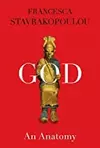
I came to God: An Anatomy fairly fresh off learning that “non-denominational” was just charismatic Pentecostal evangelical in a Hillsong hoodie. Great time to read a book about God’s genitals.
Just a warning for religious / believing people, some parts of this are kind of heavy to sit with if you are learning about it for the first time / you have had zero exposure to secular biblical scholarship.
The thesis is not complicated. The God in the Bible has a body. Feet. Hands. A face. Genitals. A smell. Dr. Stavrakopoulou, a professor of Hebrew Bible and Ancient Religion who clearly enjoys her job, works through it anatomically. Chapter by chapter. Feet to head.
She is not trying to destroy anything. She is simply pointing at the text and declining to look the other away. Which is more than I can say for thirty years of Sunday sermons.
The God I was handed was abstract, invisible, philosophically sanitized. That editing job started about two thousand years ago and nobody within my faith tradition mentioned it.
What gets me is how boring her case is. She is not speculating. She is translating. The uncomfortable parts were always there, and there's a long history of deciding words don't mean words and they are just metaphors.
I listened to the audiobook while reading along. (Yes, both at once, I need the training wheels.) Her writing is scholarly, but alive. She reads the audiobook herself - her voice gives the book even more character. Sounds like someone constitutionally incapable of pretending things are simpler than they are. After years of “teachers” doing the opposite, this book was eye-opening.
Five stars. Not a faith-killer. More like a very well-researched autopsy.
Originally posted at www.goodreads.com.
TL;DR
— Someone finally read the Bible without trying to rescue it from itself.
— Ideal reading conditions: recently deconstructed, still processing.
⭐⭐⭐⭐⭐
I came to God: An Anatomy fairly fresh off learning that “non-denominational” was just charismatic Pentecostal evangelical in a Hillsong hoodie. Great time to read a book about God’s genitals.
Just a warning for religious / believing people, some parts of this are kind of heavy to sit with if you are learning about it for the first time / you have had zero exposure to secular biblical scholarship.
The thesis is not complicated. The God in the Bible has a body. Feet. Hands. A face. Genitals. A smell. Dr. Stavrakopoulou, a professor of Hebrew Bible and Ancient Religion who clearly enjoys her job, works through it anatomically. Chapter by chapter. Feet to head.
She is not trying to destroy anything. She is simply pointing at the text and declining to look the other away. Which is more than I can say for thirty years of Sunday sermons.
The God I was handed was abstract, invisible, philosophically sanitized. That editing job started about two thousand years ago and nobody within my faith tradition mentioned it.
What gets me is how boring her case is. She is not speculating. She is translating. The uncomfortable parts were always there, and there's a long history of deciding words don't mean words and they are just metaphors.
I listened to the audiobook while reading along. (Yes, both at once, I need the training wheels.) Her writing is scholarly, but alive. She reads the audiobook herself - her voice gives the book even more character. Sounds like someone constitutionally incapable of pretending things are simpler than they are. After years of “teachers” doing the opposite, this book was eye-opening.
Five stars. Not a faith-killer. More like a very well-researched autopsy.
Originally posted at www.goodreads.com.


TL;DR
- Ancient religion was messier than modern theology allows.
- This book explains why—thoroughly, densely, and without apologizing.
I am very much not a scholar 🌝 I read this as the kind of person who’s interested in biblical history but does not own tweed, know Hebrew, or enjoy pretending this is light reading.
That said, YHWH’s Divine Images is doing something genuinely interesting. The basic idea (as I understand it) is that ancient people didn’t think about God, images, messengers, or objects in clean either/or ways. Things could be “God” and “not God” at the same time, depending on context, function, and how humans actually think. Which immediately explains why so many modern debates about idols, angels, and divine presence go absolutely nowhere.
The book then methodically walks through how divine presence was “handled” in the ancient world—stones, objects, the Ark, messengers, the Name, glory, etc.—until you eventually realize that what later readers call symbolism was often functioning as something much closer to presence. And then it lands on the idea that the scripture itself eventually becomes the primary vehicle of divine presence, which suddenly makes a lot of later religious behavior make sense in a way that’s mildly uncomfortable 🌚
If you are a normie like me, this is not an easy read. It’s dense, technical, and not interested in holding your hand. You will reread sentences. You will be unsure whether you understood something correctly. That seems to be part of the experience.
But if you’re tired of being told ancient people secretly believed modern theology before modern theology existed, this book is worth the effort. I didn’t understand everything, but I understood enough to know my old assumptions were doing a lot of unexamined work.
Lastly, also worth noting: Dan made this book freely available years ago, and his broader work has been genuinely eye-opening for separating confidence from evidence. More of that, less noise.
Originally posted at www.goodreads.com.
TL;DR
- Ancient religion was messier than modern theology allows.
- This book explains why—thoroughly, densely, and without apologizing.
I am very much not a scholar 🌝 I read this as the kind of person who’s interested in biblical history but does not own tweed, know Hebrew, or enjoy pretending this is light reading.
That said, YHWH’s Divine Images is doing something genuinely interesting. The basic idea (as I understand it) is that ancient people didn’t think about God, images, messengers, or objects in clean either/or ways. Things could be “God” and “not God” at the same time, depending on context, function, and how humans actually think. Which immediately explains why so many modern debates about idols, angels, and divine presence go absolutely nowhere.
The book then methodically walks through how divine presence was “handled” in the ancient world—stones, objects, the Ark, messengers, the Name, glory, etc.—until you eventually realize that what later readers call symbolism was often functioning as something much closer to presence. And then it lands on the idea that the scripture itself eventually becomes the primary vehicle of divine presence, which suddenly makes a lot of later religious behavior make sense in a way that’s mildly uncomfortable 🌚
If you are a normie like me, this is not an easy read. It’s dense, technical, and not interested in holding your hand. You will reread sentences. You will be unsure whether you understood something correctly. That seems to be part of the experience.
But if you’re tired of being told ancient people secretly believed modern theology before modern theology existed, this book is worth the effort. I didn’t understand everything, but I understood enough to know my old assumptions were doing a lot of unexamined work.
Lastly, also worth noting: Dan made this book freely available years ago, and his broader work has been genuinely eye-opening for separating confidence from evidence. More of that, less noise.
Originally posted at www.goodreads.com.