
Bruno


Mage Errant didn’t really feel like it was bringing anything radically new to the table. The broad beats and the general shape of the story felt pretty familiar to other stories of the same type.
That said, I did enjoy the execution. Especially the world the story is built in, the characters, and the way the magic system is introduced and how it works. It has that satisfying “this makes sense” feeling.
The biggest compliment I can give it is that I didn’t even notice how quickly I was moving through it. Before I knew it, I’d finished the book and I came away thinking it was genuinely enjoyable.
Not a groundbreaking story, but it was solid, and easy to get pulled into. Looking forward to reading the next.
Think of Mage Errant as a story that starts small and personal, more “trying to survive school and expectations” than “saving the world", and then quietly widens its horizon. You spend a good chunk of time in and around a magical academy.
The magic itself is one of the main draws. It’s built on clear rules and specializations, and the fun is watching characters figure out what their strengths actually are and how to use them creatively.
Mage Errant didn’t really feel like it was bringing anything radically new to the table. The broad beats and the general shape of the story felt pretty familiar to other stories of the same type.
That said, I did enjoy the execution. Especially the world the story is built in, the characters, and the way the magic system is introduced and how it works. It has that satisfying “this makes sense” feeling.
The biggest compliment I can give it is that I didn’t even notice how quickly I was moving through it. Before I knew it, I’d finished the book and I came away thinking it was genuinely enjoyable.
Not a groundbreaking story, but it was solid, and easy to get pulled into. Looking forward to reading the next.
Think of Mage Errant as a story that starts small and personal, more “trying to survive school and expectations” than “saving the world", and then quietly widens its horizon. You spend a good chunk of time in and around a magical academy.
The magic itself is one of the main draws. It’s built on clear rules and specializations, and the fun is watching characters figure out what their strengths actually are and how to use them creatively.
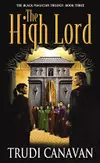
As the third and final book in the trilogy, The High Lord was, in my view, the strongest in terms of writing quality and overall story flow. There’s a clear progression across the serie and an improvement from the first book to the second, and again in this final one.
In terms of the story itself, I thought it delivered a solid conclusion to the main arc that had been built throughout the trilogy. The way everything comes together near the end was satisfying, and I enjoyed seeing the different groups converge.
That said, I had a major frustration. One that I’ve seen mentioned in other reviews. A lot of tension and focus is placed on one character’s storyline, only for it to end in a way that felt disappointing after so much buildup. Related to that, I also found the central relationship poorly written. It often felt like filler rather than something that meaningfully shaped the plot. Whether it happened or not didn’t seem to change much, and I couldn’t help thinking there were other, more compelling characters who deserved more spotlight and action.
Even with those issues, Canavan created a world I genuinely enjoyed, and I’d be interested in reading more stories set in it. I also wanted more depth around the magic system: how it’s learned, how it develops, and how the world responds to it. There are moments where the book touches on this in engaging ways, but too often the descriptions felt rushed or simplified, which made some scenes less captivating than they could have been.
Overall, I’d rate The High Lord, and the trilogy as a whole: 3/5.
As the third and final book in the trilogy, The High Lord was, in my view, the strongest in terms of writing quality and overall story flow. There’s a clear progression across the serie and an improvement from the first book to the second, and again in this final one.
In terms of the story itself, I thought it delivered a solid conclusion to the main arc that had been built throughout the trilogy. The way everything comes together near the end was satisfying, and I enjoyed seeing the different groups converge.
That said, I had a major frustration. One that I’ve seen mentioned in other reviews. A lot of tension and focus is placed on one character’s storyline, only for it to end in a way that felt disappointing after so much buildup. Related to that, I also found the central relationship poorly written. It often felt like filler rather than something that meaningfully shaped the plot. Whether it happened or not didn’t seem to change much, and I couldn’t help thinking there were other, more compelling characters who deserved more spotlight and action.
Even with those issues, Canavan created a world I genuinely enjoyed, and I’d be interested in reading more stories set in it. I also wanted more depth around the magic system: how it’s learned, how it develops, and how the world responds to it. There are moments where the book touches on this in engaging ways, but too often the descriptions felt rushed or simplified, which made some scenes less captivating than they could have been.
Overall, I’d rate The High Lord, and the trilogy as a whole: 3/5.
