
carlin


Definitely more good than bad here, but not an enjoyable read when it could've been
To focus on the good, the fundamental idea here is correct and worth writing a book about, and there are definitely things which I will take away from this and use in my future career. I'm not sure I can recommend as this is the first teaching book that I have read
However, this book is quite a mess and feels like something which has been written and redrafted, but needs an editor to sort it out. For example, there is no Index at the back. How is this supposed to be a useful reference manual? The structure of the chapters at the beginning is well thought out and feel like they build, but the second half of the book feels more like blog posts and even within chapters there are sections which are incongruous. Ideas like "Ready, Respectful, Safe" are assumed to be understood and not explained, and aren't tied in with previous chapters. The conclusion of the book feels slapped on and doesn't relate to the last chapter, which is strange given the conclusion is essentially a single paragraph.
As the book is not cohesive, it fails to meet its own bar. It is constantly suggesting "Your behaviour management policy should be trivially understood" but every chapter gives you a dozen different ideas for what good policies should be and what you should actually do. I feel like this book actually becomes rather overwhelming because of it's lack of refinement.
I also would have appreciated better sourcing, evidencing or at least engagement with the literature. I think he refers to a few recently published books (by his friends perhaps..) and at least one blog post. Unfortunately I cannot substantiate this easily as there is no bibliography. As such, this feels disconnected from the canon of pedagogy and relies a bit too much on you trusting him.
Less crucially for the aims of the book, I found I did not like many of the quirks of the text. He really likes to have a list of regular things and then the last one is like "nuclear war" or "picking a child up by their ankles", which clearly are jokes mean to liven the text, but I just found them to be inappropriate and distracting. Some of the more extended anecdotes also fall into the realm of unbelievable and left me rolling my eyes (the one regarding a mother with incomplete tattoos felt made up and that it was punching down). Lastly many of the anecdotes feel like they're flattering the author, which is a natural inclination and serve provide a reason for us to trust him (in lieu of sourcing...), but I feel you can do this in a way that's more upfront or perhaps grateful ("I had the honour to..." rather than "The Department of Education invited me...").
I also had a sense that Paul Dix kinda doesn't view children as people? A lot of the way he talks about them seem as if they are a different species with different aims than adults. This is perhaps a specific example which isn't quite the general tone I'm referring to, but for example he talks about children being addicted to being angry and how they want an excuse to unleash their anger. As a formerly angry child, I really hated being angry and I wanted it to stop. It was embarrassing for me and it was something I didn't have control over. If an adult had anger issues we would not assume them to be "addicted" to the feeling, we would consider what the material conditions they are facing which are leading to these emotions.
Additionally, I felt that the book suffered from not having a clear audience, or not signalling its audience well paragraph-to-paragraph. Some parts are aimed at primary school teachers, some at head teachers, some at teachers in general, and practically none aimed at people working with students with extra support needs. This is fine (especially if some are not part of the audience), but I think it weakens the reception of the book on the individual level as it's unclear if you are the audience of the advice. I think introducing some structure like For headteachers, etc would help this book have more impact with the respective audiences.
Finally, I think the book kinda feels unprincipled in a subtle way. There is clearly the principle that "Adults can effect the behaviour of students via a consistent attitude to behaviour management", but I think there also should have been something in regards to pedagogy (or children) such as "Our goal as teachers is to provide a Ready, Respectful, Safe environment for students so they can learn, and to do this we have to have a consistent attitude to behaviour management". As the book is not anchored in a cohesive principle in regards to pedagogy, I feel that it is subtly uncentered.
I think what I would've liked to have read instead, is a perspective on behaviour management from someone who has had a career working with additional support needs kids. I think that working in that context probably provides better insight into the crux of behaviour management that is useful universally. And for what it's worth, I think it would be pretty similar to Dix's proposal here regarding consistent and kind treatment, but I think it would be better foundationed as you have to reckon with more difficult circumstances.
Definitely more good than bad here, but not an enjoyable read when it could've been
To focus on the good, the fundamental idea here is correct and worth writing a book about, and there are definitely things which I will take away from this and use in my future career. I'm not sure I can recommend as this is the first teaching book that I have read
However, this book is quite a mess and feels like something which has been written and redrafted, but needs an editor to sort it out. For example, there is no Index at the back. How is this supposed to be a useful reference manual? The structure of the chapters at the beginning is well thought out and feel like they build, but the second half of the book feels more like blog posts and even within chapters there are sections which are incongruous. Ideas like "Ready, Respectful, Safe" are assumed to be understood and not explained, and aren't tied in with previous chapters. The conclusion of the book feels slapped on and doesn't relate to the last chapter, which is strange given the conclusion is essentially a single paragraph.
As the book is not cohesive, it fails to meet its own bar. It is constantly suggesting "Your behaviour management policy should be trivially understood" but every chapter gives you a dozen different ideas for what good policies should be and what you should actually do. I feel like this book actually becomes rather overwhelming because of it's lack of refinement.
I also would have appreciated better sourcing, evidencing or at least engagement with the literature. I think he refers to a few recently published books (by his friends perhaps..) and at least one blog post. Unfortunately I cannot substantiate this easily as there is no bibliography. As such, this feels disconnected from the canon of pedagogy and relies a bit too much on you trusting him.
Less crucially for the aims of the book, I found I did not like many of the quirks of the text. He really likes to have a list of regular things and then the last one is like "nuclear war" or "picking a child up by their ankles", which clearly are jokes mean to liven the text, but I just found them to be inappropriate and distracting. Some of the more extended anecdotes also fall into the realm of unbelievable and left me rolling my eyes (the one regarding a mother with incomplete tattoos felt made up and that it was punching down). Lastly many of the anecdotes feel like they're flattering the author, which is a natural inclination and serve provide a reason for us to trust him (in lieu of sourcing...), but I feel you can do this in a way that's more upfront or perhaps grateful ("I had the honour to..." rather than "The Department of Education invited me...").
I also had a sense that Paul Dix kinda doesn't view children as people? A lot of the way he talks about them seem as if they are a different species with different aims than adults. This is perhaps a specific example which isn't quite the general tone I'm referring to, but for example he talks about children being addicted to being angry and how they want an excuse to unleash their anger. As a formerly angry child, I really hated being angry and I wanted it to stop. It was embarrassing for me and it was something I didn't have control over. If an adult had anger issues we would not assume them to be "addicted" to the feeling, we would consider what the material conditions they are facing which are leading to these emotions.
Additionally, I felt that the book suffered from not having a clear audience, or not signalling its audience well paragraph-to-paragraph. Some parts are aimed at primary school teachers, some at head teachers, some at teachers in general, and practically none aimed at people working with students with extra support needs. This is fine (especially if some are not part of the audience), but I think it weakens the reception of the book on the individual level as it's unclear if you are the audience of the advice. I think introducing some structure like For headteachers, etc would help this book have more impact with the respective audiences.
Finally, I think the book kinda feels unprincipled in a subtle way. There is clearly the principle that "Adults can effect the behaviour of students via a consistent attitude to behaviour management", but I think there also should have been something in regards to pedagogy (or children) such as "Our goal as teachers is to provide a Ready, Respectful, Safe environment for students so they can learn, and to do this we have to have a consistent attitude to behaviour management". As the book is not anchored in a cohesive principle in regards to pedagogy, I feel that it is subtly uncentered.
I think what I would've liked to have read instead, is a perspective on behaviour management from someone who has had a career working with additional support needs kids. I think that working in that context probably provides better insight into the crux of behaviour management that is useful universally. And for what it's worth, I think it would be pretty similar to Dix's proposal here regarding consistent and kind treatment, but I think it would be better foundationed as you have to reckon with more difficult circumstances.


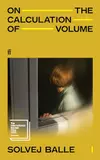
was very appropriate to read this while trapped at home with illness
does what it says on the tin — this is literary fiction time loop ahaha. Lovely prose and imagery, and in a sense reminded me of Ishiguro
maybe it's just because books are so expensive here in switzerland (I paid £21.70 here), but feels a bit greedy for this to be released as 7 books. Like I feel like I have read part 1 of a larger volume. Will I read the rest? If there's acclaim or plaudits probably, but generally this is not really my sort of thing
--- spoilers ---
As with similar sci-fi adjacent things, it takes unreasonably long for her to have fun with it even a bit ahaha. Also she should learn to lie, like it's lovely that her husband always believes her but I feel like it would be easier if she just white lied more.
feel like this is about a lot of different things, but I most appreciated how restless it is.
was very appropriate to read this while trapped at home with illness
does what it says on the tin — this is literary fiction time loop ahaha. Lovely prose and imagery, and in a sense reminded me of Ishiguro
maybe it's just because books are so expensive here in switzerland (I paid £21.70 here), but feels a bit greedy for this to be released as 7 books. Like I feel like I have read part 1 of a larger volume. Will I read the rest? If there's acclaim or plaudits probably, but generally this is not really my sort of thing
--- spoilers ---
As with similar sci-fi adjacent things, it takes unreasonably long for her to have fun with it even a bit ahaha. Also she should learn to lie, like it's lovely that her husband always believes her but I feel like it would be easier if she just white lied more.
feel like this is about a lot of different things, but I most appreciated how restless it is.





Added to listNoname's Book Clubwith 112 books.



first and last poems didn't really do it for me, I feel like learners would mostly just look at the pictures
Tom and Ted is really quite weird and twisted for what I expected! Like I really did not expect it at all, and I hope learners would be quite engaged with the story and want to re-read it
but the star of the show is clearly "Ten big fat men"!! It reads very nicely and the pictures are incredibly delightful. I also like that the story is not judgemental about the men being big and fat and it's not plot relevant
overall I got a couple laughs out of these poems which is really more than I could ask for!
first and last poems didn't really do it for me, I feel like learners would mostly just look at the pictures
Tom and Ted is really quite weird and twisted for what I expected! Like I really did not expect it at all, and I hope learners would be quite engaged with the story and want to re-read it
but the star of the show is clearly "Ten big fat men"!! It reads very nicely and the pictures are incredibly delightful. I also like that the story is not judgemental about the men being big and fat and it's not plot relevant
overall I got a couple laughs out of these poems which is really more than I could ask for!


really enjoyed reading this
You can tell it is written by a poet but it also has plot and something to say
think I'll probably re-read as it's for book club and it's so short (probably like 3hr max if you read in a sitting)
--- spoilers ---
unfortunately i didn't feel like Samsa was a real person. And I also can't really believe that this is meant to be subjectively how Boulder experiences her. Like from Samsa's perspective why would she put up w her
however I do still like Boulder, Tinna and their relationship so the book does overall work for me
really enjoyed reading this
You can tell it is written by a poet but it also has plot and something to say
think I'll probably re-read as it's for book club and it's so short (probably like 3hr max if you read in a sitting)
--- spoilers ---
unfortunately i didn't feel like Samsa was a real person. And I also can't really believe that this is meant to be subjectively how Boulder experiences her. Like from Samsa's perspective why would she put up w her
however I do still like Boulder, Tinna and their relationship so the book does overall work for me