
Eric Stone

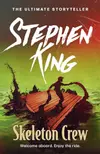
I’m finding that I don’t love short story collections as much as King's longer works. They don't always hold my attention, and while they are always worth the time, they often lack staying power compared to his novels. The further we get into King’s career, the more these collections feel hit-or-miss for me.
That said, there are some absolute standouts here. The Mist is a classic, but Gramma was the highlight - wonderfully creepy and exactly the kind of atmospheric horror I'm looking for.
If you're a King fan, it’s a required stop on the journey, but this isn't one I'll revisit in totality. Gramma.. that I'd reread.
I’m finding that I don’t love short story collections as much as King's longer works. They don't always hold my attention, and while they are always worth the time, they often lack staying power compared to his novels. The further we get into King’s career, the more these collections feel hit-or-miss for me.
That said, there are some absolute standouts here. The Mist is a classic, but Gramma was the highlight - wonderfully creepy and exactly the kind of atmospheric horror I'm looking for.
If you're a King fan, it’s a required stop on the journey, but this isn't one I'll revisit in totality. Gramma.. that I'd reread.



Answered a promptWhat books did you read in 2026?


Answered a promptWhat books did you read in 2026?


Name a subculture. To people outside of it, it means nothing. To people involved, it is everything. I witnessed this book firsthand. Having grown up in Central Mass, graduating in 2003, and attending college in Boston, the Boston Hardcore scene was very much a part of my world. Reading this felt like stepping into a time capsule.
It brought me right back to September 13, 2003, at the ICC in Allston. I had spent two months in the hospital following a car accident exactly two years prior, and I spent that night sitting on top of a piano watching Bane, Comeback Kid, Mental, and The Promise. That feeling of belonging and purpose was exactly what I needed at that moment in my life.
Whether it’s this or King’s Faithful, I will consume any perspective on the Red Sox 2004 World Series season. Wrenn’s ability to switch from descriptive storytelling to historical recollection is seamless. He captures the balance of Boston outside Fenway in the fall perfectly. The description of Have Heart’s last show and the afterword were particularly emotional - they perfectly captured what made that era and that scene so special.
I listened to the audiobook from Hachette on an ALC. The narration was solid, though it tripped me up slightly because my edge friends always put the emphasis on the "straight" versus the "edge," but that’s a minor regional detail in an otherwise great performance.
Wrenn doesn’t just document a subculture; he bottles the lightning of a very specific era in Boston’s history. For anyone who felt the belonging and purpose of the Massachusetts hardcore scene or lived through the magic of the 2004 Sox season, this isn't just a book - it’s a time capsule. A seamless blend of grit, nostalgia, and historical recollection.
Name a subculture. To people outside of it, it means nothing. To people involved, it is everything. I witnessed this book firsthand. Having grown up in Central Mass, graduating in 2003, and attending college in Boston, the Boston Hardcore scene was very much a part of my world. Reading this felt like stepping into a time capsule.
It brought me right back to September 13, 2003, at the ICC in Allston. I had spent two months in the hospital following a car accident exactly two years prior, and I spent that night sitting on top of a piano watching Bane, Comeback Kid, Mental, and The Promise. That feeling of belonging and purpose was exactly what I needed at that moment in my life.
Whether it’s this or King’s Faithful, I will consume any perspective on the Red Sox 2004 World Series season. Wrenn’s ability to switch from descriptive storytelling to historical recollection is seamless. He captures the balance of Boston outside Fenway in the fall perfectly. The description of Have Heart’s last show and the afterword were particularly emotional - they perfectly captured what made that era and that scene so special.
I listened to the audiobook from Hachette on an ALC. The narration was solid, though it tripped me up slightly because my edge friends always put the emphasis on the "straight" versus the "edge," but that’s a minor regional detail in an otherwise great performance.
Wrenn doesn’t just document a subculture; he bottles the lightning of a very specific era in Boston’s history. For anyone who felt the belonging and purpose of the Massachusetts hardcore scene or lived through the magic of the 2004 Sox season, this isn't just a book - it’s a time capsule. A seamless blend of grit, nostalgia, and historical recollection.

While the resolution was decent enough, the story felt incredibly disjointed. At times, it felt like the author literally lost the plot.
The pacing was all over the place. We would get deep, atmospheric descriptions of some planes of hell, while others were essentially skipped entirely. This inconsistency extended to the character development as well - new, "important" characters would be introduced, but it wouldn't be until hundreds of pages later that we’d learn the protagonist had a childhood affinity for them. It made the emotional stakes feel bizarre and unearned.
I did enjoy the ending and the way the main character finally reclaimed her power. That scene was a highlight, especially since she spent the majority of the book as a "woe-is-me" sad sack. I found her arrogance and self-centered nature deeply annoying, and unfortunately, she doesn't actually grow out of it; she stays that way right through the resolution. I just wasn't made to feel anything for her.
I wouldn’t reread this or recommend it. I was actually urged away from this book by people saying Babel is much better - I’ll likely give that one a shot eventually to see if the structure holds up better than it did here.
While the resolution was decent enough, the story felt incredibly disjointed. At times, it felt like the author literally lost the plot.
The pacing was all over the place. We would get deep, atmospheric descriptions of some planes of hell, while others were essentially skipped entirely. This inconsistency extended to the character development as well - new, "important" characters would be introduced, but it wouldn't be until hundreds of pages later that we’d learn the protagonist had a childhood affinity for them. It made the emotional stakes feel bizarre and unearned.
I did enjoy the ending and the way the main character finally reclaimed her power. That scene was a highlight, especially since she spent the majority of the book as a "woe-is-me" sad sack. I found her arrogance and self-centered nature deeply annoying, and unfortunately, she doesn't actually grow out of it; she stays that way right through the resolution. I just wasn't made to feel anything for her.
I wouldn’t reread this or recommend it. I was actually urged away from this book by people saying Babel is much better - I’ll likely give that one a shot eventually to see if the structure holds up better than it did here.

Truly impressive debut by Laura Marie Meyers. It manages to capture middle school nostalgia perfectly while navigating some heavy themes. Keep an eye out for this in July - review coming in June!
Truly impressive debut by Laura Marie Meyers. It manages to capture middle school nostalgia perfectly while navigating some heavy themes. Keep an eye out for this in July - review coming in June!

This is a review for the upcoming audiobook release of Shy Girl.
Holy moly - this one was wild. It’s a very quick read, but the impact is massive.
Two minutes in, I realized the descriptions of texture were next level. This was narrator Ebony Jonelle’s first solo credit, and she does a fantastic job capturing the main character’s innocence, desperation, and constant overanalysis. The tension is palpable before Gia even arrives at Nathan’s house, and from there the story really takes off. I noticed Nathan’s Southern accent tends to slip in and out, but the transition to the Patricia character was fantastic.
The book explores powerful themes in a new - albeit delightfully disturbing - way. I loved this quote on mental health: "I used to think about killing myself as if it was something I might get around to eventually... It was quieter than that. More practical." It captures that internal closed system of depression perfectly.
I’m honestly speechless at the end of this. It did NOT end how I expected - it was so much better. The body horror elements and the manifestation of Gia’s desperation were incredible. As the author notes in the closing, this is about women refusing to remain victims and reclaiming their own narratives. Truly great stuff, well worth a listen!
This is a review for the upcoming audiobook release of Shy Girl.
Holy moly - this one was wild. It’s a very quick read, but the impact is massive.
Two minutes in, I realized the descriptions of texture were next level. This was narrator Ebony Jonelle’s first solo credit, and she does a fantastic job capturing the main character’s innocence, desperation, and constant overanalysis. The tension is palpable before Gia even arrives at Nathan’s house, and from there the story really takes off. I noticed Nathan’s Southern accent tends to slip in and out, but the transition to the Patricia character was fantastic.
The book explores powerful themes in a new - albeit delightfully disturbing - way. I loved this quote on mental health: "I used to think about killing myself as if it was something I might get around to eventually... It was quieter than that. More practical." It captures that internal closed system of depression perfectly.
I’m honestly speechless at the end of this. It did NOT end how I expected - it was so much better. The body horror elements and the manifestation of Gia’s desperation were incredible. As the author notes in the closing, this is about women refusing to remain victims and reclaiming their own narratives. Truly great stuff, well worth a listen!
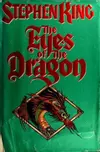
This is a classic fairy tale from the mind of Stephen King. It is easily his most child-appropriate work, and likely one of the first I’ll give to my kids to read when they’re ready for his stuff. It was, afterall, written specifically for his thirteen-year-old daughter who - up to that point - not read any of his work.
The story features familiar names for King fans - Roland the Good and Randall Flagg - in a tale of wrongful conviction, escape, and the retaking of a throne. It definitely gives off some Count of Monte Cristo vibes, but set within King's specific brand of fantasy. It reminded me quite a bit of The Talisman, as well as his much later work, Fairy Tale - which is one of my personal favorites. It’s interesting to see the DNA of his more recent fantasy epics starting right here.
Because it’s earlier King, the prose is quick and clean. It’s an unmuddled story that moves exactly where it needs to go without the sprawling detours he sometimes takes in his later epics. I also have to tip my hat to the narrator, Bronson Pinchot; the atmosphere he created for Flagg's voice was excellent. An all-around enjoyable read.
This is a classic fairy tale from the mind of Stephen King. It is easily his most child-appropriate work, and likely one of the first I’ll give to my kids to read when they’re ready for his stuff. It was, afterall, written specifically for his thirteen-year-old daughter who - up to that point - not read any of his work.
The story features familiar names for King fans - Roland the Good and Randall Flagg - in a tale of wrongful conviction, escape, and the retaking of a throne. It definitely gives off some Count of Monte Cristo vibes, but set within King's specific brand of fantasy. It reminded me quite a bit of The Talisman, as well as his much later work, Fairy Tale - which is one of my personal favorites. It’s interesting to see the DNA of his more recent fantasy epics starting right here.
Because it’s earlier King, the prose is quick and clean. It’s an unmuddled story that moves exactly where it needs to go without the sprawling detours he sometimes takes in his later epics. I also have to tip my hat to the narrator, Bronson Pinchot; the atmosphere he created for Flagg's voice was excellent. An all-around enjoyable read.

Answered a promptWhat books did you read in 2026?


3.75 Stars. This period of historical fiction doesn't usually appeal to me, but I wanted to read an account of historical women's oppression written by a woman.
About 40% of the way through, I noted that the characters weren't quite distinct enough to tell apart. I still think that’s a fair criticism, but I’m pleased to report that the story itself really came into its own after that point. Inspired by true events, this is a tale that cannot be told enough. It’s a stark example of how far we’ve come, but also a reminder of how far we have to go.
Specifically, the way the book handles the "Hysteria" diagnosis of the late 1800s - and how the ruling class used it as an acceptable tool of control - is great food for thought. It's impossible not to draw parallels to modern injustices that are still viewed as "acceptable" by society today.
The story had some solid twists that felt grounded enough to maintain immersion. Overall, it’s a quick read and a powerful reminder of the systems man is capable of building to keep others down.
3.75 Stars. This period of historical fiction doesn't usually appeal to me, but I wanted to read an account of historical women's oppression written by a woman.
About 40% of the way through, I noted that the characters weren't quite distinct enough to tell apart. I still think that’s a fair criticism, but I’m pleased to report that the story itself really came into its own after that point. Inspired by true events, this is a tale that cannot be told enough. It’s a stark example of how far we’ve come, but also a reminder of how far we have to go.
Specifically, the way the book handles the "Hysteria" diagnosis of the late 1800s - and how the ruling class used it as an acceptable tool of control - is great food for thought. It's impossible not to draw parallels to modern injustices that are still viewed as "acceptable" by society today.
The story had some solid twists that felt grounded enough to maintain immersion. Overall, it’s a quick read and a powerful reminder of the systems man is capable of building to keep others down.
