Eric Stone


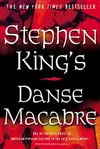
I’m giving this a 4.75. The only reason it isn’t a flat 5 is that I’m not sure I’ll ever do a full re-read, but if that changes, I’ll update this.
I’m not sure what else can be said about this book, but the emotional connection to the characters and the world-building is tremendous. Despite the length, I didn’t feel like a single word was wasted. I loved the format; the way it bounces between the 50s and the 80s is so tightly interwoven that one chapter will end and the next picks it up mid-sentence. Some might find it slow, but I was entirely engaged throughout.
I split this 50/50 between the physical book and the audiobook. This is the first time I’ve ever been so enamored with a narrator that I looked up their other work - Steven Weber is next-level here. If the length intimidates you, go for the audio.
I’ve read 38 of King’s 69 novels, and he might be at his best here from a storytelling perspective. I still prefer The Stand (I’m a sucker for end-of-the-world systems), but the way King transports you back into the mindset of a child is impressive. You feel that hyperfocus where nothing matters but your friends, until something else takes over and that becomes your entire world. The characters are tremendously flawed, and watching them overcome those flaws by focusing on what really matters is deeply satisfying.
I do want to address the "infamous" sewer scene. While I don’t think it’s as vulgar as some suggest, I think the book could have done without it. That said, claiming I know how to craft a story better than King is nonsense. Like the scene itself, I can't quite make sense of it.
Overall, I think I’m better for having read this. I can’t quite put my finger on why yet - something about how childhood is captured in those final pages - but IT hits really hard.
I’m giving this a 4.75. The only reason it isn’t a flat 5 is that I’m not sure I’ll ever do a full re-read, but if that changes, I’ll update this.
I’m not sure what else can be said about this book, but the emotional connection to the characters and the world-building is tremendous. Despite the length, I didn’t feel like a single word was wasted. I loved the format; the way it bounces between the 50s and the 80s is so tightly interwoven that one chapter will end and the next picks it up mid-sentence. Some might find it slow, but I was entirely engaged throughout.
I split this 50/50 between the physical book and the audiobook. This is the first time I’ve ever been so enamored with a narrator that I looked up their other work - Steven Weber is next-level here. If the length intimidates you, go for the audio.
I’ve read 38 of King’s 69 novels, and he might be at his best here from a storytelling perspective. I still prefer The Stand (I’m a sucker for end-of-the-world systems), but the way King transports you back into the mindset of a child is impressive. You feel that hyperfocus where nothing matters but your friends, until something else takes over and that becomes your entire world. The characters are tremendously flawed, and watching them overcome those flaws by focusing on what really matters is deeply satisfying.
I do want to address the "infamous" sewer scene. While I don’t think it’s as vulgar as some suggest, I think the book could have done without it. That said, claiming I know how to craft a story better than King is nonsense. Like the scene itself, I can't quite make sense of it.
Overall, I think I’m better for having read this. I can’t quite put my finger on why yet - something about how childhood is captured in those final pages - but IT hits really hard.

Answered a promptWhat books did you read in 2026?



A classic closed system. In this one, the system is designed specifically to break you. Similar to Wool, the setting itself is the antagonist. Orwell builds a world where the language and the constant surveillance are just as oppressive as the dirt and the lack of resources.
When I read it in high school, I didn't consider it a heavy read. As an adult, I certainly do. In the intervening years, mentioning 1984 in regards to government has gone from tongue-in-cheek to reality. For that reason, the book hits a lot harder for me now. The weight of the institutional oppression is constant - it’s the definitive look at what happens when the rules are designed to be inescapable.
A classic closed system. In this one, the system is designed specifically to break you. Similar to Wool, the setting itself is the antagonist. Orwell builds a world where the language and the constant surveillance are just as oppressive as the dirt and the lack of resources.
When I read it in high school, I didn't consider it a heavy read. As an adult, I certainly do. In the intervening years, mentioning 1984 in regards to government has gone from tongue-in-cheek to reality. For that reason, the book hits a lot harder for me now. The weight of the institutional oppression is constant - it’s the definitive look at what happens when the rules are designed to be inescapable.

I’m giving this five stars, but I’m still a little frustrated by it. This is essentially three distinct books shoved into one 800-page mammoth. Don't get me wrong, it works. I just can’t help but wish Stephenson had given us a trilogy instead. We get a taste of the apocalypse, a taste of things going sideways in orbit, and then a massive jump to how it all shakes out. Seveneves hits fast-forward on some of the most interesting world-building I’ve ever encountered - perhaps to keep the epic scope moving?
I usually prefer a deep dive into a specific system over an expansive narrative, so there were sections here where I felt cheated out of the details. But wanting more is for sure the kind of problem you want to have.
The technical hard sci-fi here is incredible. It’s a closed system with the highest possible stakes - survival is mechanics and perseverance. The way Stephenson handles the "Seven Eves" themselves and the legacy they leave behind is fascinating. This is an absolute must-read for anyone who likes sci-fi that checks all the boxes.
I’m giving this five stars, but I’m still a little frustrated by it. This is essentially three distinct books shoved into one 800-page mammoth. Don't get me wrong, it works. I just can’t help but wish Stephenson had given us a trilogy instead. We get a taste of the apocalypse, a taste of things going sideways in orbit, and then a massive jump to how it all shakes out. Seveneves hits fast-forward on some of the most interesting world-building I’ve ever encountered - perhaps to keep the epic scope moving?
I usually prefer a deep dive into a specific system over an expansive narrative, so there were sections here where I felt cheated out of the details. But wanting more is for sure the kind of problem you want to have.
The technical hard sci-fi here is incredible. It’s a closed system with the highest possible stakes - survival is mechanics and perseverance. The way Stephenson handles the "Seven Eves" themselves and the legacy they leave behind is fascinating. This is an absolute must-read for anyone who likes sci-fi that checks all the boxes.

Answered a promptWhat books did you read in 2026?