
Hernando

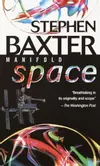
This book can be confusing at times, specially because there are like 5 characters you have to keep track of and they often hop into different planets and star systems without much continuity between them (the characters). So is recommended at least to write down the name of each character and where they are at the moment when reading the book.
It can be also engrossing and slow, mainly because of the above or because the big chunks of Hard SF in each chapter/page.
I would not recommend this book to people who don't have that much of patience for engrossing details or want some more of human drama or a light and easy to follow story because that would be difficult to find in here. It delivered what I was looking for, and I liked it overall.
This book can be confusing at times, specially because there are like 5 characters you have to keep track of and they often hop into different planets and star systems without much continuity between them (the characters). So is recommended at least to write down the name of each character and where they are at the moment when reading the book.
It can be also engrossing and slow, mainly because of the above or because the big chunks of Hard SF in each chapter/page.
I would not recommend this book to people who don't have that much of patience for engrossing details or want some more of human drama or a light and easy to follow story because that would be difficult to find in here. It delivered what I was looking for, and I liked it overall.


3.4 rounded down to 3.0.
The blurb/synopsis of the book is not 100% accurate, actually I would say not even 70% accurate, or did I read another version of the same book?, another manifold maybe?. So just a heads up and don't be mislead by the blurb.
Update: They finally updated the whole blurb.
This guy Malenfant wakes up from coldsleep to find a more advanced world where all the basic needs are covered (health, food, education, etc.), a sort of utopia (for many) and also a creepy world to live in. There is not purpose for the future to come , instead the people just focus in the present as that is what really matters for them.From here until around 150p is worldbuilding, and exploration of this 25th century world, then things start going weird and the book changes completely from what the synopsis actually says.
I could see here Baxter forcing himself from giving loads of info dumps until he couldn't anymore, so this book is not as hard SF as some of his other books and will probably appeal to those who wants something a bit different in that sense, but there are still a lot of Hard SF on it, in the last third specially, just not as much as many are used to when reading him.
This is the first installment of a duology , the second book World Engines: Creator to be published next year, so to describe this first book as a whole I would say it was enjoyable and did not feel I wasted my time.
3.4 rounded down to 3.0.
The blurb/synopsis of the book is not 100% accurate, actually I would say not even 70% accurate, or did I read another version of the same book?, another manifold maybe?. So just a heads up and don't be mislead by the blurb.
Update: They finally updated the whole blurb.
This guy Malenfant wakes up from coldsleep to find a more advanced world where all the basic needs are covered (health, food, education, etc.), a sort of utopia (for many) and also a creepy world to live in. There is not purpose for the future to come , instead the people just focus in the present as that is what really matters for them.From here until around 150p is worldbuilding, and exploration of this 25th century world, then things start going weird and the book changes completely from what the synopsis actually says.
I could see here Baxter forcing himself from giving loads of info dumps until he couldn't anymore, so this book is not as hard SF as some of his other books and will probably appeal to those who wants something a bit different in that sense, but there are still a lot of Hard SF on it, in the last third specially, just not as much as many are used to when reading him.
This is the first installment of a duology , the second book World Engines: Creator to be published next year, so to describe this first book as a whole I would say it was enjoyable and did not feel I wasted my time.

First half of the book is pure gold in an epic scale but I somehow did not like when the handwavium Extra Super FTL hyperdrive appeared, it wasn't that bad to compromise the whole book but I was not expecting that at all. Probably it made sense in some way for the plot but It also made the universe looks like a small city and it sort of broke that sense of wonder you got when you reading about the Ring, super strings, etc.
Apart from that, it could be a full 5 star book.
First half of the book is pure gold in an epic scale but I somehow did not like when the handwavium Extra Super FTL hyperdrive appeared, it wasn't that bad to compromise the whole book but I was not expecting that at all. Probably it made sense in some way for the plot but It also made the universe looks like a small city and it sort of broke that sense of wonder you got when you reading about the Ring, super strings, etc.
Apart from that, it could be a full 5 star book.


I would give it a 4.6 rate and I understand why it is still considered a masterpiece.
The book is quite a slog, very so, but is so unique in itself.
Aside, the way Miller found death and looking at this book and see how he wrote the discussion about euthanasia is indeed staggering. Depression is quite a thing.
The following are probably one of the best lines I've ever read in a SF book:
“
We are the centuries.
We are the chin-choppers and the golly-woppers, and soon we shall discuss the amputation of your head.
We are your singing garbage men, Sir and Madam, and we march in cadence behind you, chanting rhymes that some think odd.
Hut two threep foa!
Left!
Left! He-had-a-good-wife-but-he
Left!
Left!
Left!
Right!
Left!
Wir, as they say in the old country, marschieren weiter wenn alles in Scherben fällt.
We have your eoliths and your mesoliths and your neoliths. We have your Babylons and your Pompeiis, your Caesars and your chromium-plated (vital-ingredient-impregnated) artifacts.
We have your bloody hatchets and your Hiroshimas. We march in spite of Hell, we do– Atrophy, Entropy, and Proteus vulgaris,
telling bawdy jokes about a farm girl name of Eve
and a traveling salesman called Lucifer.
We bury your dead and their reputations.
We bury you. We are the centuries.
Be born then, gasp wind, screech at the surgeon's slap, seek manhood, taste a little of godhood, feel pain, give birth, struggle a little while, succumb:
(Dying, leave quietly by the rear exit, please.)
Generation, regeneration, again, again, as in a ritual, with blood-stained vestments and nail-torn hands, children of Merlin, chasing a gleam. Children, too, of Eve, forever building Edens– and kicking them apart in berserk fury because somehow it isn't the same. (AGH! AGH! AGH!–an idiot screams his mindless anguish amid the rubble. But quickly! let it be inundated by the choir, chanting Alleluias at ninety decibels.)
Hear then, the last Canticle of the Brethren of the Order of Leibowitz, as sung by the century that swallowed its name:
V: Lucifer is fallen.
R: Kyrie eleison.
V: Lucifer is fallen.
R: Christe eleison.
V: Lucifer is fallen.
R: Kyrie eleison, eleison imas!
”
I would give it a 4.6 rate and I understand why it is still considered a masterpiece.
The book is quite a slog, very so, but is so unique in itself.
Aside, the way Miller found death and looking at this book and see how he wrote the discussion about euthanasia is indeed staggering. Depression is quite a thing.
The following are probably one of the best lines I've ever read in a SF book:
“
We are the centuries.
We are the chin-choppers and the golly-woppers, and soon we shall discuss the amputation of your head.
We are your singing garbage men, Sir and Madam, and we march in cadence behind you, chanting rhymes that some think odd.
Hut two threep foa!
Left!
Left! He-had-a-good-wife-but-he
Left!
Left!
Left!
Right!
Left!
Wir, as they say in the old country, marschieren weiter wenn alles in Scherben fällt.
We have your eoliths and your mesoliths and your neoliths. We have your Babylons and your Pompeiis, your Caesars and your chromium-plated (vital-ingredient-impregnated) artifacts.
We have your bloody hatchets and your Hiroshimas. We march in spite of Hell, we do– Atrophy, Entropy, and Proteus vulgaris,
telling bawdy jokes about a farm girl name of Eve
and a traveling salesman called Lucifer.
We bury your dead and their reputations.
We bury you. We are the centuries.
Be born then, gasp wind, screech at the surgeon's slap, seek manhood, taste a little of godhood, feel pain, give birth, struggle a little while, succumb:
(Dying, leave quietly by the rear exit, please.)
Generation, regeneration, again, again, as in a ritual, with blood-stained vestments and nail-torn hands, children of Merlin, chasing a gleam. Children, too, of Eve, forever building Edens– and kicking them apart in berserk fury because somehow it isn't the same. (AGH! AGH! AGH!–an idiot screams his mindless anguish amid the rubble. But quickly! let it be inundated by the choir, chanting Alleluias at ninety decibels.)
Hear then, the last Canticle of the Brethren of the Order of Leibowitz, as sung by the century that swallowed its name:
V: Lucifer is fallen.
R: Kyrie eleison.
V: Lucifer is fallen.
R: Christe eleison.
V: Lucifer is fallen.
R: Kyrie eleison, eleison imas!
”


A classic.
Reading a short stories book can be a roller coaster. The very nature of this kind of books is that more than 50% of the stories must be excellent to keep you reading, otherwise if 2 continuous stories are boring, then is easy to give up on the book.
The thing is, here we have a few weak stories for sure but they are still good, and the good ones, are just top quality SF and I’ll eventually read them again. There was not a single one that did not put my brain to work , I liked that.
This one and Timelike Infinity are my favorites from Baxter.
A classic.
Reading a short stories book can be a roller coaster. The very nature of this kind of books is that more than 50% of the stories must be excellent to keep you reading, otherwise if 2 continuous stories are boring, then is easy to give up on the book.
The thing is, here we have a few weak stories for sure but they are still good, and the good ones, are just top quality SF and I’ll eventually read them again. There was not a single one that did not put my brain to work , I liked that.
This one and Timelike Infinity are my favorites from Baxter.


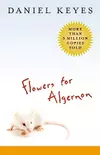


Excelente recuento histórico de la era pre imperial de Roma. Desde Rómulo y los primeros reyes hasta las conquista de Grecia en las batallas macedónicas, alrededor de unos 140 años antes de cristo.
El libro relata de manera entretenida las diferentes guerras que enfrentaron los romanos desde sus inicios, pero no solo eso, sino que también nos brinda una detallada descripción de su armamento y estilo de combate en aquella época, como también de alguno de sus primeros hitos de ingeniería y de la estructura social que gobernaba a la ciudad.
El tiempo abarcado incluye además de su legendaria fundación, y las intermitentes guerras con alguno de los pueblos inmediatos como los Etruscos y Samnitas, las de Pirro y su imperio helenístico, como también el periodo de guerra contra Cartago y Aníbal.
Lo más decepcionante que puedo decir en contra y que definitivamente dañaba un poco la lectura es que el autor en ciertas ocasiones no usa a.C o d.C según convenga, sino que, por el contrario, escribe la fecha tal cual, ejemplo, año 103. En ese punto vas intuyendo que quiere decir a.C, pero se vuelve fastidioso el cambio.
A pesar de eso, el recuento que da Javier Negrete de esta parte de la roma antigua es bastante satisfactoria y elegante.
Excelente recuento histórico de la era pre imperial de Roma. Desde Rómulo y los primeros reyes hasta las conquista de Grecia en las batallas macedónicas, alrededor de unos 140 años antes de cristo.
El libro relata de manera entretenida las diferentes guerras que enfrentaron los romanos desde sus inicios, pero no solo eso, sino que también nos brinda una detallada descripción de su armamento y estilo de combate en aquella época, como también de alguno de sus primeros hitos de ingeniería y de la estructura social que gobernaba a la ciudad.
El tiempo abarcado incluye además de su legendaria fundación, y las intermitentes guerras con alguno de los pueblos inmediatos como los Etruscos y Samnitas, las de Pirro y su imperio helenístico, como también el periodo de guerra contra Cartago y Aníbal.
Lo más decepcionante que puedo decir en contra y que definitivamente dañaba un poco la lectura es que el autor en ciertas ocasiones no usa a.C o d.C según convenga, sino que, por el contrario, escribe la fecha tal cual, ejemplo, año 103. En ese punto vas intuyendo que quiere decir a.C, pero se vuelve fastidioso el cambio.
A pesar de eso, el recuento que da Javier Negrete de esta parte de la roma antigua es bastante satisfactoria y elegante.


