
Katherine


This is a great mystery, and I still adore Ana and Din so much. Malo is a fantastic addition to the cast. What took this down a notch from its predecessor for me was that there were a few moments where Bennett explained things to the reader that didn’t really need to be spelled out like it was, or the character should not have needed prompting to realize. There were also a few things that Ana immediately concluded and I couldn’t figure out why that HAD to be the case. It seemed logical to me there were at least two options, but the book hinged on exactly what Ana presumed being correct. But, like I said, I really enjoyed it and absolutely love the world and characters.
This is a great mystery, and I still adore Ana and Din so much. Malo is a fantastic addition to the cast. What took this down a notch from its predecessor for me was that there were a few moments where Bennett explained things to the reader that didn’t really need to be spelled out like it was, or the character should not have needed prompting to realize. There were also a few things that Ana immediately concluded and I couldn’t figure out why that HAD to be the case. It seemed logical to me there were at least two options, but the book hinged on exactly what Ana presumed being correct. But, like I said, I really enjoyed it and absolutely love the world and characters.


At first, I wasn’t so sure about it. It seemed cute and mildly interesting, with the main character, Scout, being a space-archaeologist with their brother and their cat named Pumpkin who goes to different planets with them. Soon you learn that there is more going on under the surface for Scout and Kieran, and they discover something extremely important for their galaxy. The book isn’t really about that discovery, though. For a book that advertises itself as a cozy sci-fi, it has so much introspection about grief, life, and what it means to live your best life. I’d be lying if I said this didn’t make me cry. It’s not a long book, it’s not complex plot-wise, but it is impactful.
This quote in particular was very meaningful to me, especially at this time in my life.
“It’s so easy, when things don’t go as we planned, to think that we’re a failure. To think that things will never get better… It’s strange what hindsight does. Takes all the layers of emotions and flattens them, turns them either good or bad. It can take time to see the shadows as something beautiful.”
And then later: “What I do know is that I have right now. Only this moment is certain. Only this moment is.”
Live in the moment. Do the best you can. And keep pushing forward.
At first, I wasn’t so sure about it. It seemed cute and mildly interesting, with the main character, Scout, being a space-archaeologist with their brother and their cat named Pumpkin who goes to different planets with them. Soon you learn that there is more going on under the surface for Scout and Kieran, and they discover something extremely important for their galaxy. The book isn’t really about that discovery, though. For a book that advertises itself as a cozy sci-fi, it has so much introspection about grief, life, and what it means to live your best life. I’d be lying if I said this didn’t make me cry. It’s not a long book, it’s not complex plot-wise, but it is impactful.
This quote in particular was very meaningful to me, especially at this time in my life.
“It’s so easy, when things don’t go as we planned, to think that we’re a failure. To think that things will never get better… It’s strange what hindsight does. Takes all the layers of emotions and flattens them, turns them either good or bad. It can take time to see the shadows as something beautiful.”
And then later: “What I do know is that I have right now. Only this moment is certain. Only this moment is.”
Live in the moment. Do the best you can. And keep pushing forward.


This is a strong sequel, but it didn’t have the same captivating energy to me as the first. The storytelling is still very community based, but it’s more straightforward than No Gods, No Monsters. I really like the characters and all of their different motivations- they truly all feel real. I’m fascinated by where this will end up going and I’m sad that my library’s Libby doesn’t have the third book!
This is a strong sequel, but it didn’t have the same captivating energy to me as the first. The storytelling is still very community based, but it’s more straightforward than No Gods, No Monsters. I really like the characters and all of their different motivations- they truly all feel real. I’m fascinated by where this will end up going and I’m sad that my library’s Libby doesn’t have the third book!

TW list at the bottom of the review!
Little Heaven is, as you can guess from the title and genre, a religious horror book. It has a classic setup of a religious commune in the middle of the woods where mysterious and dark things begin to happen. Unfortunately for it, I’ve seen this premise but better before. I’m overall extremely mixed on this one.
Let’s start with some of the negatives. This book is WAY too long. It’s almost 500 pages and it really didn’t need to be. There are two plotlines, one in the past and one in the present. The one in the present… I’m not sure entirely what the point was. I *can* see a thematic purpose, but I’m not sure it was needed. The past plotline contains the meat of the story, but even it has some random side tangents that barely lead anywhere and the payoffs later weren’t worth it. There are some horror elements that are also done a few too many times and explained in similar ways, so it felt repetitive and even started feeling silly in some places. This also happened with some of the more philosophic passages.
I can’t get over the book taking the time to explain the joke “Why was 6 afraid of 7? 789!” Why was that even relevant? I’ve finished the book and can’t tell you, honestly. And why did it need to be explained when that’s a joke that second graders tell each other? Baffling. And don’t get me started on a character calling a bunch of “small brown birds” KITES. My bird nerd brain went ballistic.
Now, onto the positives. Nick Cutter is very talented at writing body horror. It gets visceral reactions from me, which is hard to do- many horror authors don’t get that reaction. Some of the horror scenes were fantastic in their portrayal. It’s unfortunate they were so spread out or repetitive. There are also some good passages reflecting on the root of evil, what it means to be evil, etc. I thought the characters of Minerva, Ebenezer, and Micah were quite compelling. Each of them had their own struggles with morality and interesting ideas on what is and is not moral. The book really fleshed them out. Speaking of flesh, Amos Flesher, the leader of the commune, was also a fascinating figure in all of this, though unfortunately I think religious horror media often has this exact type of character. For the plot, while I thought it was much too long and similar to those I’ve seen before, there are some moments that genuinely surprised me. The reveal at the end is quite different, and it doesn’t give you the answers you may want.
However, I’d have to say to give this one a pass. If you really like religious horror with philosophical musings and don’t mind the book dragging in some areas, it does have good moments. Unfortunately, it’s dragged down by its length, the premise being so similar to so many others, and how repetitive it could feel.
TWs: Animal body horror, human body horror, suicide attempts, traumatic child death, child abuse, abuse of disabled children, religious abuse, homophobia (slurs), racism (slurs), misogyny (one character POV in particular), SA, extreme torture, mention of animal cruelty, mass murder
TW list at the bottom of the review!
Little Heaven is, as you can guess from the title and genre, a religious horror book. It has a classic setup of a religious commune in the middle of the woods where mysterious and dark things begin to happen. Unfortunately for it, I’ve seen this premise but better before. I’m overall extremely mixed on this one.
Let’s start with some of the negatives. This book is WAY too long. It’s almost 500 pages and it really didn’t need to be. There are two plotlines, one in the past and one in the present. The one in the present… I’m not sure entirely what the point was. I *can* see a thematic purpose, but I’m not sure it was needed. The past plotline contains the meat of the story, but even it has some random side tangents that barely lead anywhere and the payoffs later weren’t worth it. There are some horror elements that are also done a few too many times and explained in similar ways, so it felt repetitive and even started feeling silly in some places. This also happened with some of the more philosophic passages.
I can’t get over the book taking the time to explain the joke “Why was 6 afraid of 7? 789!” Why was that even relevant? I’ve finished the book and can’t tell you, honestly. And why did it need to be explained when that’s a joke that second graders tell each other? Baffling. And don’t get me started on a character calling a bunch of “small brown birds” KITES. My bird nerd brain went ballistic.
Now, onto the positives. Nick Cutter is very talented at writing body horror. It gets visceral reactions from me, which is hard to do- many horror authors don’t get that reaction. Some of the horror scenes were fantastic in their portrayal. It’s unfortunate they were so spread out or repetitive. There are also some good passages reflecting on the root of evil, what it means to be evil, etc. I thought the characters of Minerva, Ebenezer, and Micah were quite compelling. Each of them had their own struggles with morality and interesting ideas on what is and is not moral. The book really fleshed them out. Speaking of flesh, Amos Flesher, the leader of the commune, was also a fascinating figure in all of this, though unfortunately I think religious horror media often has this exact type of character. For the plot, while I thought it was much too long and similar to those I’ve seen before, there are some moments that genuinely surprised me. The reveal at the end is quite different, and it doesn’t give you the answers you may want.
However, I’d have to say to give this one a pass. If you really like religious horror with philosophical musings and don’t mind the book dragging in some areas, it does have good moments. Unfortunately, it’s dragged down by its length, the premise being so similar to so many others, and how repetitive it could feel.
TWs: Animal body horror, human body horror, suicide attempts, traumatic child death, child abuse, abuse of disabled children, religious abuse, homophobia (slurs), racism (slurs), misogyny (one character POV in particular), SA, extreme torture, mention of animal cruelty, mass murder
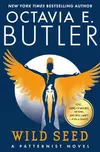
There isn’t much I can say that would really dive into this book the way it deserves. I’m not a literary analyst, but I’ll definitely seek out some essays or analyses of this so I can even begin to unravel and put words to the thoughts I have. This is a heavy book. There are so many layers to it. There are themes dealing with slavery, what it means to be human, how power affects people, loneliness, loss, the desire to have a community, feminism, and so, so much more. A surface level reading of this book doesn’t do it justice. This is my favorite book that I’ve read of Butler’s so far- it’s incredibly powerful with its ideas while simultaneously not feeling like it was hitting me over the head with it. I was left with chills at the ending, somehow both positive and negative, and I am left with so much to think about and consider with my head spinning from just how much Butler managed to say in just shy of 300 pages.
There isn’t much I can say that would really dive into this book the way it deserves. I’m not a literary analyst, but I’ll definitely seek out some essays or analyses of this so I can even begin to unravel and put words to the thoughts I have. This is a heavy book. There are so many layers to it. There are themes dealing with slavery, what it means to be human, how power affects people, loneliness, loss, the desire to have a community, feminism, and so, so much more. A surface level reading of this book doesn’t do it justice. This is my favorite book that I’ve read of Butler’s so far- it’s incredibly powerful with its ideas while simultaneously not feeling like it was hitting me over the head with it. I was left with chills at the ending, somehow both positive and negative, and I am left with so much to think about and consider with my head spinning from just how much Butler managed to say in just shy of 300 pages.