
Joan Kessler


Maria Olon Tsaroucha fuses Method acting with quantum physics in her dynamic system of Perceptual Acting and Directing. She offers exercises for the actor to use in cultivating awareness to deepen the conscious connection with the character and all its possible iterations, making space for the actor to perform with present moment awareness. Recommended for readers with a basic understanding of quantum and meta-physics.


A fun adventure mystery with delightful illustrations. I loved learning about the real Lady Spies. The book design is lots of fun, too; black and white illustrations with a feature color (in this case yellow). And this story features the fabulous Josephine Baker! I would have loved this as a young reader. I'm looking forward to more spy shenanigans!
This book was great fun, a fairytale told out of order and filled with rich nonsense and wisdom. The author speaks directly to the reader, much like A. A. Milne's Winne-the-Pooh, adding to the whimsy. The absurd, magical chaos is reminiscent of Terry Pratchett. The whole thing is silly, charming, and deeply tender.


Ferris is a delightful read. The story is at turns funny, real, and touching, balancing magical realism with emotional anchors. It reminded me of Capra's screwball film, You Can't Take It With You. Each member of the family is quirky in their own way, which can sometimes (and hilariously) test the limits. But, ultimately, they are held together by love.


NB: I read the 10th Anniversary Edition.
There's a hum that happens inside my head when I hit a certain writing rhythm, a certain speed. When laying track goes from feeling like climbing a mountain on my hands and knees to feeling like flying effortlessly through the air. Like breaking the sound barrier. Everything inside me just shifts. I break the writing barrier. And the feeling of laying track changes, transforms, shifts from exertion into exultation.
- Shonda Rhimes


If you're looking for action, suspense, and high-octane thrills, this author is not for you. But if you appreciate or need space to think, to wonder, to consider even the everyday goings-on of life, then McCall Smith will give you that. His worlds are populated with characters who think about what they're doing and make a regular practice of philosophical musings, alone or with others. The team handle the odd cases that other departments won't handle. A fun, restful read with humor and humanity.

I was looking forward to this read. Here's what I liked: chuckle-worthy sarcasm and well-defined characters. Verne doesn't shy away from caricatures of the Gun Club members or the Frenchman Ardan. The over-the-top characters are a perfect complement to the fantastical idea of traveling to the moon in 1865. Verne is certainly imaginative, and I like getting a past perspective of what would become future events, even, or especially, if they are wildly off the mark.
However, Verne leans far too heavily on science and math in an effort to make his fantasy believable. He describes feats of engineering in such detail, as well as mathematical calculations and lists of longitudes and latitudes, that story becomes secondary, and reading becomes tedious. In the words of Michel Ardan (in the accompanying story, 'Around the Moon'), "Ouf! …Speak plainly, you algebraic man!" I admit to much skimming. But high marks for imagination and enthusiasm.


This was a fun story. Book twelve in a series, but the first one I read. Speaks to being different, learning to fit in, and learning to accept differences. Harris and Roxy teach Zeke, their friend from another planet, about fun winter activities while dealing with neighborhood bullies. Zeke uses his alien powers to counteract the tricks the bullies play. Looks like a fun series.


I found 13 Nancy Drew books at my local library's book sale. It's fun to revisit these stories. I used to think that Nancy was perfect, but on this reread, I was surprised at the pleasure she took in knocking the Tophams off their pedestal. And of course in the series she trespasses and breaks into places. For a well brought-up girl who is generally polite and kind, she shows her flaws, anchored in her desire for justice. Of course, this series isn't about character arc. It's all about solving mysteries with an amateur detective, and in that light, Nancy is clever, daring, and diligent. She's a wonderful role model for young readers. While the writing may be dated, it was still a fun read.


Really enjoyed this book (my copy has the Rebecca Cobb cover illustration). I didn't know it was the second book in a series when I bought it, but I didn't feel that I was missing anything or had to get caught up with the first book. Not that I don't want to read it now! The characters are lively and the story vivid and exciting. Blyton uses the omniscient style (head-hopping by today's standards), but it really doesn't matter because the story is engaging and well-paced.
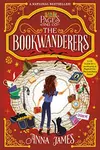

'The Bookwanderers' is a delightful fantasy, the dream of every book lover. Set in the cozy world of a bookshop home and secret libraries, we learn of the extraordinary ability of some readers to transport themselves inside the books they read, and the surprising and sometimes dangerous consequences of doing so, all while exploring the importance of stories. It's a middle-grade version of H. G. Parry's 'The Unlikely Escape of Uriah Heep'. A wonderful read!


A fun story set in a rich world. I liked the world building (and would have liked even more about Lebanese food). It tics the boxes, especially for fans of wizarding stories. There were a few instances where things happened off-page and seemed to be added later for convenience. But overall, a fresh new fantasy world for readers to explore.


A mostly delightful story (child-me would have been put off by the amount of violence; even adult-me was a bit surprised) that breezes along with wit and whimsy. I'm always curious when stories change medium. I love to see what writers used and what they discarded or changed from the book to create the screen version. (The first film version was the 1910 silent short film, followed by a few silent versions of other Oz stories before the famous the 1939 adaptation). The storytelling style and illustrations whisk the reader to another time (and, of course, place!)
N. B. The version I read was The Wonderful Wizard of Oz (Deluxe Hardcover Edition): Featuring a Debossed Cover with 3-Color Foil and Illustrated by W.W. Denslow, not found in this database.


I enjoyed this over the top, campy caper, mostly because of my theatre background. It wasn't a particularly clever whodunnit mystery, but it was fast-paced and entertaining. I liked the split narrative, text chains, & newspaper articles. Recommended for people who enjoy theatrics & occasional racy dialogue.


{ARC}
This book is an absolute delight. Arnott takes us through the stages of his life, from his first theatre experience in childhood, to learning stage management, to working in the West End. The writing flows with ease and wit, and you feel you are being given a backstage tour with VIP access. "Beginners to the Stage, Please" is a must-read for anyone interested in a life in the theatre.


A story about an unexpected friendship. Bean has no trouble expressing herself using her vast vocabulary of name-calling, and she loves a good gag. She reminds me of a slightly older Junie B. Jones. Ivy has her own secret plans for empowerment. Bean is the doer; Ivy is the thinker. Both are imaginative. This story brought to mind my latch-key days when our neighborhood was my backyard. And the worm scene gave me flashbacks to the book, "How to Eat Fried Worms," which our teacher read to us in fourth grade. Wrongs do not go unpunished, and I appreciate the parent who remembers what it's like to pretend, but also sets some ground rules. Love the cover illustration.


"The Secret Dead Club" is a well-paced story of friendship, acceptance, and found family. The ghostly scene is set in the opening pages, and stays with you. This is a properly spooky story, and it kept me reading 'just one more chapter' before going to bed. It probably would have scared me silly when I was ten, but I truly enjoyed this read.


An abundance of humorous asides, moral musings, and gentle wisdom make this a delightful read. A protagonist who finds herself following quiet streams of thought and who considers all sides of a situation equally is a mental refresher. There is quiet relief in having the space to think, and especially so when that space is in Scotland.