
Karen


Sitting down to read THE FORSAKEN (late to the party as usual), wasn't at all sure what to expect. The blurb explains that for ten years, Logan Booth, served as a contract killer for the CIA, never knowing that was what he was doing. Finding out he wasn't a rogue hitman for a band of vigilantes, but rather a means by which governments of the USA furthered their own interests is .. well it's a lot. Starting out reading a book about somebody who is fine with the killing bit, but very particular about the motivation element is something to think about.
Although to be honest, thinking about motivations, morals, rights and wrongs, became somewhat secondary to the wild, bare-knuckle, no holds barred, violent, extreme and, uncomfortably horribly train wreck that became an equally uncomfortably enjoyable crazy ride, that is Logan Booth, and just about everybody who comes into contact with him.
Don't get me wrong - this is NOT a novel for the squeamish, or violence intolerant. It's also not a novel that's necessarily going to drag readers into deep contemplation of human nature and the choices we make. Only, it kind of is that latter bit. You can "get" how it would be that somebody who thought they were a lone-wolf, vigilante killer with a "reason" for the job, might be more than a bit miffed to discover that a government was pulling the strings. Grey, faceless, suit wearing, desk sitting behind men who were simply powering through anybody or anything that they felt was in the road of their aims and machinations. It's easy to see how that would screw up your head just a little, and acceptance of that is helped by Logan Booth being a great character. Superhuman freaky violent, dangerous, utterly controlled and clear headed about what he's doing, he's also oblivious to pain, mad, bad, and more than a bit crazy, alcoholic and suicidal, and he's had a lot going on. So he's not at all pleased when people won't just bugger off and leave him alone. Then, they murder his oldest, only really, friend and the switch from despair to fury saves him, although it makes life very short for a lot of other people.
Picking up a most unexpected ally along the way in the person of homeless, crack addict, Alice Mason, Booth starts out avenging his friend's death, making sure that whoever killed him doesn't get Alice as well, and generally dishing out a bit of vengeance and justice for everybody and everything, before he finds himself chasing corruption, money, influence and rotten power into a lot of dark corners. All while facing the same sort of demons he's insisting Alice front up to as well.
As weird as this sounds, this was a thoroughly enjoyable, absolutely engaging, enthralling, extremely violent, over the top thriller with great characters and a core of humanity in amongst the blood, sweat, flying teeth, gunshots, broken bones, flying bodies, falling bodies, tripped over bodies, and corruption. As always it comes down to corruption and the pursuit of money.
Originally posted at www.austcrimefiction.org.
Sitting down to read THE FORSAKEN (late to the party as usual), wasn't at all sure what to expect. The blurb explains that for ten years, Logan Booth, served as a contract killer for the CIA, never knowing that was what he was doing. Finding out he wasn't a rogue hitman for a band of vigilantes, but rather a means by which governments of the USA furthered their own interests is .. well it's a lot. Starting out reading a book about somebody who is fine with the killing bit, but very particular about the motivation element is something to think about.
Although to be honest, thinking about motivations, morals, rights and wrongs, became somewhat secondary to the wild, bare-knuckle, no holds barred, violent, extreme and, uncomfortably horribly train wreck that became an equally uncomfortably enjoyable crazy ride, that is Logan Booth, and just about everybody who comes into contact with him.
Don't get me wrong - this is NOT a novel for the squeamish, or violence intolerant. It's also not a novel that's necessarily going to drag readers into deep contemplation of human nature and the choices we make. Only, it kind of is that latter bit. You can "get" how it would be that somebody who thought they were a lone-wolf, vigilante killer with a "reason" for the job, might be more than a bit miffed to discover that a government was pulling the strings. Grey, faceless, suit wearing, desk sitting behind men who were simply powering through anybody or anything that they felt was in the road of their aims and machinations. It's easy to see how that would screw up your head just a little, and acceptance of that is helped by Logan Booth being a great character. Superhuman freaky violent, dangerous, utterly controlled and clear headed about what he's doing, he's also oblivious to pain, mad, bad, and more than a bit crazy, alcoholic and suicidal, and he's had a lot going on. So he's not at all pleased when people won't just bugger off and leave him alone. Then, they murder his oldest, only really, friend and the switch from despair to fury saves him, although it makes life very short for a lot of other people.
Picking up a most unexpected ally along the way in the person of homeless, crack addict, Alice Mason, Booth starts out avenging his friend's death, making sure that whoever killed him doesn't get Alice as well, and generally dishing out a bit of vengeance and justice for everybody and everything, before he finds himself chasing corruption, money, influence and rotten power into a lot of dark corners. All while facing the same sort of demons he's insisting Alice front up to as well.
As weird as this sounds, this was a thoroughly enjoyable, absolutely engaging, enthralling, extremely violent, over the top thriller with great characters and a core of humanity in amongst the blood, sweat, flying teeth, gunshots, broken bones, flying bodies, falling bodies, tripped over bodies, and corruption. As always it comes down to corruption and the pursuit of money.
Originally posted at www.austcrimefiction.org.


BROKE ROAD is the follow up to the excellent BLACK RIVER, the opening salvo in the series, featuring the determined and dedicated DS Rose Riley, journalist Adam Beaumont, and a serial killer that didn't make this reviewer want to chuck that first book against a wall, hard.
Riley is back, with her sidekick Priya Patel, and Beaumont, this time in the wine tourism area of the Hunter Valley around Cessnock when a young woman is found dead in an isolated new townhouse, by her husband late one night. No forced entry and no signs of a struggle means that the husband is obviously suspect number one, and whilst a local tabloid journalist is busy spinning her own story about all of that, Riley is questioning everything and everybody. When Beaumont arrives on scene they slip back into the sort of working relationship that opened up in the first novel, collaborative without being unbelievable, cautious and friendly, Riley, Patel and Beaumont are joined by a local cop this time, in an investigation that takes some most unexpected turns along the way.
There are quite a few references back to the earlier novel, particularly in terms of how these three main characters met, and developed the friendship that they have. This novel also looks back a little further at Riley's own childhood, in this region, on a farm that was marginal, before the wine industry moved in and turned the place into a tourism mecca. There are nice touches of the clash between the old and the new, the old pub where Beaumont finds himself staying, compared to the swish new, hands off model motel where the women are staying. The older residents, many of whom have now found work, for the incomers, the big winemakers, the restaurateurs and the entrepreneurs. The differences between the region midweek and weekends when the tourists arrive, and finally the tension between the mining industry and the winemakers, something reflected in the household of the dead woman who worked in PR and marketing for the wine industry, and her coal mining geologist husband.
Whilst there is a lot going on locally, including some hefty doses of corruption involving some of those wealthy incomers, the police and the local media, the investigation finds tentacles outside the area - to Adelaide, Canberra and potentially other locations, and it's those leads that flush out some complicated connections. To say nothing of the goings on at the motel where RIley and Patel are staying. All of which makes up for a wild ride of a read, which for this reviewer, was basically a one sitting inhalation.
The balance between personal and professional here is great, as is the sheer slog of detective work, analysis and thinking outside the box that goes towards an investigation that could easily have got bogged in the local. The characters are great - flawed but not overtly so, dedicated, determined, and a bit messy along the way, these three are a great, and surprisingly believable team, given we're talking a journo and a couple of cops. The friendship is well portrayed, the interactions really fun to read, and the sense of place well executed.
Wine growing areas, where the tourists and the developers arrive in a landscape that's originally settled into marginal farming, with old families, old connections, and many layers of stories make for an interesting place to set a story that's about the murder of an incomer, a woman who on the face of it had no reason to die. Take that idyllic place, and stick in an undercurrent of sick, perverted weirdo's and you've got a well executed, disquieting novel that works on a number of levels.
NOTE: For the American audience that this has obviously been "edited" for - Shoes and Tires would be Shoes and Tyres here / for local audiences if you do happen to come across that edition, the shoes aren't looking for a lie in.... (Why publishers do this is beyond me, I mean we can "translate" the reverse - seems a bit disrespectful to suggest your reader's can't do the same ... ).
Originally posted at www.austcrimefiction.org.
BROKE ROAD is the follow up to the excellent BLACK RIVER, the opening salvo in the series, featuring the determined and dedicated DS Rose Riley, journalist Adam Beaumont, and a serial killer that didn't make this reviewer want to chuck that first book against a wall, hard.
Riley is back, with her sidekick Priya Patel, and Beaumont, this time in the wine tourism area of the Hunter Valley around Cessnock when a young woman is found dead in an isolated new townhouse, by her husband late one night. No forced entry and no signs of a struggle means that the husband is obviously suspect number one, and whilst a local tabloid journalist is busy spinning her own story about all of that, Riley is questioning everything and everybody. When Beaumont arrives on scene they slip back into the sort of working relationship that opened up in the first novel, collaborative without being unbelievable, cautious and friendly, Riley, Patel and Beaumont are joined by a local cop this time, in an investigation that takes some most unexpected turns along the way.
There are quite a few references back to the earlier novel, particularly in terms of how these three main characters met, and developed the friendship that they have. This novel also looks back a little further at Riley's own childhood, in this region, on a farm that was marginal, before the wine industry moved in and turned the place into a tourism mecca. There are nice touches of the clash between the old and the new, the old pub where Beaumont finds himself staying, compared to the swish new, hands off model motel where the women are staying. The older residents, many of whom have now found work, for the incomers, the big winemakers, the restaurateurs and the entrepreneurs. The differences between the region midweek and weekends when the tourists arrive, and finally the tension between the mining industry and the winemakers, something reflected in the household of the dead woman who worked in PR and marketing for the wine industry, and her coal mining geologist husband.
Whilst there is a lot going on locally, including some hefty doses of corruption involving some of those wealthy incomers, the police and the local media, the investigation finds tentacles outside the area - to Adelaide, Canberra and potentially other locations, and it's those leads that flush out some complicated connections. To say nothing of the goings on at the motel where RIley and Patel are staying. All of which makes up for a wild ride of a read, which for this reviewer, was basically a one sitting inhalation.
The balance between personal and professional here is great, as is the sheer slog of detective work, analysis and thinking outside the box that goes towards an investigation that could easily have got bogged in the local. The characters are great - flawed but not overtly so, dedicated, determined, and a bit messy along the way, these three are a great, and surprisingly believable team, given we're talking a journo and a couple of cops. The friendship is well portrayed, the interactions really fun to read, and the sense of place well executed.
Wine growing areas, where the tourists and the developers arrive in a landscape that's originally settled into marginal farming, with old families, old connections, and many layers of stories make for an interesting place to set a story that's about the murder of an incomer, a woman who on the face of it had no reason to die. Take that idyllic place, and stick in an undercurrent of sick, perverted weirdo's and you've got a well executed, disquieting novel that works on a number of levels.
NOTE: For the American audience that this has obviously been "edited" for - Shoes and Tires would be Shoes and Tyres here / for local audiences if you do happen to come across that edition, the shoes aren't looking for a lie in.... (Why publishers do this is beyond me, I mean we can "translate" the reverse - seems a bit disrespectful to suggest your reader's can't do the same ... ).
Originally posted at www.austcrimefiction.org.

I WILL FIND THE KEY is one of those random choices that a reader browsing the library's audio book selection late at night can make, with absolutely no idea what they are getting into, or even why the choice was made.
Set in Sweden, the story features a private investigator by the name of Julia Stark, who has a physical disability that, to be honest, I never really did quite get to the bottom of how or when it occurred. But she has a lot of stuff going on, not the least of which is a cop ex-husband, who happily takes time off work to help her out particularly in the case in this novel. The case is also a lot (there's a theme building here), with a man appearing at the door of Stark's business unannounced, clutching his phone, containing a photo of a battered man, tied up with a bag over his head.
He wants Stark to find out if he killed this man. Whoever he is. The client is the owner of a very successful family business, based in a remote part of northwest Sweden, with a well known propensity to drink to excess. He's woken the morning after a company board meeting and gathering of most of the family, to discover the photo, which leads to Julia and her ex - Sidney Mendelson, staying at the remote, opulent family home, with a remote, opulent and decidedly weird family dynamic being played out in front of them.
I WILL FIND THE KEY did manage to invoke a lot of reactions in this reader - some of them positive / some of them very negative. There was a lot happening, and it seemed somewhat disjointed at points - granted I was listening to the audio of it, and it might be that I zoned out sometimes, but there were the longest periods when I really wasn't sure if I'd missed something vital. Something about Stark and Mendelson's marriage, and why she was hoping to win him back. And exactly how her disability happened I never quite got clear in my own head, but then I'm pretty sure I'd zoned out because that subject came up quite a bit, as did the weirdness of the family, the opulence, the drinking, the food, the interpersonal clashes, the weirdness, the missing, the past, the future, the business, often seemingly more than that thing about who the man with the bag on his head was, and if he was actually alive.
Of course it's always tricky to write a slightly prickly central character and I'm pretty sure Julia Stark has been set up to be the "bad" to Sidney Mendelson's "good", although to be frank from the sounds of the marriage breakdown I'm not sure I'd go along with that. Or maybe I would, but really I'm on board with the idea that a prickly woman who experiences a major life change and is in a fair amount of pain and restriction as a result, can be a bit grouchy about that without it being a "bad" thing. There were times when I thought she was a great character though, and there were times when I wanted to be anywhere but in her company, so it was a lot, and a bit tricky to get a handle on. Mind you, Mendelson's "wry tolerance" could annoy readers as well.
Either way I suspect this will be the sort of novel that could polarise readers into "loved it" and "loathed it" camps or simply create a wishy washy middle ground, which is where I'm currently located. Didn't loathe it, didn't love it, would probably pick up another novel in the series if there was nothing else within easy reach.
** After finishing it, I went on a bit of a fact finding mission and it turns out the author, Alex Ahndoril, is a new collaboration for Alexander Ahndoril and Alexandra Coelho Ahndoril, who it further was revealed are the pairing behind the better known name Lars Kepler.
Originally posted at www.austcrimefiction.org.
I WILL FIND THE KEY is one of those random choices that a reader browsing the library's audio book selection late at night can make, with absolutely no idea what they are getting into, or even why the choice was made.
Set in Sweden, the story features a private investigator by the name of Julia Stark, who has a physical disability that, to be honest, I never really did quite get to the bottom of how or when it occurred. But she has a lot of stuff going on, not the least of which is a cop ex-husband, who happily takes time off work to help her out particularly in the case in this novel. The case is also a lot (there's a theme building here), with a man appearing at the door of Stark's business unannounced, clutching his phone, containing a photo of a battered man, tied up with a bag over his head.
He wants Stark to find out if he killed this man. Whoever he is. The client is the owner of a very successful family business, based in a remote part of northwest Sweden, with a well known propensity to drink to excess. He's woken the morning after a company board meeting and gathering of most of the family, to discover the photo, which leads to Julia and her ex - Sidney Mendelson, staying at the remote, opulent family home, with a remote, opulent and decidedly weird family dynamic being played out in front of them.
I WILL FIND THE KEY did manage to invoke a lot of reactions in this reader - some of them positive / some of them very negative. There was a lot happening, and it seemed somewhat disjointed at points - granted I was listening to the audio of it, and it might be that I zoned out sometimes, but there were the longest periods when I really wasn't sure if I'd missed something vital. Something about Stark and Mendelson's marriage, and why she was hoping to win him back. And exactly how her disability happened I never quite got clear in my own head, but then I'm pretty sure I'd zoned out because that subject came up quite a bit, as did the weirdness of the family, the opulence, the drinking, the food, the interpersonal clashes, the weirdness, the missing, the past, the future, the business, often seemingly more than that thing about who the man with the bag on his head was, and if he was actually alive.
Of course it's always tricky to write a slightly prickly central character and I'm pretty sure Julia Stark has been set up to be the "bad" to Sidney Mendelson's "good", although to be frank from the sounds of the marriage breakdown I'm not sure I'd go along with that. Or maybe I would, but really I'm on board with the idea that a prickly woman who experiences a major life change and is in a fair amount of pain and restriction as a result, can be a bit grouchy about that without it being a "bad" thing. There were times when I thought she was a great character though, and there were times when I wanted to be anywhere but in her company, so it was a lot, and a bit tricky to get a handle on. Mind you, Mendelson's "wry tolerance" could annoy readers as well.
Either way I suspect this will be the sort of novel that could polarise readers into "loved it" and "loathed it" camps or simply create a wishy washy middle ground, which is where I'm currently located. Didn't loathe it, didn't love it, would probably pick up another novel in the series if there was nothing else within easy reach.
** After finishing it, I went on a bit of a fact finding mission and it turns out the author, Alex Ahndoril, is a new collaboration for Alexander Ahndoril and Alexandra Coelho Ahndoril, who it further was revealed are the pairing behind the better known name Lars Kepler.
Originally posted at www.austcrimefiction.org.

The second in the series, THE SUNBAKER is another one of those novels that could be read as a standalone, but add THE BEACON to your reading list anyway. For those that haven't yet had the pleasure, Jack Harris, disgraced son of a "major" media baron, was sidelined to the stable's least important paper - The Beacon - located in Byron Bay which turned into a happy career and personal move in the first novel. Caitlin is the lawyer daughter of the longtime, much admired editor of the paper, who met a very grisly end in that story, and she and Jack teamed up to solve that case, forming a firm friendship with a sprinkling of romantic attachment.
Fast forward to this second novel and Jack's ensconced as a journo in Byron Bay, and Caitlin's moved from her high-powered Sydney based job to work as a legal assistant to a local barrister. A high flyer in his own right, this barrister has some very dodgy clients, not that Caitlin has come across any of them. Fast forward a bit more, and local pathologist Nicola Fox heads out from Byron to her holiday home in Brunswick Heads only to discover a staged corpse lounging in a deck chair by her pool which, conveniently, points the finger of initial suspicion directly at her, but why are the organised crime squad suddenly in the picture?
There's a quote on the novel cover from William McInnes
'P.A. Thomas has a clinician's mind, a photographer's eye and the gift of great storytelling. A wonderful book'.
Given that the author has trained as a nuclear medicine specialist he does bring that clinician's mind to these novels. It's evident in the romantic frisson between the two main characters - Jack and Caitlin, prompted by medical complications. Making the romantic tension less will they / won't they and more can they? Then there's the prologue that comes with the sort of black humour that will undoubtedly ring bells with medical and ancillary support staff. Given that this is, though, the story of a series of bizarrely staged deaths, medical and forensic viewpoints are a big part of the picture, as is location and the people that keep popping up in unexpected places. This reviewer chooses to put the lock picking, housebreaking and hacking undertaken by Jack and his lifelong best friend Ricky down to that storytelling gift though.
The photographer's eye comes out in the sense of place, and the observational details scattered throughout the book. Whilst the main location for "The Beacon" newspaper and the cast of characters is Byron Bay, the crime all seems to be happening in Brunswick Heads. This gives the author a chance to draw a picture of tourist town Byron versus quiet, locals mostly, Bruns. There's a sense that crime would never happen in Bruns, and when it does, the laid back nature of the place reveals itself in the slightly haphazard observations of goings on. It also gives Thomas a chance to introduce a supporting cast of a Marilyn Monroe look-alike, way too many bands playing Simon and Garfunkel covers, and a persistent bin chicken.
Mind you, there's also the imposed humour of Caitlin's wish-list of daring doings, way too many of which require a head for heights, which Jack most definitely does not have. And then there's the distinct possibility that Jack's developing a thing for pathologist and prime suspect Nicola, which is pushing more than one or two of Caitlin's buttons.
It sounds like a lot but Thomas most definitely has a gift for storytelling. It's rollicking, fast paced, serving up of twists and turns, delivering a roller coaster of a reading ride with no sign of second novel jitters. The characterisations are great, the romantic tension believable and not at all offputting, and it's peppered with sly humour and clever hook lines. THE SUNBAKER bodes well for the life of an ongoing, long-running series.
Originally posted at www.austcrimefiction.org.
The second in the series, THE SUNBAKER is another one of those novels that could be read as a standalone, but add THE BEACON to your reading list anyway. For those that haven't yet had the pleasure, Jack Harris, disgraced son of a "major" media baron, was sidelined to the stable's least important paper - The Beacon - located in Byron Bay which turned into a happy career and personal move in the first novel. Caitlin is the lawyer daughter of the longtime, much admired editor of the paper, who met a very grisly end in that story, and she and Jack teamed up to solve that case, forming a firm friendship with a sprinkling of romantic attachment.
Fast forward to this second novel and Jack's ensconced as a journo in Byron Bay, and Caitlin's moved from her high-powered Sydney based job to work as a legal assistant to a local barrister. A high flyer in his own right, this barrister has some very dodgy clients, not that Caitlin has come across any of them. Fast forward a bit more, and local pathologist Nicola Fox heads out from Byron to her holiday home in Brunswick Heads only to discover a staged corpse lounging in a deck chair by her pool which, conveniently, points the finger of initial suspicion directly at her, but why are the organised crime squad suddenly in the picture?
There's a quote on the novel cover from William McInnes
'P.A. Thomas has a clinician's mind, a photographer's eye and the gift of great storytelling. A wonderful book'.
Given that the author has trained as a nuclear medicine specialist he does bring that clinician's mind to these novels. It's evident in the romantic frisson between the two main characters - Jack and Caitlin, prompted by medical complications. Making the romantic tension less will they / won't they and more can they? Then there's the prologue that comes with the sort of black humour that will undoubtedly ring bells with medical and ancillary support staff. Given that this is, though, the story of a series of bizarrely staged deaths, medical and forensic viewpoints are a big part of the picture, as is location and the people that keep popping up in unexpected places. This reviewer chooses to put the lock picking, housebreaking and hacking undertaken by Jack and his lifelong best friend Ricky down to that storytelling gift though.
The photographer's eye comes out in the sense of place, and the observational details scattered throughout the book. Whilst the main location for "The Beacon" newspaper and the cast of characters is Byron Bay, the crime all seems to be happening in Brunswick Heads. This gives the author a chance to draw a picture of tourist town Byron versus quiet, locals mostly, Bruns. There's a sense that crime would never happen in Bruns, and when it does, the laid back nature of the place reveals itself in the slightly haphazard observations of goings on. It also gives Thomas a chance to introduce a supporting cast of a Marilyn Monroe look-alike, way too many bands playing Simon and Garfunkel covers, and a persistent bin chicken.
Mind you, there's also the imposed humour of Caitlin's wish-list of daring doings, way too many of which require a head for heights, which Jack most definitely does not have. And then there's the distinct possibility that Jack's developing a thing for pathologist and prime suspect Nicola, which is pushing more than one or two of Caitlin's buttons.
It sounds like a lot but Thomas most definitely has a gift for storytelling. It's rollicking, fast paced, serving up of twists and turns, delivering a roller coaster of a reading ride with no sign of second novel jitters. The characterisations are great, the romantic tension believable and not at all offputting, and it's peppered with sly humour and clever hook lines. THE SUNBAKER bodes well for the life of an ongoing, long-running series.
Originally posted at www.austcrimefiction.org.

Wellington, 1923, and a sixty-year-old woman hangs herself in a scullery; ten years later another woman ‘falls’ from the second floor of a Taranaki tobacconist; soon afterwards a young mother in Taumarunui slices the throat of her newborn with a cleaver.
What connects these women, and the short, pointed tales in FOX SPIRIT IN A DISTANT LAND is that all these women are part of the Chinese diaspora in New Zealand, and all the stories are inspired by real events. Murray has chosen to explore these stories of violent crimes, by and towards a number of woman using a combination of styles: biography, mythology, horror and poetry, using, as a connecting thread, the mythological Chinese nine-tailed fox.
Harrowing, and yet beautiful, this is the story of foul play at it's most confrontational, death by others and own hands, the brevity of this collection is part of its strength, and in a weird way, it's saving grace. There is so much in this that's confronting that the language, the style, and the almost shorthand in which the stories are told make them even more compelling and audacious.
Originally posted at www.austcrimefiction.org.
Wellington, 1923, and a sixty-year-old woman hangs herself in a scullery; ten years later another woman ‘falls’ from the second floor of a Taranaki tobacconist; soon afterwards a young mother in Taumarunui slices the throat of her newborn with a cleaver.
What connects these women, and the short, pointed tales in FOX SPIRIT IN A DISTANT LAND is that all these women are part of the Chinese diaspora in New Zealand, and all the stories are inspired by real events. Murray has chosen to explore these stories of violent crimes, by and towards a number of woman using a combination of styles: biography, mythology, horror and poetry, using, as a connecting thread, the mythological Chinese nine-tailed fox.
Harrowing, and yet beautiful, this is the story of foul play at it's most confrontational, death by others and own hands, the brevity of this collection is part of its strength, and in a weird way, it's saving grace. There is so much in this that's confronting that the language, the style, and the almost shorthand in which the stories are told make them even more compelling and audacious.
Originally posted at www.austcrimefiction.org.

Less a full review, more of a note to self to keep track of this series because it really is extremely good fun. Robert Thorogood is the author behind Death in Paradise, and now the Marlow Murder Club series has made it's way to TV as well. Haven't watched any of them yet but they promise to deliver exactly what the books do, a clever series with strong female lead characters, a touch of dotty English village going's on, and a startling amount of murder and mayhem in such an unlikely setting. And Judith Potts swimming naked in The Thames - and if you don't quite get that reference, then you'll need to head back to book one of this lovely, entertaining little set of books and start there.
Book 4, MURDER ON THE MARLOW BELLE again centres around the river, boats, a local theatre group, and a local actor who has made it big in Hollywood. The death of the local founder of MADS (Marlow Amateur Dramatic Society) after the hiring of a private pleasure cruiser for an exclusive party, makes for a sort of locked room (middle of a river) scenario with champagne, intrigue and tensions. As well as some of those lovely interpersonal connections between everyone that happen so easily in small communities.
Saved from straight-out cosiness by a strong, and eccentric cast of central characters, Judith and her friends Suzie and Becks are a great group of "amateur sleuths". Local cop Tanika hangs onto her job just as always, and the truth behind the death of Oliver Beresford is nicely twisty and convoluted.
I have listened to the audio version of all these books, and the narrator Nicolette McKenzie does them with what sounds like the perfect sort of English village, slightly clipped, sometimes strident sort of voice that just fits in perfectly with all the characters - Judith the crossword setting, Suzie the dog walker, and Becks the vicar's wife. The fifth book in the series, The Mysterious Affair of Judith Potts (also seen around the place as The Marlow Murder Club - so goodness knows), is due out in early 2026.
Originally posted at www.austcrimefiction.org.
Less a full review, more of a note to self to keep track of this series because it really is extremely good fun. Robert Thorogood is the author behind Death in Paradise, and now the Marlow Murder Club series has made it's way to TV as well. Haven't watched any of them yet but they promise to deliver exactly what the books do, a clever series with strong female lead characters, a touch of dotty English village going's on, and a startling amount of murder and mayhem in such an unlikely setting. And Judith Potts swimming naked in The Thames - and if you don't quite get that reference, then you'll need to head back to book one of this lovely, entertaining little set of books and start there.
Book 4, MURDER ON THE MARLOW BELLE again centres around the river, boats, a local theatre group, and a local actor who has made it big in Hollywood. The death of the local founder of MADS (Marlow Amateur Dramatic Society) after the hiring of a private pleasure cruiser for an exclusive party, makes for a sort of locked room (middle of a river) scenario with champagne, intrigue and tensions. As well as some of those lovely interpersonal connections between everyone that happen so easily in small communities.
Saved from straight-out cosiness by a strong, and eccentric cast of central characters, Judith and her friends Suzie and Becks are a great group of "amateur sleuths". Local cop Tanika hangs onto her job just as always, and the truth behind the death of Oliver Beresford is nicely twisty and convoluted.
I have listened to the audio version of all these books, and the narrator Nicolette McKenzie does them with what sounds like the perfect sort of English village, slightly clipped, sometimes strident sort of voice that just fits in perfectly with all the characters - Judith the crossword setting, Suzie the dog walker, and Becks the vicar's wife. The fifth book in the series, The Mysterious Affair of Judith Potts (also seen around the place as The Marlow Murder Club - so goodness knows), is due out in early 2026.
Originally posted at www.austcrimefiction.org.


The follow up novel to what was, frankly, one of the highlights of my reading 2025, MY INNER CHILD WANTS TO MURDER MINDFULLY comes after MURDER MINDFULLY which came out in 2024 from memory. That first novel has been made into a Netflix series which we watched - it works pretty well although obviously all the wondrous, sly, slightly mucky moments from the novel couldn't make it onto the screen. It's one of those series (so far) that would really benefit from reading from the start because frankly, how it got to what happens in the second novel has to be read to be believed. And besides, there's a lake and a chipper and well ....
This second novel in the MINDFUL MURDER series is as good as the first, even allowing for the fact that you get the central premise now. Lawyer, turned kindergarten owner, gang boss in all but name, and murderer, Björn would really like to stop killing people. His marriage has hit the rocks, and his daughter is still the most important child in his life, even if he does seem to spend a lot of time listening to his "Inner Child". The one that's convincing him that something drastic needs to be done with the prisoner in the basement below his apartment and the kindergarten. His parent's committee are also getting very bent out of shape about the sorts of things that liberal, inner-city, eco-conscious and proud of it parents do, especially when they don't have a dangerous gang war looming, so he's a bit on the stressed side. He's also being blackmailed.
There's only so much a mindfulness coach can do under these circumstances, but helping him master the art of listening to the unmet needs of his inner child leads him to some very creative solutions to a whole lot of problems. Thereby solving the big one. Björn doesn't want to commit murder and mayhem, it's all the work of his inner child.
These books are so slyly funny, and clever that you really will have to be careful where you read them so as not to appear greatly in need of a bit of counselling in your own right. They are dry, cleverly plotted and just barking mad enough to be uncomfortably believable. And nearly as creative as the ways in which an inner child can guide a fully grown man on how to clear the decks of some very tricky problems and exit himself with grace from a marriage.
Doesn't hurt that the highly qualified early childhood educator who runs the kindergarten also happened to be the ex-driver, ex-confidant of the real-life gangster who ran the gang that owns the building that houses the kindergarten (who only seemingly communicates via Björn / read the first book seriously read the first book.... ), because he's the one person who gets quite the dilemma that's being addressed here. The identity of their prisoner, the reason he's locked up, and what the hell they are going to do about the parent's committee and their heating system crusade when there's a man hidden down there in very close proximity.
If it all sounds a bit crazy, it is. Bit violent, yep. More than a bit strange, often. Worth every moment of reading time.
Originally posted at www.austcrimefiction.org.
The follow up novel to what was, frankly, one of the highlights of my reading 2025, MY INNER CHILD WANTS TO MURDER MINDFULLY comes after MURDER MINDFULLY which came out in 2024 from memory. That first novel has been made into a Netflix series which we watched - it works pretty well although obviously all the wondrous, sly, slightly mucky moments from the novel couldn't make it onto the screen. It's one of those series (so far) that would really benefit from reading from the start because frankly, how it got to what happens in the second novel has to be read to be believed. And besides, there's a lake and a chipper and well ....
This second novel in the MINDFUL MURDER series is as good as the first, even allowing for the fact that you get the central premise now. Lawyer, turned kindergarten owner, gang boss in all but name, and murderer, Björn would really like to stop killing people. His marriage has hit the rocks, and his daughter is still the most important child in his life, even if he does seem to spend a lot of time listening to his "Inner Child". The one that's convincing him that something drastic needs to be done with the prisoner in the basement below his apartment and the kindergarten. His parent's committee are also getting very bent out of shape about the sorts of things that liberal, inner-city, eco-conscious and proud of it parents do, especially when they don't have a dangerous gang war looming, so he's a bit on the stressed side. He's also being blackmailed.
There's only so much a mindfulness coach can do under these circumstances, but helping him master the art of listening to the unmet needs of his inner child leads him to some very creative solutions to a whole lot of problems. Thereby solving the big one. Björn doesn't want to commit murder and mayhem, it's all the work of his inner child.
These books are so slyly funny, and clever that you really will have to be careful where you read them so as not to appear greatly in need of a bit of counselling in your own right. They are dry, cleverly plotted and just barking mad enough to be uncomfortably believable. And nearly as creative as the ways in which an inner child can guide a fully grown man on how to clear the decks of some very tricky problems and exit himself with grace from a marriage.
Doesn't hurt that the highly qualified early childhood educator who runs the kindergarten also happened to be the ex-driver, ex-confidant of the real-life gangster who ran the gang that owns the building that houses the kindergarten (who only seemingly communicates via Björn / read the first book seriously read the first book.... ), because he's the one person who gets quite the dilemma that's being addressed here. The identity of their prisoner, the reason he's locked up, and what the hell they are going to do about the parent's committee and their heating system crusade when there's a man hidden down there in very close proximity.
If it all sounds a bit crazy, it is. Bit violent, yep. More than a bit strange, often. Worth every moment of reading time.
Originally posted at www.austcrimefiction.org.
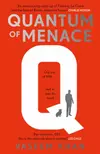
I'd been looking forward to this one, something a bit on the softer side after a period of some hefty social commentary style undertakings, the opening salvo in a series built around "Q" from the James Bond franchise. In this introduction, after being unexpectedly ousted from MI6, he finds himself back in his quiet, very English hometown of Wickstone-on-Water, a bit lost and directionless. But the mysterious death of his childhood friend, and renowned quantum computer scientist, Peter Naper, who left behind a very cryptic note, sees Q / Major Boothroyd compelled to investigate in the face of a somewhat lacklustre verdict of suicide by the police.
Sounds intriguing, and it quite possibly is, once you get past a lot of other issues. I mean you can forgive the idea that people are trying to keep something as successful as the Bond Franchise going, but a cosy murder mystery? A story which includes, for reasons I never did quite fathom, a robot assistant called Honeypenny, a pet dog called Bastard (was that meant to be titillating - we had a cat called Black Bastard for years when I was a kid - not titillating at all - accurate / the damn thing was a leap out of the bushes biter), and the endless reminiscences about James Bond - like we'd forgotten who Q is and therefore needed to be reminded of the whole special agent schtick.
All of that possibly could have been put down to a bit of light entertainment / distraction though, if it also didn't come with the whole Major Boothroyd / Q thing. I mean everyone - from an ex-fiancee to his own father, referred to Boothroyd as "Q". School friends, people in his hometown - everyone. Constantly. And then there's the whole thing of everyone and his pony knowing all about their famous MI6 resident and his 30 year secret service career - Official Secrets Act anybody?
By now you're probably getting the feeling that I'm heading for a denouncement of this novel, and I will admit it was a rare DNF for me - I really really tried to finish this but you know what it's like. When you start noticing the dust build up, you have at some stage, to admit defeat. At some point I do hope the series decides what it wants to be - a light fluffy entertainment cosy, or a spy novel. I do hope that Q finally decides who he is and stops faffing about somewhere in the middle of the early movie and original book character interpretations, and maybe has a chance to give some thought to that whole "national security" thing.
When I say DNF I did make it to just over half way, and things did seem to be finding a form and direction, once Q joins forces with the local constabulary, and it got stuck into forming a more Midsomer Murders / Poirot / Baby Ganesh feel and structure.
Would I try another novel in this "Q" franchise? Probably have a look, but I'm not sure I'd break land speed records in getting to it.
Originally posted at www.austcrimefiction.org.
I'd been looking forward to this one, something a bit on the softer side after a period of some hefty social commentary style undertakings, the opening salvo in a series built around "Q" from the James Bond franchise. In this introduction, after being unexpectedly ousted from MI6, he finds himself back in his quiet, very English hometown of Wickstone-on-Water, a bit lost and directionless. But the mysterious death of his childhood friend, and renowned quantum computer scientist, Peter Naper, who left behind a very cryptic note, sees Q / Major Boothroyd compelled to investigate in the face of a somewhat lacklustre verdict of suicide by the police.
Sounds intriguing, and it quite possibly is, once you get past a lot of other issues. I mean you can forgive the idea that people are trying to keep something as successful as the Bond Franchise going, but a cosy murder mystery? A story which includes, for reasons I never did quite fathom, a robot assistant called Honeypenny, a pet dog called Bastard (was that meant to be titillating - we had a cat called Black Bastard for years when I was a kid - not titillating at all - accurate / the damn thing was a leap out of the bushes biter), and the endless reminiscences about James Bond - like we'd forgotten who Q is and therefore needed to be reminded of the whole special agent schtick.
All of that possibly could have been put down to a bit of light entertainment / distraction though, if it also didn't come with the whole Major Boothroyd / Q thing. I mean everyone - from an ex-fiancee to his own father, referred to Boothroyd as "Q". School friends, people in his hometown - everyone. Constantly. And then there's the whole thing of everyone and his pony knowing all about their famous MI6 resident and his 30 year secret service career - Official Secrets Act anybody?
By now you're probably getting the feeling that I'm heading for a denouncement of this novel, and I will admit it was a rare DNF for me - I really really tried to finish this but you know what it's like. When you start noticing the dust build up, you have at some stage, to admit defeat. At some point I do hope the series decides what it wants to be - a light fluffy entertainment cosy, or a spy novel. I do hope that Q finally decides who he is and stops faffing about somewhere in the middle of the early movie and original book character interpretations, and maybe has a chance to give some thought to that whole "national security" thing.
When I say DNF I did make it to just over half way, and things did seem to be finding a form and direction, once Q joins forces with the local constabulary, and it got stuck into forming a more Midsomer Murders / Poirot / Baby Ganesh feel and structure.
Would I try another novel in this "Q" franchise? Probably have a look, but I'm not sure I'd break land speed records in getting to it.
Originally posted at www.austcrimefiction.org.




- Randa Abdel-Fattah
- Sara M. Saleh
- Paula Abood
- Nokomi Achkar
- Michael Mohammed Ahmad
- Rooan Al Kalmashi
- Ryan Al-Natour
- Rawah Arja
- Hana Assafiri
- Sarah Ayoub
- Omar Bensaidi
- Sara El Sayed
- Asma Fahmi
- Farid Farid
- Ruby Hamad
- Abdulrahman Hammoud
- Lamisse Hamouda
- Amani Haydar
- Miran Hosny
- Lora Inak
- Elias Jahshan
- Nicola Joseph
- Huna Amweero
- Zainab Kadhim
- Mohammad Awad
- Wafa Kazal
- Yassir Morsi