
Karen


I was having a bit of a chat with a fellow lover of crime fiction (hi Gavin) on BlueSky who copied me in on an instagram post that outed the author of this novel as Campbell Jeffreys, a writer with a diverse background in literature, media and film, and the author of (amongst other things) a thriller entitled BALACLAVA which is now on the TO BE READ teetering piles. Because, if at any point you think that QUINTUS HUNTLEY: BOTANY (written under the author name of Royce Leville) sounds unlikely, park the concerns, grab yourself a copy and get stuck in.
This is the sort of dry, humorous, social commentary that is so far up my alley, and pitched perfectly, that it very nearly made me turn off the cricket so I could concentrate. It's the story of poet, and all round endearingly slightly, maybe not really so, hopeless case, poet come university lectuter Quintus Huntley (the name comes with commune territory); ex-punk-rock drummer, now detective Elenore Everest (now desperately want a YouTube Music channel for Salty Lemonade); PR writer come poet at heart Aphra Massey (who works for the wrong side and is all too aware of that); and octogenarian EV driver and computer hacker Henrickson (now there's a man that could carry a novel in his own right!). Great cast in other words, I mean even Everest's sidekick - of nepo-baby fame, mid-20's for goodness sake, and definitely slightly dodgy Justin Booth is okay. In the small doses allocated to him herein.
The plot revolves around a series of deaths (and one coma), all connected by the plants that are used to poison each victim. Each plant is a tad on the obscure side, and the methods of death (and coma) just odd enough to go down as one murder, one suicide, one accident and one natural causes (I think that's the combo, I was laughing a lot by then and yes I know that sounds ... odd), but the plot was clever, and funny, and nicely twisty and best of all not everything gets resolved the way it should, and the higher-ups stick the oars in when they should be minding the sinking ship, and the caravan living lifestyle fits with the idea that Huntley grew up in a very eclectic family on a very hilariously established commune, and there's connections between the Perth of the current day - all developers at the cost of environment, and populist opportunistic politics, and the drug wars behind some of it, and the political machinations over WA becoming a country in its own right, and the money, corruption and influence. To say nothing of who is sleeping with who. You might want to make notes, it all gets very complicated, but never confusing, it gets very serious, but never loses the sense of tongues firmly pressed into cheeks, and the poet(s), the cop who was a punk, and the old man with his incontinence support, his book shop and his hacking skills, all combine to save the day. Sort of.
Right from the get go I loved QUINTUS HUNTLEY: BOTANY. It worked on the humorous level, it worked as a piece of crime fiction out to solve some crimes, and it worked as a bit of sly social commentary. It worked because the cast of characters is brilliant, but there was more than enough plot to allow them to shine, and it worked because it was quirky and very unexpected and I now I want the next book in the series.
Originally posted at www.austcrimefiction.org.
I was having a bit of a chat with a fellow lover of crime fiction (hi Gavin) on BlueSky who copied me in on an instagram post that outed the author of this novel as Campbell Jeffreys, a writer with a diverse background in literature, media and film, and the author of (amongst other things) a thriller entitled BALACLAVA which is now on the TO BE READ teetering piles. Because, if at any point you think that QUINTUS HUNTLEY: BOTANY (written under the author name of Royce Leville) sounds unlikely, park the concerns, grab yourself a copy and get stuck in.
This is the sort of dry, humorous, social commentary that is so far up my alley, and pitched perfectly, that it very nearly made me turn off the cricket so I could concentrate. It's the story of poet, and all round endearingly slightly, maybe not really so, hopeless case, poet come university lectuter Quintus Huntley (the name comes with commune territory); ex-punk-rock drummer, now detective Elenore Everest (now desperately want a YouTube Music channel for Salty Lemonade); PR writer come poet at heart Aphra Massey (who works for the wrong side and is all too aware of that); and octogenarian EV driver and computer hacker Henrickson (now there's a man that could carry a novel in his own right!). Great cast in other words, I mean even Everest's sidekick - of nepo-baby fame, mid-20's for goodness sake, and definitely slightly dodgy Justin Booth is okay. In the small doses allocated to him herein.
The plot revolves around a series of deaths (and one coma), all connected by the plants that are used to poison each victim. Each plant is a tad on the obscure side, and the methods of death (and coma) just odd enough to go down as one murder, one suicide, one accident and one natural causes (I think that's the combo, I was laughing a lot by then and yes I know that sounds ... odd), but the plot was clever, and funny, and nicely twisty and best of all not everything gets resolved the way it should, and the higher-ups stick the oars in when they should be minding the sinking ship, and the caravan living lifestyle fits with the idea that Huntley grew up in a very eclectic family on a very hilariously established commune, and there's connections between the Perth of the current day - all developers at the cost of environment, and populist opportunistic politics, and the drug wars behind some of it, and the political machinations over WA becoming a country in its own right, and the money, corruption and influence. To say nothing of who is sleeping with who. You might want to make notes, it all gets very complicated, but never confusing, it gets very serious, but never loses the sense of tongues firmly pressed into cheeks, and the poet(s), the cop who was a punk, and the old man with his incontinence support, his book shop and his hacking skills, all combine to save the day. Sort of.
Right from the get go I loved QUINTUS HUNTLEY: BOTANY. It worked on the humorous level, it worked as a piece of crime fiction out to solve some crimes, and it worked as a bit of sly social commentary. It worked because the cast of characters is brilliant, but there was more than enough plot to allow them to shine, and it worked because it was quirky and very unexpected and I now I want the next book in the series.
Originally posted at www.austcrimefiction.org.



The opening salvo in a new detective series based around Jake Shaw, TURNING POINT is set in the US, written by a Kiwi author and published by a New Caledonian based company. Which unlikely series of events has come together to create a multi-threaded thriller styled novel with some very topical plot threads.
Starting out with the story of Tommy Sessions, who leaves jail after serving 3 years for his part in an armed robbery, morphing on the way out into William Brass, the leader of an reclusive religious sect who, on the face of it seem peaceful enough, but the coincidence of them protesting outside family planning clinics that are then bombed, is too much to ignore. Which is initially where Jake Shaw and the leader of a specialist FBI unit, Clement Oddsworth, who investigate terrorist acts come in.
Meanwhile in the other major thread to the story a former drug cartel leader, Huetzin Sanchez and some loyal soldiers flee Mexico, going into hiding at a safe haven within the US. The new cartel leader would like to find Sanchez, almost as much as the FBI but he has seemingly vanished, until a scam provides some much needed hints.
When starting out reading TURNING POINT you might be wondering if and how on earth these two main thread points are going to collide. There is quite a lot of build up here, which does, just occasionally, slow down what is otherwise one hell of a roller coaster of a ride through the topical subject of violent protest and attacks, and money and influence. Ultimately doesn't everything always seem to come down to money, influence, power... and control. The thing at the heart of this was the way that people manipulate others - that ideals and belief systems are so easily twisted and coerced into becoming something else....
But back to the novel TURNING POINT. A debut novel, the subject matter and plot lines are well executed, and the twists and turns keep the reader's attention and focus. The switching backwards and forwards between the two thread lines works well, with the chapters nicely sized to keep readers from getting lost or overly bombarded with detail. To be honest the only thing that really threw me out of the story was in the epilogue and that particular President ceding the floor to anyone graciously...
Part of what looks to be a planned series, it's an interesting undertaking from a Kiwi based author.
Originally posted at www.austcrimefiction.org.
The opening salvo in a new detective series based around Jake Shaw, TURNING POINT is set in the US, written by a Kiwi author and published by a New Caledonian based company. Which unlikely series of events has come together to create a multi-threaded thriller styled novel with some very topical plot threads.
Starting out with the story of Tommy Sessions, who leaves jail after serving 3 years for his part in an armed robbery, morphing on the way out into William Brass, the leader of an reclusive religious sect who, on the face of it seem peaceful enough, but the coincidence of them protesting outside family planning clinics that are then bombed, is too much to ignore. Which is initially where Jake Shaw and the leader of a specialist FBI unit, Clement Oddsworth, who investigate terrorist acts come in.
Meanwhile in the other major thread to the story a former drug cartel leader, Huetzin Sanchez and some loyal soldiers flee Mexico, going into hiding at a safe haven within the US. The new cartel leader would like to find Sanchez, almost as much as the FBI but he has seemingly vanished, until a scam provides some much needed hints.
When starting out reading TURNING POINT you might be wondering if and how on earth these two main thread points are going to collide. There is quite a lot of build up here, which does, just occasionally, slow down what is otherwise one hell of a roller coaster of a ride through the topical subject of violent protest and attacks, and money and influence. Ultimately doesn't everything always seem to come down to money, influence, power... and control. The thing at the heart of this was the way that people manipulate others - that ideals and belief systems are so easily twisted and coerced into becoming something else....
But back to the novel TURNING POINT. A debut novel, the subject matter and plot lines are well executed, and the twists and turns keep the reader's attention and focus. The switching backwards and forwards between the two thread lines works well, with the chapters nicely sized to keep readers from getting lost or overly bombarded with detail. To be honest the only thing that really threw me out of the story was in the epilogue and that particular President ceding the floor to anyone graciously...
Part of what looks to be a planned series, it's an interesting undertaking from a Kiwi based author.
Originally posted at www.austcrimefiction.org.

Being quite a fan of the TV series SLOW HORSES, and all over the place with reading the books that make up the Slough House series I promised myself earlier in the year that I'd carve some time out to start reading (in some cases re-reading) from book 1. It's not going so well given that it's now heading into December, and I'm 2 books in.
Not because of any reluctance or reticence, simply because the reviewing piles are lurking loudly.
To be fair though, reading the books now, having seen the series up to the current release, it's hard not to see the actors, and hear their voices when reading. Which normally makes me twitch, but this time round just works. The books are obviously considerably more detailed, but it's turned out to be kind of like getting the full story over a beer at the pub after seeing the highlights played out just before. It's enjoyable. The books are really enjoyable in their own right, with a sly sense of humour, great pace, really good characters, and plots which are disarmingly believable, given the subject matter.
The washed up nature of Slough House's raison d'être is nicely done, the slow horses various and sometimes seemingly minor disgraces that have resulted in them being pushed to the outer edges of MI5 makes for a diverse cast of characters, as does, in DEAD LIONS in particular, that idea of a chance of redemption smelling very sweet indeed. This time when an old Cold-War-era spy found dead on a bus in Oxford, way outside his normal comfort zone, it's Jackson Lamb who smells murder, and leads his crew into an investigation that winds right back to a man named Alexander Popov who is either a Soviet strawman or a very dangerous person indeed. It's up to the Slow Horses crew to keep the body count manageable, and all of themselves, in particular upright.
Even without the TV version of these characters in your head, they are easy to get to know and like in these books - irascible, snippy, arrogant and/or a bit lost - they all feel very real, as does the put upon nature of their work, and their place of work - a scruffy non-descript place in a grey sort of location, in mostly grey weather, with whatever hope that's generated being pushed out from within.
I've really enjoyed those books of this series that I've had a chance to read, and I really really want to carve out a bit more time to keep going with this quest.
Originally posted at www.austcrimefiction.org.
Being quite a fan of the TV series SLOW HORSES, and all over the place with reading the books that make up the Slough House series I promised myself earlier in the year that I'd carve some time out to start reading (in some cases re-reading) from book 1. It's not going so well given that it's now heading into December, and I'm 2 books in.
Not because of any reluctance or reticence, simply because the reviewing piles are lurking loudly.
To be fair though, reading the books now, having seen the series up to the current release, it's hard not to see the actors, and hear their voices when reading. Which normally makes me twitch, but this time round just works. The books are obviously considerably more detailed, but it's turned out to be kind of like getting the full story over a beer at the pub after seeing the highlights played out just before. It's enjoyable. The books are really enjoyable in their own right, with a sly sense of humour, great pace, really good characters, and plots which are disarmingly believable, given the subject matter.
The washed up nature of Slough House's raison d'être is nicely done, the slow horses various and sometimes seemingly minor disgraces that have resulted in them being pushed to the outer edges of MI5 makes for a diverse cast of characters, as does, in DEAD LIONS in particular, that idea of a chance of redemption smelling very sweet indeed. This time when an old Cold-War-era spy found dead on a bus in Oxford, way outside his normal comfort zone, it's Jackson Lamb who smells murder, and leads his crew into an investigation that winds right back to a man named Alexander Popov who is either a Soviet strawman or a very dangerous person indeed. It's up to the Slow Horses crew to keep the body count manageable, and all of themselves, in particular upright.
Even without the TV version of these characters in your head, they are easy to get to know and like in these books - irascible, snippy, arrogant and/or a bit lost - they all feel very real, as does the put upon nature of their work, and their place of work - a scruffy non-descript place in a grey sort of location, in mostly grey weather, with whatever hope that's generated being pushed out from within.
I've really enjoyed those books of this series that I've had a chance to read, and I really really want to carve out a bit more time to keep going with this quest.
Originally posted at www.austcrimefiction.org.

In 2018 a novel barnstormed its way into the Ngaio Marsh Awards with THE SOUND OF HER VOICE making it to double finalist in both the Best First and Best Novel categories. At the time I remember thinking this is an author with such potential, and knowing it was a pseudonym, stood by patiently waiting to see if the author would be able to emerge, or would continue to write under that name. Chris Blake is that author, and his second novel, SOFTLY CALLS THE DEVIL is as good as that debut, continuing on with the intense, unsparing, and oh so realistic stylings of the first offering.
Following on with Matt Buchanan's career and personal story, for some context, from my review of the first book:
Every year the Ngaio Marsh awards for New Zealand crime fiction throw up an unexpected perspective, something brave and unusual that will set you back on your heels and make you think. For this reviewer, this year, that book was THE SOUND OF HER VOICE. In what's a combination of police procedural, and tragic police perspective, Detective Matt Buchanan has been in the job too long, and he's had a gut full of the nastiness of human nature. Unsolved murder cases haunt him, people being bastards haunt him, everything haunts him. He's bitter and he's well on the way to being twisted, and the murder of 14 year old Samantha Coates puts him on the trail of something big, and even nastier than he had even thought possible.
This second outing for Buchanan sees him back in uniform, in a small town, doing typical small town policing. And he's more settled, seemingly happier in himself, and what might seem like a demotion to some, is a chance to regroup, and rethink life and career, although the quieter world of traffic offences, kids behaving badly and the odd drug dealer, suddenly gets blown apart when his much admired predecessor in the job, Gus, is discovered beside a river with a bullet in his head. Gus had been doing a bit of digging around in an old murder-suicide in the local area, the parent's bodies discovered but their daughter never found. For all the world it looked like a violent and controlling father had inevitably flipped, and the missing daughter had always been assumed dead, as there had never been a trace of her. Matt's detective spider senses are tweaked though, and as much as he doesn't want to think it, it seems that there's been some rifts in this seemingly close-knit community, until more murders push him firmly back into his old detecting ways.
Refreshingly this novel doesn't make out that all the higher-ups and/or colleagues are idiots, and Buchanan isn't set up to be a lone wolf that saves the day. Rather the effects of his own trauma, and loss, are incorporated into the story of a decent bloke, trying to do the right thing, by a community of people he feels responsible for. He's also able to make some forward movement in his personal life, which very nearly doesn't work out, something that was surprisingly moving.
SOFTLY CALLS THE DEVIL is one of those crime novels that, on the face of it, is a standard police procedural, written by somebody who knows that world back to front (Blake runs the Behavioural Science unit of the NZ Police in Wellington). He's also incredibly skilled at making it all about the story, not the process, and at no stage does this read like a training manual, or a self-help treatise.
Instead, this is a fast paced, nicely twisty mystery with a particularly nasty killer at the centre of it - killing to protect themselves from their past, as is so often the way. There is also something very real about the way this story addresses the complications and trauma of an ongoing policing career, and how the connections with other serving officers who understand, and a community that supports and sympathises can be the difference between burn out and thriving.
Told in a brisk, no nonsense tone that is richly interlaced with laconic humour, and compelling observation, SOFTLY CALLS THE DEVIL delivers and then some on the promise of THE SOUND OF HER VOICE. Bring on the third novel please.
Originally posted at www.austcrimefiction.org.
In 2018 a novel barnstormed its way into the Ngaio Marsh Awards with THE SOUND OF HER VOICE making it to double finalist in both the Best First and Best Novel categories. At the time I remember thinking this is an author with such potential, and knowing it was a pseudonym, stood by patiently waiting to see if the author would be able to emerge, or would continue to write under that name. Chris Blake is that author, and his second novel, SOFTLY CALLS THE DEVIL is as good as that debut, continuing on with the intense, unsparing, and oh so realistic stylings of the first offering.
Following on with Matt Buchanan's career and personal story, for some context, from my review of the first book:
Every year the Ngaio Marsh awards for New Zealand crime fiction throw up an unexpected perspective, something brave and unusual that will set you back on your heels and make you think. For this reviewer, this year, that book was THE SOUND OF HER VOICE. In what's a combination of police procedural, and tragic police perspective, Detective Matt Buchanan has been in the job too long, and he's had a gut full of the nastiness of human nature. Unsolved murder cases haunt him, people being bastards haunt him, everything haunts him. He's bitter and he's well on the way to being twisted, and the murder of 14 year old Samantha Coates puts him on the trail of something big, and even nastier than he had even thought possible.
This second outing for Buchanan sees him back in uniform, in a small town, doing typical small town policing. And he's more settled, seemingly happier in himself, and what might seem like a demotion to some, is a chance to regroup, and rethink life and career, although the quieter world of traffic offences, kids behaving badly and the odd drug dealer, suddenly gets blown apart when his much admired predecessor in the job, Gus, is discovered beside a river with a bullet in his head. Gus had been doing a bit of digging around in an old murder-suicide in the local area, the parent's bodies discovered but their daughter never found. For all the world it looked like a violent and controlling father had inevitably flipped, and the missing daughter had always been assumed dead, as there had never been a trace of her. Matt's detective spider senses are tweaked though, and as much as he doesn't want to think it, it seems that there's been some rifts in this seemingly close-knit community, until more murders push him firmly back into his old detecting ways.
Refreshingly this novel doesn't make out that all the higher-ups and/or colleagues are idiots, and Buchanan isn't set up to be a lone wolf that saves the day. Rather the effects of his own trauma, and loss, are incorporated into the story of a decent bloke, trying to do the right thing, by a community of people he feels responsible for. He's also able to make some forward movement in his personal life, which very nearly doesn't work out, something that was surprisingly moving.
SOFTLY CALLS THE DEVIL is one of those crime novels that, on the face of it, is a standard police procedural, written by somebody who knows that world back to front (Blake runs the Behavioural Science unit of the NZ Police in Wellington). He's also incredibly skilled at making it all about the story, not the process, and at no stage does this read like a training manual, or a self-help treatise.
Instead, this is a fast paced, nicely twisty mystery with a particularly nasty killer at the centre of it - killing to protect themselves from their past, as is so often the way. There is also something very real about the way this story addresses the complications and trauma of an ongoing policing career, and how the connections with other serving officers who understand, and a community that supports and sympathises can be the difference between burn out and thriving.
Told in a brisk, no nonsense tone that is richly interlaced with laconic humour, and compelling observation, SOFTLY CALLS THE DEVIL delivers and then some on the promise of THE SOUND OF HER VOICE. Bring on the third novel please.
Originally posted at www.austcrimefiction.org.

The sixth novel now in the Fiji Islands Mystery series, DEATH OF A DIPLOMAT has a lot of twists and turns in the personal sides of the lives of DI Joe Horseman and his team. Because of that you really would be best to dip into the series a tad earlier than this one, just to get a taste for the day to day life of a Fijian Police DI, and the sorts of cases that he and his team have to deal with. To say nothing of an unsupportive, mildly bats boss, and Horseman's beloved Junior Shiners rugby team.
Rugby looms largish in these storylines as Horseman was a very famous Fijian rugby player before injury put pay to that career and saw him return to the islands, taking up a career in the police force. I say largish in that his fame is a way into a lot of situations, but the "rugby" talk itself is mostly confined to the recognition and accolades heaped on Horseman by the people he encounters. He is also supported by a close and hardworking team of police colleagues, and a close relationship with many people who form the periphery of lots of his investigations.
It is one of those series that has been building a world in which it inhabits, and the sense of place, and culture is strong in these. The food descriptions are all too frequently mouth watering, the locations for some of the cases glorious, and the culture, and way of the people shines through. There is a bit of Fijian language dotted throughout the dialogue (with a glossary helpfully included), but there is never anything that can't be sussed from the context, and somehow those greetings, and exclamations make the feel of the novels even more authentic.
This time around there's a weaving in of Horseman's extracurricular activities - a rugby team made up of street kids in dire need of support and guidance - and the untimely murder of the Australian High Commissioner to Fiji, Her Excellency Helen Armstrong, who was immediately noticed as missing when she didn't arrive to open a hostel built for the street kids with her assistance. This makes Horseman's investigation doubly personal, not only did he know this victim, he admired her and he would always be grateful for her support to help his beloved Shiner kids (many of whom earn a paltry living on the streets, shining shoes for people). (There is an amusing aside about the number of homeless shoeshine boys in a country where most people wear sandals at the most...)
The resolution of the case, as is often the way with this series, comes down to excellent forensic work, dogged ticking off of investigative points, and a sixth sense about what is and isn't right about all of this. (And a lot of tea drinking!) There's also a subthread here on the smuggling of drugs which serves as a great way to bring team member, now promoted and working on another island, Susila Singh back into the action, and into the world of favourite coffee shops, food and the team.
I've been a fan of this series since the early novels and it's always improved with each new book. DEATH OF A DIPLOMAT is a complex investigation, combining the complications of dealing with diplomatic restrictions and relationships between countries, but always pulling everything back to the lowest common denominator. What people do when they believe they have no choice. On the other hand, it looks like Horseman and Singh have some big decisions to make - some of which they do, some of which make you wonder what next.
Originally posted at www.austcrimefiction.org.
The sixth novel now in the Fiji Islands Mystery series, DEATH OF A DIPLOMAT has a lot of twists and turns in the personal sides of the lives of DI Joe Horseman and his team. Because of that you really would be best to dip into the series a tad earlier than this one, just to get a taste for the day to day life of a Fijian Police DI, and the sorts of cases that he and his team have to deal with. To say nothing of an unsupportive, mildly bats boss, and Horseman's beloved Junior Shiners rugby team.
Rugby looms largish in these storylines as Horseman was a very famous Fijian rugby player before injury put pay to that career and saw him return to the islands, taking up a career in the police force. I say largish in that his fame is a way into a lot of situations, but the "rugby" talk itself is mostly confined to the recognition and accolades heaped on Horseman by the people he encounters. He is also supported by a close and hardworking team of police colleagues, and a close relationship with many people who form the periphery of lots of his investigations.
It is one of those series that has been building a world in which it inhabits, and the sense of place, and culture is strong in these. The food descriptions are all too frequently mouth watering, the locations for some of the cases glorious, and the culture, and way of the people shines through. There is a bit of Fijian language dotted throughout the dialogue (with a glossary helpfully included), but there is never anything that can't be sussed from the context, and somehow those greetings, and exclamations make the feel of the novels even more authentic.
This time around there's a weaving in of Horseman's extracurricular activities - a rugby team made up of street kids in dire need of support and guidance - and the untimely murder of the Australian High Commissioner to Fiji, Her Excellency Helen Armstrong, who was immediately noticed as missing when she didn't arrive to open a hostel built for the street kids with her assistance. This makes Horseman's investigation doubly personal, not only did he know this victim, he admired her and he would always be grateful for her support to help his beloved Shiner kids (many of whom earn a paltry living on the streets, shining shoes for people). (There is an amusing aside about the number of homeless shoeshine boys in a country where most people wear sandals at the most...)
The resolution of the case, as is often the way with this series, comes down to excellent forensic work, dogged ticking off of investigative points, and a sixth sense about what is and isn't right about all of this. (And a lot of tea drinking!) There's also a subthread here on the smuggling of drugs which serves as a great way to bring team member, now promoted and working on another island, Susila Singh back into the action, and into the world of favourite coffee shops, food and the team.
I've been a fan of this series since the early novels and it's always improved with each new book. DEATH OF A DIPLOMAT is a complex investigation, combining the complications of dealing with diplomatic restrictions and relationships between countries, but always pulling everything back to the lowest common denominator. What people do when they believe they have no choice. On the other hand, it looks like Horseman and Singh have some big decisions to make - some of which they do, some of which make you wonder what next.
Originally posted at www.austcrimefiction.org.

Originally, and quite obviously conceived as a podcast, THE MUSHROOM TAPES is partly a true crime exploration of a notorious case, but more than that, it's a reflection on what makes a murderer, and what makes a court case, about an event in which three much loved members of one extended family died horribly, a spectacle, and external to the case itself a nauseating farce.
The text of the book is mostly told as the relating of conversations between the three authors, in the car to and from Melbourne and Morwell (the scene of the trial), during their time waiting around outside the courtroom, in a nearby motel, coffee shop and in online and phone conversations. Whilst not always in the same place, at the same time, the three women do start out on day one of the trial with a vague idea of a podcast, or a collaborative effort in mind.
We head out of the city in a south-easterly direction. Sarah Krasnostein is at the wheel, Helen Garner and Chloe Hooper are her passengers.
We've never travelled anywhere together before. We're writers and we're friends, but this morning we're almost shy of each other, not a hundred percent sure how we're going to handle the day.
None of us wants to write about this. And none of us wants NOT to write about it.
It would be fair to say that the ambivalence, reticence, reluctance to get involved is something that they thrash out a lot, particularly as the godawful spectacle surrounding the trial started to play out. There were people in and around that courtroom that had lost their minds - it was a triple murder trial for gods sake - and some of these appalling people were treating it like we were way back in the past, when trials were the only entertainment on offer. Some people need to buy a book, watch a movie, get a bloody life...
Whilst, in the main, the majority of the spectacle was made up of breathless journalists and people with too much time on their hands, and no concept of propriety, there were also some people whose connections to the defendant were part of the bigger story of a woman who has been found guilty of killing three people, and attempting to kill a fourth, for reasons which have never really fully been explained. One of these is an "online" friend of the defendant's who the authors of this work refer to as the POA (power of attorney). She was at the trial to support the defendant:
Sarah: Remember when she told Helen she had mistaken her for a 'CWA busybody'? She apologised. I was chatting with her the other day about how we've been here so much we haven't been able to get haircuts. And she said 'I promised Erin I won't get my greys touched up until she can.'
Chloe: Of all the huge stories happening in the world, why are we all here? Climate change, the Middle East, AI about to take our jobs, the threat to democracy. But that is exactly why everyone is here. So as not to think about these things.
It is through these asides, reflections, chats between the three authors that so many of the issues in this case are raised. Some of which were undoubtedly being asked by those following and occasionally hearing things about the case, and the trial.
Chloe: In a small town, everyone's got their eye on you already. But there's a mismatch between the modest, salt-of-the-earth relatives and Erin Patterson, who seems so operatic. Is that part of the public fascination? Why do you think this has struck such a cord?
Sarah: Female poisoner.
Helen: When you said operatic, I suddenly thought of Medea.
Chloe: It's Medea in reverse though. It's not her husband's children she's alleged to have killed - it's his parents and elderly relatives.
Helen: I guess Medea in the sense that she's a huge figure. Her behaviour, if it's true, gives her operatic proportions.
Chloe: Why is the public fascinated by a female poisoner?
Sarah: It's archetypal. Adam and Eve and the apple, It's throughout myths and fairytales.
Chloe: These crime stories seem to work as modern folktales. We like it all the more if the characters are clearly good or bad, much as those old tales need a witch.
There's also reminders here, that the authors refer to, of the Azaria Chamberlain case. A mother "blamed", treated with contempt and derision because her reactions didn't fit with expectations, religion, a convenient "othering". In that case Lindy Chamberlain was eventually cleared and there's no suggestion here that the outcomes will be similar, but there is a feeling that because Patterson is female, and her behaviour often had that "operatic" or unexpected quality to it, we ended up with a witch-hunt.
Sarah: Can we talk about the difference between remorse and regret?
Helen: Raimond Gaita says that remorse is a pained, bewildered realisation of what it means to have wronged someone.
Sarah: Regret is self-interested. Remorse is a deeper thing.
Most disquieting of all is the way that the authors circle, and then zero in on the most disquieting aspects of this entire spectacle. One that caused them considerable discomfort as well - the generation of spectacle, when it should have been left to the legal process to play out a trial, in which evidence was revealed, guilt or innocence assessed, and when found guilty, sentence pronounced and closure and dignity provided to the victims, their families, and the family of the guilty party.
Okay, Erin is guilty. She murdered three people. But you know how they feast on a woman? Photographers are big-game hunters, and those are the prize shots. I saw one of them showing the security guards his series of photos: 'Yeah, we got into the van, look at this!' It was like a carnival. There was something dehumanising in that glee.
As dehumanising as the court spectators taking a celebratory, arms in the air, group photograph in the courtyard of the courthouse...
There are members of the human race who have lost their bloody minds, and some of them congregated in this place, at this trial, in disquietingly large numbers. Something that this book, in its observational and conversational manner clearly bought out into the open. As part of the process of observing the trial, and looking to write a true crime book about the trial, the three woman have instead written a story of their own discomfort, and their disquiet.
Helen: And that's another awful thing about it dragging on like this. Nobody talks or thinks about those dear people. And when Justice Beale spoke after the jury directions, when he said 'We have to remember that three people have died,' I thought he was saying in a coded way, Why doesn't everyone stop emoting and rushing around and drawing attention to themselves? There's got to be a moment of realisation of what this is actually about.
Originally posted at www.austcrimefiction.org.
Originally, and quite obviously conceived as a podcast, THE MUSHROOM TAPES is partly a true crime exploration of a notorious case, but more than that, it's a reflection on what makes a murderer, and what makes a court case, about an event in which three much loved members of one extended family died horribly, a spectacle, and external to the case itself a nauseating farce.
The text of the book is mostly told as the relating of conversations between the three authors, in the car to and from Melbourne and Morwell (the scene of the trial), during their time waiting around outside the courtroom, in a nearby motel, coffee shop and in online and phone conversations. Whilst not always in the same place, at the same time, the three women do start out on day one of the trial with a vague idea of a podcast, or a collaborative effort in mind.
We head out of the city in a south-easterly direction. Sarah Krasnostein is at the wheel, Helen Garner and Chloe Hooper are her passengers.
We've never travelled anywhere together before. We're writers and we're friends, but this morning we're almost shy of each other, not a hundred percent sure how we're going to handle the day.
None of us wants to write about this. And none of us wants NOT to write about it.
It would be fair to say that the ambivalence, reticence, reluctance to get involved is something that they thrash out a lot, particularly as the godawful spectacle surrounding the trial started to play out. There were people in and around that courtroom that had lost their minds - it was a triple murder trial for gods sake - and some of these appalling people were treating it like we were way back in the past, when trials were the only entertainment on offer. Some people need to buy a book, watch a movie, get a bloody life...
Whilst, in the main, the majority of the spectacle was made up of breathless journalists and people with too much time on their hands, and no concept of propriety, there were also some people whose connections to the defendant were part of the bigger story of a woman who has been found guilty of killing three people, and attempting to kill a fourth, for reasons which have never really fully been explained. One of these is an "online" friend of the defendant's who the authors of this work refer to as the POA (power of attorney). She was at the trial to support the defendant:
Sarah: Remember when she told Helen she had mistaken her for a 'CWA busybody'? She apologised. I was chatting with her the other day about how we've been here so much we haven't been able to get haircuts. And she said 'I promised Erin I won't get my greys touched up until she can.'
Chloe: Of all the huge stories happening in the world, why are we all here? Climate change, the Middle East, AI about to take our jobs, the threat to democracy. But that is exactly why everyone is here. So as not to think about these things.
It is through these asides, reflections, chats between the three authors that so many of the issues in this case are raised. Some of which were undoubtedly being asked by those following and occasionally hearing things about the case, and the trial.
Chloe: In a small town, everyone's got their eye on you already. But there's a mismatch between the modest, salt-of-the-earth relatives and Erin Patterson, who seems so operatic. Is that part of the public fascination? Why do you think this has struck such a cord?
Sarah: Female poisoner.
Helen: When you said operatic, I suddenly thought of Medea.
Chloe: It's Medea in reverse though. It's not her husband's children she's alleged to have killed - it's his parents and elderly relatives.
Helen: I guess Medea in the sense that she's a huge figure. Her behaviour, if it's true, gives her operatic proportions.
Chloe: Why is the public fascinated by a female poisoner?
Sarah: It's archetypal. Adam and Eve and the apple, It's throughout myths and fairytales.
Chloe: These crime stories seem to work as modern folktales. We like it all the more if the characters are clearly good or bad, much as those old tales need a witch.
There's also reminders here, that the authors refer to, of the Azaria Chamberlain case. A mother "blamed", treated with contempt and derision because her reactions didn't fit with expectations, religion, a convenient "othering". In that case Lindy Chamberlain was eventually cleared and there's no suggestion here that the outcomes will be similar, but there is a feeling that because Patterson is female, and her behaviour often had that "operatic" or unexpected quality to it, we ended up with a witch-hunt.
Sarah: Can we talk about the difference between remorse and regret?
Helen: Raimond Gaita says that remorse is a pained, bewildered realisation of what it means to have wronged someone.
Sarah: Regret is self-interested. Remorse is a deeper thing.
Most disquieting of all is the way that the authors circle, and then zero in on the most disquieting aspects of this entire spectacle. One that caused them considerable discomfort as well - the generation of spectacle, when it should have been left to the legal process to play out a trial, in which evidence was revealed, guilt or innocence assessed, and when found guilty, sentence pronounced and closure and dignity provided to the victims, their families, and the family of the guilty party.
Okay, Erin is guilty. She murdered three people. But you know how they feast on a woman? Photographers are big-game hunters, and those are the prize shots. I saw one of them showing the security guards his series of photos: 'Yeah, we got into the van, look at this!' It was like a carnival. There was something dehumanising in that glee.
As dehumanising as the court spectators taking a celebratory, arms in the air, group photograph in the courtyard of the courthouse...
There are members of the human race who have lost their bloody minds, and some of them congregated in this place, at this trial, in disquietingly large numbers. Something that this book, in its observational and conversational manner clearly bought out into the open. As part of the process of observing the trial, and looking to write a true crime book about the trial, the three woman have instead written a story of their own discomfort, and their disquiet.
Helen: And that's another awful thing about it dragging on like this. Nobody talks or thinks about those dear people. And when Justice Beale spoke after the jury directions, when he said 'We have to remember that three people have died,' I thought he was saying in a coded way, Why doesn't everyone stop emoting and rushing around and drawing attention to themselves? There's got to be a moment of realisation of what this is actually about.
Originally posted at www.austcrimefiction.org.
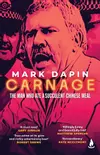
The opening blurb paragraph:
Whether you know it as the ‘succulent Chinese meal’ video, or ‘democracy manifest’, chances are you have seen the video of baritone larrikin Jack Karlson getting arrested outside a Brisbane Chinese restaurant in 1991. The Guardian called it ‘perhaps the pre-eminent Australian meme of the last 10 years’.
Was really all the reason I reserved a copy of the audio of this book at the library. I'd heard of the 'succulent Chinese meal' arrest and after Jack Karlson died and everyone started talking about him again, I realised that I didn't know much about the back story at all.
Got three quarters of the way through listening to this book though and decided it was either not the best choice in audio or that it seemed to be talking about everybody BUT Jack Karlson. Either way I had to throw in the towel.
Originally posted at www.austcrimefiction.org.
The opening blurb paragraph:
Whether you know it as the ‘succulent Chinese meal’ video, or ‘democracy manifest’, chances are you have seen the video of baritone larrikin Jack Karlson getting arrested outside a Brisbane Chinese restaurant in 1991. The Guardian called it ‘perhaps the pre-eminent Australian meme of the last 10 years’.
Was really all the reason I reserved a copy of the audio of this book at the library. I'd heard of the 'succulent Chinese meal' arrest and after Jack Karlson died and everyone started talking about him again, I realised that I didn't know much about the back story at all.
Got three quarters of the way through listening to this book though and decided it was either not the best choice in audio or that it seemed to be talking about everybody BUT Jack Karlson. Either way I had to throw in the towel.
Originally posted at www.austcrimefiction.org.


Hopefully more and more of us are looking for answers to the state of the world in the right directions, but then again you look at the state of world politics and the rise of the nationalistic mobs, environmental degradation and climate change denial, and it's getting hard to see any light at the end of an increasingly long, dark tunnel. Tina Makereti has chosen to take this situation, and the hopelessness generated hyper-local, with THE MIRES. Into a small community, living on top of a swamp in Kapiti, on the North Island of Aotearoa New Zealand which is trying to coexist, and it's in their interactions and responses to threats that we have been given the opportunity to learn something,
The story is centred around three women - all from different countries and different decades, all of whom with children and life experience that vary dramatically. First up is Keri, a Māori woman who lives with the aftermath of domestic violence, struggling to feed her two children - a lively four year old called Walty and her reserved teenage daughter Wairere, who hears the voices of her ancestors and has the gift of sight.
She lives between, on the one side, refugees from ecological breakdown in Europe - Sera, her husband Adam and baby Aliana. On the other Janet, another survivor of domestic violence, she's a white New Zealander woman with very fixed ideas about how everybody else should live. Meanwhile her son, Conor, is becoming increasing radicalised, behaving very secretly and strangely.
These three women - Keri, Sera and Janet - form the core of this novel, but it's Conor who becomes the catalyst, returning home without warning, sporting tattoos and a buzzcut, his behaviour really causing the tension to ramp up. Whilst the older women may not immediately realise just how warped Conor's beliefs have become, Wairere immediately senses the danger.
As with the outstanding and very moving KATARAINA, central to the core of the Māori people is their connection to vital areas of the landscape - in this case, again, a swamp that forms both part of the community and their sensibility for want of a better description. The novel starts out quite deceptively, with the feel of a gentle, domestic styled story about women, families and living in small communities or suburbs. As friendships are formed, and the younger children in particular form initial bridges between them, the novel itself starts to build through the gathering of strangers and the perceived threat of difference to a very particular threat within. Conor and his extremist right-wing connections, isolation, and targeting of women and migrants in particular becomes something that could break this small, almost insulated world apart.
Informed strongly by indigenous sensibilities, beliefs and spiritual connections to Country, and ancestors, THE MIRES also isn't afraid to use the examples of the horror of white supremacy, the massacres that are all too often performed in its name, and attempt to shine a light on that darkest of human behaviour whilst more importantly, providing examples of how the best of humanity can rise above.
Whilst parts of THE MIRES were devastating, and very discomforting to read, it's message of hope and connection shone through. It has a particularly indigenous sensibility - the things that matter - people / community / connection to those and to place, always to place, feels very much like an answer we could all be looking towards.
Originally posted at www.austcrimefiction.org.
Hopefully more and more of us are looking for answers to the state of the world in the right directions, but then again you look at the state of world politics and the rise of the nationalistic mobs, environmental degradation and climate change denial, and it's getting hard to see any light at the end of an increasingly long, dark tunnel. Tina Makereti has chosen to take this situation, and the hopelessness generated hyper-local, with THE MIRES. Into a small community, living on top of a swamp in Kapiti, on the North Island of Aotearoa New Zealand which is trying to coexist, and it's in their interactions and responses to threats that we have been given the opportunity to learn something,
The story is centred around three women - all from different countries and different decades, all of whom with children and life experience that vary dramatically. First up is Keri, a Māori woman who lives with the aftermath of domestic violence, struggling to feed her two children - a lively four year old called Walty and her reserved teenage daughter Wairere, who hears the voices of her ancestors and has the gift of sight.
She lives between, on the one side, refugees from ecological breakdown in Europe - Sera, her husband Adam and baby Aliana. On the other Janet, another survivor of domestic violence, she's a white New Zealander woman with very fixed ideas about how everybody else should live. Meanwhile her son, Conor, is becoming increasing radicalised, behaving very secretly and strangely.
These three women - Keri, Sera and Janet - form the core of this novel, but it's Conor who becomes the catalyst, returning home without warning, sporting tattoos and a buzzcut, his behaviour really causing the tension to ramp up. Whilst the older women may not immediately realise just how warped Conor's beliefs have become, Wairere immediately senses the danger.
As with the outstanding and very moving KATARAINA, central to the core of the Māori people is their connection to vital areas of the landscape - in this case, again, a swamp that forms both part of the community and their sensibility for want of a better description. The novel starts out quite deceptively, with the feel of a gentle, domestic styled story about women, families and living in small communities or suburbs. As friendships are formed, and the younger children in particular form initial bridges between them, the novel itself starts to build through the gathering of strangers and the perceived threat of difference to a very particular threat within. Conor and his extremist right-wing connections, isolation, and targeting of women and migrants in particular becomes something that could break this small, almost insulated world apart.
Informed strongly by indigenous sensibilities, beliefs and spiritual connections to Country, and ancestors, THE MIRES also isn't afraid to use the examples of the horror of white supremacy, the massacres that are all too often performed in its name, and attempt to shine a light on that darkest of human behaviour whilst more importantly, providing examples of how the best of humanity can rise above.
Whilst parts of THE MIRES were devastating, and very discomforting to read, it's message of hope and connection shone through. It has a particularly indigenous sensibility - the things that matter - people / community / connection to those and to place, always to place, feels very much like an answer we could all be looking towards.
Originally posted at www.austcrimefiction.org.

Cristina Sanders is a new to me author who has written a number of books in the past along the same lines of ŌKIWI BROWN - a fictionalised version of historical events that incorporate early tales (tall and true) of Aotearoa. This story is told in a series of anecdotes, incorporating the story of a man, a waler who washed up on the eastern shores of Port Nicholson many years ago, in the early days of colonial settlement. He sets himself up with a pub and makes a home with a woman found abandoned on the nearby beach, quickly developing a reputation for evil and nasty going's on.
The set up to this is an unusual one, perhaps not so out of the ordinary for Cristina Sanders if the blurbs for her other books (MRS JEWELL AND THE WRECK OF THE GENERAL GRANT, JERNINGHAM and DISPLACED) are anything to go by, although this one appears to be the only novel that so directly connects the possibility of past and present murders, and a potential character from history.
Told with incredible strength, and a profound sense of place, ŌKIWI BROWN never shies away from the intrinsic evil of that unknown waler, or the difficulties of life in the new colony, whilst weaving in enough of the story of Burke and Hare to give the assumption of identity some credence. Overall it's well depicted, although populated by a lot of characters and some very disparate stories. All in all, it was increasingly disconcerting to think about the possibility of who else washed up on what shores in the days of very limited communications.
Originally posted at www.austcrimefiction.org.
Cristina Sanders is a new to me author who has written a number of books in the past along the same lines of ŌKIWI BROWN - a fictionalised version of historical events that incorporate early tales (tall and true) of Aotearoa. This story is told in a series of anecdotes, incorporating the story of a man, a waler who washed up on the eastern shores of Port Nicholson many years ago, in the early days of colonial settlement. He sets himself up with a pub and makes a home with a woman found abandoned on the nearby beach, quickly developing a reputation for evil and nasty going's on.
The set up to this is an unusual one, perhaps not so out of the ordinary for Cristina Sanders if the blurbs for her other books (MRS JEWELL AND THE WRECK OF THE GENERAL GRANT, JERNINGHAM and DISPLACED) are anything to go by, although this one appears to be the only novel that so directly connects the possibility of past and present murders, and a potential character from history.
Told with incredible strength, and a profound sense of place, ŌKIWI BROWN never shies away from the intrinsic evil of that unknown waler, or the difficulties of life in the new colony, whilst weaving in enough of the story of Burke and Hare to give the assumption of identity some credence. Overall it's well depicted, although populated by a lot of characters and some very disparate stories. All in all, it was increasingly disconcerting to think about the possibility of who else washed up on what shores in the days of very limited communications.
Originally posted at www.austcrimefiction.org.

Maxine has been losing things lately. Her car in the shopping centre carpark. Important work files—and her job as a result. Her marbles? ‘Mild cognitive impairment’, according to the doctor. Time for a nursing home, according to her daughter, Rose.
Rose has her own troubles with a recurring vision of a locked cupboard, claustrophobic panic. Something in the shadows. Something to do with the old family house in Kutarere.
The idea of losing things being a precursor to something more sinister is one of those noises lurking at the back of many minds of a "certain age". On the one hand we're always told that forgetting names, losing your keys, forgetting where the car was parked - it's all part of life busy noise. You get it when you're juggling too many things in too small a space of time with not enough sleep because along with that forgetfulness come the aches, pains and niggles. Did I mention dropping things? Am I projecting here? Quite possibly, but A HOUSE BUILT ON SAND was a memorable reading experience because of so many things it's hard to know where to start.
When Maxine's doctor diagnosed 'mild cognitive impairment', he probably should have included a diagnosis for her daughter Rose, who is on edge and suffering some form of PTSD right from the start of this novel. Which means, despite her doctor's explicit instructions not to drive, when Maxine heads out to drive from Auckland to the family bach at Kutarere, she causes panic and resentment. She's hoping that whatever it is that's really important about going there will come to her when she arrives, but a near miss with a truck and a crash into a ditch mean that Rose is called and she could really. Live. Without. The four-hour-drive to collect Maxine. This is not the first drop everything and run episode with Maxine and Rose is annoyed, Rose's husband is tetchy and Maxine doesn't seem to care.
Once Rose gets there though, the idea of an extra night at the house, where there are so many happy memories, seems like a good idea. And then the reader starts to discover just what a car crash Rose's own life has become, even without her mother's dramas. Infertility challenges and a less than invested partner, a job as an early childhood educator adding to the sense of personal failure, to say nothing of the strain of working with other people's children in general. Claustrophobia, and a therapist that can treat her over the phone, at the location of the worst of her childhood triggering memories seems like a good plan, as does the chance to find some way of reconnection with her mother. But Maxine is dealing with her own stirred memories - not all of them good, and there's something, in particular that's worrying her, making her feel guilty and stressed.
A HOUSE BUILT ON SAND is a interesting approach to what is a very convincing portrayal of somebody's slip into dementia. Giving that the twist of a mystery to be solved seems to reflect the way that life goes - for the sufferer and their families, little mysteries of what / why and when being solved on a regular basis, but this time, with something bigger behind it. It seems that the author of this work has some personal experience of parts of this scenario and the narrative reads as both convincing and sympathetic but realistic, warts and all with humour and sadness, and past and present, leading inexorably to a future that needs some getting used to.
Originally posted at www.austcrimefiction.org.
Maxine has been losing things lately. Her car in the shopping centre carpark. Important work files—and her job as a result. Her marbles? ‘Mild cognitive impairment’, according to the doctor. Time for a nursing home, according to her daughter, Rose.
Rose has her own troubles with a recurring vision of a locked cupboard, claustrophobic panic. Something in the shadows. Something to do with the old family house in Kutarere.
The idea of losing things being a precursor to something more sinister is one of those noises lurking at the back of many minds of a "certain age". On the one hand we're always told that forgetting names, losing your keys, forgetting where the car was parked - it's all part of life busy noise. You get it when you're juggling too many things in too small a space of time with not enough sleep because along with that forgetfulness come the aches, pains and niggles. Did I mention dropping things? Am I projecting here? Quite possibly, but A HOUSE BUILT ON SAND was a memorable reading experience because of so many things it's hard to know where to start.
When Maxine's doctor diagnosed 'mild cognitive impairment', he probably should have included a diagnosis for her daughter Rose, who is on edge and suffering some form of PTSD right from the start of this novel. Which means, despite her doctor's explicit instructions not to drive, when Maxine heads out to drive from Auckland to the family bach at Kutarere, she causes panic and resentment. She's hoping that whatever it is that's really important about going there will come to her when she arrives, but a near miss with a truck and a crash into a ditch mean that Rose is called and she could really. Live. Without. The four-hour-drive to collect Maxine. This is not the first drop everything and run episode with Maxine and Rose is annoyed, Rose's husband is tetchy and Maxine doesn't seem to care.
Once Rose gets there though, the idea of an extra night at the house, where there are so many happy memories, seems like a good idea. And then the reader starts to discover just what a car crash Rose's own life has become, even without her mother's dramas. Infertility challenges and a less than invested partner, a job as an early childhood educator adding to the sense of personal failure, to say nothing of the strain of working with other people's children in general. Claustrophobia, and a therapist that can treat her over the phone, at the location of the worst of her childhood triggering memories seems like a good plan, as does the chance to find some way of reconnection with her mother. But Maxine is dealing with her own stirred memories - not all of them good, and there's something, in particular that's worrying her, making her feel guilty and stressed.
A HOUSE BUILT ON SAND is a interesting approach to what is a very convincing portrayal of somebody's slip into dementia. Giving that the twist of a mystery to be solved seems to reflect the way that life goes - for the sufferer and their families, little mysteries of what / why and when being solved on a regular basis, but this time, with something bigger behind it. It seems that the author of this work has some personal experience of parts of this scenario and the narrative reads as both convincing and sympathetic but realistic, warts and all with humour and sadness, and past and present, leading inexorably to a future that needs some getting used to.
Originally posted at www.austcrimefiction.org.

I've been dipping into this series on audio as and when there's time, and the books are available at the library. This is the third in the Inspector Simon Ramsay series, set in small village England. In this case, Dorothea Cassidy is the wife of the local vicar, who spends her Thursday's doing her own thing, away from the routine duties of a small village vicar's wife. Which leads to a bit of a multifaceted mystery, firstly why Dorothea married the very different vicar, why she thought her respite would involve visiting people was so different from the routine duties, and how she ended up strangled out in the open after not coming home on Thursday night.
Painstaking police work is at the heart of this series, with Inspector Ramsay a good, dedicated, and quiet sort of a cop, with a few personal problems of his own, and a community he's coming to know but not quite understand yet.
They are a good option in audio with the pace being slightly slower, the investigations being quite methodical and meticulous, it's possible to listen without having to have a laser like focus on intricate details. Which makes then sound a bit wishy-washy, which the series is anything but, it's just one of those that works as an audio, is entertaining without being overly distracting and the narrator has one of those voices that holds attention without overwhelming everything else.
Originally posted at www.austcrimefiction.org.
I've been dipping into this series on audio as and when there's time, and the books are available at the library. This is the third in the Inspector Simon Ramsay series, set in small village England. In this case, Dorothea Cassidy is the wife of the local vicar, who spends her Thursday's doing her own thing, away from the routine duties of a small village vicar's wife. Which leads to a bit of a multifaceted mystery, firstly why Dorothea married the very different vicar, why she thought her respite would involve visiting people was so different from the routine duties, and how she ended up strangled out in the open after not coming home on Thursday night.
Painstaking police work is at the heart of this series, with Inspector Ramsay a good, dedicated, and quiet sort of a cop, with a few personal problems of his own, and a community he's coming to know but not quite understand yet.
They are a good option in audio with the pace being slightly slower, the investigations being quite methodical and meticulous, it's possible to listen without having to have a laser like focus on intricate details. Which makes then sound a bit wishy-washy, which the series is anything but, it's just one of those that works as an audio, is entertaining without being overly distracting and the narrator has one of those voices that holds attention without overwhelming everything else.
Originally posted at www.austcrimefiction.org.

In the process of getting the new AustCrime version up and running, I keep coming across books I've not read, or reviews I've forgotten to post. This fell into the later category, how I managed to miss this I'm not quite sure, but that gap has now been filled.
One of the things with the Phryne Fisher series is whether or not you can dip in and out, or need to read them in order. Whilst reading them in order certainly helps with the complications of Phyrne's family and love life, each little mystery in its own right, is a standalone, so the choice is really up to the reader. I've been a serial reader of the lot of them out of order and topsy turvy, and then, in the later part, I've managed to almost get my act together and read the in order. Which means in this outing, I immediately knew who Lin Chung is, what the backstory to his liaison with Phryne is, who and where his future bride fits into the story, and therefore why all of that is causing a fair amount of ructions in the Fisher household.
Other than the personal complications and fraught feelings, at the heart of this story are Phryne's friends and able helpers when required, Bert and Cec, and something that happened in 1918, fighting in the Great War in Montparnasse, France, with five other friends. Two of home are now dead in supposed accidents, one of whom has been nearly hit by a car, leaving Bert and Cec convinced that these were no accidents, but no idea why they have suddenly all become targets.
Phryne was also in Montparnasse in 1918, and her memories of that time, and the kerfuffle around her home life, with Mr and Mrs Butler vehemently objecting to Phryne's lover potentially being a married man, the disarray around her adds to the pressure of solving this past mystery, and keeping at least part of her coterie safe and with her still. All of which means she must draw on reserves on concentration and strength all readers will always know she had, as well as more than a bit of beguile and ingenuity.
One of the great attractions of this series is that you get what you come for every time. Phryne being brave and resourceful, Dot being stoic and tolerant, the rest of the family there at the drop of a hat with whatever it takes to keep the indomitable Miss Fisher at the top of her game, and all mysteries solved neatly. Of course you entitled to know that she will sort all this mess out, but the how is never quite as clear. Of course those around her are there to reflect the glory, but this time you're also going to get just a glimpse of the Great War events that seeded her will and strength.
Originally posted at www.austcrimefiction.org.
In the process of getting the new AustCrime version up and running, I keep coming across books I've not read, or reviews I've forgotten to post. This fell into the later category, how I managed to miss this I'm not quite sure, but that gap has now been filled.
One of the things with the Phryne Fisher series is whether or not you can dip in and out, or need to read them in order. Whilst reading them in order certainly helps with the complications of Phyrne's family and love life, each little mystery in its own right, is a standalone, so the choice is really up to the reader. I've been a serial reader of the lot of them out of order and topsy turvy, and then, in the later part, I've managed to almost get my act together and read the in order. Which means in this outing, I immediately knew who Lin Chung is, what the backstory to his liaison with Phryne is, who and where his future bride fits into the story, and therefore why all of that is causing a fair amount of ructions in the Fisher household.
Other than the personal complications and fraught feelings, at the heart of this story are Phryne's friends and able helpers when required, Bert and Cec, and something that happened in 1918, fighting in the Great War in Montparnasse, France, with five other friends. Two of home are now dead in supposed accidents, one of whom has been nearly hit by a car, leaving Bert and Cec convinced that these were no accidents, but no idea why they have suddenly all become targets.
Phryne was also in Montparnasse in 1918, and her memories of that time, and the kerfuffle around her home life, with Mr and Mrs Butler vehemently objecting to Phryne's lover potentially being a married man, the disarray around her adds to the pressure of solving this past mystery, and keeping at least part of her coterie safe and with her still. All of which means she must draw on reserves on concentration and strength all readers will always know she had, as well as more than a bit of beguile and ingenuity.
One of the great attractions of this series is that you get what you come for every time. Phryne being brave and resourceful, Dot being stoic and tolerant, the rest of the family there at the drop of a hat with whatever it takes to keep the indomitable Miss Fisher at the top of her game, and all mysteries solved neatly. Of course you entitled to know that she will sort all this mess out, but the how is never quite as clear. Of course those around her are there to reflect the glory, but this time you're also going to get just a glimpse of the Great War events that seeded her will and strength.
Originally posted at www.austcrimefiction.org.

Fans of Stuart MacBride's novels will be particularly familiar with the way that he likes to keep his police characters, in particular, at the end of their tether, under pressure from all sides, and frequently having a bit of a dummy spit by way of a coping mechanism.
NO LESS THE DEVIL starts out with a couple of very young teenagers killing a homeless man, then switches focus to a current day police team, and the search for a serial killer, dubbed 'The Bloodsmith', with two members of the team looking for him as the main focus. DS Lucy McVeigh and her colleague DC Duncan (the Dunk) Fraser, a search which is increasingly lost, bewildering, frantic and slightly manic. Not helped by the PTSD that McVeigh is obviously suffering from (explained later on in the novel in more detail), with the slightly lighter relief provided by the Dunk, who is out of shape, out of his time period (he dresses like a hippy from the 1960s), providing a constant scathing source of pithy commentary about the so-called uppercrusts of society. He's got plenty to work with in that department as the investigation seems to be increasingly circling the confines of the super-exclusive St Nicholas College for gifted children. Readers may find themselves with quite a bit to reflect on in the character of the Dunk, the confines of the School, the mental state of McVeigh and the nature of police investigations if they want to take the time for a bit of a ponder. Although the whole tale is told with typical MacBride mayhem, always with a somber, considered core.
Everything sort of potters along in that slight downbeat, whinging, carping environment that is often the way with a MacBride book before everything, and I mean everything, goes to hell in a handbasket in the final twists and turns - a lot of which sure couldn't have been more clearly signposted than, well a heavily signposted destination I guess. Including the connections and the fallout from that homeless man killing, which weighs heavily on McVeigh in particular. But as is often the way with the better thrillers, the story gets to the end and some of the baddies get what's coming to them, but some don't. Some of the good guys end up even more damaged than they started out, and there are plenty of subtle, and not so subtle, digs at society, people, class systems, parenting and child abuse. It's always hard to get to the end of one of this author's novels without feeling vaguely bruised and battered, but with lots of stuff to think about.
NO LESS THE DEVIL is dry, pointed, uncomfortably funny and extremely thought provoking stuff. It very much felt like one of those books where you're not meant to be comfortable or say it was enjoyable. But you should definitely find it memorable and thought provoking.
Vale Grendel MacBride.
Originally posted at www.austcrimefiction.org.
Fans of Stuart MacBride's novels will be particularly familiar with the way that he likes to keep his police characters, in particular, at the end of their tether, under pressure from all sides, and frequently having a bit of a dummy spit by way of a coping mechanism.
NO LESS THE DEVIL starts out with a couple of very young teenagers killing a homeless man, then switches focus to a current day police team, and the search for a serial killer, dubbed 'The Bloodsmith', with two members of the team looking for him as the main focus. DS Lucy McVeigh and her colleague DC Duncan (the Dunk) Fraser, a search which is increasingly lost, bewildering, frantic and slightly manic. Not helped by the PTSD that McVeigh is obviously suffering from (explained later on in the novel in more detail), with the slightly lighter relief provided by the Dunk, who is out of shape, out of his time period (he dresses like a hippy from the 1960s), providing a constant scathing source of pithy commentary about the so-called uppercrusts of society. He's got plenty to work with in that department as the investigation seems to be increasingly circling the confines of the super-exclusive St Nicholas College for gifted children. Readers may find themselves with quite a bit to reflect on in the character of the Dunk, the confines of the School, the mental state of McVeigh and the nature of police investigations if they want to take the time for a bit of a ponder. Although the whole tale is told with typical MacBride mayhem, always with a somber, considered core.
Everything sort of potters along in that slight downbeat, whinging, carping environment that is often the way with a MacBride book before everything, and I mean everything, goes to hell in a handbasket in the final twists and turns - a lot of which sure couldn't have been more clearly signposted than, well a heavily signposted destination I guess. Including the connections and the fallout from that homeless man killing, which weighs heavily on McVeigh in particular. But as is often the way with the better thrillers, the story gets to the end and some of the baddies get what's coming to them, but some don't. Some of the good guys end up even more damaged than they started out, and there are plenty of subtle, and not so subtle, digs at society, people, class systems, parenting and child abuse. It's always hard to get to the end of one of this author's novels without feeling vaguely bruised and battered, but with lots of stuff to think about.
NO LESS THE DEVIL is dry, pointed, uncomfortably funny and extremely thought provoking stuff. It very much felt like one of those books where you're not meant to be comfortable or say it was enjoyable. But you should definitely find it memorable and thought provoking.
Vale Grendel MacBride.
Originally posted at www.austcrimefiction.org.
