
Karen


Inter-generational trauma is explored with explosive impact in Candice Fox's latest novel REDBELLY CROSSING.
When a young woman is found stabbed to death in an upstairs bedroom of a busy pub in the small country town of Redbelly Crossing, it brings together two brothers Russell and Evan Powder. Both cops, Evan is more local to the scene, lower ranked, with a professional past in which he's made a grave error.
Russell is the older brother, parachuted in from the city, he's there because he's also screwed up more recently and has been sent to the back of beyond as a sort of punishment. He's higher in rank than his brother from whom he's been estranged, and barely been able to be civil to, for a long time.
Included in this mix is the brother's father – an ex-cop himself, he was a violent single father with frankly psychopathic tendencies revealed as the story unfurls. He's an awful man, who increasingly makes you wonder how either of these two brothers survived, and went onto have families of their own.
Unsurprisingly those families are also screwed up, with Russell having been married, with a young daughter, before finally having to admit to himself, and his family, that he's a gay man. A gay man who had never cheated on his wife while they were married, has a “Prick Switch” he is very fond of flipping against his work colleagues, and an attitude problem. This investigation is also at the worst possible time, a week taken off work to try to reconnect with his now young adult daughter, upended into a house boat in the middle of a paddock in the middle of nowhere, in the middle of a baffling investigation that goes nowhere fast. Although in a strange way it's the making of his relationship with daughter Bridie, a resourceful and resilient young woman whose main interest in life is the rescue of stranded and endangered wildlife.
Because this family has made a competition out of being dysfunctional, Evan is at the centre of a whole storm of trouble at home of his own. A good relationship with his wife is strained by his absence at this time, with their frankly unsettling son's birthday celebrations in full swing, and Evan away on this case at the behest / bullying of his deeply disturbing father, his wife's not best pleased. Mind you that's the tip of the iceberg that's about to tip over into melt that threatens to wash them away when the young man leering the victim at the bar just before she died bears a striking resemblance to Evan's son – the boy who swore he was at home the whole time.
What starts out as a very complicated case – not the least reason being why somebody would have stabbed a young woman to death and how they did it with nobody noticing their movements on the busiest night of the week in the pub - gets even more complicated when Evan realises his son could be in a heap of trouble here, and starts actively covering up things. As that happens more and more truths come to light about the brother's own childhoods, and a history of the unsolved killings and rape of women in the area.
Sounds dire, and the book should come with some very pointed trigger warnings. About men and boys behaving appallingly and being allowed to get away with it – frankly the son Chris comes across as somebody who needs less cover up and more glaring spotlights for a start. Russell's attitude is abusive and reeking of attitude, albeit maybe with reasons but not excuses for it. Evan's minor superpower seems to be stupid decisions, maybe triggered by panic. Either way both the brothers are classic cases of severe PTSD, and it looks like the damage goes both ways up and down the male line.
All of which sounds confrontational and it is, but Fox is a good author, and whilst there is so much to find discomforting and just plain wrong about the subjects explored in this novel, the touch is careful, the atmosphere tense, the pace rapid and there are consequences. Be aware though, the Who Done It is a) pretty obvious and b) revealed reasonably early on but REDBELLY CROSSING doesn't feel like it was ever pretending to be a traditional mystery in that way, rather it was always about the exploration of consequences. For damage inflicted, and that which you inflict on others. And how or who can get their act together and survive all that which is much more of a mystery than why it happened, and ultimately, if, intergenerational trauma can ever be stopped.
(Worth reading the author's note at the back of the novel as well which gives an insight into the thinking behind this fictional story).
Originally posted at www.austcrimefiction.org.
Inter-generational trauma is explored with explosive impact in Candice Fox's latest novel REDBELLY CROSSING.
When a young woman is found stabbed to death in an upstairs bedroom of a busy pub in the small country town of Redbelly Crossing, it brings together two brothers Russell and Evan Powder. Both cops, Evan is more local to the scene, lower ranked, with a professional past in which he's made a grave error.
Russell is the older brother, parachuted in from the city, he's there because he's also screwed up more recently and has been sent to the back of beyond as a sort of punishment. He's higher in rank than his brother from whom he's been estranged, and barely been able to be civil to, for a long time.
Included in this mix is the brother's father – an ex-cop himself, he was a violent single father with frankly psychopathic tendencies revealed as the story unfurls. He's an awful man, who increasingly makes you wonder how either of these two brothers survived, and went onto have families of their own.
Unsurprisingly those families are also screwed up, with Russell having been married, with a young daughter, before finally having to admit to himself, and his family, that he's a gay man. A gay man who had never cheated on his wife while they were married, has a “Prick Switch” he is very fond of flipping against his work colleagues, and an attitude problem. This investigation is also at the worst possible time, a week taken off work to try to reconnect with his now young adult daughter, upended into a house boat in the middle of a paddock in the middle of nowhere, in the middle of a baffling investigation that goes nowhere fast. Although in a strange way it's the making of his relationship with daughter Bridie, a resourceful and resilient young woman whose main interest in life is the rescue of stranded and endangered wildlife.
Because this family has made a competition out of being dysfunctional, Evan is at the centre of a whole storm of trouble at home of his own. A good relationship with his wife is strained by his absence at this time, with their frankly unsettling son's birthday celebrations in full swing, and Evan away on this case at the behest / bullying of his deeply disturbing father, his wife's not best pleased. Mind you that's the tip of the iceberg that's about to tip over into melt that threatens to wash them away when the young man leering the victim at the bar just before she died bears a striking resemblance to Evan's son – the boy who swore he was at home the whole time.
What starts out as a very complicated case – not the least reason being why somebody would have stabbed a young woman to death and how they did it with nobody noticing their movements on the busiest night of the week in the pub - gets even more complicated when Evan realises his son could be in a heap of trouble here, and starts actively covering up things. As that happens more and more truths come to light about the brother's own childhoods, and a history of the unsolved killings and rape of women in the area.
Sounds dire, and the book should come with some very pointed trigger warnings. About men and boys behaving appallingly and being allowed to get away with it – frankly the son Chris comes across as somebody who needs less cover up and more glaring spotlights for a start. Russell's attitude is abusive and reeking of attitude, albeit maybe with reasons but not excuses for it. Evan's minor superpower seems to be stupid decisions, maybe triggered by panic. Either way both the brothers are classic cases of severe PTSD, and it looks like the damage goes both ways up and down the male line.
All of which sounds confrontational and it is, but Fox is a good author, and whilst there is so much to find discomforting and just plain wrong about the subjects explored in this novel, the touch is careful, the atmosphere tense, the pace rapid and there are consequences. Be aware though, the Who Done It is a) pretty obvious and b) revealed reasonably early on but REDBELLY CROSSING doesn't feel like it was ever pretending to be a traditional mystery in that way, rather it was always about the exploration of consequences. For damage inflicted, and that which you inflict on others. And how or who can get their act together and survive all that which is much more of a mystery than why it happened, and ultimately, if, intergenerational trauma can ever be stopped.
(Worth reading the author's note at the back of the novel as well which gives an insight into the thinking behind this fictional story).
Originally posted at www.austcrimefiction.org.


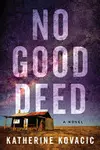
NO GOOD DEED is a very welcome Australian crime fiction book, written by one of the leading local writers in Katherine Kovacic, set in the stinking hot outback, featuring Rena - a 60something retired geologist on a trip through the area that is partly fulfillment of a long standing plan, partly an attempt to heal a broken heart after the death of her much loved husband. Rena and Tom had been planning this trip for years, both of them retired, a camper van fitted out with careful thought to being very self-sufficient and mobile, they wanted to get out into the remote areas, with just each other for company. Only Tom died suddenly of cancer, and Rena headed out on her own, devastated by the loss, moving through the the sorts of country that she knows well, as a healing exercise, and a search for purpose.
Very early on in the trip, she comes across signs of a fire burning off the highway. Venturing out to see what services would be required the scene is confronting - a crashed vehicle, consumed by flames, the driver still inside. The eventual revelation that the driver was a fellow geologist that she hadn't seen for 20 or so years, a disreputable character with a very dodgy past, piques the interest of a woman who is more than ably equipped to do a lot of outback sleuthing, much of which revolves around mining interests in the area, and a rumour of stolen, rare and very valuable, pink diamonds.
It's very obvious when reading NO GOOD DEED that Kovacic has done her research well. But she's too good a writer to turn this into a geology / mining text book. The tale here is interesting, and the character of Rena and those she pairs up with along the way are really believable, and extremely personable. It's hard not to want to really cheer the use of an older, talented and resilient female character at the centre of this story, but it's not done gratuitously or as some sort of nobler than thou feminist treatise. Instead, this character fits into the scenario effortlessly, she's believable, very emotionally fragile, but physically capable, experienced and it just makes sense that she would follow the leads in a field that she knows particularly well. The plot here is well laid out, perhaps not as suspenseful, or fast paced as some, but set within the overarching disruption of big mining, amplifying the competing priorities of small towns looking for economic impetus, and indigenous communities trying to protect their sacred places and country. The depiction of the colours of the landscape, the stark beauty and the all too oppressive heat are spot on, as is the vastness of the locations, and the oddness of encountering people in the most unexpected of locations. Not all those people mean well though, and whilst there are a couple of aspects of the plot that aren't that hard to work out, the resolutions to many threads take an unexpected path.
There is also a sly, very Australian, dry as the dust around her sense of humour about Rena. She's aware of her emotional fragility, aware that leaping into the investigation of a murder that is nothing to do with her is dangerous, and equally aware that there's no reason for her to be doing what she's doing. But she does. Partly it's that search for purpose, partly it's her natural sense of justice, partly it's incurable curiosity. Whilst curiosity this time around didn't quite kill the cat, there were points when you had to wonder whether or not she should have been having a long hard think about her choice. Then again, Rena doesn't seem like the sort of person that backs off when the going gets tough. Let's hope there's another book in her story.
Originally posted at www.austcrimefiction.org.
NO GOOD DEED is a very welcome Australian crime fiction book, written by one of the leading local writers in Katherine Kovacic, set in the stinking hot outback, featuring Rena - a 60something retired geologist on a trip through the area that is partly fulfillment of a long standing plan, partly an attempt to heal a broken heart after the death of her much loved husband. Rena and Tom had been planning this trip for years, both of them retired, a camper van fitted out with careful thought to being very self-sufficient and mobile, they wanted to get out into the remote areas, with just each other for company. Only Tom died suddenly of cancer, and Rena headed out on her own, devastated by the loss, moving through the the sorts of country that she knows well, as a healing exercise, and a search for purpose.
Very early on in the trip, she comes across signs of a fire burning off the highway. Venturing out to see what services would be required the scene is confronting - a crashed vehicle, consumed by flames, the driver still inside. The eventual revelation that the driver was a fellow geologist that she hadn't seen for 20 or so years, a disreputable character with a very dodgy past, piques the interest of a woman who is more than ably equipped to do a lot of outback sleuthing, much of which revolves around mining interests in the area, and a rumour of stolen, rare and very valuable, pink diamonds.
It's very obvious when reading NO GOOD DEED that Kovacic has done her research well. But she's too good a writer to turn this into a geology / mining text book. The tale here is interesting, and the character of Rena and those she pairs up with along the way are really believable, and extremely personable. It's hard not to want to really cheer the use of an older, talented and resilient female character at the centre of this story, but it's not done gratuitously or as some sort of nobler than thou feminist treatise. Instead, this character fits into the scenario effortlessly, she's believable, very emotionally fragile, but physically capable, experienced and it just makes sense that she would follow the leads in a field that she knows particularly well. The plot here is well laid out, perhaps not as suspenseful, or fast paced as some, but set within the overarching disruption of big mining, amplifying the competing priorities of small towns looking for economic impetus, and indigenous communities trying to protect their sacred places and country. The depiction of the colours of the landscape, the stark beauty and the all too oppressive heat are spot on, as is the vastness of the locations, and the oddness of encountering people in the most unexpected of locations. Not all those people mean well though, and whilst there are a couple of aspects of the plot that aren't that hard to work out, the resolutions to many threads take an unexpected path.
There is also a sly, very Australian, dry as the dust around her sense of humour about Rena. She's aware of her emotional fragility, aware that leaping into the investigation of a murder that is nothing to do with her is dangerous, and equally aware that there's no reason for her to be doing what she's doing. But she does. Partly it's that search for purpose, partly it's her natural sense of justice, partly it's incurable curiosity. Whilst curiosity this time around didn't quite kill the cat, there were points when you had to wonder whether or not she should have been having a long hard think about her choice. Then again, Rena doesn't seem like the sort of person that backs off when the going gets tough. Let's hope there's another book in her story.
Originally posted at www.austcrimefiction.org.
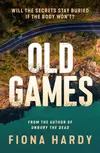
The morally flexible PI team of Alice and Teddy are back in a perfectly bonkers scenario in Fiona Hardy’s new novel Old Games.
Alice and Teddy, introduced to readers in the excellent Unbury the Dead, are best mates and private investigators who work for ‘Choker’, a man with an eclectic team of people who help him keep things on his version of the straight and narrow.
Full Review at Newtown Review of Books (link below) or my website.
Originally posted at newtownreviewofbooks.com.au.
The morally flexible PI team of Alice and Teddy are back in a perfectly bonkers scenario in Fiona Hardy’s new novel Old Games.
Alice and Teddy, introduced to readers in the excellent Unbury the Dead, are best mates and private investigators who work for ‘Choker’, a man with an eclectic team of people who help him keep things on his version of the straight and narrow.
Full Review at Newtown Review of Books (link below) or my website.
Originally posted at newtownreviewofbooks.com.au.


The third (and it seems possibly the final) novel in the story of Tatiana Crowe, a female undertaker in 1870s Sydney, sees the return of a character from an earlier novel who has had quite the change in personality (interestingly - explained in the author's notes at the end of the novel).
Tatiana Crowe and Evan Hunter met in that earlier novel in which Hunter, obviously attracted to Crowe, also insisted that she attend his father's demise and embalm his body for his final journey home to England. There's a shortage of reliable and competent embalmers in New Zealand, and despite Crowe's reluctance / refusal, it's the arrival of a large sum of cash and the complications in returning it safely, that finally force her hand, and she and her assistant find themselves on a ship to Auckland upon receipt of the news that Hunter Senior's death is imminent.
Once they arrive, however, they find that the Hunter's are a very different kettle of fish with Evan's mother an awful woman who verbally attacks Crowe for her seeming designs on her son Evan (which Crowe most definitely does not entertain), especially as it turns out that Hunter is considerably more interested in the thriving funeral business than Crowe herself. Although his "method" of weaponised rape in order to convince her that marriage is the only alternative, is both vicious and lacking in awareness of just how determined Crowe can be when it comes to protecting her hard-won independence and the business on which many people she loves now rely.
This is one of those series that it really would be best to read right from the beginning. Partly because the story of how Tatiana (Tatty) Crowe got to this point in her very young life (she's only twenty-five after all), and who the supporting cast of characters are - those that followed her from England and those that joined her in Sydney. There's complicated family relationships, love affairs, and always the business of conducting funerals, along with the regular stints of morgue duty. There's also a court case that refers back to the second novel that plays out in this one. This time, once Crowe returns from New Zealand, and the consequences start to be revealed, odd things happen, with a body stolen from a funeral train, and strange goings on at the morgue. Somebody is obviously targeting Crowe's business, but that threat also gets closer to the people around her, and at that point, intervention comes from a most unexpected, and tragic direction.
This is one of those series of novels that grabbed attention right from the opening salvo. Written with an eye to historical detail, the author's notes at the end of each novel provide a fascinating glimpse into the motivation, knowledge and thinking of the author (the information on dialogue alone is worth the price of purchase). There is obviously some restraint been used as they don't read as information dumps, with a good balance between historical detail, plot and character development. A big part of the attraction is the characters that surround Crowe, as well as Crowe herself, who for such a young woman is clever, determined, kind and astute. The workers that help her on a day to day basis are really a family though, and the author is not afraid to put members of that family at risk, and ultimately to have some pay the ultimate price, reflecting the reality of life at the time - medical help was limited, and the sorts of things that killed women in particular get a well-deserved, and pointed, airing.
Setting the series within the world of funerals, death and morgues also gives a very different perspective. A business whose practitioners move through society at all levels, often times unseen, but with fingers and connections in a lot of places, gives Crowe, and her fellow travellers a way of seeing everything, and not necessarily drawing a lot of attention. Which made some of the concealment aspects of this story particularly interesting - again from the female perspective, the decisions that were forced on women because of society's pathetic and dangerous double standards play out here in vivid confrontation.
I've really enjoyed the three books so far in this series, and will be really sad if this is the end for Tatty Crowe, and the family and business she's built herself.
Originally posted at www.austcrimefiction.org.
The third (and it seems possibly the final) novel in the story of Tatiana Crowe, a female undertaker in 1870s Sydney, sees the return of a character from an earlier novel who has had quite the change in personality (interestingly - explained in the author's notes at the end of the novel).
Tatiana Crowe and Evan Hunter met in that earlier novel in which Hunter, obviously attracted to Crowe, also insisted that she attend his father's demise and embalm his body for his final journey home to England. There's a shortage of reliable and competent embalmers in New Zealand, and despite Crowe's reluctance / refusal, it's the arrival of a large sum of cash and the complications in returning it safely, that finally force her hand, and she and her assistant find themselves on a ship to Auckland upon receipt of the news that Hunter Senior's death is imminent.
Once they arrive, however, they find that the Hunter's are a very different kettle of fish with Evan's mother an awful woman who verbally attacks Crowe for her seeming designs on her son Evan (which Crowe most definitely does not entertain), especially as it turns out that Hunter is considerably more interested in the thriving funeral business than Crowe herself. Although his "method" of weaponised rape in order to convince her that marriage is the only alternative, is both vicious and lacking in awareness of just how determined Crowe can be when it comes to protecting her hard-won independence and the business on which many people she loves now rely.
This is one of those series that it really would be best to read right from the beginning. Partly because the story of how Tatiana (Tatty) Crowe got to this point in her very young life (she's only twenty-five after all), and who the supporting cast of characters are - those that followed her from England and those that joined her in Sydney. There's complicated family relationships, love affairs, and always the business of conducting funerals, along with the regular stints of morgue duty. There's also a court case that refers back to the second novel that plays out in this one. This time, once Crowe returns from New Zealand, and the consequences start to be revealed, odd things happen, with a body stolen from a funeral train, and strange goings on at the morgue. Somebody is obviously targeting Crowe's business, but that threat also gets closer to the people around her, and at that point, intervention comes from a most unexpected, and tragic direction.
This is one of those series of novels that grabbed attention right from the opening salvo. Written with an eye to historical detail, the author's notes at the end of each novel provide a fascinating glimpse into the motivation, knowledge and thinking of the author (the information on dialogue alone is worth the price of purchase). There is obviously some restraint been used as they don't read as information dumps, with a good balance between historical detail, plot and character development. A big part of the attraction is the characters that surround Crowe, as well as Crowe herself, who for such a young woman is clever, determined, kind and astute. The workers that help her on a day to day basis are really a family though, and the author is not afraid to put members of that family at risk, and ultimately to have some pay the ultimate price, reflecting the reality of life at the time - medical help was limited, and the sorts of things that killed women in particular get a well-deserved, and pointed, airing.
Setting the series within the world of funerals, death and morgues also gives a very different perspective. A business whose practitioners move through society at all levels, often times unseen, but with fingers and connections in a lot of places, gives Crowe, and her fellow travellers a way of seeing everything, and not necessarily drawing a lot of attention. Which made some of the concealment aspects of this story particularly interesting - again from the female perspective, the decisions that were forced on women because of society's pathetic and dangerous double standards play out here in vivid confrontation.
I've really enjoyed the three books so far in this series, and will be really sad if this is the end for Tatty Crowe, and the family and business she's built herself.
Originally posted at www.austcrimefiction.org.

The author is well known in his native Iceland for translations, books for children, and as a publisher, but ONE TRUE WORD is his first thriller, and it's guaranteed to divide readers.
The premise is, on the one hand, straight forward, in that after an increasing period of snarking at each other, Júlía and her husband Gíó head off on a small boat to an uninhabited, small island in the middle of a freezing fjord as part of a research trip that Júlía claims is absolutely vital for her current work assignment. She then abandons him there in the depths of the Icelandic winter, returning home to a night of guilt ridden contemplation. But when she returns to the island the following morning, Gíó is nowhere to be found. A police search finds no trace of him, and obviously Júlía comes under suspicion, as her behaviour (and her failure to admit what really happened - the island / abandonment and all) starts to become increasingly erratic and questionable.
"Straight forward" in that it definitely seems that Júlía may not have directly killed Gío, but the complete lack of sightings, or evidence that he's alive, does seem to mean she's at least committed a form of manslaughter. Or is he out there somewhere biding his time, waiting for a chance for revenge? It's hard to tell, partly because Júlía is the main narrator of this story and she's a tricky woman to get a handle on. Gíó had definitely seemed to be more grumpy, more critical of everything she does all the time, and it feels like she had a right to be sick to the back teeth of him, and her reactions post the police starting an investigation, and her attempts to cover up her involvement feel like the actions of a guilty conscience. Not helped by the fact that part the way through the novel it's not at all hard to start to develop some feelings of sympathy for Gíó, as Júlía increasingly comes across as a bit of a liability and frankly, bloody annoying.
I do like novels like ONE TRUE WORD. They aren't immediately "entertaining" reading, and on the one level a lot of time is spent in the head of an increasingly unpleasant woman, but on the other level, it's pulling apart the expectations of normal behaviour and subverting the norm. A couple, who on the face of it, seemed reasonably content, with a reasonably good life, and a bit of material comfort, falling apart because of unrelenting sniping and dissatisfaction, but abandonment on a deserted miniscule island feels, well dramatic. Then again, it's just possible that Júlía or Gíó are world class unreliable narrators and there's considerably more going on at the heart of this story.
Did Júlía happily abandon Gíó to his fate, or was it a moment of madness that she'll live to regret? Or did Gíó take this opportunity to disappear from the radar and plot his revenge, or simply walk away? Or is there a third scenario? The reader won't know until you get to the end of the novel, and even then you might be left wondering. And therein lies the reason I found myself enthralled, and thoroughly invested right up what turned into a perfectly apt ending.
Originally posted at www.austcrimefiction.org.
The author is well known in his native Iceland for translations, books for children, and as a publisher, but ONE TRUE WORD is his first thriller, and it's guaranteed to divide readers.
The premise is, on the one hand, straight forward, in that after an increasing period of snarking at each other, Júlía and her husband Gíó head off on a small boat to an uninhabited, small island in the middle of a freezing fjord as part of a research trip that Júlía claims is absolutely vital for her current work assignment. She then abandons him there in the depths of the Icelandic winter, returning home to a night of guilt ridden contemplation. But when she returns to the island the following morning, Gíó is nowhere to be found. A police search finds no trace of him, and obviously Júlía comes under suspicion, as her behaviour (and her failure to admit what really happened - the island / abandonment and all) starts to become increasingly erratic and questionable.
"Straight forward" in that it definitely seems that Júlía may not have directly killed Gío, but the complete lack of sightings, or evidence that he's alive, does seem to mean she's at least committed a form of manslaughter. Or is he out there somewhere biding his time, waiting for a chance for revenge? It's hard to tell, partly because Júlía is the main narrator of this story and she's a tricky woman to get a handle on. Gíó had definitely seemed to be more grumpy, more critical of everything she does all the time, and it feels like she had a right to be sick to the back teeth of him, and her reactions post the police starting an investigation, and her attempts to cover up her involvement feel like the actions of a guilty conscience. Not helped by the fact that part the way through the novel it's not at all hard to start to develop some feelings of sympathy for Gíó, as Júlía increasingly comes across as a bit of a liability and frankly, bloody annoying.
I do like novels like ONE TRUE WORD. They aren't immediately "entertaining" reading, and on the one level a lot of time is spent in the head of an increasingly unpleasant woman, but on the other level, it's pulling apart the expectations of normal behaviour and subverting the norm. A couple, who on the face of it, seemed reasonably content, with a reasonably good life, and a bit of material comfort, falling apart because of unrelenting sniping and dissatisfaction, but abandonment on a deserted miniscule island feels, well dramatic. Then again, it's just possible that Júlía or Gíó are world class unreliable narrators and there's considerably more going on at the heart of this story.
Did Júlía happily abandon Gíó to his fate, or was it a moment of madness that she'll live to regret? Or did Gíó take this opportunity to disappear from the radar and plot his revenge, or simply walk away? Or is there a third scenario? The reader won't know until you get to the end of the novel, and even then you might be left wondering. And therein lies the reason I found myself enthralled, and thoroughly invested right up what turned into a perfectly apt ending.
Originally posted at www.austcrimefiction.org.
The author is well known in his native Iceland for translations, books for children, and as a publisher, but ONE TRUE WORD is his first thriller, and it's guaranteed to divide readers.
The premise is, on the one hand, straight forward, in that after an increasing period of snarking at each other, Júlía and her husband Gíó head off on a small boat to an uninhabited, small island in the middle of a freezing fjord as part of a research trip that Júlía claims is absolutely vital for her current work assignment. She then abandons him there in the depths of the Icelandic winter, returning home to a night of guilt ridden contemplation. But when she returns to the island the following morning, Gíó is nowhere to be found. A police search finds no trace of him, and obviously Júlía comes under suspicion, as her behaviour (and her failure to admit what really happened - the island / abandonment and all) starts to become increasingly erratic and questionable.
"Straight forward" in that it definitely seems that Júlía may not have directly killed Gío, but the complete lack of sightings, or evidence that he's alive, does seem to mean she's at least committed a form of manslaughter. Or is he out there somewhere biding his time, waiting for a change for revenge? It's hard to tell, partly because Júlía is the main narrator of this story and she's a tricky woman to get a handle on. Gíó had definitely seemed to be more grumpy, more critical of everything she does all the time, and it feels like she had a right to be sick to the back teeth of him, and her reactions post the police starting an investigation, and her attempts to cover up her involvement feel like the actions of a guilty conscience. Not helped by the fact that part the way through the novel it's not at all hard to start to develop some feelings of sympathy for Gíó, as Júlía increasingly comes across as a bit of a liability and frankly, bloody annoying.
I do like novels like ONE TRUE WORD. They aren't immediately "entertaining" reading, and on the one level a lot of time is spent in the head of an increasingly unpleasant woman, but on the other level, it's pulling apart the expectations of normal behaviour and subverting the norm. A couple, who on the face of it, seemed reasonably content, with a reasonably good life, and a bit of material comfort, falling apart because of unrelenting sniping and dissatisfaction, but abandonment on a deserted miniscule island feels, well dramatic. Then again, it's just possible that Júlía or Gíó are world class unreliable narrators and there's considerably more going on at the heart of this story.
Did Júlía happily abandon Gíó to his fate, or was it a moment of madness that she'll live to regret? Or did Gíó take this opportunity to disappear from the radar and plot his revenge, or simply walk away? Or is there a third scenario? The reader won't know until you get to the end of the novel, and even then you might be left wondering. And therein lies the reason I found myself enthralled, and thoroughly invested right up what turned into a perfectly apt ending.
Originally posted at www.austcrimefiction.org.
The author is well known in his native Iceland for translations, books for children, and as a publisher, but ONE TRUE WORD is his first thriller, and it's guaranteed to divide readers.
The premise is, on the one hand, straight forward, in that after an increasing period of snarking at each other, Júlía and her husband Gíó head off on a small boat to an uninhabited, small island in the middle of a freezing fjord as part of a research trip that Júlía claims is absolutely vital for her current work assignment. She then abandons him there in the depths of the Icelandic winter, returning home to a night of guilt ridden contemplation. But when she returns to the island the following morning, Gíó is nowhere to be found. A police search finds no trace of him, and obviously Júlía comes under suspicion, as her behaviour (and her failure to admit what really happened - the island / abandonment and all) starts to become increasingly erratic and questionable.
"Straight forward" in that it definitely seems that Júlía may not have directly killed Gío, but the complete lack of sightings, or evidence that he's alive, does seem to mean she's at least committed a form of manslaughter. Or is he out there somewhere biding his time, waiting for a change for revenge? It's hard to tell, partly because Júlía is the main narrator of this story and she's a tricky woman to get a handle on. Gíó had definitely seemed to be more grumpy, more critical of everything she does all the time, and it feels like she had a right to be sick to the back teeth of him, and her reactions post the police starting an investigation, and her attempts to cover up her involvement feel like the actions of a guilty conscience. Not helped by the fact that part the way through the novel it's not at all hard to start to develop some feelings of sympathy for Gíó, as Júlía increasingly comes across as a bit of a liability and frankly, bloody annoying.
I do like novels like ONE TRUE WORD. They aren't immediately "entertaining" reading, and on the one level a lot of time is spent in the head of an increasingly unpleasant woman, but on the other level, it's pulling apart the expectations of normal behaviour and subverting the norm. A couple, who on the face of it, seemed reasonably content, with a reasonably good life, and a bit of material comfort, falling apart because of unrelenting sniping and dissatisfaction, but abandonment on a deserted miniscule island feels, well dramatic. Then again, it's just possible that Júlía or Gíó are world class unreliable narrators and there's considerably more going on at the heart of this story.
Did Júlía happily abandon Gíó to his fate, or was it a moment of madness that she'll live to regret? Or did Gíó take this opportunity to disappear from the radar and plot his revenge, or simply walk away? Or is there a third scenario? The reader won't know until you get to the end of the novel, and even then you might be left wondering. And therein lies the reason I found myself enthralled, and thoroughly invested right up what turned into a perfectly apt ending.
Originally posted at www.austcrimefiction.org.

The website of author Taliyah Stone has an interesting byline:
Australian crime fiction based on real events from the 1980s underworld. Written by an anonymous author with insider knowledge.
BANG! is the first entrant in a trilogy to be followed up by DIRTY! (to be released 3rd July, 2026) and TAKEN! (to be released late 2026).
Set in the early 1980's in Perth, Western Australia, the opening novella (125 or so pages) tells the story of the murder of brothel madam Destiny Purcell. Shot at the wheel of her car, on a golf course in Perth, it was a wet and dismal sort of a night, and the only evidence that could be gleaned was a single image of an unidentifiable man on a pushbike near the scene at the right time.
Meanwhile the city is controlled by a shadowy group of influential men known as the Purple Circle, who use motorcycle clubs as enforcers, and managed sin as a controlling factor, it all comes down to money and power.
Told in a noir styled tone, in a series of short sharp chapters, BANG! packs quite a bit into a small space. The intricacies of the Purple Circle and the bikies, and the influence that they assert, and the people who they control are well fleshed out, as is the existence of the shadowy killer, who eventually outs himself, after the wrong man takes the blame for the killing of Destiny Purcell. Along the way other people get hurt, lives spiral out of control and the money and power stay exactly where the Circle wants it.
The tone here is pretty spot on, although there were a few points where a bit of the repetition did detract slightly from the pace, and noir stylings. Given the shortness of the work, there's enough character exposition to give the reader a handle on who was who in this story, and the evil at the heart of it all.
I'm more than a bit of a fan of fiction with a dark, black heart though, and BANG! certainly gave this reader a chance to contemplate the worst of human nature.
Originally posted at www.austcrimefiction.org.
The website of author Taliyah Stone has an interesting byline:
Australian crime fiction based on real events from the 1980s underworld. Written by an anonymous author with insider knowledge.
BANG! is the first entrant in a trilogy to be followed up by DIRTY! (to be released 3rd July, 2026) and TAKEN! (to be released late 2026).
Set in the early 1980's in Perth, Western Australia, the opening novella (125 or so pages) tells the story of the murder of brothel madam Destiny Purcell. Shot at the wheel of her car, on a golf course in Perth, it was a wet and dismal sort of a night, and the only evidence that could be gleaned was a single image of an unidentifiable man on a pushbike near the scene at the right time.
Meanwhile the city is controlled by a shadowy group of influential men known as the Purple Circle, who use motorcycle clubs as enforcers, and managed sin as a controlling factor, it all comes down to money and power.
Told in a noir styled tone, in a series of short sharp chapters, BANG! packs quite a bit into a small space. The intricacies of the Purple Circle and the bikies, and the influence that they assert, and the people who they control are well fleshed out, as is the existence of the shadowy killer, who eventually outs himself, after the wrong man takes the blame for the killing of Destiny Purcell. Along the way other people get hurt, lives spiral out of control and the money and power stay exactly where the Circle wants it.
The tone here is pretty spot on, although there were a few points where a bit of the repetition did detract slightly from the pace, and noir stylings. Given the shortness of the work, there's enough character exposition to give the reader a handle on who was who in this story, and the evil at the heart of it all.
I'm more than a bit of a fan of fiction with a dark, black heart though, and BANG! certainly gave this reader a chance to contemplate the worst of human nature.
Originally posted at www.austcrimefiction.org.


Updated a reading goal:
Read 100 books in 2026
Progress so far: 25 / 100 25%


Part life story, part inspirational memoir, BLOOM is life from Mary Fowler's point of view. And it's been quite the ride for such a young, talented woman. Parts of this book are distressing to read about - the overt racism particularly whilst playing in France, her self-doubt and anxiety. Then there are the insights into the joy of playing for the Matilda's and the close relationships with the team that seem to fuel so much of the success of the team. I love watching them play - win or lose - they seem like a supportive and close group when looked at from the distance of a TV screen.
The book is also a bit of a guide to how Fowler has improved her own mental health - through journaling, meditation and really working hard on it. The chapters are short, and mostly end with a series of meditative questions or points to think about, and there are photos sprinkled throughout that show a happy and supportive family life, as well as a series of photos of friends and playing times. And a growing romance with a sports person (I have to admit I've no idea who he is - but then up until the Matilda's current iteration you'd have had to drag me kicking screaming and raging to any form of football), but he seems incredibly supportive and they are obviously very close....
A very quick read, there's more than enough in this memoir to give you an idea of who Mary Fowler is and where she came from, the battles it's taken to get her to this point in her life, and the way that she handles pressure to be useful, without being overly intrusive.
In that it was actually refreshingly different - not your average sporting memoir at all, but then Fowler, and the Matilda's in general, are not your average team.
Part life story, part inspirational memoir, BLOOM is life from Mary Fowler's point of view. And it's been quite the ride for such a young, talented woman. Parts of this book are distressing to read about - the overt racism particularly whilst playing in France, her self-doubt and anxiety. Then there are the insights into the joy of playing for the Matilda's and the close relationships with the team that seem to fuel so much of the success of the team. I love watching them play - win or lose - they seem like a supportive and close group when looked at from the distance of a TV screen.
The book is also a bit of a guide to how Fowler has improved her own mental health - through journaling, meditation and really working hard on it. The chapters are short, and mostly end with a series of meditative questions or points to think about, and there are photos sprinkled throughout that show a happy and supportive family life, as well as a series of photos of friends and playing times. And a growing romance with a sports person (I have to admit I've no idea who he is - but then up until the Matilda's current iteration you'd have had to drag me kicking screaming and raging to any form of football), but he seems incredibly supportive and they are obviously very close....
A very quick read, there's more than enough in this memoir to give you an idea of who Mary Fowler is and where she came from, the battles it's taken to get her to this point in her life, and the way that she handles pressure to be useful, without being overly intrusive.
In that it was actually refreshingly different - not your average sporting memoir at all, but then Fowler, and the Matilda's in general, are not your average team.


