
Karen


Following up very closely behind Milligan's debut novel PHEASANT'S NEST, SHELLYBANKS features the same main character, journalist Kate Delaney, and many of the same themes - violence and abuse of women, the PTSD and long-term affects of that on victims, and those that love them.
Whilst it's absolutely not necessary to have read the first book in the series, as there are plenty of throwbacks to the shocking and traumatising events in Delaney's life, it would also help to understand the depths of the PTSD and trauma she, and her much loved partner Liam are experiencing, and the challenges they are both facing in trying to move on with their lives. It's during an extended break away in Greece that they are called by Kate's beloved aunt Dolores, at home in Ireland, where after many many years of single life, she was nearly at the point of marriage to a much loved man. Only he has suddenly discovered a terminal illness that kills him pretty quickly, and Dolores needs Kate's support. Flying into Dublin what starts out as a supporting role for a grieving woman, quickly becomes an investigation into the abuse and trauma inflicted on Dolores when she was young, that Kate never knew about.
As is often the way with stories of the abuse of young women and girls, the full extent only comes to light at a later time in the survivor's life, in this case, as a result of the trauma of losing the man she loved, and the close connection between an Aunt who was a mother figure in many ways, and a niece who has her own godawful burden to bear. It's the shared experience that seems to give these two women the ability to a) reveal and b) deal with the events that happened to Dolores many years before, when she was drawn into a deeply abusive religious movement that inflicted physical and sexual abuse on its victims, and seems to still be operating in some capacity today. Maybe even more confronting because it's a movement of women, inflicting such cruel suffering on other women, including the stealing of babies and an illegal adoption racket.
To be honest by the time you get to the story of Siobhan, a young woman, adopted out as a child, it's a relief to know she got out, lived a relatively normal life, and survived. All the women who stayed within the orbit of a woman known as the "Directress" were most definitely the unlucky ones. Which gets us to the core of this book. This is a book about abuse and suffering. Much of the content of the stories of Dolores, and the references back to what happened to Kate are extremely confronting and downright distressing at times.
The style of writing is matter of fact, almost stilted on occasions, perhaps reflecting a reluctance to be party to the telling, to revealing just how bloody awful people can be. Regardless of the reason though, there are parts of this book that are absolutely a hard slog. For this reader, it was the story of Siobhan that struck me as a point of redemption in an odd sort of way. She had loving, albeit smothering adoptive parents, she had a life and the chance to be who she wanted to be, and it was her very existence that led to the downfall of awful people and an awful system.
Delaney works as an investigator who is utterly committed to these sorts of stories, and the use of the slightly lighter, albeit determined and dedicated cop in Christy Redmond works as a counterpoint. Although to be fair, Delaney's not trying to be likeable or understandable, she's as confronted by her PTSD, by the events that happened in the first novel as the reader is going to be. She's damaged, and Liam is struggling, but it's in Dolores and her relationship that you see shared experience triumphing over all.
Recommending a book like this is always going to be a difficult undertaking. It's a story that absolutely needs to be told. The telling of it's hard and the experience of reading about it confronting. It's one of those crime novels that takes something very broken and lights it up as brightly and as clearly as it possibly can. Warts and all.
Originally posted at www.austcrimefiction.org.
Following up very closely behind Milligan's debut novel PHEASANT'S NEST, SHELLYBANKS features the same main character, journalist Kate Delaney, and many of the same themes - violence and abuse of women, the PTSD and long-term affects of that on victims, and those that love them.
Whilst it's absolutely not necessary to have read the first book in the series, as there are plenty of throwbacks to the shocking and traumatising events in Delaney's life, it would also help to understand the depths of the PTSD and trauma she, and her much loved partner Liam are experiencing, and the challenges they are both facing in trying to move on with their lives. It's during an extended break away in Greece that they are called by Kate's beloved aunt Dolores, at home in Ireland, where after many many years of single life, she was nearly at the point of marriage to a much loved man. Only he has suddenly discovered a terminal illness that kills him pretty quickly, and Dolores needs Kate's support. Flying into Dublin what starts out as a supporting role for a grieving woman, quickly becomes an investigation into the abuse and trauma inflicted on Dolores when she was young, that Kate never knew about.
As is often the way with stories of the abuse of young women and girls, the full extent only comes to light at a later time in the survivor's life, in this case, as a result of the trauma of losing the man she loved, and the close connection between an Aunt who was a mother figure in many ways, and a niece who has her own godawful burden to bear. It's the shared experience that seems to give these two women the ability to a) reveal and b) deal with the events that happened to Dolores many years before, when she was drawn into a deeply abusive religious movement that inflicted physical and sexual abuse on its victims, and seems to still be operating in some capacity today. Maybe even more confronting because it's a movement of women, inflicting such cruel suffering on other women, including the stealing of babies and an illegal adoption racket.
To be honest by the time you get to the story of Siobhan, a young woman, adopted out as a child, it's a relief to know she got out, lived a relatively normal life, and survived. All the women who stayed within the orbit of a woman known as the "Directress" were most definitely the unlucky ones. Which gets us to the core of this book. This is a book about abuse and suffering. Much of the content of the stories of Dolores, and the references back to what happened to Kate are extremely confronting and downright distressing at times.
The style of writing is matter of fact, almost stilted on occasions, perhaps reflecting a reluctance to be party to the telling, to revealing just how bloody awful people can be. Regardless of the reason though, there are parts of this book that are absolutely a hard slog. For this reader, it was the story of Siobhan that struck me as a point of redemption in an odd sort of way. She had loving, albeit smothering adoptive parents, she had a life and the chance to be who she wanted to be, and it was her very existence that led to the downfall of awful people and an awful system.
Delaney works as an investigator who is utterly committed to these sorts of stories, and the use of the slightly lighter, albeit determined and dedicated cop in Christy Redmond works as a counterpoint. Although to be fair, Delaney's not trying to be likeable or understandable, she's as confronted by her PTSD, by the events that happened in the first novel as the reader is going to be. She's damaged, and Liam is struggling, but it's in Dolores and her relationship that you see shared experience triumphing over all.
Recommending a book like this is always going to be a difficult undertaking. It's a story that absolutely needs to be told. The telling of it's hard and the experience of reading about it confronting. It's one of those crime novels that takes something very broken and lights it up as brightly and as clearly as it possibly can. Warts and all.
Originally posted at www.austcrimefiction.org.

I listened to Alcott read this memoir himself so that was a bit of a joy in and of itself, there's something about the infectious tone of his voice that's very engaging, and pretty funny in places. He's got a dry sense of humour that's for sure, but in ABLE he doesn't shy away from the complications of a life spent with some physical restrictions as the result of a tumour on the spine that he was born with. In 1990. Sheesh, the things this man has achieved in his lifetime make me wonder what the hell I've been doing for all my years.
I'd definitely recommend reading / listening to this memoir though. It's a reminder that life's not straightforward when you have physical disabilities, and the complications come from all sorts of places the rest of us aren't considering. Salting iced footpaths might help with walking, but it's havoc for wheelchairs just as one small example. But that doesn't mean everyone doesn't deserve a place, a voice and a chance.
Brilliant book. Brilliant bloke. How lucky are we to have him around. (And do look up Wheelchair Crowd Surfing Gone Wrong on YouTube).
Originally posted at www.austcrimefiction.org.
I listened to Alcott read this memoir himself so that was a bit of a joy in and of itself, there's something about the infectious tone of his voice that's very engaging, and pretty funny in places. He's got a dry sense of humour that's for sure, but in ABLE he doesn't shy away from the complications of a life spent with some physical restrictions as the result of a tumour on the spine that he was born with. In 1990. Sheesh, the things this man has achieved in his lifetime make me wonder what the hell I've been doing for all my years.
I'd definitely recommend reading / listening to this memoir though. It's a reminder that life's not straightforward when you have physical disabilities, and the complications come from all sorts of places the rest of us aren't considering. Salting iced footpaths might help with walking, but it's havoc for wheelchairs just as one small example. But that doesn't mean everyone doesn't deserve a place, a voice and a chance.
Brilliant book. Brilliant bloke. How lucky are we to have him around. (And do look up Wheelchair Crowd Surfing Gone Wrong on YouTube).
Originally posted at www.austcrimefiction.org.


A mystery thriller that turns into an unresolved dystopian nightmare was not what I was expecting when I started LEFT BEHIND. Nor was it necessarily obviously where it was heading as the story of a camping trip to K'gari started out. Two couples, connected through Des and Luke's shared training as paramedics, Annabelle and Luke are married - and there are tensions. Des and Julianni are recently dating, and in the early stages of discovery and doubt. The tension between the married couple is palpable, right from the start of the story, although most of the view of that is seen through Annabelle's eyes, and there's more than a hint of Luke being controlling, and her being a bit lost and unsure of her future.
The tension is heightened by some odd things happening on the island when they arrive there with the spectre of an incoming cyclone adding to that - is it the heavy air that comes before a storm that's making everything seem so overwhelming or is it the strange man that Annabelle keeps catching moving around in the dark, digging in sand off the side of darkened tracks, moving large items, popping up in all sorts of peculiar places. Even stranger when it turns out he's the "friend" that Luke suddenly announces is supposed to be joining them. Then there's the late night moaning in the amenities block, and a missing pair of campers who just vanish, leaving their belongings abandoned near the beach.
Told as it is mostly through Annabelle's eyes it's really hard to tell if this is just a woman who is jumping at shadows because she's on knife-edged tense before they even get to the island, or there's something else going on with Luke. Or his friend, or the ranger, or the missing campers, or Julianni who is a dab hand with a fishing knife and up for a lot of things that Annabelle's sure are dangerous. Swimming with sharks anyone? Which leaves you with a hefty potential metaphor of sharks on land as well. Or maybe you've got an unreliable narrator. Or maybe things are going to get weird. Which lordy they do.
The first half of the novel is very much a real world, no idea what's happening here but something's going to happen, in a glorious location, with a palpable atmosphere. The second half of the novel is ... well let's go with not quite what I was expecting from the lead up. What starts out as an exercise in extreme psychological tension with a potentially unreliable narrator or two, or at the very least some very sensitive ones, doesn't necessarily end in personal jeopardy but goes big. Very big.
Steeped in atmospheric, odd, off putting and it has to be said very engaging tension, the ambiguous ending of this one is going to be pitch perfect for some readers, and teeth endangering for others. Either way I'd suggest coming to this for the dread, the sense of foreboding in the bright sun and holiday atmosphere, and ... well for the weird that seems to be setting up the idea that it doesn't really matter a jot just how fraught your personal situation is when there are considerably bigger, world wide threats on the doorstep.
Originally posted at www.austcrimefiction.org.
A mystery thriller that turns into an unresolved dystopian nightmare was not what I was expecting when I started LEFT BEHIND. Nor was it necessarily obviously where it was heading as the story of a camping trip to K'gari started out. Two couples, connected through Des and Luke's shared training as paramedics, Annabelle and Luke are married - and there are tensions. Des and Julianni are recently dating, and in the early stages of discovery and doubt. The tension between the married couple is palpable, right from the start of the story, although most of the view of that is seen through Annabelle's eyes, and there's more than a hint of Luke being controlling, and her being a bit lost and unsure of her future.
The tension is heightened by some odd things happening on the island when they arrive there with the spectre of an incoming cyclone adding to that - is it the heavy air that comes before a storm that's making everything seem so overwhelming or is it the strange man that Annabelle keeps catching moving around in the dark, digging in sand off the side of darkened tracks, moving large items, popping up in all sorts of peculiar places. Even stranger when it turns out he's the "friend" that Luke suddenly announces is supposed to be joining them. Then there's the late night moaning in the amenities block, and a missing pair of campers who just vanish, leaving their belongings abandoned near the beach.
Told as it is mostly through Annabelle's eyes it's really hard to tell if this is just a woman who is jumping at shadows because she's on knife-edged tense before they even get to the island, or there's something else going on with Luke. Or his friend, or the ranger, or the missing campers, or Julianni who is a dab hand with a fishing knife and up for a lot of things that Annabelle's sure are dangerous. Swimming with sharks anyone? Which leaves you with a hefty potential metaphor of sharks on land as well. Or maybe you've got an unreliable narrator. Or maybe things are going to get weird. Which lordy they do.
The first half of the novel is very much a real world, no idea what's happening here but something's going to happen, in a glorious location, with a palpable atmosphere. The second half of the novel is ... well let's go with not quite what I was expecting from the lead up. What starts out as an exercise in extreme psychological tension with a potentially unreliable narrator or two, or at the very least some very sensitive ones, doesn't necessarily end in personal jeopardy but goes big. Very big.
Steeped in atmospheric, odd, off putting and it has to be said very engaging tension, the ambiguous ending of this one is going to be pitch perfect for some readers, and teeth endangering for others. Either way I'd suggest coming to this for the dread, the sense of foreboding in the bright sun and holiday atmosphere, and ... well for the weird that seems to be setting up the idea that it doesn't really matter a jot just how fraught your personal situation is when there are considerably bigger, world wide threats on the doorstep.
Originally posted at www.austcrimefiction.org.


Twenty years have passed since the brutal death of James Brandt’s beloved cousin. Will an inquiry into gay hate-crimes offer any resolution?
In 2021 journalist Michael Burge released his first novel Tank Water, a coming-of-age thriller that tackled the issue of homophobic violence, particularly from the late 1980s through to the 1990s. Protagonist James Brandt had left his hometown of Kippen in rural New South Wales as a very young man, only returning after years away when his cousin Tony was found dead under the local bridge. There were two confusing aspects to that death. First, the bridge was very near a well-known homosexual beat and had been the location of other reported attacks, although Tony was not known to be homosexual, unlike James. Second, why had Tony left the entire family farm to James? Although the wider societal question is the really big one, there’s also the question of why one lonely Kippen farm boy in every generation kills himself.
The author’s note at the back of Dirt Trap explains the trigger for the novel was the real-life New South Wales Special Commission of Inquiry into LGBTQI Hate Crimes 2021–2024. While a lot of the media reporting of that Inquiry concentrated on city-based crimes, there were a number of victims from regional areas, and in his role as a journalist, Burge spoke to many of the families:
Since the publication of Tank Water, I’ve come to realise how positioning gay-hate killing within contemporary crime fiction has a tendency to legitimise the murder of gay people as atrocities in the minds of a far bigger audience than journalism. It’s ironic, but I’m convinced this is because fiction is capable of attaching emotion to the issue, particularly when dealing with the bereaved caught up in such long-term unsolved crimes.
In Dirt Trap, James Brandt has returned to Kippen more permanently. Living on part of the family farm, near Tony’s sister Yvonne and her husband, who also care for Tony and Yvonne’s elderly mother Doris. Brandt’s father has also recently died, a fall from a tank on the family farm caused, it was thought, by a heart attack, meaning that Brandt’s connections to the area are fraying. As is his relationship with husband Dylan, who moved to Kippen with James not that many years before. The fragility of that relationship has nothing to do with Dylan, who is supportive, kind and tries to be understanding of an increasingly brittle and triggered James, who is obsessed with the findings of the NSW Inquiry, and the man he believes killed Tony.
James is a prickly, difficult, frequently confronting character. He’s also acutely aware of some of the reasons he’s struggling:
James knew his fictional ramblings were as raw as a therapy session, yet as soon as the first paragraph was out of him, a truly satisfying breath got to the very far reaches of his lungs and he could see what was really bothering him.
Tony’s killer was back in town the same week as the court hearing about his murder, and that could only mean one thing: Bobby Jones reckoned he was off the hook.
The Jones and Brandt families have been part of the fabric of Kippen for as long as anyone can remember. It’s a classic case of two multi-generational families, one small town, and all sorts of historic rivalries. James has always been convinced that Bobby killed Tony. Bobby’s departure, and the whole Jones clan’s odd behaviour since Tony’s death, seems – to James at least – to mean they have questions to answer. But nobody quite expected Bobby’s sudden return to town, accompanied by wife Kylie and teenage children Andrew and Neil. Andrew is transitioning and now goes by the name Andi. Dylan, as the principal of the high school, immediately takes this in his stride. James is unquestioning in his acceptance as well, heightened by his awareness of the bravery of being different in a small town, although it turns out that difference is not so unusual in Kippen these days, as a gay dating app reveals. Surprisingly to some, one of Andi’s loudest and most determined supporters is her father, although Andi’s grandfather proves to be nowhere near as understanding, or close to acceptance.
Dad used to say awful things about gays. So did Grandad. Drunken things, like they were proud of kicking the shit out of men like that. But once they’d known Andi wasn’t a boy, Dad stopped expecting her to join in with all that talk and would try to change the subject to make Grandad shut up. But he wouldn’t. He’d gone into a rage once about how the Joneses weren’t murderers just because a poof journalist whinged to the cops.
The depth of the problems in the Jones family really start to surface when Bobby is found dead at the foot of the water standpipe in town, as do the flaws in James’s fervent belief that Bobby killed Tony. Again the spectre of a known homosexual beat raises its head, complicated further by the ongoing drought, which means that the water collection point becomes as busy as a major city street day and night, making the discovery of a second body in the vicinity a source of major confusion.
The farmer who’d called in the body was sitting patiently in his truck. She’d go over the discovery with him again shortly, but she had no reason to doubt his story: the early morning drought news had brought him into town with his truck-mounted tank to fill up at the standpipe.
Meanwhile the outsider cop, Therese Lin, does a sterling job of dogged investigative practice, especially given the police station is now a coffee shop and residence. Instead she finds herself living in the local caravan park, next door to an investigative podcaster sent by James’s editor to work with him (not going to happen as far as James is concerned), using the pool staffroom as a police station. With limited facilities, no backup, distant forensics and a complicated web of people with plenty to hide, she works her way through these current murders trying to understand the echoes back to the time when Tony and others had died in Kippen, and those inter-family and small community tensions. But Lin is no idiot, she’s patient, and notices the little things.
Therese waved back like it was all good, because men were always unsettled by the sudden wrap-up of a little chat. If this one was worried about anything, he’d come sniffing around eventually.
Burge takes his experiences of rural life and makes them very real on the page. The observations about living through extreme drought, the complications of small-town interactions, and the nature of difference and how small gestures of acceptance can matter to an individual, sit easily within the narrative of an ongoing investigation of crimes past and present.
He’s also not afraid to make his central character a tricky individual. Readers may struggle to warm to James Brandt, although those prepared to reflect a little will see ample reasons for him being stressed, complicated, confused, and occasionally grating. It makes sense that a man who has experienced so much rejection early in life, and homophobia and the possibility that difference is potentially life-threatening, would be a bit prickly. It wouldn’t make sense to have it any other way, and it’s not just a brave move, it’s speaking truth to the facts.
Which is, when it comes down to it, exactly what Dirt Trap is all about. The inquiry into hate crimes might have bought some legal closure to some of the cases brought before it, but nothing so formal and legalistic will ever explain the emotional reality of so many lives lost because of pointless hate.
Originally posted at newtownreviewofbooks.com.au.
Twenty years have passed since the brutal death of James Brandt’s beloved cousin. Will an inquiry into gay hate-crimes offer any resolution?
In 2021 journalist Michael Burge released his first novel Tank Water, a coming-of-age thriller that tackled the issue of homophobic violence, particularly from the late 1980s through to the 1990s. Protagonist James Brandt had left his hometown of Kippen in rural New South Wales as a very young man, only returning after years away when his cousin Tony was found dead under the local bridge. There were two confusing aspects to that death. First, the bridge was very near a well-known homosexual beat and had been the location of other reported attacks, although Tony was not known to be homosexual, unlike James. Second, why had Tony left the entire family farm to James? Although the wider societal question is the really big one, there’s also the question of why one lonely Kippen farm boy in every generation kills himself.
The author’s note at the back of Dirt Trap explains the trigger for the novel was the real-life New South Wales Special Commission of Inquiry into LGBTQI Hate Crimes 2021–2024. While a lot of the media reporting of that Inquiry concentrated on city-based crimes, there were a number of victims from regional areas, and in his role as a journalist, Burge spoke to many of the families:
Since the publication of Tank Water, I’ve come to realise how positioning gay-hate killing within contemporary crime fiction has a tendency to legitimise the murder of gay people as atrocities in the minds of a far bigger audience than journalism. It’s ironic, but I’m convinced this is because fiction is capable of attaching emotion to the issue, particularly when dealing with the bereaved caught up in such long-term unsolved crimes.
In Dirt Trap, James Brandt has returned to Kippen more permanently. Living on part of the family farm, near Tony’s sister Yvonne and her husband, who also care for Tony and Yvonne’s elderly mother Doris. Brandt’s father has also recently died, a fall from a tank on the family farm caused, it was thought, by a heart attack, meaning that Brandt’s connections to the area are fraying. As is his relationship with husband Dylan, who moved to Kippen with James not that many years before. The fragility of that relationship has nothing to do with Dylan, who is supportive, kind and tries to be understanding of an increasingly brittle and triggered James, who is obsessed with the findings of the NSW Inquiry, and the man he believes killed Tony.
James is a prickly, difficult, frequently confronting character. He’s also acutely aware of some of the reasons he’s struggling:
James knew his fictional ramblings were as raw as a therapy session, yet as soon as the first paragraph was out of him, a truly satisfying breath got to the very far reaches of his lungs and he could see what was really bothering him.
Tony’s killer was back in town the same week as the court hearing about his murder, and that could only mean one thing: Bobby Jones reckoned he was off the hook.
The Jones and Brandt families have been part of the fabric of Kippen for as long as anyone can remember. It’s a classic case of two multi-generational families, one small town, and all sorts of historic rivalries. James has always been convinced that Bobby killed Tony. Bobby’s departure, and the whole Jones clan’s odd behaviour since Tony’s death, seems – to James at least – to mean they have questions to answer. But nobody quite expected Bobby’s sudden return to town, accompanied by wife Kylie and teenage children Andrew and Neil. Andrew is transitioning and now goes by the name Andi. Dylan, as the principal of the high school, immediately takes this in his stride. James is unquestioning in his acceptance as well, heightened by his awareness of the bravery of being different in a small town, although it turns out that difference is not so unusual in Kippen these days, as a gay dating app reveals. Surprisingly to some, one of Andi’s loudest and most determined supporters is her father, although Andi’s grandfather proves to be nowhere near as understanding, or close to acceptance.
Dad used to say awful things about gays. So did Grandad. Drunken things, like they were proud of kicking the shit out of men like that. But once they’d known Andi wasn’t a boy, Dad stopped expecting her to join in with all that talk and would try to change the subject to make Grandad shut up. But he wouldn’t. He’d gone into a rage once about how the Joneses weren’t murderers just because a poof journalist whinged to the cops.
The depth of the problems in the Jones family really start to surface when Bobby is found dead at the foot of the water standpipe in town, as do the flaws in James’s fervent belief that Bobby killed Tony. Again the spectre of a known homosexual beat raises its head, complicated further by the ongoing drought, which means that the water collection point becomes as busy as a major city street day and night, making the discovery of a second body in the vicinity a source of major confusion.
The farmer who’d called in the body was sitting patiently in his truck. She’d go over the discovery with him again shortly, but she had no reason to doubt his story: the early morning drought news had brought him into town with his truck-mounted tank to fill up at the standpipe.
Meanwhile the outsider cop, Therese Lin, does a sterling job of dogged investigative practice, especially given the police station is now a coffee shop and residence. Instead she finds herself living in the local caravan park, next door to an investigative podcaster sent by James’s editor to work with him (not going to happen as far as James is concerned), using the pool staffroom as a police station. With limited facilities, no backup, distant forensics and a complicated web of people with plenty to hide, she works her way through these current murders trying to understand the echoes back to the time when Tony and others had died in Kippen, and those inter-family and small community tensions. But Lin is no idiot, she’s patient, and notices the little things.
Therese waved back like it was all good, because men were always unsettled by the sudden wrap-up of a little chat. If this one was worried about anything, he’d come sniffing around eventually.
Burge takes his experiences of rural life and makes them very real on the page. The observations about living through extreme drought, the complications of small-town interactions, and the nature of difference and how small gestures of acceptance can matter to an individual, sit easily within the narrative of an ongoing investigation of crimes past and present.
He’s also not afraid to make his central character a tricky individual. Readers may struggle to warm to James Brandt, although those prepared to reflect a little will see ample reasons for him being stressed, complicated, confused, and occasionally grating. It makes sense that a man who has experienced so much rejection early in life, and homophobia and the possibility that difference is potentially life-threatening, would be a bit prickly. It wouldn’t make sense to have it any other way, and it’s not just a brave move, it’s speaking truth to the facts.
Which is, when it comes down to it, exactly what Dirt Trap is all about. The inquiry into hate crimes might have bought some legal closure to some of the cases brought before it, but nothing so formal and legalistic will ever explain the emotional reality of so many lives lost because of pointless hate.
Originally posted at newtownreviewofbooks.com.au.

Any new novel from J.P. Pomare needs to be approached with caution. You're going to have to make sure that you've cleared your calendar, stacked up the pre-made meals, and maybe set some alarms to remind you of the animal medication schedules and feeding rounds, because I can just about guarantee that the "well I don't know what's going on here" is rapidly going to suck you in and hang onto you until the final page.
He's a deceptive writer, this man. Setting up a story in THE GAMBLER that started out almost gently, creating a few doubts that the planning mentioned above would be required (luckily I've been here before), it's a slow builder. Private Investigator, Vince Reid, is visiting an old friend when he's offered a case he can't refuse, and his friend can't do. Maybe therein lies the reason for the gentle deceptive start, Reid also thinks this one is going to be a bit of a doddle - find out why a young woman was shot at a political rally. Why she was targeted by a seemingly respectable older local woman who drove into that rally and fired, seemingly directly, at a young woman she didn't know or have any connection to whatsoever. The gunwoman herself was killed almost immediately afterwards by a young man who did actually have a connection to the victim, but he's elusive, hard to track down, hard to understand, increasingly hard to explain who or exactly what he is to do with the whole thing. It's as Reid tries to understand his part in the main that the connections get even more murky, and the layers in this deceptively chilling tale of manipulation, control, money, power and cruelty start to emerge.
From small towns, to online communities, the Amish and working class families who just want to know what the hell happened, Reid starts out on an investigation that seems like it would be easy money, only to find it's anything but. In fact, it gets more and more dangerous as it gets more and more complicated, and it gets less and less clear who he can trust, and just how high the stakes are.
THE GAMBLER is the second novel in the PI Vince Reid series, the first being THE WRONG WOMAN. Both these novels are set in the US, in small towns dealing with what seems unimaginable, and turns out to be anything but. As is also often the way with his novels, victims are complicated, motivations are messy, and outcomes are always beset by edge cases and questions unanswered. Reid is a perfect character around which to centre such a complicated world, as is his friend and mentor - both of whom are either hiding, dodging or dealing with a lot of personal stuff.
Clever and fascinating, utterly unputdownable, THE GAMBLER is standalone in story, but readers would benefit from reading the first novel simply because Reid is a character in whose company time is not wasted.
Originally posted at www.austcrimefiction.org.
Any new novel from J.P. Pomare needs to be approached with caution. You're going to have to make sure that you've cleared your calendar, stacked up the pre-made meals, and maybe set some alarms to remind you of the animal medication schedules and feeding rounds, because I can just about guarantee that the "well I don't know what's going on here" is rapidly going to suck you in and hang onto you until the final page.
He's a deceptive writer, this man. Setting up a story in THE GAMBLER that started out almost gently, creating a few doubts that the planning mentioned above would be required (luckily I've been here before), it's a slow builder. Private Investigator, Vince Reid, is visiting an old friend when he's offered a case he can't refuse, and his friend can't do. Maybe therein lies the reason for the gentle deceptive start, Reid also thinks this one is going to be a bit of a doddle - find out why a young woman was shot at a political rally. Why she was targeted by a seemingly respectable older local woman who drove into that rally and fired, seemingly directly, at a young woman she didn't know or have any connection to whatsoever. The gunwoman herself was killed almost immediately afterwards by a young man who did actually have a connection to the victim, but he's elusive, hard to track down, hard to understand, increasingly hard to explain who or exactly what he is to do with the whole thing. It's as Reid tries to understand his part in the main that the connections get even more murky, and the layers in this deceptively chilling tale of manipulation, control, money, power and cruelty start to emerge.
From small towns, to online communities, the Amish and working class families who just want to know what the hell happened, Reid starts out on an investigation that seems like it would be easy money, only to find it's anything but. In fact, it gets more and more dangerous as it gets more and more complicated, and it gets less and less clear who he can trust, and just how high the stakes are.
THE GAMBLER is the second novel in the PI Vince Reid series, the first being THE WRONG WOMAN. Both these novels are set in the US, in small towns dealing with what seems unimaginable, and turns out to be anything but. As is also often the way with his novels, victims are complicated, motivations are messy, and outcomes are always beset by edge cases and questions unanswered. Reid is a perfect character around which to centre such a complicated world, as is his friend and mentor - both of whom are either hiding, dodging or dealing with a lot of personal stuff.
Clever and fascinating, utterly unputdownable, THE GAMBLER is standalone in story, but readers would benefit from reading the first novel simply because Reid is a character in whose company time is not wasted.
Originally posted at www.austcrimefiction.org.



It seems, to this reader at least, that there are a couple of main "types" of crime fiction these days. The new, unusual, clever idea stuff that breaks new ground and the tried and tested world of old ground. The problem with the old ground version is that it's sometimes very easy to sound like same old same old. Which adage most definitely does not apply to STILLWATER.
Here we have a man from a troubled, difficult childhood, who is attempting redemption and a new start, but is dragged back into the world of drugs, violence and standover men as a result of a chance encounter, and that past. It's oldish ground definitely, but in STILLWATER it's delivered with aplomb, with an engaging central character, with a few twists to his life that are just different enough, and a backstory and potential future that the reader is really able to get on board with. No matter what he has to do to ensure it happens.
Years spent away from Melbourne allowed Luke Harris to reinvent himself. New name, new career, new potential. After his much loved mother died of a drug overdose, and his very estranged father stepped in, he's been mostly raising himself from the age of 10. In and out of various schools, houses and foster care, his father Quin's a real loser. Would be musician, petty criminal and general idiot, he's tied at the hip to his lifelong friend Kevin, whose mother, turns out to be a very small bit of stability in young Luke's life of chaos, violence and madness. Until brutal criminal and opportunist Gus Alberici steps in. Luke soon finds himself as a general dogsbody for Alberici, who in turn provides him with boxing lessons, money, and some (granted weird) sense of stability. Until things get impossible and Luke makes a run for it, and a new identity, new life.
Which, for reasons that sort of make sense and then again you think what the hell are you doing, means he finds himself back in Melbourne, new name, new University course, working in disability support and care. Here you see a different side of a very calm, caring young man who steps into a fractured family situation with a difficult to manage Autistic adult son, Phil, a distant and quite nasty father, and a young, very attractive daughter Emma. And an encounter on a night out that brings Alberici back into the picture, dragging Luke into the hunt for his father and his best mate.
Lot happening then, the pace is high in this one, as is the violence. These are people who shoot, punch and generally belt their way out of situations that involve dodgy goings on, large amounts of cash, complicated debts and connections, and a lot of past sins / future jeopardy. All of which Luke is trying to tiptoe around, whilst studying a Commerce / Accounting degree, falling for the wrong girl, and annoying Alberici and the girl's father sometimes in equal measure.
The action moves backwards and forwards through time, and place, with father and son initially living with Kevin and his mum, spending holidays and time away at Kevin's block up in Castlemaine, then back in Melbourne and forward in time, at Luke's scruffy old St Kilda flat, to his job in a posh house in Brighton, and time in cars. Lots of time in cars, chasing people, doing "jobs" for Alberici, running around looking for Quin and Kevin (who Alberici wants found - in a hurry). All while Luke just really wants a normal life, a place to call home, and a dog. Oh and the girl, it turns out, would be nice as well.
The pace really works in STILLWATER, as do the characterisations (worth noting the author is a doctor and medical educator with years of experience working in mental health care). Luke is capable of absorbing a ridiculous amount of physical damage, yet his calmness, control and focus make a lot of that believable. He's also a very engaging person, aware of the damage that has bought him to this place, and the causes of that trauma, his hyper-independence identified, discussed, out there for him to understand and work with. He's as in control of a bad situation as he can possibly be, although there are times when you can't help but think this is not going to turn out well. For who, and how is what makes this such a roller-coaster of a ride.
Originally posted at www.austcrimefiction.org.
It seems, to this reader at least, that there are a couple of main "types" of crime fiction these days. The new, unusual, clever idea stuff that breaks new ground and the tried and tested world of old ground. The problem with the old ground version is that it's sometimes very easy to sound like same old same old. Which adage most definitely does not apply to STILLWATER.
Here we have a man from a troubled, difficult childhood, who is attempting redemption and a new start, but is dragged back into the world of drugs, violence and standover men as a result of a chance encounter, and that past. It's oldish ground definitely, but in STILLWATER it's delivered with aplomb, with an engaging central character, with a few twists to his life that are just different enough, and a backstory and potential future that the reader is really able to get on board with. No matter what he has to do to ensure it happens.
Years spent away from Melbourne allowed Luke Harris to reinvent himself. New name, new career, new potential. After his much loved mother died of a drug overdose, and his very estranged father stepped in, he's been mostly raising himself from the age of 10. In and out of various schools, houses and foster care, his father Quin's a real loser. Would be musician, petty criminal and general idiot, he's tied at the hip to his lifelong friend Kevin, whose mother, turns out to be a very small bit of stability in young Luke's life of chaos, violence and madness. Until brutal criminal and opportunist Gus Alberici steps in. Luke soon finds himself as a general dogsbody for Alberici, who in turn provides him with boxing lessons, money, and some (granted weird) sense of stability. Until things get impossible and Luke makes a run for it, and a new identity, new life.
Which, for reasons that sort of make sense and then again you think what the hell are you doing, means he finds himself back in Melbourne, new name, new University course, working in disability support and care. Here you see a different side of a very calm, caring young man who steps into a fractured family situation with a difficult to manage Autistic adult son, Phil, a distant and quite nasty father, and a young, very attractive daughter Emma. And an encounter on a night out that brings Alberici back into the picture, dragging Luke into the hunt for his father and his best mate.
Lot happening then, the pace is high in this one, as is the violence. These are people who shoot, punch and generally belt their way out of situations that involve dodgy goings on, large amounts of cash, complicated debts and connections, and a lot of past sins / future jeopardy. All of which Luke is trying to tiptoe around, whilst studying a Commerce / Accounting degree, falling for the wrong girl, and annoying Alberici and the girl's father sometimes in equal measure.
The action moves backwards and forwards through time, and place, with father and son initially living with Kevin and his mum, spending holidays and time away at Kevin's block up in Castlemaine, then back in Melbourne and forward in time, at Luke's scruffy old St Kilda flat, to his job in a posh house in Brighton, and time in cars. Lots of time in cars, chasing people, doing "jobs" for Alberici, running around looking for Quin and Kevin (who Alberici wants found - in a hurry). All while Luke just really wants a normal life, a place to call home, and a dog. Oh and the girl, it turns out, would be nice as well.
The pace really works in STILLWATER, as do the characterisations (worth noting the author is a doctor and medical educator with years of experience working in mental health care). Luke is capable of absorbing a ridiculous amount of physical damage, yet his calmness, control and focus make a lot of that believable. He's also a very engaging person, aware of the damage that has bought him to this place, and the causes of that trauma, his hyper-independence identified, discussed, out there for him to understand and work with. He's as in control of a bad situation as he can possibly be, although there are times when you can't help but think this is not going to turn out well. For who, and how is what makes this such a roller-coaster of a ride.
Originally posted at www.austcrimefiction.org.

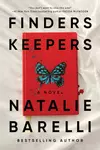
Author Natalie Barelli's website has a tagline on it that says 'Psychological Thriller Author' and it lists 10 books written by her (another due out in 2026), although FINDERS KEEPERS is the first I've read.
You can definitely see where the psychology comes into this as she's created a couple of main characters that seem to be in desperate need of psychological counselling at the very least. Rose (aka Iris) is a woman with so much baggage she's going to need a large trolley to keep it moving, and Emily is an author who is, it turns out, a disaster to be around.
Starting out with the seemingly passive, profoundly frustrating Rose, walking past a bookshop and spying a book with a title that's chillingly familiar. Turns out Rose's school day's journal, written as a 13 year old with a massive crush on a teacher, was stored on a laptop, which she lost. The journal contains some very dangerous confessions, something that could result in severe consequences for Rose if it were ever to be made public and/or connected to her. So priority number one is getting close enough to Emily to a) find the laptop and b) work out just what Emily knows / is prepared to talk about. So Rose becomes Iris, ingratiating herself close enough to the seemingly unsuspecting Emily, move into Emily's apartment, and slip into the role of unpaid dogsbody unseen and unrecognised. Or so she thinks. The problems are that Rose/Iris isn't who she says she is, and has some very dark secrets indeed and Emily isn't who she says she is, and neither of them are very nice people.
Which leads to a very unusual reading experience where, to be frank, I was gritting my teeth and swearing life was too short for about the first half of the book where horrible people did / said a bunch of tedious things, and I was bored. So very very bored. And then I wasn't. Twists started to appear in the personalities and the plot, people started to drop the pretence and whilst some remained determinedly horrible people, it turned out that maybe not all of them were as bad / useless / self-involved as they seemed. Then a few other characters turned out to be much worse, and the truth started to out itself in some very weird directions.
To my eternal chagrin, I've missed most of Barelli's earlier books. Is the best praise you can have for a book the immediate seeking out of the author's back catalogue? Because that's what happened here, I suspect it will happen for a lot of readers.
Originally posted at www.austcrimefiction.org.
Author Natalie Barelli's website has a tagline on it that says 'Psychological Thriller Author' and it lists 10 books written by her (another due out in 2026), although FINDERS KEEPERS is the first I've read.
You can definitely see where the psychology comes into this as she's created a couple of main characters that seem to be in desperate need of psychological counselling at the very least. Rose (aka Iris) is a woman with so much baggage she's going to need a large trolley to keep it moving, and Emily is an author who is, it turns out, a disaster to be around.
Starting out with the seemingly passive, profoundly frustrating Rose, walking past a bookshop and spying a book with a title that's chillingly familiar. Turns out Rose's school day's journal, written as a 13 year old with a massive crush on a teacher, was stored on a laptop, which she lost. The journal contains some very dangerous confessions, something that could result in severe consequences for Rose if it were ever to be made public and/or connected to her. So priority number one is getting close enough to Emily to a) find the laptop and b) work out just what Emily knows / is prepared to talk about. So Rose becomes Iris, ingratiating herself close enough to the seemingly unsuspecting Emily, move into Emily's apartment, and slip into the role of unpaid dogsbody unseen and unrecognised. Or so she thinks. The problems are that Rose/Iris isn't who she says she is, and has some very dark secrets indeed and Emily isn't who she says she is, and neither of them are very nice people.
Which leads to a very unusual reading experience where, to be frank, I was gritting my teeth and swearing life was too short for about the first half of the book where horrible people did / said a bunch of tedious things, and I was bored. So very very bored. And then I wasn't. Twists started to appear in the personalities and the plot, people started to drop the pretence and whilst some remained determinedly horrible people, it turned out that maybe not all of them were as bad / useless / self-involved as they seemed. Then a few other characters turned out to be much worse, and the truth started to out itself in some very weird directions.
To my eternal chagrin, I've missed most of Barelli's earlier books. Is the best praise you can have for a book the immediate seeking out of the author's back catalogue? Because that's what happened here, I suspect it will happen for a lot of readers.
Originally posted at www.austcrimefiction.org.


This is now the third book in The Kamogawa Diner series which I think now has to be said is considerably more about the meals / food than it is about the investigation. The premise is simple, using an obscure advertisement in a Culinary Magazine, the father and daughter duo behind the Kamogawa Diner draw anyone to them that has a longing for food or a particular dish that they remember but now cannot access. He's the chef, she's the head of the detective agency although these days that's mostly her getting the details of the client's longing (craving), and leaving it to her father to do the leg work to track down the dish.
Each chapter revolves around a new dish, each format is the same - a person arrives at the diner, is fed an absolutely glorious meal, then sits down and explains the dish that they are longing to try again and why. They return in a few weeks to be presented with the dish by the chef father, who then explains (increasingly briefly it has to be said), how he tracked down the recipe / ingredients / the something special.
Nothing special therefore in terms of "mystery" or "detecting" but everything to do with some absolutely glorious food descriptions that even for a coeliac vegetarian have a tendency to make the mouth water.
Definitely a series for fans of the eclectic, and not one to be recommended for when you were feeling a bit peckish anyway.
Originally posted at www.austcrimefiction.org.
This is now the third book in The Kamogawa Diner series which I think now has to be said is considerably more about the meals / food than it is about the investigation. The premise is simple, using an obscure advertisement in a Culinary Magazine, the father and daughter duo behind the Kamogawa Diner draw anyone to them that has a longing for food or a particular dish that they remember but now cannot access. He's the chef, she's the head of the detective agency although these days that's mostly her getting the details of the client's longing (craving), and leaving it to her father to do the leg work to track down the dish.
Each chapter revolves around a new dish, each format is the same - a person arrives at the diner, is fed an absolutely glorious meal, then sits down and explains the dish that they are longing to try again and why. They return in a few weeks to be presented with the dish by the chef father, who then explains (increasingly briefly it has to be said), how he tracked down the recipe / ingredients / the something special.
Nothing special therefore in terms of "mystery" or "detecting" but everything to do with some absolutely glorious food descriptions that even for a coeliac vegetarian have a tendency to make the mouth water.
Definitely a series for fans of the eclectic, and not one to be recommended for when you were feeling a bit peckish anyway.
Originally posted at www.austcrimefiction.org.

‘No one will invest in a business focussed on family violence – it’s the opposite of sexy.’
Lauren Brown, owner of Weeping Angels, smiled. ‘Maybe to men.’
Lauren Brown has a booming business on her hands - an agency that helps victims of family violence obtain protection orders - something notoriously difficult in a world that seems more comfortable in forcing women to prove guilt, then men to prove innocence, but Lauren's also no amateur. She obsessively guards her privacy, and her past, preferring her personal life to remain well in the shadows, until it no longer can.
Contacting Investigative Journalist Grace Marks, Lauren wants her help in putting pressure on the government to fix the broken legal system, although soon after that initial foray, Lauren disappears after visiting a friend. A disappearance the police write off as "just another missing person", but not so Grace. But to find her, she also must find out who she really is, and what's the reason for Lauren's obsessive pursuit of privacy.
Until this book I didn't realise that The Democracy Game, Surveillance and this one were all part of a series featuring Marks. It's a series that takes on current day topics in an engaging and very readable manner. WEEPING ANGELS has that disappearance at its core, with the complication here being that it is very hard to find somebody when you don't know who they are, or even where they live.
Which means that Grace has a number of big problems on her hands with this search, something that was portrayed very well indeed in this novel which makes some pointed observations whilst never losing the idea that this is a fictional plot that has to engage the reader. Whilst clearly showing the risk that too many women are put at by the ones that used to be closest to them, it carves out the idea of the disappearance of somebody who nobody knew in the first place being a very tricky problem to solve.
Originally posted at www.austcrimefiction.org.
‘No one will invest in a business focussed on family violence – it’s the opposite of sexy.’
Lauren Brown, owner of Weeping Angels, smiled. ‘Maybe to men.’
Lauren Brown has a booming business on her hands - an agency that helps victims of family violence obtain protection orders - something notoriously difficult in a world that seems more comfortable in forcing women to prove guilt, then men to prove innocence, but Lauren's also no amateur. She obsessively guards her privacy, and her past, preferring her personal life to remain well in the shadows, until it no longer can.
Contacting Investigative Journalist Grace Marks, Lauren wants her help in putting pressure on the government to fix the broken legal system, although soon after that initial foray, Lauren disappears after visiting a friend. A disappearance the police write off as "just another missing person", but not so Grace. But to find her, she also must find out who she really is, and what's the reason for Lauren's obsessive pursuit of privacy.
Until this book I didn't realise that The Democracy Game, Surveillance and this one were all part of a series featuring Marks. It's a series that takes on current day topics in an engaging and very readable manner. WEEPING ANGELS has that disappearance at its core, with the complication here being that it is very hard to find somebody when you don't know who they are, or even where they live.
Which means that Grace has a number of big problems on her hands with this search, something that was portrayed very well indeed in this novel which makes some pointed observations whilst never losing the idea that this is a fictional plot that has to engage the reader. Whilst clearly showing the risk that too many women are put at by the ones that used to be closest to them, it carves out the idea of the disappearance of somebody who nobody knew in the first place being a very tricky problem to solve.
Originally posted at www.austcrimefiction.org.

Journalist Grace Marks needs a good story, but she has no idea how good a story she's unearthing when she starts out investigating a surge in suburban minor crime. I mean who would put that much organisation into a series of minor crimes. Maybe a security company CEO, a company that offers some very new technology for people to use in thwarting the aforementioned sorts of minor crimes.
Only the CEO of Erebus Optics turns out to be as suspicious of the owner of the American technology at the core of what his company offers, and despite the fact that Will Manilow's business is booming, there are moves afoot back in the States to stop what the American parent believes there local "reseller" might be about to reveal.
Part a sort of industrial espionage / part an international conspiracy storyline, SURVEILLANCE is one of those books that just grabs the reader and drags them ever forward as Investigative Journalist Grace Marks races to beat an IT specialist (Maria Simmons) to the document that could blow an entire ecosystem of surveillance and control out of existence.
I had my doubts about this storyline as I often have my doubts about technological storylines, but this one worked. Heaps of pace, threat and lurking going on. Very believable scenario that might spook those of us with surveillance camera's from one end of their property to the other (although to be fair, about the only thing being surveilled around here are bloody foxes), but still. It's a pointed reminder that you have to have your eyes open, and your risks mitigated with every single technological item you use / install / tick the privacy box on the conditions of use of.
Originally posted at www.austcrimefiction.org.
Journalist Grace Marks needs a good story, but she has no idea how good a story she's unearthing when she starts out investigating a surge in suburban minor crime. I mean who would put that much organisation into a series of minor crimes. Maybe a security company CEO, a company that offers some very new technology for people to use in thwarting the aforementioned sorts of minor crimes.
Only the CEO of Erebus Optics turns out to be as suspicious of the owner of the American technology at the core of what his company offers, and despite the fact that Will Manilow's business is booming, there are moves afoot back in the States to stop what the American parent believes there local "reseller" might be about to reveal.
Part a sort of industrial espionage / part an international conspiracy storyline, SURVEILLANCE is one of those books that just grabs the reader and drags them ever forward as Investigative Journalist Grace Marks races to beat an IT specialist (Maria Simmons) to the document that could blow an entire ecosystem of surveillance and control out of existence.
I had my doubts about this storyline as I often have my doubts about technological storylines, but this one worked. Heaps of pace, threat and lurking going on. Very believable scenario that might spook those of us with surveillance camera's from one end of their property to the other (although to be fair, about the only thing being surveilled around here are bloody foxes), but still. It's a pointed reminder that you have to have your eyes open, and your risks mitigated with every single technological item you use / install / tick the privacy box on the conditions of use of.
Originally posted at www.austcrimefiction.org.
