
Kelsey

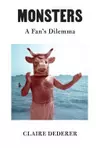
I went into this book wanting to be told what to think. I wanted to be told what to do about my internal conflict over whether or not it's okay to still (inadvertently nowadays) laugh at Louis CK jokes or sing along to I Believe I Can Fly or read [insert whatever Hemingway book people like] (spoiler alert: I won't ever be finishing a book by Hemingway, but that has nothing to do with him being a shithead — I just think he's bad).
But, as it turns out, that was not the purpose of the book. And, as it also turns out, I'm grateful for that. Though it was at times meandering, I thought Monsters was an excellent exploration of ideas that weren't just limited to monstrous artists (men, mainly) — we also get a taste of film history, flavors of motherhood, theories of beauty, and an innovative look into our role as consumers of art.
Aside from its captivating subject matter, I really just enjoyed the feeling of hanging out with Claire Dederer for 250 pages. As one would expect, she is brilliant. But she's also pretty damn funny, and I found myself laughing out loud several times even during some really dark shit. Plus, Monsters could have been a huge bummer, but it mostly wasn't. What could've easily been a tirade about an unfair world full of disgusting men who fuck young girls, Monsters was a surprisingly objective (“objective” might be gracious, but I don't have a better word for “somewhere-between-subjective-and-objective”) and thoughtful internal dialogue that we've likely all had before: What standard am I supposed to hold these public figures to? Do they deserve my empathy and adoration or my hatred? Why is it that I, as the consumer, am left responsible for deciding how to handle my idol's biography? Can I forgive them? Does it matter? Am I also monstrous? Where do we draw the line between human and monster?
Would recommend. Would read again. Hope someone I know reads it soon so that I can discuss.
I went into this book wanting to be told what to think. I wanted to be told what to do about my internal conflict over whether or not it's okay to still (inadvertently nowadays) laugh at Louis CK jokes or sing along to I Believe I Can Fly or read [insert whatever Hemingway book people like] (spoiler alert: I won't ever be finishing a book by Hemingway, but that has nothing to do with him being a shithead — I just think he's bad).
But, as it turns out, that was not the purpose of the book. And, as it also turns out, I'm grateful for that. Though it was at times meandering, I thought Monsters was an excellent exploration of ideas that weren't just limited to monstrous artists (men, mainly) — we also get a taste of film history, flavors of motherhood, theories of beauty, and an innovative look into our role as consumers of art.
Aside from its captivating subject matter, I really just enjoyed the feeling of hanging out with Claire Dederer for 250 pages. As one would expect, she is brilliant. But she's also pretty damn funny, and I found myself laughing out loud several times even during some really dark shit. Plus, Monsters could have been a huge bummer, but it mostly wasn't. What could've easily been a tirade about an unfair world full of disgusting men who fuck young girls, Monsters was a surprisingly objective (“objective” might be gracious, but I don't have a better word for “somewhere-between-subjective-and-objective”) and thoughtful internal dialogue that we've likely all had before: What standard am I supposed to hold these public figures to? Do they deserve my empathy and adoration or my hatred? Why is it that I, as the consumer, am left responsible for deciding how to handle my idol's biography? Can I forgive them? Does it matter? Am I also monstrous? Where do we draw the line between human and monster?
Would recommend. Would read again. Hope someone I know reads it soon so that I can discuss.