
Scott Graham

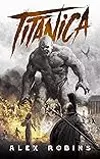
It’s difficult to write a review of The Ruined Gods series with all the pitfalls it contains: it’s historical fantasy that plays havoc with the historical elements that it emulates. It contains a Greek flavor, classical Greek terminology, personification of the Titans and Gods, but it does not remain faithful to the accepted anthropology and archeology of proto-classical and classical Greek periods. That caveat being said, it was a fun series to read. Robins creates a new mythology for his universe, with new inventions, new roles for women, a new concept for a war within the pantheon and the effects on humanity. Centered on a new Greek general and his wife and son, marital tension and hero worship by a son for his often absent father is established early. Other characters are introduced, mostly other soldiers, politicians, and tradespeople (not to leave out Gods and Titans) that round out the cultural of the central town, Thena. A neighborong city-state calls for help per a treaty drawn up earlier and things do not go to plan. As in classical Greek mythology where the gods liked to influence outcomes in the wars, you can imagine how things turn out when gods with mutual animosities start to affect how battles and alliances play out. The reader traverses battlefields, barely aligned cities, the afterlife and other worlds by the time the story concludes. Reimagined minotaurs, centaurs, harpies, cerberus, and a guest role by the Colossus of Rhodes make things much more interesting. Recommended for the non-pedant where ancient Greek civilization and mythology is concerned.
It’s difficult to write a review of The Ruined Gods series with all the pitfalls it contains: it’s historical fantasy that plays havoc with the historical elements that it emulates. It contains a Greek flavor, classical Greek terminology, personification of the Titans and Gods, but it does not remain faithful to the accepted anthropology and archeology of proto-classical and classical Greek periods. That caveat being said, it was a fun series to read. Robins creates a new mythology for his universe, with new inventions, new roles for women, a new concept for a war within the pantheon and the effects on humanity. Centered on a new Greek general and his wife and son, marital tension and hero worship by a son for his often absent father is established early. Other characters are introduced, mostly other soldiers, politicians, and tradespeople (not to leave out Gods and Titans) that round out the cultural of the central town, Thena. A neighborong city-state calls for help per a treaty drawn up earlier and things do not go to plan. As in classical Greek mythology where the gods liked to influence outcomes in the wars, you can imagine how things turn out when gods with mutual animosities start to affect how battles and alliances play out. The reader traverses battlefields, barely aligned cities, the afterlife and other worlds by the time the story concludes. Reimagined minotaurs, centaurs, harpies, cerberus, and a guest role by the Colossus of Rhodes make things much more interesting. Recommended for the non-pedant where ancient Greek civilization and mythology is concerned.