
Michelle Dsouza


No One Is Talking About This was my first fragmented novel, and for the opening stretch I was sure the failure was mine. I never read blurbs before starting a book, so I arrived with no warning: no conventional chapters, no orientation, only a stream of post-sized paragraphs from the mind of an unnamed woman who went viral once and now lives half her life inside a place called the portal. I felt locked out, and I kept asking why anyone would write a book this way.
The answer arrived once I stopped fighting the form. The fragments mimic the scroll. Reading them recreates the exact texture of an hour online, attention ricocheting between the absurd and the sincere, and Lockwood controls the ricochet with unnerving precision. The first half is funny in a way few literary novels manage. I laughed out loud repeatedly, and one four-word fragment, "Can a dog be twins?", has taken up permanent residence in my head. Lockwood is a poet before she is a novelist, and the poetry lives in the rhythm of her sentences and in the way a single line, sitting alone on the page, detonates.
At the midpoint the novel pivots. Real life breaks through the screen, a family tragedy takes over, and I will say nothing more specific, because arriving at the second half unprepared is part of what makes it devastating. The back half engaged me more deeply than the front. It becomes a reflection on grief, illness, and what the portal is worth when measured against a real and finite life. The narrator has spent years performing a self online, and the book quietly asks what the performance cost her. The critique of the internet is sharp without once tipping into cliché, and the structure is right as it stands. The first half must be as long as it is for the second half to land as hard as it does.
A format note. I read the physical while listening to the audio, narrated by Kristen Sieh, and the tandem smoothed the fragmentation considerably. If the form intimidates you, this is the way in.
This is autofiction, a little over 200 pages, and it left my head aching in a way I enjoyed. My one reservation is the entry. The book locks you out until you find the key, and some readers will put it down before they do. 4.5 stars, and my introduction to Patricia Lockwood will not be my last encounter with her.
Originally posted at www.instagram.com.


The Namesake follows Gogol Ganguli, born in America to Bengali parents and named after a Russian writer because of a train accident his father barely survived. Across twelve chapters and thirty years, Lahiri traces what a name carries, what a family carries, and what survives when a culture crosses an ocean.
I want to start with the structure, because it nearly lost me. Twelve chapters, each of them long, written in long paragraphs of short declarative sentences. The first chapter is slow, and the early sections seem crowded with detail that goes nowhere. Hairstyles. Wall paint colours. Side stories about people who never return. By chapter five I understood what Lahiri was doing. Identity does not live in plot points. It lives in small things, and the accumulation of those small things is the entire method of this book. Once I read it on those terms, the writing opened up completely. I still wonder whether Lahiri would structure it the same way if she wrote it today, and I mean this as curiosity rather than complaint.
This is not a plot-driven novel. There are stretches that feel directionless, and the momentum comes almost entirely from the characters. But what characters. By chapter ten I was so invested in Gogol that a late betrayal, which I will not name, made me genuinely angry on his behalf. When a reader wants to guard a fictional man's heart, the author has done something right.
The authenticity is what sets the book apart. I am a child of displaced Indian heritage. My father grew up in India and was of Portuguese descent, my mother grew up in Sri Lanka and is of Dutch descent, and the culture Gogol inherits in fragments is the same culture that reached me in fragments. Lahiri gets every fragment right. The tea sellers running alongside train windows with aluminium kettles, still true in 2026. The four locks on the front door in a country with nothing to fear. The folklore, including the legend of the Taj Mahal masons losing their thumbs so they could never build anything more beautiful. My father told me that story in 1996. He died three years ago, and he lives on in the stories I catch myself retelling. Meeting one of them inside this novel is a reading experience I will not forget.
More than anything, this book understands the children of first-generation immigrants, raised in a country their parents were not, for whom building traditions of their own feels like a quiet betrayal of everything their parents sacrificed. Lahiri wrote this in 2003. It was ahead of its time then and it is accurate now.
A note on the audiobook, since I listened while reading the physical. Sarita Choudhury was a puzzling choice of narrator. Words this book depends on are mispronounced throughout. Desh and desi lose their correct sounds, and Gogol himself is read as Gaw-gawl rather than Go-gol, a strange fate for the name the entire novel is about. This did not affect my rating of the book, but choose the page over the audio if you can.
4.5 stars. Outstanding, with one reservation about the wandering middle, and prose I would follow anywhere.
Originally posted at www.instagram.com.


I sat on this book for months and I have no defence. Murder mystery, thriller, romance, humour, banter with teeth. I read it in four days and immediately developed a grudge against every bookshop in Bahrain for not stocking the sequel.
Weaver pulls off something strange here: she writes serial killers you end up cheering for. On a technical level, Harper and Nolan are not the strongest leads I have read this year. The depth is not fully there, and I noticed. What saves them is chemistry. The slow build between them earns every page it takes, and as unhinged as it feels to admit, I wanted these two murderers to get their happy ending. Rarely have two people been so precisely made for each other.
The comedy lands because everything pulls in the same direction: the narrative voice, the timing, the absurdity of Cape Carnage itself. Dual POV, and both voices hold up. The town does serious heavy lifting too. It leans all the way into its reputation for carnage, and its residents behave like any coastal community where privacy goes to die. The story is fuller for it.
Yes, the twists are visible from a distance. Weaver is not hiding them. The satisfaction lives in the delivery rather than the surprise, and that is a confident choice, not a failure.
The most grounded thread belongs to Arthur, Harper's ageing mentor, who is living with dementia. Weaver drew this from her own grandparents' experiences, works in neuroscience clinical research, and donates part of the trilogy's royalties to Alzheimer's charities. You feel it. That storyline holds a tenderness the rest of the book, deliberately, never reaches for.
My complaints are minor. The spice sometimes tips into dialogue cheesy enough to earn a full eye roll, and I am normally put off by this much open-door content, but here each scene feeds the next and the intent behind it is clear. The murder scenes themselves run a bit flat, which lovingly suggests Weaver lacks hands-on experience. And Harper's day job as a gardener solves a logistics problem this genre usually ignores. Inspired.
I will remember this one. Not because it sits heavy on the heart, but because it refuses to mistake gloom for atmosphere in a genre that so often does. I am borderline murderous for book 2.
Originally posted at www.instagram.com.


I went into this knowing absolutely nothing about Natalie Summers, and I came out already wanting the next book.
Tides Wait for No Witch is exactly the kind of cozy fantasy I love. It mixes magic, mystery, small-town charm, family drama, a sprinkle of romance, and just enough humor to keep everything feeling light without losing the emotional moments.
Sara was so easy to root for. One minute she's living her perfectly ordinary life, and the next she's discovering an entire magical family tree nobody thought to mention. Honestly, most people would need months to process that level of emotional whiplash. Sara gets approximately five minutes before another secret appears, another family member materializes, or someone casually hands her yet another magical problem to solve. The poor woman never stood a chance.
And then there's Ollie.
I don't think I've loved a talking sea otter this much in my life. Every time he wandered onto the page, I knew something entertaining was about to happen. He somehow managed to be equal parts comic relief, professional busybody, and accidental voice of reason. More than once I found myself thinking the humans should probably just ask Ollie what to do and save everyone the trouble.
The mystery itself kept me guessing for most of the book, although I wasn't completely sold on the final reveal. It wrapped up a little too conveniently for me, and I wasn't entirely convinced by how everything came together. The motive in particular felt thin for what the story had been building toward. That said, the ending immediately set up the next mystery, and now I need Book Two because that cliffhanger absolutely did its job.
One thing I really appreciated was how the story handled family. Beneath all the spells, suspicious deaths, magical lessons, and increasingly bizarre situations was a reminder that family isn't always the people you've known the longest. Sometimes it's the people who appear when your life completely unravels and decide they're staying anyway. That thread ended up meaning more to me than I expected.
The dialogue was genuinely funny, the magical chaos never took itself too seriously, and the cast had that cozy mystery quality where everyone seems to know something but collectively agrees not to answer the one question the main character actually asked. Sara, of course, has exactly the kind of personality that hears "don't investigate" and immediately treats it like a personal challenge.
This was such a fun introduction to a new-to-me author. I'll definitely be picking up the next book because I'm far too invested in this wonderfully chaotic little island now.
I received this ARC from the publisher via NetGalley in exchange for an honest review. All opinions are my own.
Originally posted at www.instagram.com.


This was my first Andrew Sean Greer book, and I will be back for more.
It took me a while to get into it, and I want to be honest about that. Part I is slow, and at the time I did not understand why. Looking back, the slowness is deliberate. Greer uses Part I to lay every thread he pays off later, so that by Part II the immersion feels earned rather than granted. The book asks for your patience up front and then rewards it.
Anyone who knows me knows I have a soft spot for senior characters, and Lisabetta, the ninety-two-year-old Baronessa known as Coco, had my heart from the start. Her stories, not all of them true, are entirely hers. She is "as uncontrollable and changeable as the wind, she is also contrarily constant." Greer builds her with such specificity that she stops reading like a character and starts reading like someone you met.
The book moves through many characters, and I understand how that could frustrate a reader trying to track them. The prose is what holds it together. The writing is slow, and the slowness is the point. Slow, cozy, and vivid. Reading Villa Coco feels like a Sunday afternoon in the cool autumn sunshine, warm hot chocolate in hand, at peace with everything around you, even though the story itself runs on chaos. Greer holds calm and chaos in the same hand, and that balance is the real achievement of the book.
The narrator goes by many names, never his own. That anonymity worked for me. By the time I was immersed, the names stopped mattering and who these people were took over. The first-person voice reads like a confidential memoir, which pulls you close and makes his coming-of-age feel like something you are inside of rather than watching.
This is not a book for everyone. It is slow, and it branches so many times it risks leaving you behind. That branching is what hooked me. All our lives are made of a thousand branches, each one shaping the life we end up living, and the book is built to mirror that. By Part II, I was fully immersed in this tiny Tuscan village, the sights, the smells, the imagery, all of it written well enough that I felt like a silent observer of these people's everyday lives. Some moments run over the top, but with a ninety-two-year-old self-proclaimed Baronessa at the center, you expect nothing less.
Do not come for a plot, because there is not one. Come for the verbal swordplay between the young narrator and Coco, and the anecdotes they trade, which show off Greer's sharp observational humor. This is a book about life. About the choices you make, the paths you take, and the people you love and live alongside.
"'Lisabetta knows the trick to life,' she said, 'is knowing what you want.'"
Originally posted at www.instagram.com.


This is one of those books I admired more than I loved, and I mean the admiration sincerely.
I went in expecting a dark romance, an obsessive FMC and a morally grey professor. What I got was a psychological thriller layered with conspiracy, engineering, human experimentation, and questions about identity. It's ambitious, and I respect how much it reaches for. I'm just not convinced every layer earned its place.
The first half completely had me, and that's almost entirely down to Ariella. She's the strongest part of the book by a wide margin. She could so easily have collapsed into the stereotypical "crazy stalker," and she never does, because her obsession is rendered with absolute consistency. Tes Archer doesn't tell you Ariella is obsessed. She lets you watch it happen. Ariella memorizes lectures until she can predict the next sentence. She learns engineering because of him. She unconsciously adopts his accent. Every small decision quietly reshapes her world around a man who barely knows she exists. It's unsettling and fascinating, one of the most memorable character studies I've read in a while, and it works precisely because the book trusts the behavior to carry the meaning.
The quieter psychological tension between Ariella and Alistair is the other thing I loved. Those early chapters play like a slow-burning game of observation, two people trying to understand each other in completely different ways. That was the book I kept wanting more of.
As the story expanded into secret organizations, experimentation, and a wider conspiracy, my investment dropped. I could appreciate the ambition, but I never enjoyed those sections the way I enjoyed the intimate psychological story the book opened with. Ariella was compelling enough to carry a much smaller, tighter novel, and part of me wishes that had been the book.
The prose is the other thing holding it back. There were so many moments where a stronger version of the scene was sitting just beneath the surface. The characters' actions had already communicated everything, and then the narration would stay to explain the emotion anyway. I kept wishing the writing trusted the reader more, because the moments where it did are the moments that really land. That's a craft note, not a dealbreaker, and it's the kind of thing that sharpens with each book.
I'll also be honest that some of the spice didn't work for me. The psychological tension between Ariella and Alistair was far more interesting than the explicit scenes, which occasionally leaned into familiar dark romance territory in a way the rest of the novel didn't. The book is at its best when it's strange and specific, and the spice pulled it toward the conventional.
Here's what I keep coming back to, though: this never once felt like a book chasing trends. It has its own identity, and I would so much rather read an ambitious novel that doesn't land every idea than a safe one that risks nothing.
I don't know if I'll remember every twist six months from now. I do know I'll remember Ariella.
A note for readers: this is heavy dark romance with an extensive content warning list from the author. Please read those before picking it up.
3.75 stars rounded to 4.
I received this ARC directly from the author in exchange for an honest review. All opinions are my own.
Originally posted at www.instagram.com.


Where do I even start with this one.
Let me set expectations first, because they matter for this book. Promise Me Sunshine is not literary fiction and never pretends to be. It isn't reaching for philosophical depth, and it isn't vain about its own cleverness either. What it does, and does well, is hold all of us in its palm and let us be ourselves. Bastone knows exactly what kind of book she's writing, and that self-awareness is half of why it works.
Structurally, this is a fascinating little machine. It's almost entirely dialogue, with very little narration carrying the load. That construction usually fails. Books that lean this hard on dialogue tend to feel thin, like you're watching characters talk in a void. Here it doesn't, because the pacing carries you through without ever forcing it or dragging, and because the voices are distinct enough to hold the weight the prose isn't trying to. It's fast, the sentences are short, nothing is vivid or ornate, and that simplicity consistently serves the accessibility rather than costing the book emotional depth. This is a deliberate, controlled choice, not a limitation.
The grief structure is the smartest thing Bastone does. This is a grief story wearing a romance as its outer layer, and the two aren't just stitched together, they grow from the same root. Lenny and Miles fall for each other while trying to save each other. "He walked into hell and dragged me back out." But Bastone never lets the romance neatly resolve the grief, which is the trap most books like this fall into. The grief keeps showing up, in small things, threaded all the way through, and the love blossoms from inside it rather than erasing it. That honest tension is what gives an otherwise light book its real weight.
Lenny is the fully drawn character here, and she runs the show completely. Her grief, her wit, her chaotic mind, all of it is rendered with specificity. Miles, by contrast, functions more as the steady, patient vehicle for her healing. You see parts of him as he reveals himself to her, but it's clear whose story this is. I'd normally count a love interest who exists mostly to hold space for the protagonist as a flaw, but in a book this committed to one woman's interior journey, it reads as a deliberate framing rather than an oversight.
The predictability is worth talking about honestly, because it's predictable from the very first pages and it does not matter at all. This is the advantage of a feel-good book done properly. There's no pretense, no sense of being misled, you know exactly where it's headed and you happily ride there alongside them. Comfort fiction is supposed to feel good, and the reassurance of knowing the shape of the ending is part of what makes it safe to feel something while you're grieving. Done badly, predictability is a weakness. Done like this, it's the entire point, and a genuine strength.
My honest criticism, and this is personal taste, is the spice. I'm a closed-door reader by preference, so the roughly five pages of detailed foreplay weren't for me, and I skimmed. The moment Bastone referred to his manhood as "his pal," I was fully out. It's a small thing, but the cutesy language clashed with the emotional sincerity of everything around it.
Fair warning on tone: this book runs on a lot of Gen Z energy. Lenny is as quirky as they come, and if you don't enjoy over-dramatic, chaotic characters, this might not land for you. For me, it was infectious. The banter made me laugh out loud more than once, and that levity is doing real structural work, giving you somewhere to breathe between the heavier grief beats.
I listened on audio, and Alex Finke carried the whole damn book. I ran it at 2x speed, which I recommend, and even sped up she captured every emotion in it. Every sigh, every heartache, every grief-stricken thought Lenny carried. In a book that's mostly dialogue, the narrator is doing an enormous amount of the characterization, and Finke delivers it. I've already ordered a physical copy, which is the highest compliment I can give an audiobook.
At its core, this book takes your grief-stricken, broken heart, heals a small part of it, and sets you down among other grieving hearts. It reminded me that as I move through my own grief, the happy, smiling people around me are carrying theirs too, in the only ways they know how. Two moments I'm taking with me: Lenny inventing a quick, kind future with every new person she meets, judgment left at the door, and Miles closing his eyes to savor a moment, committing it to memory.
I'd never read Cara Bastone before. Consider me converted.
"The only way out is through."
Originally posted at www.goodreads.com.


I saw this book all over my feed and couldn't wait to listen the moment I found out Julia Whelan was narrating. Julia Whelan can do no wrong. I'd listen to her read a grocery list. And she's most of why this is a three-star book and not lower. A five-star narrator carrying a three-star story. If I'd read this in print instead of listening to her, the rating would have dipped.
The premise gave me Pretty Woman flashbacks about 10% in. Rich, put-together business guy enters a paid fake romance to seem more presentable. Stewart is essentially Richard Gere with the charm dialed down, more boring than magnetic. Dolly, though, is the reason to be here. She's funny, intelligent, and a genuine delight, the kind of character who deserved a better book around her. Annabel Monaghan builds her with real specificity, and every scene Dolly drives is the book at its best.
The problem is structure. It starts well and stays exciting until around the 40% mark, then drags for no good reason. The middle is drawn out well past what the story needs, and the writing itself is fair, serviceable in the way a lot of this genre is, nothing that elevates the slower stretches. The big exposure of their fake romance, which should be the centerpiece, lands anticlimactically and stretches believability past breaking. People in their late thirties and early forties do not behave the way these characters do in that sequence.
It picks up again near the end when Dolly confronts Stewart, comes into her own, and stands up for what she actually wants. That was the peak of the book for me. She earned an exit. She had the courage, she said the words, and for a few chapters I thought Monaghan was going to let her walk away whole.
And then she takes him back.
This is my real problem with the book, and it's structural, not just taste. Stewart left her at an event he invited her to, disappeared for a year, and came back, and Dolly dispels every bit of the courage she'd just found in order to accept him. The genre's demand for a tidy happy ending overrides everything the character had earned. Her arc was about coming into her own, and the ending walks it back for a HEA she'd already grown past. It frustrated me more than any pacing issue, because it's the book betraying its own best character.
It wasn't a terrible book. But it didn't use its full potential, and that's the sad part. There was a sharper, braver story in here, and it flinched at the last moment.
Three stars, and Julia Whelan earned at least one of them on her own.
Originally posted at www.instagram.com.


Every time I had to put this book down, I was a little annoyed. I wanted to keep going. Three days, a hundred pages at a time, and life kept getting in the way shaking me out the escape that this book was!
Chloe is burnt out. Invisible to her boss, overworked, underappreciated, and I didn't find it sad so much as infuriating, because I've let jobs do this to me more times than I want to admit. She was a mirror, and not always a comfortable one. She books a wellness retreat at a sun-drenched Ibizan villa and gets chaos instead of calm. Feral goats, beach raves, skinny-dipping, wedding-crashing, and Ben, who runs the place, looks like Pedro Pascal, cooks like a dream, and is visibly a bit out of his depth. He's on a sabbatical from his London restaurant, trying to turn his late uncle's rundown villa into something functional. Neither of them planned on the other.
The romance is sweet, but it's not the reason to read this. The women are. Chloe, Jess, and Zara are at completely different stages of their lives, and they still find this deep, easy belonging in each other. That friendship is the warmest thing in the book. It's three women rediscovering themselves and their own bodies, holding space for each other while they do it, and Bailey writes it with a lot of care. It made me want to call my own people. Women need to do this more, reach out to their inner circles, protect the time they spend with the women they actually love being around. Chloe specifically is every woman who overthinks everything, puts her career before herself, runs on imposter syndrome, and never once shoots her shot. Relatable to the point of slight discomfort.
Ben is the heart of it. Bailey writes him as thoughtful, not just handsome, someone who notices the women around him battling new roles and changing bodies and meets them with kindness. But the thing I loved most was the banter between Ben and Miguel. It's warm and silly and feels like an actual friendship, and it quietly carries the weight of the relationship Ben had with his late uncle Lorenzo. I'd read a whole book of those two just talking.
If I had one note, it's the spice. The characters are written with so much thought that the language in the intimate scenes felt a little at odds with the rest, slightly cruder than the care everywhere else would suggest, and the first scene between Chloe and Ben arrived a bit suddenly. To be clear, the spice itself is mild compared to a lot of what I've read. It's more that the wording occasionally didn't match how tenderly these characters were drawn.
The ending is what you'd expect from a rom-com, a little predictable, but it works, and I was relieved it didn't take the cheap dramatic turn it flirted with near the end. There's a message too, spelled out in the author's note: women and mothers deserve love, deserve to feel appreciated, deserve time that's purely their own. Book the holiday. Wear the bikini. Eat what you want. You are important. For all the women out there, give yourself a break. Away from it all. Annually.
Warm, funny, full of heart, and a lot of soul underneath.
Originally posted at www.instagram.com.


Hello Beautiful is a heavy book, and I mean that as the highest compliment. It's full of love, life, and grief, and it carries all three without ever buckling under the weight.
The novel follows the four Padavano sisters, Julia, Sylvie, Cecelia, and Emeline, and William, the lonely boy who marries into their family and finds in them the warmth he never had growing up. I didn't know going in that this was a Little Women retelling. I started feeling the shape of it somewhere in the middle, and when the book named it outright, the recognition landed hard. It could not have been a coincidence. Ann Napolitano knew exactly what she was building.
What struck me most is the flow. The way the story moves from one character to the next is seamless, never awkward or forced, one of the smoothest narrative structures I've read recently. You move through Julia's stubbornness and cold edges, Sylvie's anxiety over every decision, Alice's heartache as she works toward self-discovery, and Izzy's easy optimism about a life she was handed. And William, whose fears, hopes, and dreams you feel as strongly as he does, whose childhood quietly shaped everything about him until Sylvie arrived. It was hard to dislike any of them, because the writing refuses to let you.
Sylvie is the one who stayed with me. Her anxiety over her choices captures something a lot of us know firsthand: loving someone your family doesn't have the luxury of approving. The book understands that making the right choice for yourself is the most important one, even when it costs you the people who share your blood.
Napolitano's prose is tender and precise exactly where it needs to be. One passage about loss has stayed with me, the idea that when your love for someone is so profound that it becomes part of who you are, their absence becomes part of your DNA, your bones, your skin. And a quieter moment where Alice realizes her mother tried to control her past the same way she controlled her wild hair, and thinks, "She's done the same with me." That one landed in my chest.
This book is underrated and doesn't get the hype it deserves. But I'll be honest about who it's for. It will resonate most with readers who understand what it means to distance themselves from family that doesn't always have their best interest at heart, who have had to accept that blood is not always thicker than water, who have lost someone close. For other readers, I think some of it may be lost.
A quiet, devastating, deeply human story about how love comes in different shapes and how some of them truly heal.


This was my first Greek mythology retelling, and I went in knowing Medusa only the way most people do, through pop culture. The snakes. The stone gaze. The monster. What I didn't know was the circumstance that made her. That part of the story is unbearable, and it stayed with me. The book itself I'm more conflicted about.
Medusa retells the myth from Medusa's own perspective, reclaiming her as a wronged woman rather than a monster. I rooted for her, though the myth hands you most of that sympathy before Hewlett does anything with it. Her death moved me to tears, but I have to be honest about why. The circumstance is unbearable on its own. Medusa's story is a few thousand years old and devastating regardless of who tells it. The tears were the myth's doing, not the book's, and once I separated the two, I could see how much the telling worked against the material rather than for it.
My central problem is the language. It's modern, consistently and throughout, and I couldn't make peace with it. It pulled me out of the world the book was trying to build. I understand the strategy. Modern language makes mythology accessible, and it's a genuinely effective way to get a new generation to pick up these stories and feel that they belong to them too. But there's a cost. The contemporary phrasing felt disrespectful to the genre and, more than that, to who Medusa was. It didn't read like the interior voice of a woman from this world. It read like a voice imported from ours.
That bleeds into my second issue. Hewlett's foreword is explicit about wanting women's voices heard, and the book carries a clear #MeToo current underneath it. The cause is valid and formidable, and I have no quarrel with it as a cause. But you can feel the agenda being pushed through the narrative, specifically in the way Medusa speaks and the things she says, which often didn't feel like how she would actually have thought. The message kept stepping in front of the character. A well told tale that could have been told better, because the telling was always slightly visible.
The thing I couldn't reconcile at all is Athena. The book has her wanting Medusa dead, seemingly as punishment for the rape rather than for the god who committed it. For a goddess, that's morally incoherent. Wouldn't a deity be beyond that kind of misdirected blame? And if she truly is a goddess, wouldn't she have been able to see what actually happened? The book never resolves this in a way that satisfied me, and it's the kind of gap that matters when the whole project is about justice and who deserves blame.
I wouldn't read this again. I'd reach for something more traditional. But as an entry point into a genre I'd never touched, it did enough to make me want more of it, just told differently.
Originally posted at www.instagram.com.
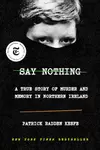


I came to the Troubles the way a lot of people my age did, sideways, through Derry Girls. I knew the broad shape of it. The Good Friday Agreement, the sense of a tragedy that had already been filed away as history. I picked up Say Nothing as a primer before reading Patrick Radden Keefe's newer book, expecting true crime. What I got instead was a history lesson I didn't know I needed and don't regret for a second.
The book opens with the 1972 abduction of Jean McConville, a widowed mother of ten taken from her home in the Divis Flats in front of her children and disappeared. Keefe uses her killing as the thread that pulls the whole sweater apart, moving through the lives of Dolours Price, the IRA volunteer turned hunger striker, and Brendan Hughes, and eventually toward the long shadow Gerry Adams casts over all of it. The scope is enormous. That's the book's strength and occasionally its weight. It took me seven days to read, not because it dragged, but because I kept stopping to sit with what I'd read, and more than once to research online and check what was actually confirmed versus what remains contested.
That instinct turned out to matter. The McConville killing unsettled me most. She was accused of being an informer, but the more I sat with it, the less the justification held. How would she have passed information? The Divis Flats were notorious for paper-thin walls. A household that surveilled would have left witnesses, corroboration, a trail. There isn't one. Keefe doesn't hand you a verdict, and that restraint is part of what makes the book honest. He lets the doubt sit where it belongs.
What the book deepened for me is a pattern I keep returning to in my reading, in both fiction and non-fiction. In every one of these conflicts, humanity is the first casualty. Innocent lives are spent for the greed of power and politics, and the people who pay are almost never the ones who decided the price. The number of people in this book who genuinely believed that death was the answer is staggering. We may never see a united Ireland. One can hope. But the cost recorded here is its own argument against the certainty that drove it.
If I have a reservation, it's that the writing itself is functional rather than beautiful. Keefe is a meticulous researcher and a clear communicator, but the prose doesn't reach for anything beyond delivering the story, and the story is so strong it almost doesn't need to. This isn't a book you read for the sentences. You read it for the staggering accumulation of detail and the moral weight underneath it.
A history I came to expecting true crime, and left thinking about power, memory, and how easily both get rewritten.
Originally posted at www.instagram.com.


I distrust dual timelines. Too often they're a structural crutch, a way to manufacture tension by withholding information across two threads that don't actually need each other. The Sirens made me forget I distrust them at all. Emilia Hart moves between past and present so seamlessly that the transitions feel inevitable rather than engineered. Every time one timeline handed off to the other, it landed at exactly the right moment.
The book follows Lucy, who wakes from a sleepwalking episode with her hands around her ex's throat and flees to her estranged sister Jess's house on the coast, only to find Jess missing. Threaded through Lucy's present is the story of Mary and Eliza, sisters transported on a convict ship to Australia in 1800, and a deeper history of water, transformation, and a kind of feminine power that runs in the blood. The Mary and Eliza timeline is the one that gripped me hardest. Their chapters carry the emotional weight of the book, and Hart writes them with a clarity that never tips into melodrama despite everything they endure.
What I loved most is that Hart commits fully to both the mythic and the human. The magical elements aren't decoration. They drive the plot and deepen the themes rather than sitting on top of them. The water, the transformation, the inheritance of suffering and survival across generations of women, all of it works because Hart trusts it.
There's a moment with a lionfish that genuinely stopped me. Robert watches the siren in the cave, beautiful and vicious all at once, and sees a lionfish in her. When he tries to draw her, it feels like pinning a butterfly for study, taking something that flickers with life and killing it. He refuses to do that to her. So instead he draws a lionfish, secretly, as a way to hold onto her without trapping her. It's a small, tender act of restraint, and it captures something the whole book is reaching for: how do you love something wild without destroying the wildness that made you love it.
What stayed with me is the hope. The Sirens is a book full of trauma, but it refuses to end there. It insists that suffering can be turned into something, that survival is its own kind of power, that all is not always lost. After a run of books that confused sadness with depth, this one earns its darkness and then earns its way back out of it.
My one real frustration is the student/teacher subplot. It felt like it was there to serve the plot rather than because it deserved a place in the book, and Melody's story about Ryan Smith landed the same way: a detail the book didn't need. Both moments pulled me briefly out of a story that otherwise held me completely.
The pacing is the quiet hero here. I read this in 24 hours and didn't want to stop. Borrowed from the library and already planning to buy my own copy, which is the highest compliment I have.
Originally posted at www.instagram.com.


Contains spoilers
I have a note from page 232 that reads: "Still no progress of the plot. Jason has a lot of opinions. And they're not very good or relevant. At least he's funny. But is that enough? I've been bored for about 200 of the 232 pages."
Reader, I finished it anyway. All 408 of them.
Charlotte Street has a genuinely interesting premise. Jason Priestly, a man who is not the actor Jason Priestly and has resigned himself to a lifetime of that joke, helps a woman juggling too many things into a cab on Charlotte Street. In the process she accidentally leaves behind a disposable camera. He gets the photos developed. He becomes quietly obsessed with finding her. That's it. That's the whole book. And for 400 of its 408 pages, almost nothing happens.
The plot begins on page 7. It gains movement on page 400. That is not a pacing issue. That is a structural decision that does not work.
What keeps you going is Danny Wallace's humor, which is genuine and consistent even when everything around it is not. There are legitimately funny jokes in here. The relationship between Jason and his flatmate Dev is the book's best dynamic: two annoying blokes living together, the kind you'd never actually want to visit but find oddly compelling to read about. The relatable moments land too. The adding and deleting of an ex from social media. The overthinking that paralyzes you before you talk to someone you're interested in. The specific texture of post-breakup imposter syndrome. Wallace understands that register and writes it well.
The problem is that relatable moments and consistent humor are not enough to carry 408 pages of a plot that refuses to move. Jason as a protagonist is whiny, lacking in basic courage, and impossible to root for. The mystery girl thread stays thin from beginning to end. The ending arrives and is so anticlimactic that the 400 pages of build-up feel like a genuine imposition on the reader's time. The blurb describes it as "a heartwarming everyday tale of boy stalks girl." He does not stalk her. He doesn't even know who she is. He sees her a few times and fails to speak to her each time because of his own overthinking. That's not a love story. That's a man being a pansy for 400 pages.
The audiobook, narrated by Mackenzie Crook and Wendy Wason, is the version I'd reluctantly recommend if you're going to read this at all. Their voices give the humor better delivery than the page does, and frankly gave me more reason to finish than the book itself provided.
Not for everyone. Definitively not for me.
2.5 stars, rounded to 3 on Goodreads.
Shelves: fiction, romance, british-fiction, audio, physical, 2026-reads, contemporary, humor
Originally posted at www.instagram.com.


Contains spoilers
Paulette Vargas has lived a life that justifies a memoir several times over. A closeted father whose behavior put his children in danger. A mother trapped in an arrangement she couldn't leave. Family secrets spanning generations. A nervous breakdown at 64 and a hard-won peace on the other side. The raw material here is genuinely dramatic, and when Vargas trusts it, the book delivers.
The moments that stop you are the ones where she doesn't reach for effect. She finds her father in the garage, engine running, understands exactly what she's seeing, and walks her little sister to school. No adult called. No breakdown of her own. Just school. That single action tells you more about what her childhood had done to her than any amount of direct explanation could. She had already learned that crisis was just Tuesday.
The briefcase scene lands the same way. A mother bringing two young girls to hand cash to strangers in New York, possibly connected to gambling debts. The detail that Vargas knew better than to ask "safe from what?" out loud. A child who has already internalized that asking questions is dangerous doesn't announce that understanding. She just doesn't ask. Vargas doesn't announce it either. She just lets the detail sit there and do its work.
The nursing home confrontation with her father is handled with unusual honesty. His response is a weak apology and something about finding religion. She admits she never expected genuine remorse. She just needed to say it out loud. Most memoirs need the confrontation to mean more than it does. She lets it be small and insufficient, which is almost certainly how it actually felt, and that restraint is the book at its best.
The throughline across all of it is the same: a child who learned very early that no one was coming, and who kept moving anyway. That's the real subject of the book. When Vargas finds it, the writing earns its place.
Where it struggles is structure. The genealogy chapters go deep into Swedish immigration records and family trees that don't pay off emotionally. Readers who came for the dysfunction described in the opening pages have to wait through a lot of historical scaffolding before the book finds its footing again. The ending feels compressed compared to the childhood sections. The breakdown, which should be the emotional climax, gets fewer pages than the Playboy Bunny job. That imbalance matters. And some of the biggest unresolved threads, particularly the estrangement from Nicole, are acknowledged and then set aside. That's her right. But the reader notices the gap.
The prose is clear and direct, which suits the subject. This isn't a literary memoir reaching for gorgeous sentences. It's someone telling you what happened, and that straightforwardness mostly works in its favor.
At 60 pages, it reads like an early draft of a stronger book. The life story more than justifies a memoir. The structure needs another editorial pass to match the emotional weight of the opening to what the rest delivers.
I received this ebook directly from the author in exchange for an honest review. All opinions are my own.
Originally posted at www.instagram.com.


Maeve Dunigan has spent a lifetime trying to seem effortlessly chill. This book is the evidence that it hasn't worked, and it is funnier for it.
Read This to Look Cool is a humor essay collection in the McSweeney's tradition: specific, self-aware, deadpan, and very online in its sensibility. The pieces are standalone, which means you can read one on a lunch break and put it down without losing a thread. That structural looseness is either a feature or a limitation depending on your patience for collections that don't build toward anything. I found it freeing.
The wit is consistent across the whole collection, which matters more than it sounds. Most humor essay collections peak in the first third and spend the rest coasting on goodwill. Dunigan doesn't let that happen. The register stays level: self-deprecating without being a performance of self-deprecation, absurdist without losing the emotional core underneath.
"Email Signatures in Ascending Order of How Nervous I Am to Be Emailing You" is the standout piece. It's a stream of consciousness that a lot of people have lived through and thought about writing down and never did. Dunigan wrote it down and made it funny without defusing it. You laugh because it's true.
She also hates tomatoes. She at least tried to like them, which puts her ahead of me.
Dunigan is likeable in a way that makes the humor land warmer than it might otherwise. She writes about belonging, self-performance, the anxiety of modern visibility, and the specific embarrassments that live rent-free in your head for years. She is not trying to be cool, which is the only way to write a book called Read This to Look Cool without it backfiring.
This is not my usual reading territory. Dunigan made it easy to be in anyway.
Originally posted at www.instagram.com.


Contains spoilers
Nobody told me the Fig Tree was a character. I went in expecting a love story set against the backdrop of Cyprus's 1974 division, and I got that, but I also got a century-old Ficus carica with opinions about bats, butterflies, human grief, and the particular way people avoid learning things about trees because they are afraid of what they might find out. That surprise alone tells you something about what Elif Shafak is doing here.
The book moves across two timelines. In 1970s Cyprus, Kostas, a Greek Cypriot, and Defne, a Turkish Cypriot, fall in love inside a taverna where a fig tree grows through a cavity in the roof. The tree watches everything. Decades later, in London, their daughter Ada is sixteen, recently bereaved, and struggling with a grief nobody around her will name directly. A fig tree grows in the garden of her family home. The two timelines fold into each other, and so do the losses.
Shafak's structural choice to give the Fig Tree its own narrative voice is the book's biggest risk and its greatest success. For most of the book it operates as narrator: balanced, observant, unbiased, knowing things about the natural world that no human character could deliver without it feeling like a lecture. The information never feels like a lecture. You learn about fig wasp symbiosis, bat deaths in wartime, butterfly migration patterns, and fungal networks under the soil, and none of it feels grafted on. It feels like the world the story lives inside. The butterfly migration section is the one that stayed with me longest. Butterflies are always moving, always seeking change. Shafak places that against forced human migration and says nothing further. She doesn't need to.
The reveal that Defne is the Fig Tree is the emotional hinge the whole book builds toward. Looking back, the narration doesn't change. The Fig Tree knew more about trees than Defne ever could have. But the love in those observations, the way it watches Kostas and Ada, the way it grieves without naming grief, that lands differently once you know. Shafak earns it.
Kostas works precisely because he is readable throughout. His love, his values, his steadiness never shift. He is a man who loves with his whole self and carries loss the same way. His loneliness after Defne mirrors Chico the parrot's in a way the book makes quietly explicit, two beings kept company by a tree when the person they needed most was gone. Meryem, Defne's aunt, arrives from Cyprus and immediately becomes the book's warmth and its wit. Her proverbs, her superstitions, her absolute certainty about everything she believes, and the way her certainty softens the story's grief without dismissing it. She is the reason the book doesn't collapse under its own weight.
Ada's arc is the one place the book leaves a thread slightly loose. The classroom incident points toward something the narrative doesn't fully resolve. I've decided that's intentional. Sometimes grief gets so large you scream in public and no tidy resolution follows. The book trusts the reader to sit with that.
The writing shifts register between the human chapters and the Fig Tree's narration, and that shift works harder than it sounds. It physically resets your pace. Shafak handles the political history of Cyprus with the care it deserves. She doesn't treat the 1974 division as backdrop. She puts two teenagers in love across a fault line that their families and their governments drew, and she asks you to understand what it costs them. "You don't fall in love in Cyprus in the summer of 1974. Not here, not now. And yet there they were, the two of them." That's the whole book in four sentences.
I teared up at the end. Defne being the Fig Tree, watching over Ada and Kostas, staying behind in the only form she could. My heart hurt and was full at the same time. I didn't expect a book about trees to do that to me.
Originally posted at www.instagram.com.


Contains spoilers
Grace is one of the most unlikeable protagonists I have encountered in recent memory, and I mean that as a compliment to Bella Mackie.
The premise is exactly what it sounds like. Grace, the illegitimate daughter of a wealthy man who never acknowledged her, decides to systematically kill off his entire family to claim what she believes is rightfully hers. She is intelligent, calculating, and absolutely insufferable in the best possible way. She has opinions about everything and everyone, all of them withering, most of them funny, and none of them particularly kind.
The wit is the book's greatest strength. Mackie writes Grace's internal monologue with a sharpness that had me laughing out loud repeatedly. The funniest moments come from Grace's absolute conviction in her own superiority and her complete inability to be impressed by anyone. At a party, a man confesses his kink for choking and traces it back, with great seriousness, to nearly drowning in the family pool as a child. Grace listens, looks pointedly at his wedding ring, and delivers: "Does your wife indulge? I assume she'd like to choke you occasionally." She means it completely. He laughs because men often laugh with surprise when they find women funny, as though it's a skill they're not expected to possess. Mackie gets two jokes out of one exchange and makes both land.
Where the book loses me is in the believability of the central conceit. Multiple deaths within one family, all written off as accidents, with no investigative thread pulling them together, strains credibility past the point of suspension of disbelief. The victims' families are largely absent as a concern. For a book this intelligent in its prose, the plot mechanics feel underdeveloped.
Grace's behavior at Jimmy's engagement was the moment her internal logic broke down in a way that felt like a writing inconsistency rather than a character flaw. She had just finished explaining how she kept him at arm's length because her mission came first. Her reaction to his engagement contradicts that entirely, and it stands out precisely because the rest of Grace's reasoning, however twisted, holds together.
The pacing also suffers from over-explanation in places. Grace has a tendency to over-narrate her own thinking, which slows the book down where momentum matters most.
The ending is unexpected, slightly over the top, and fits the book perfectly. Anticlimactic in a way that suits Grace exactly.
The case for why the cousin and uncle needed to die alongside Simon's immediate family never fully lands. It feels like the body count expanding for its own sake rather than because the story required it.
Funny, sharp, and occasionally its own worst enemy. Grace is a villain you laugh at rather than root for, which is exactly the right register for this book.
Originally posted at www.instagram.com.
Delilah Thomas has spent her whole life making herself easy to be around. She learned it young, inside a family she never belonged to, that the safest thing was to stay quiet and agree. By her late thirties she has turned it into a kind of art form. She teaches preschoolers, keeps a tight circle of five lifelong friends, and does not make waves.
Then Peach Pit moves into her small Southern town. A direct sales beauty company, it recruits women into its network with promises of beauty, income, and sisterhood. Her closest friend Betsy joins immediately. Something feels wrong to Delilah. She says nothing, because saying something has never been her first language.
Grace Helena Walz uses Peach Pit smartly. It doesn't function as a corporate villain. It functions as a social one, moving through the friend group the way these things actually move: through hope, not pressure. The promise of belonging and self-improvement attaches itself to insecurity and ambition, and the damage it causes is personal before it's physical. It tests who believes whom, who speaks up, and who defends something harmful because they need the dream to be real. That makes the conflict feel human rather than abstract.
The Fives are the emotional core of the book and Walz writes them with honesty. These are women with twenty years of shared history who are starting to be pulled in different directions by life, motherhood, money, and fear. The friendship is loving and not immune to silence, jealousy, or the slow discomfort of outgrowing old roles. That felt true to how long friendships actually work.
Mrs. Chopra is the standout of the supporting cast. She has the warmth and specificity of a character who exists fully beyond her plot function, and she carries much of the book's humor without tipping into caricature. Betsy is the complicated one. Her loyalty to Peach Pit is the place where love and denial meet, and it's uncomfortable in exactly the right way.
Delilah's growth is quiet and earns its place. She doesn't become suddenly fearless. She starts choosing honesty even when confrontation still frightens her, and Walz respects that timeline. By the time Delilah says what needs to be said, you've traveled the whole distance with her.
The weakness is that the premise promises more sharpness than the tone delivers. The book stays firmly in warm, wholesome Southern fiction territory throughout. For the kind of story this is, that is the right choice. For readers wanting something with more edge, it will feel like an opportunity not fully taken.
"Life might not always be pretty, but it sure is sweet." That closing line does the work.
3.5 stars.
Originally posted at www.instagram.com.


I came into When the Light Returns without reading Book 1, which turns out to be both fine and dangerous. Fine, because Meyer constructs the sequel with enough context that you stay oriented. Dangerous, because finishing it sent me straight to While the Dark Remains.
Ballast Vallin is a deposed king bearing the cost of his father's cruelty. Brynja is his father's former captive, the woman Ballast loves, and the person who stripped him of his crown. The book opens with that rupture and keeps them separated for most of its pages, working against forces larger than either of them. Brynja ends up in Iljaria, at the mercy of Queen Valrún, whose ambitions extend to seizing power the gods were meant to hold. The stakes are clear from the first chapters and only compound from there.
What Meyer does that most fantasy romance writers don't is refuse to manufacture emotional distance between the leads. Ballast and Brynja are certain of each other. The obstacles are political, structural, and external, not manufactured doubt or miscommunication dressed up as tension. That decision changes the entire emotional register of the book. You spend your time watching two people fight their way back to each other rather than waiting for them to stop being in their own way.
Ballast works as an MMC because Meyer gives him specificity. He has one eye, and she uses that detail with precision rather than treating it as background tragedy. The moment where Brynja's gaze catches on it mid-scene and Ballast clocks it lands as humour inside genuine tension, and that tonal control carries through the entire book. Climax scenes deliver with unexpected wit. "Ballast, that was supposed to be a secret!" only works when the surrounding architecture is solid enough to hold the levity, and here it is.
The prose is efficient. Meyer gives you exactly what you need and moves on. The multiple POVs and timelines add structural weight that I noticed more acutely as someone coming in without Book 1. A returning reader will likely carry this differently. It's my only real friction with the book.
Two lines stayed with me after I finished. "I am pulled to pieces and sewn back together. I am shattered and remade. I am erased and redrawn, over and over again." That's Brynja entire. And the quieter devastation of "Because it is we who have done this. It is me." Meyer earns both. They don't arrive out of nowhere.
This closes the duology in a place that satisfies and stings simultaneously. My complaint is that I wanted one more book. That's probably the best complaint a duology can generate.
Originally posted at www.instagram.com.


Contains spoilers
The situation in Palestine, if it can even be called that, is not a war or conflict. It is a gross injustice. An ongoing erasure of innocent lives and entire generations by an occupying power that entered a land, was tolerated by its people, and then systematically displaced them. That is the context for this book. That is the only honest context.
Mornings in Jenin gives you the full weight of Palestinian life under occupation. Not just the loss, though there is devastating loss. You see the love, the laughter, the pride, the belonging, all of it existing alongside unimaginable pain. abulhawa does not let you look away from the abuse and systemic subjugation her characters face, but she also refuses to reduce them to their suffering. These are people trying to find meaning in days that keep being stolen from them.
This is not a book about war. It is a book about what happens when an occupier decides that a ten-year-old throwing a rock at a tank deserves collective punishment. It is about generations wiped out not because they fought back, but because they existed. The vengeance in these pages was not created by the occupied. It was created by the occupier.
The timeline and voice shifts do create moments of disorientation as the book moves across four generations and sixty years. But the pace justifies the urgency. The structure reflects exactly what it needs to: the emotional weight of a history too large and too ongoing to be told in a straight line. There were no storylines that felt unjustified or without impact. Every detail mattered to the larger picture, and the larger picture is the point.
Amal is the character who stays. She is the family's heart, the one who carries the most, the one through whose eyes the book sees most clearly. She is not a symbol of Palestine. She is a specific person: a girl who had poetry read to her at dawn by her father, a woman who found love and lost it, someone carrying a brother she never fully had and a home that no longer exists. abulhawa does not use Amal to make a political argument. She uses her to show what a life costs when it is lived under these specific conditions. That distinction is what makes the book work as literature rather than as testimony.
The Ismael/David subplot, the infant son stolen from his mother at birth and raised as an Israeli soldier, is where abulhawa does her most precise and difficult work. This is not a story about two sides. It is a story about what it means to have your identity constructed for you, and what happens when that construction meets the thing it replaced. abulhawa handles this without sentimentality and without easy resolution. That is the harder and more honest choice, and she makes it consistently.
The writing is lyrical without being ornate. She writes grief as landscape, as the smell of olive groves, as the specific weight of a mother's arms, as food made in kitchens that no longer exist. She writes violence without exploiting it. She writes hope without falsifying it. For a book covering this much history and this much loss, the emotional register is remarkably controlled throughout. Nothing is overstated. Nothing needs to be.
I already knew this history and I am still heartbroken. That is not a small achievement. It means abulhawa did not write a history lesson. She wrote a family, and through that family, something true and specific about what displacement means over time. Not as a political term. As a lived reality across generations of people who had names and lives and mornings.
Read this book. Read it openly and without apology. The people it was written about deserve to be read.
Four stars. I'm heartbroken and sad and I would not change a page.
Originally posted at www.instagram.com.


I went in with high expectations and came out having wasted seventeen hours.
The history this book draws from is real and extraordinary. The women who ran escape lines through Nazi-occupied France, who moved Allied airmen across the Pyrenees at enormous personal risk, who were arrested and sent to camps and sometimes did not return, were women of documented, specific, extraordinary courage. A novel choosing to tell their story owed them the gravity they earned. This one assembled the clichés instead. There are so many genuinely great books written about this period that the laziness here is its own offense. Hannah did not try. She took every available shortcut and called it historical fiction.
The central absurdity of the premise: your city is invaded by Nazis and your first instinct is to cry about some man that you loved you didn't love you back and abandoned you? That is the book. That is the whole book. The occupation of France is not the subject. It is the mood board.
The writing is mediocre and the inconsistencies are not subtle. Isabelle distributes Resistance leaflets and steals a bicycle in knee-deep snow. Knee-deep snow leaves tracks. Tracks lead soldiers directly back to the people she is supposedly protecting. This is not a small oversight. It is the kind of basic logical gap that a careful writer, or a careful editor, closes before publication. This book has several of them and each one confirms that the research never went deeper than the surface.
The village of Carriveau is small and rural and somehow contains Nazis, SS officers, Gestapo, and a and entire networked train system that appears wherever the plot requires one. This is not world-building. This is a writer placing whatever she needs in whatever location the scene demands and hoping the reader does not notice.
Days after Vianne is assaulted, her husband conveniently returns home and she is now pregnant. The timing is so narratively convenient it borders on contemptuous toward the reader. If you want to write a love story, write a love story. Do not drag the trauma of war into it as a plot device and call it brave storytelling.
The prose itself does not compensate for any of this. It is functional at best, reaching for emotional weight through repetition and sentiment rather than through specificity or genuine observation. The dialogue is flat. There are no sentences here that stay with you. There is no moment of writing that earns its place through genuine skill.
The suggestion that what a woman needed to survive Nazi occupation was a beautiful face and a body men wanted is not historical looseness. It is offensive.
It is beyond comprehension that anyone has the nerve to romanticize war. The people who lived through Nazi occupation deserve to have their reality told with honesty, not dressed up in a love story because honest history is apparently less sellable.
The real women who inspired Isabelle earned legacies of genuine historical weight. This novel closes by reducing them to women in love. It is not a tribute. It is a reduction, and it is the most telling thing about what this book actually values.That this passed through an editorial process and was celebrated is its own conversation.
One star. Absolutely not.
Originally posted at www.instagram.com.


I picked this up because the premise genuinely interested me. Two influencers. A suspiciously generous all-expenses-paid trip. A desert mansion that turns sinister. The setup has real potential and for the first quarter of the novella, it delivers on that.
Then the format took over.
I understand novellas are supposed to be short. But this particular story needed space that a hundred pages does not provide. The premise Rosi is working with, characters you fear for, escalating dread, a payoff that actually lands, requires room to build. It never gets that room. The result is a book that moves through the motions of a much more effective story without having time to become one. The format robbed a genuinely good premise.
The writing is functional. Not bad, but not descriptive or creative either. It moves you from one scene to the next without doing much else. You will not stop to notice a sentence. You will not feel the heat of the desert or the specific chill of a situation closing in around you. It tells you what is happening without making you feel like you are there.
Debbie and Amelia are underdeveloped, which is at least partly the format's problem. You need to know someone before you fear for them. Rosi does not have the pages to build that knowledge and it shows. The characters feel rushed and incomplete, and the darkness that follows lands on people you never fully meet.
The setting is a separate issue. The book places its events in a vaguely defined Middle East desert without naming a country, a city, or engaging with any specific cultural detail. In 2025, using the Middle East as atmospheric backdrop without any actual engagement with the region is a lazy choice. It is a mood, not a place.
The book is marketed as a novella that will "shock and terrify." I was not shocked. I was not terrified. What the characters experience is objectively disturbing, but the writing never puts you inside it enough to feel the weight of it. For something to genuinely shock and terrify you, you need to be in the story. I was watching from a distance the entire time.
I finished it in one evening. Afterward I did not feel particularly excited to have read it. That is the most honest summary I have.
The premise deserved a full novel. This is not that book.
Thank you to Zoe Rosi, Xpresso Book Tours, Lighthouse Books, and NetGalley for the ARC in exchange for an honest review.
Originally posted at www.instagram.com.


I almost gave up on this in the first twenty pages. Not because it was bad, but because I had never read a memoir before and kept waiting for a plot that was never coming.
Then I looked up Dawn O'Porter and fell completely in love with her. After that, the book sailed.
Hungry Eyes follows the moments and meals that built Dawn into the person she is. Her beginnings are genuinely sad. She lost both parents young and was raised by her Aunty Jane in Guernsey, and you feel how much that shaped her on every single page. But this is not a sad book. It is the story of someone who came into herself with real honesty and humor and a lot of food, and watching that happen was, genuinely, an honor to read.
The writing is raw. Not raw in a performed, look-how-honest-I-am way. Actually raw. The kind where you laugh and then feel slightly guilty for laughing, and then Dawn makes the same joke a beat later and you realize you were supposed to laugh. I found myself giggling with her constantly, and I know I could listen to her tell her stories all day long.
The book is detailed enough that you feel like you lived inside the stories rather than just reading about them. Her writing is authentic enough that by the end you feel like you know who she is personally and who she loves deeply.
Aunty Jane is in a category of her own. The way Dawn writes about her is so pure it makes you want to call your own person, whoever that is for you.
There are recipes in this book. I made the Ultimate Mac N Cheese and the Panettone Bread Pudding within the same week. I am working out extra hard as a direct consequence and I have no one to blame but Dawn O'Porter and myself, in equal measure.
By the end I just wanted more. More stories, more meals, more Aunty Jane.
This was my first ever memoir and my first NetGalley ARC, and I did not expect to feel this way about either. Four stars and a growing suspicion I have been missing out on an entire genre.


Cecelia Ahern gave us a dead husband's letters. Richard Curtis gave us a bookshop in Notting Hill. Libby Page took both and built something that earns its inheritance.
Tilly Nightingale is a book editor who stopped reading when Joe died. Page uses this detail with precision: the thing Tilly built her identity and livelihood around is the thing grief took from her, exactly when she needed it most. Then Alfie Lane, who runs the local bookshop Book Lane, calls to say Joe left a birthday gift: twelve books, one per month across an entire year, each with a letter tucked inside.
Joe is the most interesting construction in the novel and is never present in it. He exists entirely through his selections and his writing, which means Page builds a full human character out of the things he chose for someone else. The letters reveal a person who knew Tilly the way only someone who paid close attention for years knows another person: not perfectly, not without ego, but with a real and specific generosity. When this works in fiction, the absent character becomes the emotional center. Joe works.
Alfie falls first. This is visible early and is not a spoiler. What Page does with this information is refuse to rush it, which is the correct decision. Alfie holds the books, holds the space, and does not make Tilly's grief smaller to fit his own timeline. The romance is built on patience rather than pressure, and the ending earns its warmth because of that restraint. Falling for Alfie while listening was, to use the word directly, inevitable.
The grief is real and sustained across the full year the book covers. It shifts shape, as grief does, without disappearing. Page does not use it decoratively in the first three chapters and then quietly set it aside. Tilly's loss is present throughout, and the twelve-book structure earns its emotional logic: recovery is not a single event but a series of small, specific encounters with the world, and each book Joe selected sends Tilly somewhere new.
The book recommendations at the start of each month, titled Book Lane Recommends and listing four actual titles, are the detail that separates this from the version of itself that is merely a good premise. Page selected real books with real consideration. For a reader who loves books, encountering these recommendations inside a story about someone receiving book recommendations produces a specific pleasure: your own TBR grows inside the story's TBR, and the two lists become the same conversation.
“Getting back into reading feels like stepping inside the house of a beloved friend she hasn't seen for a long time. It feels like coming home.” This is the book's central argument expressed through image rather than thesis, and it lands because Page earns it across all 416 pages rather than announcing it on page one.
The intimate scenes are calibrated correctly. Present, honest, not detailed to the point of distraction. Page handles the romantic dimension with the same precision she applies to the grief.
“I am the person I am because of the books I have read.” For any reader who genuinely loves books, the sentence stops being a character's line and becomes something personal.
Five stars. Two days. Cried more times than planned. My top feel-good read of 2026 by a distance.