Nik Kroushl


Not much new here for me. I wish we had gotten more individual stories and more on intentional community. Author is less skeptical than I would have been about the public-private partnerships.
Not much new here for me. I wish we had gotten more individual stories and more on intentional community. Author is less skeptical than I would have been about the public-private partnerships.


some very useful things to think about in designing gatherings and deepening relationships. I downloaded the free guide on her website to help me remember the highlights!
some very useful things to think about in designing gatherings and deepening relationships. I downloaded the free guide on her website to help me remember the highlights!

Updated a reading goal:
Read 30 books in 2026
Progress so far: 15 / 30 50%

Nonfiction written so closely and compellingly it reads like a novel, but you couldn't make some of this up. I delighted in the Philly references and cringed at the sticky parts of white progressive churches dealing with racism (which hit a little close to home). Complex but never villainous, deeply human but never heroic. I am deeply fascinated by the commitment and near obsession that Circle of Hope members held for their church (so different from mine -- there is no Jesus freak style devotion to keep you at a UU institution). And how that powered them to do so much community work.... And also kept them from evolving after their founding pastors left (although let's be real, they refused to leave).
It does feel like Rachel came out on top on the portrayals and Jonny on the bottom. I'm not sure if this is because their actions were just not equal or the author's own closeness / biases / judgments involved. (For example: the narrative definitely sides with Rachel on the idea of "hearing all voices of color in the congregation including those who say that racism is not a problem here", and frames Julie's disagreement as slightly ridiculous. In truth, Griswold gives multiple interviews to dissenting BIPOC who cast doubt on the racism of the church but does not spend comparatively much time exploring experiences of the dozens of BIPOC who joined committees/groups aimed at anti-racism, who presumably DID see racist problems at COH. the problem of the dissent is that of magnitude. Do you listen to the 3 people who say "I'm a POC and there's no racism" or the 30 people who say "I'm a POC and there is"? Anyway -- it is sticky....)
Nonfiction written so closely and compellingly it reads like a novel, but you couldn't make some of this up. I delighted in the Philly references and cringed at the sticky parts of white progressive churches dealing with racism (which hit a little close to home). Complex but never villainous, deeply human but never heroic. I am deeply fascinated by the commitment and near obsession that Circle of Hope members held for their church (so different from mine -- there is no Jesus freak style devotion to keep you at a UU institution). And how that powered them to do so much community work.... And also kept them from evolving after their founding pastors left (although let's be real, they refused to leave).
It does feel like Rachel came out on top on the portrayals and Jonny on the bottom. I'm not sure if this is because their actions were just not equal or the author's own closeness / biases / judgments involved. (For example: the narrative definitely sides with Rachel on the idea of "hearing all voices of color in the congregation including those who say that racism is not a problem here", and frames Julie's disagreement as slightly ridiculous. In truth, Griswold gives multiple interviews to dissenting BIPOC who cast doubt on the racism of the church but does not spend comparatively much time exploring experiences of the dozens of BIPOC who joined committees/groups aimed at anti-racism, who presumably DID see racist problems at COH. the problem of the dissent is that of magnitude. Do you listen to the 3 people who say "I'm a POC and there's no racism" or the 30 people who say "I'm a POC and there is"? Anyway -- it is sticky....)

Hard to really absorb on audiobook, but I know this is one I'll return to!
Hard to really absorb on audiobook, but I know this is one I'll return to!

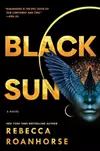
I really enjoyed this book and had trouble putting it down! Loved the clear references to Latin American indigenous cosmology. It's creepy and mystical, dark and romantic at the same time.
I really enjoyed this book and had trouble putting it down! Loved the clear references to Latin American indigenous cosmology. It's creepy and mystical, dark and romantic at the same time.


I'm in a place right now where I'm trying to reckon with polycrisis and collapse. So are the characters in this book -- although they are mostly deciding not to cope or acknowledge it and instead engage in their own acts of avoidance. Their reality is also somewhat collapsing at the death of their father.
It's not really a comforting portrayal of collapse. Things get incrementally worse. The mother of two of the daughters becomes so distressed by the coming collapse -- so isolated as well in her fear of it -- that she joins a cult that believes human sacrifice will reverse the collapse.
It will not. And at the end of the book Armfield offers very little hope -- just that of having survived one terrible moment. And having to keep on in a new iteration of the endings. And deciding that life and love in the end of the world is still worth it for the sake of life and love. And that the anger we feel about what should've been, how our lives were supposed to turn out, the proverbial riches of continued existence and happiness and descendants -- that will not save us either but drive us further apart if we let it.
I'm in a place right now where I'm trying to reckon with polycrisis and collapse. So are the characters in this book -- although they are mostly deciding not to cope or acknowledge it and instead engage in their own acts of avoidance. Their reality is also somewhat collapsing at the death of their father.
It's not really a comforting portrayal of collapse. Things get incrementally worse. The mother of two of the daughters becomes so distressed by the coming collapse -- so isolated as well in her fear of it -- that she joins a cult that believes human sacrifice will reverse the collapse.
It will not. And at the end of the book Armfield offers very little hope -- just that of having survived one terrible moment. And having to keep on in a new iteration of the endings. And deciding that life and love in the end of the world is still worth it for the sake of life and love. And that the anger we feel about what should've been, how our lives were supposed to turn out, the proverbial riches of continued existence and happiness and descendants -- that will not save us either but drive us further apart if we let it.


