
Imi


This will be a bullet point style review, because I have too many thoughts and I don't feel like wasting too much more time on this book.
The Good
- This book made me realise something; I am a sucker for a fast paced crime thriller. (Who am I kidding, I knew this already). Even when I can tell a thriller is not that good, even as I'm finding lots of plot holes and laughing at how ridiculous it all is, I still find myself racing through its pages. The plot is hugely compelling and I begrudedly admit I enjoyed the ride. I think this might say more about me than it does about the book, because when I got to the end, thinking back on what I'd just read, I have to say most of this was Not. Good.
The Bad (Are you ready for this?)
- The arrogance and ego of the main protagonist, Marcus, was almost unbearable. But worse was the fact that everyone, the world, wanted to encourage and justify his arrogance. Marcus the Magnificent is a writer, who has already written one flawless masterpiece and everyone is convinced he is about to write a second, and so everyone loves to shower him with compliments about how smart/talented etc. he is. What I don't understand is how good his first book must have been to get this kind of celebrity treatment (being recognised every he goes, hanging out with the cool celeb crowd in New York, expensive apartment/car/clothes, even the celebrity girlfriend). I mean I can't think of any writers, even hugely successful ones, that get treated like this everywhere they go? Actors and Musicians yes, writers no. Unfortunately for us, Marcus is not the only self-absorbed, vain and intorable writer that we have to deal with; his writer friend, Harry Québert, is just as bad.
- In fact no, let me rephrase that; Harry is worse. It's his gigantic ego that allows him to believe that his relationship with a 15 year old girl when he was 34 was ~real love~. The whole “love story” just makes me want to throw up. What's worse is then we have to read about Marcus prancing around the place, trying to convince everyone that this was indeed ~true love~ and therefore Harry cannot be the killer, and it's oh so tragic and sad. I mean, did Dicker by the end of the book really want the reader to consider the possibility that this relationship was anything other than creepy and sick? Because no it was definitely creepy and sick. Harry “falls in love” with Nola because he sees her dancing in the rain on a beach (i.e. lust) and then Nola decides to waste her summer doing everything to make sure that nothing protects his genius while he works on his next masterpiece novel - she removes any distractions, lounges around his house as the inspiration behind his epic masterpiece, makes him sandwiches and basically waits on him hand and foot. And then Harry wallows in self-pity for the rest of his life over the loss of this true love and we're meant to feel sorry for him. Gross.
- The writing, particularly any of the letters and dialogue in this “love story”, is painful. Imagine reading the diary of a lovesick teenager for almost 600 pages and this is what you get. Unfortunately for us, this is exactly how we are meant to believe Harry Québert, the esteemed master author, writes including in his genius novel that is supposedly famous as being the best literature of the century. The dialogue is painful and full of trite clichés such as “You must give meaning to your life. Two things can make life meaningful: books and love”. And then Spoilerwe find out who really wrote “ The Origin of Evil” and it was literally a creepy stalker, I mean of course?? And the book Québert really wrote is called something like “The something of Seagulls”, because Nola loved the sound of Seagulls. Just yuck.
- All the characters are small-town unauthentic stereotypes: the reclusive writer genius, the tough black cop, the money-grabbing lawyer/publisher (these two literally felt like the same character which was just ugh), oh and of course the Lolita nymphet.
- Dicker threw every twist, turn and red herring he could think of. A fast pace is great for a thriller, but this just descended into an implausible and ridiculous mess so much so that I ended the book in a state of disbelief. So many times before a big reveal a character would say “it's complicated” and then proceed to act mysteriously for a few pages before explaining what an earth they meant. Most of the twists make no sense then eventually get disproved by the next twist so really we're just going round in circles. I could explain why most of the reveals were terrible but I'm honestly too exhausted to do that now.
In conclusion (because I have to stop thinking about this book before I completely lose my mind), this was, put simply, a mess and I've manage to convince myself into removing another star just by writing this review.
On a side note, I'm sad that the 2 books I've read in full on my holiday so far have both been duds. What did I do to deserve this??


Sappy, cliché and melodramatic. This was really the story of Denny, Enzo the dog's owner, and all the many misfortunes that he and his family face. Firstly, Spoilerthe death of his wife Eve, and then the meddling of the controlling and manipulative in-laws who are stubbornly convinced they know what's best in regards to caring for the grand-kids, which was actuaaway kind of similar to something I experienced as a kid. So up to this point I could appreciate the events in Denny's life as sad, emotive but also reasonably believable. Then the misfortunes kept piling up and things got kind of ridiculous Spoilerespecially with the Annika situation.
My biggest disappointment, however, was Enzo the dog as the narrator. I was hoping for a simple story of family life through the eyes of a dog, because I do believe that dogs observe and understand more about human and family life than many people give them credit for. But Enzo wasn't really a dog. Nope, this narrator is a human that the author has placed in a dog's body. No matter how intelligent a dog is, I refuse to believe this is how a dog would think or behave even in a fantasy. In fact I really think this narration took away from the magic of choosing to narrate the story through the family pet. Enzo here discusses philosophy, speaks in metaphors and even has a list of his favourite actors. It's all a bit silly, because why would a dog care about things like this even it could understand them? And this is coming from someone who does actually own a dog who is obsessed with televison. We do in fact turn the TV on just for him and he does recognise the voices of people on his favourite programs. But even then I would not ever believe he would think in the way Enzo was written to think, nor would I want to believe that. I think Stein needed to write this story with a human narrator, but he was so desperate to write it from a dog's point of view that he lost the voice of the dog completely. When Enzo as the narrator is required to imagine events taking place off camera, as it were, for example in court room where a dog is most definitely not welcome, I think this just shows how much of a hindrance this choice of narrator was to the book.
If anyone can recommend that simple book I mentioned before on family life told from a dog's point of view, I'd love to read it, because this wasn't it.


If there is one sub-genre that I've enjoyed the most over the last couple of years, it has to be modern Victorian historical fiction. That is long, sprawling novels written by contemporary authors, but set in the 19th century, which explore what life might have been like for people back then. [b:The Crimson Petal and the White 40200 The Crimson Petal and the White Michel Faber https://d.gr-assets.com/books/1408937589s/40200.jpg 1210026], [b:Fingersmith 45162 Fingersmith Sarah Waters https://d.gr-assets.com/books/1327879025s/45162.jpg 1014113] and [b:Gillespie and I 10785670 Gillespie and I Jane Harris https://d.gr-assets.com/books/1327913398s/10785670.jpg 15697834] are just some gems in this category. Alias Grace could easily be grouped in with these and has much in common particularly with the latter two in that it also combines one of my other favourite genres: mystery. The questions surrounding the central character, Grace Marks, are at the heart of the novel; who was Grace, could she be trusted and what exactly was her involvement in the double-murder? Combine mystery, historical fiction and Atwood's phenomenal power with words, then of course we are on to a winner.The novel is a fictionalised account of a true event that took place in mid-19th-century Canada. Grace Marks, as a young servant girl, is part of a pair that are accused of murdering their employer and housekeeper. However, while her co-conspirator is hanged, there is enough doubt in her guilt that Grace avoids that fate, instead sentenced to imprisonment. The real crime attracted a lot of attention and everyone had an opinion on Grace, but there was never a definitive conclusion. Was Grace a cunning murderess? Or was she entirely innocent, possibly forced into acting against her will? Has she chosen to remain silent or is she really suffering from amnesia?“If I am good enough and quiet enough, perhaps after all they will let me go; but it's not easy being quiet and good, it's like hanging on to the edge of a bridge when you've already fallen over; you don't seem to be moving, just dangling there, and yet it is taking all your strength.”The mystery gives the novel its plot and maintains intrigue, but I think the two best aspects of the novel were, firstly, Grace, as an interesting, complex and unreliable narrator with a fantastic voice, and secondly the fact that the story wasn't really about whether Grace was guilty or not. Instead it explores the lives, roles of and expectations on women in 19th century Canada. Atwood conveys how little choice and control women had in this time period. The novel deals with so many important issues (the assumptions of men and upper class on, mental health, poverty...) in a subtle and insightful way so it is never too preachy.“What is believed in society is not always the equivalent of what is true; but as regards to a woman's reputation, it amounts to the same thing.”Don't go into this expecting definite answers. The reader is left to draw their own conclusions, but even now I can't say that I know what to think. But here is a spoilery thought: Spoilerthe hypnosis scene had to be an act. That is the only way it could make any sense to me and Grace's letter to Jeremiah after the event almost confirmed that for me as she thanked him for his supposed help. If the two of them had planned this deception, this makes me think Grace must be guilty, which is strange because I spent most of the novel thinking otherwise. I don't know, this scene completely confused me.Despite finding this fascinating and enjoying it immensely, there are a few points that stop it from being 5 stars. Firstly, the narration and structure was odd at times. It jumps around between Grace in first person, Dr Jordon in third and other documents such as poetry and letters. I loved the use of letters, especially in the penultimate chapter, but it was confusing sometimes and I think it could have been organised slightly better. Also, I feel like it's the darkest book I've read by Atwood so far, or at least the one with the least amount of hope. It just felt that there was no hope for Grace no matter who she was and whether or not she was guilty, due to the society she was living in. Whatever she did or did not do would never be enough, because men would always make their own judgement about her. This made for a dreary and sometimes frustrating read. Actually, this is probably why the last chapter/ending didn't quite work for me. SpoilerIt didn't seem to fit with the rest of the novel?. I hope to be a little more satisfied with the ending once I've thought about it some more and discussed it with others.Overall, a highly recommended, well researched novel, and one that I'll be thinking about and trying to fully understand for a long time to come.


I found Shipstead's first novel, [b:Seating Arrangements 12712435 Seating Arrangements Maggie Shipstead https://d.gr-assets.com/books/1329425347s/12712435.jpg 17846412], hugely disappointing and I was half expecting to give up on this novel within the first few chapters. However, I was willing to give it a go, because I had feeling that I could really enjoy Shipstead's writing if only she wrote about characters that I found more interesting.Thankfully, this turned out to be the case. In some ways, Astonish Me has a lot in common with Seating Arrangements, namely Shipstead's lovely, flowing writing style and the short chapters told from the different perspectives of a group of acquaintances. In Seating Arrangements, I simply could not bring myself to care about any of its characters. Strangely, I wouldn't say any of the characters in Astonish Me are particularly likeable either. In fact, by the end of the novel, I'd say every one of them had become downright selfish. But still I found the characters themselves and their relationships fascinating: Joan and her relationship with Jacob, Elaine and her relationship with Mr. K., how Harry and Chloe grew together...I also loved the ballet aspect of the novel. An overriding theme is the struggle for the power, perfection and glory. The commitment ballet requires, the sacrifices dancers have to make to achieve success and sometimes how they unfairly use others to gain an advantage in this unforgiving world. Now I'm no expert on ballet, but I thought Shipstead described it beautifully and the details she included made these descriptions of the dancing one of my favourite parts of the book.Overall, I'd say this an immensely enjoyable read, although it was, perhaps, a little unbelievable and melodramatic at time. I had to laugh when, near the end of the book, SpoilerArslan and Chloe became a couple. Harry summed it up pretty well: SpoilerWhen Harry thinks it through, that he is dancing in a role of his biological father while his ex-girlfriend plays his mother, while pregnant in real life with his half sibling, he becomes disoriented and troubled, and so he prefers not to think but to simply inhabit the role. Well, yes, you should definitely find that a little troubling, Harry! The ending itself was quite abrupt and I agree with other reviewers who say that the novel could have been slightly longer. I certainly would have liked to have learnt more about how the Spoilerbig reveal affected the relationships between the characters. The fact that I care about the future of these characters, though, simply demonstrates how much more invested I became in their lives, in comparison with the characters in Seating Arrangements.


I've heard a lot about Laura Lippman, but this failed to impress me. The story jumps around the points of view of many characters across 50 years. The writing and most of the characters are completely flat. Only Michelle and Bambi really held my interest, but as we only spend a short chapter with each character before moving onto the next, this made it very hard to stay invested in the story. There were far too many bland and utterly uninteresting characters. There was also no drive behind the story until the very end. Having said that, I thought the ending was pretty good. The culprit wasn't a complete surprise, but how the reveal was uncovered in the last few chapters definitely gave the novel some much-needed momentum. It's just a shame it took so long to get there.


I know this is a complete generalisation, and not true for every single book of the genre, but I think a common problem with contemporary young adult, particularly when it involves paranormal/supernatural themes, is that the ideas are often fantastic, original and imaginative, but the execution itself is not so good.
For the main premise of the novel, think murderous ballerinas. The majority of the book is pretty much a high-school drama, if you replace high-school with ballet school and prison. If you're not interested in reading about a lot of privileged teenage girl problems, then this probably isn't for you. There is also an unusual supernatural aspect in play, that I quite liked myself, but glancing through the reviews it seemed many people found it confusing.
I enjoyed the melodrama of it all, the twisted creepiness, but the mystery itself was so obvious and transparent. The “reveal” was a complete let down, because I already knew culprit was so clear right from the start, that there really didn't need to be a reveal at all. The story is told through dual narratives, and for the mystery to have been more successful, it really needed to be more subtle and there should have been doubt on which narrator to trust. This could have been a great use of unreliable narrators, but I don't think the characterisation was strong enough for that to work. The dual POVs also means the story is dragged out, with some events being described twice from the different POVs, the pacing is off for something that could have been a good, creepy thriller and basically not a lot happens in terms of plot. It's only towards the end of the book, when both narrators finally get to the root of the matter, that things finally get interesting. I loved the resolution, Spoilerghost revenge!!, but I can see why others found it jarring, because it did all happen quite suddenly with little explanation.
If you enjoy reading YA and like the premise, then maybe give it a try, but even then I wouldn't recommend it as a must-read.


The opening chapter of this novel was incredibly written, gut-wrenching and sadly I think the rest of the novel failed to live up to that standard. What I felt this really needed was a little bit of context. There was one scene in the novel where a Western TV cameraman is quickly setting up equipment to get a shot of the locals running away from sniper fire. One of the characters, Dragan, is overcome with a desire to remove a dead body from view of the cameraman, risking his life to prevent the dead man from becoming just another nameless victim in the news. Dragan is aware that every running person, every one of the injured and the dying, are so much more than their current suffering. They are complex individuals, with lives and meanings that have been torn away from them by war. Unfortunately, without the much needed context, I don't see how Galloway was much better than the cameraman. Sure, the novel demonstrates the cruel unfairness of war and the plight of ordinary people, their current suffering, but everything else was missing. Firstly I wanted to know who these characters were, what were their lives like before the siege began, because people are so much more than what war turns them in to. Secondly, there needed to be some historical context, some meaning behind why the city is in this state. The enemy, the reason the people are fighting for their lives, is referred to time and time again as simply the “the men on the hill” and I think this simplifies the situation too much. The sense of time and place, which I think is vital for good historical fiction, simply wasn't there. The novel felt much more like a writer's creative interpretation of the suffering in what could be any war, not the reality of what happened specifically in Sarajevo. A short novel which I think should have either been a short story (or more than one) or should have been expanded, including more history and authenticity, which would have made it a whole lot more meaningful.


There was a lot about this novel that was simply odd. The use of first person plural is definitely not something you see often, but (to my surprise, honestly) it works really well here. The individual voices of 3 middle-aged sisters are instead replaced with the more general and muted voice of “we”. Together they write about their family history, their tragic, personal lives in this memoir turned shared “suicide note”.
Despite the dark themes and constant gloom, the sisters also manage to be really funny at times. I do think you have to have the right kind of sense of humour to get the most from this one. If you're not laughing at least a little bit (and probably feeling a little bad about laughing at the same time), then this might be too dreary to get through. It's an odd mix of dark comedy with historical fiction, an epic family drama, but it worked for me, at least most of the time.
The reason that I can't say I completely loved it is that I think there was some parts of the novel that were a whole lot more successful then others. The novel is mostly a scattering of separate stories, observations etc. from the family history, and there were simply some of these stories that I was more interested in and more emotionally affected by than others. Personally, I loved the beginning, but felt the narrative started to drag a little in the middle (maybe the dreariness was getting to me at that point), then picked up again (SpoilerI loved Aunt Violet's unexpected appearance! Brilliant!), and then I felt like the ending didn't quite work. (SpoilerDanny's voice was too similar to that of the sisters and I actually don't think anything he told us was very necessary. The epilogue seemed as a bit of a none event really).
Overall, Mitchell has crafted something that could have been a disaster, but is mostly tremendously successful. Recommended if you feel like trying something a bit different, as it's certainly original and quirky, but also a bit of a risk.


In The Pearl that Broke Its Shell two separate plots are told side by side and demonstrate how little has improved in a century for the daily life of women in Afghanistan. Rahima and Shekiba's stories and the issues they face are tragically similar, no matter that they were born about 100 years apart. Sadly, I don't really understand why the average rating for this is so high, as I found myself becoming consistently bored not with either of the stories, but with the writing itself, which seemed rather flat and plain. The characterisation was also very one-dimensional. It's written less like a novel, and more like a report, listing off the tragedies that were faced by both protagonists. Even worse, there were some points in Shekiba's storyline where I noticed that the person changed from first to third person within a paragraph. This was jarring and seemed like a mistake on the editor's part. This is a story that must be told, but I don't think this novel did a particularly good job in telling it.


“Life demands sacrifice and difficult decisions from us at every moment. Living does not mean passing through a void of nothingness but rather through a web of relationships among beings, each with their own weight and volume and texture.”
The prologue of I'll Be Right There begins with our narrator, Jung Yoon, receiving a phone call from her ex-boyfriend, who she hasn't spoken to in 8 years. That moment causes her to recount her memories of childhood and her college years. It is a story of friendship and relationships, how we are drawn to each other, how we lose one another and the emotions we feel when we are unable to reconnect. The tone is melancholic, nostalgic and reflective, but despite the tragedies faced by every one of its characters, the novel still achieves a sense of hope. The idea is that life is never simple, not always easy, but still we survive. Similar to Shin's first book translated into English, [b:Please Look After Mom|8574333|Please Look After Mom|Kyung-sook Shin|https://d.gr-assets.com/books/1320413213s/8574333.jpg|13443181], this novel asks us to question what is left unsaid. There is no detailed explanations, no climax or resolution. Instead this novel is an inspiring exploration of the emotions and inner conflicts of a group of friends, fighting their own personal tragedies. Despite its tragic undertones, I'll Be Right There was also a very quick and readable, one that I'd recommend to fans of coming of age, realistic fiction.


I was hoping A Teaspoon of Earth and Sea would be an exploration of the relationship of twin sisters and the grief of losing one another. The idea of a young Iranian girl coping with her grief through her imagination and stories, after her twin sister, Mahtab, and her mother supposedly disappear, intrigued me. Saba invents stories about her sister's life in America, believing that being a twin must mean her sister is alive and that lives will remain linked, no matter how much earth and sea separates them.
Unfortunately, this plot seems to have been more of a sub-plot, never the main focus of the narrative as a whole. Even worse, I can't work out what was the focus of the novel. It's more like Nayeri had several different ideas and plots in mind, and instead of focussing on one, she combined all of them into one novel. The only way all these different sub-plots are linked together is that they are vaguely related to Saba. And none of them were strong enough the carry the whole novel. I can't help thinking that Nayeri should have chosen one relationship and plot to focus on.
I wish that relationship was Saba and Mahtab's, which we learn very little about. As it is Mahtab is nothing more than a plot device. Mahtab's fantastical parallel life is so obviously untrue, that there is no real faith behind it. It's clear to everyone (including Saba, I think) right from the start know that Mahtab is Spoilerlong dead. These sequences are superficial and also feel overly long. They drag and I found myself wanting to skim them, because they revealed nothing about Saba, her grief process or the development of the plot, especially when she's started her adult life and so much else happens to her. It's inconceivable that she would continue to believe in this elaborate fantasy for so long.
Even though I felt the novel failed to explore the relationships of the characters, there was still another seemingly important theme: the conflict of a wealthy Christian family attempting to live in rural Islamic village in post-revolutionary Iran. Unfortunately, this was another theme I felt wasn't sufficiently explored. Sure, there was the initial disappearance of the mother (which may or may not have been related to her religion), the difficulties of women living in a highly patriarchal society, two horrific assaults, and an execution of a character Saba has never even met, but other than that village life barely changes after the revolution and the Christian family seems to face surprisingly little resistance from the rest of the villagers. It's like the author suddenly realised the family had it too easy, so added in the assaults/execution to add to the conflict of this theme, and then went back to focussing on other themes. In fact, Nayeri even mentions in the author's note at the end that it would be “uncommon” to have “a prominent Christian family living mostly unbothered in a village” in Iran, but that she chose to ignore these “details”. I don't really understand why she would have decided it important to make the family Christian, if she wasn't interested in exploring this theme? This is another side of the novel that felt unfinished.
I'm sadly left feeling this was an unremarkable read that didn't realise it's potential. Perhaps if Nayeri had tried to find more of a focus, then the novel would have felt more complete.


Read as part of the Spring LTWF group read.
Hausfrau was a very difficult read, which got progressively more difficult as the story went on. The novel follows the downward spiral of Anna Benz, an unhappily married woman, depressed and lonely, who despite having lived in Switzerland for 9 years still cannot speak Swiss German, and has completely isolated herself from everyone around her. Its many bleak and heavy themes Spoileradultery, isolation, depression, death of a child, domestic violence and suicide make it a difficult one to recommend, especially as they are covered in a very unforgiving way. This book may hit a little too close to home for anyone who has been unfortunate enough to have experiences similar to Anna's.
A depressing subject matter wouldn't have stopped me from rating it higher, but as it is, the novel all felt very heavy-handed. Firstly, I honestly hated how it was written. The style and structure is extremely disjointed, jumping from scene to scene (present, flashback, appointments with therapist and back again), and this bothered me throughout. Not only was I getting confused points, when flashbacks seemed to merge with the present, but I also felt this structure added nothing to the overall story and slowed the pace down greatly. In particular, I found myself skimming over the scenes with Doktor Messerli, Anna's therapist, which felt overly forced and pretentious. Other scenes take place at a beginners' German class, which Anna has finally been persuaded into taking by her therapist and husband, and Essbaum compares the coldness of Anna's existence to various rigid grammatical constructions and the constraints they form. At first, being the language/grammar nerd that I am, these linguistic metaphors interested me, but it soon became overdone and repetitive, and like the therapy sessions, completely unnecessary to the emotion of the story.
Even though the writing style and overuse of philosophical metaphors frustrated me, this was still an honest read and I can see why the novel is getting a lot of attention. As deplorable and self-destructive as Anna's actions may be, she is an entirely sympathetic tragic heroine. It's a tragedy what happened to her, or more, what she did to herself. Even though it's clear her decisions (or lack of them) only made to preserve her isolation, I can see how her loneliness resulted in her continued passivity. Overall Anna's situation, although entirely her own doing, is incredibly sad and I'm sure the final sentence will haunt me for a long time to come.
If you can get past the disjointed narrative and can cope with its unapologetic and sometimes graphic directness, then maybe you'll like this a little better than I did.


Despite being narrated by the ghost of a recently deceased young woman, I wouldn't call this a ghost story. It's a historical novel set during the political upheaval of revolutionary China in the 1920s-30s. Song Leiyin, the third daughter of a prominent family, watches her funeral as a ghost, unable to move on to the afterlife or to remember how she died. She is told by the manifestations of her three souls that she can't move on to the afterlife until she atones for the sins of her mortal life. Unable to remember what these sins were, Leiyin accompanied by her souls begins to relive her memories to find out what she needs to do, reflecting on the decisions, events and consequences of her life. This unusual way of presenting a story is effective, intriguing and thoughtful.
In my opinion, what makes a good historical novel is its sense of place. And the sense of place here is exquisite. This is a time of great change. Old and new values are in constant conflict. Leiyin is from a very traditional family, where women are expected to obediently follow the roles of daughter, wife and mother. As a young girl, Leiyin has very different ideas for her future, dreaming of continuing her education at university and becoming a teacher. We observe, along with Leiyin's ghost self, as she attempts to break these social constraints, for both right and wrong reasons. The reflective element of the narration demonstrates that although Leiyin is rightly frustrated at her lack of control over her life, her rebellion had consequences that she could never have imagined.
I guessed pretty much all of the “twists” in the plot and I suppose this shows that many of the consequences of Leiyin's actions were quite predictable. This is not necessarily a criticism of the book, however, as I think demonstrates how Leiyin as a naive young girl was so desperate for life to turn out exactly as she wanted that she could see the reality right in front of her. Something I think we are all guilty of. By the time she dies, Leiyin has developed into a mature, strong woman and can now accept the truth. By looking back, she can understand her life in a way she never did at the time and appreciate both the unfairness of her situation, as well as the fact that her life wasn't all bad and that she had a lot to be thankful for. This is something she was never able to appreciate while alive.
Although Leiyin's three souls (yin, yang and hun) have distinct personalities and opinions, I did feel this concept could have been built on further, or at least given more context. The three souls didn't feel like fully fleshed characters themselves (which I guess is hard to do for three non-entities..) and so I found myself a lot more interested in Leiyin's views on her life and the moral dilemmas she faces.
This is an excellent debut, one I first debated giving either 4 or 5 stars, but in the end had to bump up a star. I'm still thinking about it. Even if some very small parts of the novel that aren't quite as strong as the rest, I am still thinking about it books later. I can wholeheartedly recommend it, especially to lovers of historical fiction.


I would have very easily given the first part of Father of the Rain a high 4 star rating. The book begins during Daley's childhood years, as she struggles with facing her parents' divorce. This first section is painful to read, but feels true. 11-year old Daley struggles to understand why her world is falling apart, her separation for her father and the fact that he now has a new family. No matter what he's done, no matter that he is an alcoholic, self-absorbed, self-destructive and everything else, in the end he's still her dad. It's easy to sympathise with the all the characters in this first part, but particularly Daley.
The second and third parts didn't ring as true for me as the first. Daley's adult years felt a little too constructed Spoiler(the perfect boyfriend/job/life that Daley has to sacrifice for her father, the fact her father's life falls apart at exactly the worst moment when she hasn't heard or really cared about him in years, the childhood crush still living in her hometown etc.) and the story lost it's believability. There are still poignant scenes and the relationship between Daley and her father is interesting, but I can't help feeling that too many times I felt I was being preached to in some way, and that things wouldn't play out this way for a real life dysfunctional family.


Sadly, a disappointment. I hated the first half, then enjoyed the middle part immensely, but found myself drifting back into indifference by the end of the book. Shipstead is immensely talented. Her writing style is wonderful and I just hope to be able to read something by her that showcases this talent. Simply put, I just couldn't bring myself to care about any of the characters. It's fine to have unlikable characters, but if I don't even care about what happened to them, then what's the point? The ending was also unsatisfactory after a somewhat more promising middle section. Not for me, I guess.


In some ways, this was everything I was hoping it would be. The premise was unique, the imagery divine and the merging of folklore and myths from various different cultures was beautifully done. I looked forward to returning to reading this at the end of every day, mostly because there was something just so calming about the flow of the story. Enjoyable, easy to read and comforting. What else could I possibly want?
Unfortunately, I have to be honest that there was something missing. Although I can't deny the process of reading this novel was very enjoyable and there is nothing particularly wrong with it, the ending left me feeling rather empty. This is certainly a character driven novel, and although that is all well and good, I can't help feeling that the whole novel was a lot of build up leading to not much pay off. It's like the story just fizzled out by the end. On the top of that, the story didn't even get going until at least a third into the book, because a lot of time was taken up introducing the many characters, even secondary character (like Michael, Sophia, Marayam, Saleh...), and their lives in minute detail. This would have been fine, and like I said before I definitely enjoyed the process of reading about them, if only it had all led to something. I can only say I found it anti-climatic, after finding out so much about these characters, to learn that they didn't impact on the story much at all.
Recommended for those who enjoy mythology and folklore, as well as slowly-developed, character driven stories. Even though I'd say I enjoy all those things, I can't help feeling underwhelmed at the novel's end.
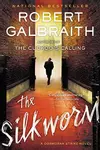


I was certain that I was going to give this 4 stars, as I was much more engrossed in the plot than in The Cuckoo's Calling. Unfortunately, like the first book in the series, the ending was a complete disappointment. Again, we had to wait for Strike to put all the pieces together and then we find ourselves frustrated as we realise that he is not going to share his thoughts with the reader until the very last chapter. I could have forgiven that, even though I'd prefer not having to rely on Comoran to solve the mystery, but then the ending I just simply hated. SpoilerI really, really hated what was done to Elizabeth Tassal's character. OK, so she's a successful business women, but also a bitch, with no husband or children, and she can't get the guy, so therefore has no life or self-worth, and oh that guy was blackmailing her. And this makes her a killer? She spends years plotting and then commits the most grotesque murder because of this? I mean, she carved out his guts!! What was the point? I just don't believe the motive at all and was left feeling very unsatisfied with this conclusion.
In fact, I'm pretty disappointed overall with how Rowling is writing the women in this series. Thankfully, Robin was given a bit more to do in the second half of this novel than in the first half and the last book. But this may not have been a good thing, because Strike's astonishment that a woman was good at driving was painful to read. Clearly, Robin proved him wrong and that would have been awesome if she hadn't ruined it later on by saying “I'm not most women”, when Strike remarks that most “women” would want flowers as a present. Ugh, please don't turn into one those “I'm-one-of-the-boys” stereotypes, Robin.
This review has been pretty negative so far, but really the series' treatment of women is the one thing that is souring an otherwise great mystery series. This is just not something I expect from J.K. Rowling, of all people, and I can't understand it. (Is she purposely trying to write as the fictional Robert Galbraith would? Why?). Still, I'm very happy that Rowling is writing a mystery series, because I think this is exactly what she excels at and it's a fun, enjoyable read.


This will be a brief review of the whole Chronicle of Ancient Darkness series, but there won't be any spoilers from any of the books.I loved this series as a child. It was one of my childhood obsessions. And I hate leaving a series unfinished. Unfortunately, by the time the final book, [b:Ghost Hunter 4326206 Ghost Hunter (Chronicles of Ancient Darkness, #6) Michelle Paver https://d.gr-assets.com/books/1415589501s/4326206.jpg 4374011], was released, I was already way older than the series' target audience and had moved on to other things. Only last year, when I read Paver's adult novel [b:Dark Matter 8350864 Dark Matter Michelle Paver https://d.gr-assets.com/books/1328133091s/8350864.jpg 13203928], did I decide to reread the first 5 books of the series and then finally read its conclusion.Of course, it is very different coming back to a children's series as an adult. The lack of character development and the formulaic structure of the plots of each book made it difficult for me to get completely absorbed in the world this time. Fortunately, as the books are so short, it was easy for me to breeze and it was definitely pleasant to revisit these characters again.None of this would be a problem for a child, especially one that struggles with reading. The length of each book is perfect for children and it's action-packed, so will hopefully keep their interest. Although many of the secondary characters are barely distinguishable, the main trio (Torak, Renn and Wolf) are great and very easy to cheer on. The best aspect of the series, however, is certainly it's setting, 6000 years in the past. These books are a fantastic way to get children interested in prehistory, the people of the Stone Age, how they lived, what they believed and the natural world.Overall, this series probably won't have enough substance to hold the interest of any adult reader, unless you are used to reading children books, but I'd certainly recommend it for children aged 8-13.


I am more ashamed than ever for not reading this sooner. I avoided reading it for so long, because I never believed it could live up to everything I'd heard about it. I couldn't have been more wrong. Of course, there is nothing I can say about this classic that hasn't been said before, so I'll keep this brief, but the story, the characters moved me. I understood the book to be an honest portrayal of childhood, about growing up and the lessons that Scout learns about being a decent person. This is something that is relevant to everyone, no matter what your background is. Everyone deserves to be treated fairly, and you shouldn't judge somebody until you've “put yourselves in their shoes” and can see them for who they truly are, and not what other people say about them:
“You never really understand a person until you consider things from his point of view... Until you climb inside of his skin and walk around in it.”


The best word to describe this novel is simply fun. It's creative, unique and at certain points completely baffling, but above all reading this felt like an experience. Not that this is a book for everyone. The story is told through journal entries, audio or video recording transcripts, excerpts from books, handwritten notes, letters etc. (think [b:Night Film 18770398 Night Film Marisha Pessl https://d.gr-assets.com/books/1397425352s/18770398.jpg 15182838]), and I can imagine that would be unbearable for some people, but I found it engaging and entirely gripping. There are even puzzles and codes that you can attempt to decipher... or just read on like I did most of the time and have it explained to you, meaning these never felt like a chore. The characters and plot itself are wacky enough not to be outshined by this strange structure. A haunted house, mysterious distant relatives, a secret society, dream manipulation, criminal masterminds, an Irish punk-rock teenager who also happens to be a mute, a dog called Help: there's so much packed in here. However, I wouldn't say this was perfect. The plot twists was a little messy and confusing at points. I had to re-read a few parts just to check if I'd followed correctly, and even then the ending didn't make complete, logical sense, but at the end of the day none of that mattered, because as I said before reading this was just pure fun.


I was all ready to give this a 3 or 4 star rating right up until the very end. I was reasonably enjoying the first two thirds, which were actually about Ava's grandmother and mother rather than her personally. The magical realism was wonderfully done at points and made for some beautiful images, although as the book went on I did feel a few of the descriptions and images of ‘love' were too overdone, a bit trite... But then that is something I expect from a YA novel (unlike the ending...) I felt for a few of the characters, particularly Emmeline, but there were others that seemed simply flat and the ridiculous names started to irritate me as more and more characters were introduced.
Still, like I said, reasonably enjoyable until about the last third. Then, as Ava started describing her teenage years, it all went downhill very, very quickly and the ending was just the nail in the coffin. SpoilerI was under the impression that the overriding theme of the novel was the pain and suffering people go through in the name of “love”. Now maybe I've just misunderstood, but it seemed very much like Nathaniel Sorrows' “suffering” in the name of “love” was being compared to that of the Roux/Lavender family. Comparing a psychopathic, mentally ill, religious maniac, who commits a horrific and violent sexual assault on a young girl (which I may I say was way too graphic for a YA novel that had otherwise claimed to be ‘whimsical'), with acts of love is just not OK. Here's one quote that bothered me:
Those deep-red bruises called to mind the faint brown mark Jack's kiss had left on her daughter Viviane's neck so many years ago. They also made her think of René's lovely face after William Peyton shot it off, of the hole in Margaux's chest where her heart once beat, and of all the scars love's victims carry.
not


If you've been put off this book (like I was at first) after finding out what this book is about (I'm not going to tell you here if you don't already know!) or because it's been tagged as ‘horror', then really don't worry. It probably would have taken me a little longer to give this a go, if it wasn't nominated as a group read, because Spoilerzombies really don't interest me in the slightest and horror (besides ghost stories) is also not a genre I pay much attention to. Fortunately, this book is actually less horror, and more what I'd describe as a post-apocalyptic scifi thriller.
Although certainly a page turner with plenty of action, which you'd expect from any good thriller, I was surprised at how character driven the novel was. The characterisation is simply fantastic. A few of them perhaps start as slight stereotypes, but as you get to know them, you see that each one is very distinct personalities and the author did a spectacular job at really making the reader empathise with and understand the motives of all the characters, even the ones that are perhaps more morally suspect.
There were a few moments where I felt the narrative dropped slighting, but the immensely satisfying ending completely made up for that. I'm still thinking about it a few days after finishing it. The ending, while being horrifying and tragic, was at the same time beautiful and brilliant. I can't think of any other way I would have wanted it to end.


3.5 rounded up to 4 stars, as I'm struggling to decide how I'd rate this. Lahiri's prose is simply exquisite and beautiful detailed. I was completely entranced from the first page. The plot is relatively simple, which is fine, especially when the details and certain scenes are so moving and beautifully portrayed, but by the end of the novel I felt that the novel overall could have worked better if the overriding plot had more of a focus. Nevertheless, this is a worthy read with a meaningful message; you don't know what you have until it's gone. I've heard Lahiri is fantastic writer of short stories and this novel has certainly made me excited to read more of her work.


I was expecting too much of this. I've watched almost all the TV adaptations (and there are a lot of them!) and absolutely loved them. My favourite version was the series with Krister Henriksson playing Wallander. I vaguely recognised the plot of this one, as I must have watched at least 2 different adaptations of it, so maybe that didn't help. Unlike in the TV shows, the plot seems lifeless here, the writing doesn't help as it's flat and unremarkable. Worse, even though I recognised many of the names, in the novel the characters have no depth and are barely differentiated from each other. I always felt a lot of sympathy for Kurt in the TV series and his life seemed challenging, but here, as the only character with any distinctive traits, he seems completely different from what I remember. Not likeable in the slightest. It's not very often that I'd say this, but really this original novel is nowhere near the quality of the TV adaptations. I can't say I'm in a hurry to read the rest of the series now, even though I feel I should as I've heard such good things about Mankell and they just have to get better than this. Right?


I thought the first half of this book was good, but that wasn't nothing compared to the second half. I've spent the whole day reading it, completely unable to put it down. This is certainly a page-turner. Full of betrayal, deception, heartbreak and so many twists that I never saw coming! I don't want to say to much at all, because it was definitely the surprises that made this one so enjoyable. Please, do yourself a favour and don't read any reviews that give away too much about the plot.