
Nourez Rawji




Answered a promptWhich novel left you ruined?


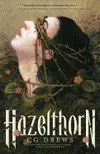
What makes a good Gothic? A sense of presence in the location. The feeling that the characters’ inner selves are being made manifest by that location. A healthy dose of moral ambiguity. A sense of being trapped, of danger, whether it's supernatural or of the characters’ own making. And through it all, a sort of grotesque allure to it all.
All of these elements exist in the foundations of Hazelthorn, but the book is so tied up in its YA trappings that it never comes together into anything meaningful by the end. At its core, Hazelthorn is the story of Evander, a young man who's spent much of the last 7 years locked in a room at the titular manor due to fits of an unnamed illness, and Laurie, the boy who tried to bury him alive 7 years prior. One day, Evander wakes to find the room's door mysteriously unlocked, and the head of the household poisoned, and he sets out to solve the mystery with Laurie's help.
When the scope of the book is just the two leads, it tends to work well. They ebb and flow into each other’s lives, being drawn together slowly by something in between romantic attraction and infatuation. The botanical horror setting and the slow digging into their characters’ pasts make for the bones of what would be a solid novel, but that's about where the good elements end for me.
The novel quickly loses its momentum whenever it stops being a weird, ethereal, gory meditation on the nature of wanting vs loving. It introduces plot twist after plot twist, moustache-twirling villains, an inheritance scheme, and a hardline sense of morality that all contribute to a very YA feel to it. The romance throws away its nuance and everyone ends up falling into strictly defined good and bad guys, all wrapped in the most on-the-nose social commentary I've read in a while. It ends up feeling over-explained and underbaked, the gothic sense of place falling away to a much more generic feeling back half. And finally, I need to touch on the prose. It's straight up awful. Every single noun has an adjective attached, every single concept is described with a metaphor or simile, there's so much flowery language that it feels suffocating. I love good poetic writing, but this is amateurish at best and unreadable at worst. It really does feel like you could cut about 30% to 40% of the words out of this novel and still have the same overarching story. I normally don't skim when I read, but I found myself having to do so just to get through the writing here. I seriously think this will be my go-to example of purple prose for people who aren't familiar with the term. I don't know if the editor just let it slip or the author was insistent on it for artistic purposes, but it was the single factor that took the book from a 3-star (it was okay) to a 2-star (I disliked it) review for me. It's that overbearing.
Ultimately, Hazelthorn is a mixed bag of good and bad ideas all tied together with deeply irritating prose. If you're okay with ornate, flowery language in an ornate, flowery mansion, this may be for you. Otherwise, I can't recommend it. There are so many better gothics out there.
What makes a good Gothic? A sense of presence in the location. The feeling that the characters’ inner selves are being made manifest by that location. A healthy dose of moral ambiguity. A sense of being trapped, of danger, whether it's supernatural or of the characters’ own making. And through it all, a sort of grotesque allure to it all.
All of these elements exist in the foundations of Hazelthorn, but the book is so tied up in its YA trappings that it never comes together into anything meaningful by the end. At its core, Hazelthorn is the story of Evander, a young man who's spent much of the last 7 years locked in a room at the titular manor due to fits of an unnamed illness, and Laurie, the boy who tried to bury him alive 7 years prior. One day, Evander wakes to find the room's door mysteriously unlocked, and the head of the household poisoned, and he sets out to solve the mystery with Laurie's help.
When the scope of the book is just the two leads, it tends to work well. They ebb and flow into each other’s lives, being drawn together slowly by something in between romantic attraction and infatuation. The botanical horror setting and the slow digging into their characters’ pasts make for the bones of what would be a solid novel, but that's about where the good elements end for me.
The novel quickly loses its momentum whenever it stops being a weird, ethereal, gory meditation on the nature of wanting vs loving. It introduces plot twist after plot twist, moustache-twirling villains, an inheritance scheme, and a hardline sense of morality that all contribute to a very YA feel to it. The romance throws away its nuance and everyone ends up falling into strictly defined good and bad guys, all wrapped in the most on-the-nose social commentary I've read in a while. It ends up feeling over-explained and underbaked, the gothic sense of place falling away to a much more generic feeling back half. And finally, I need to touch on the prose. It's straight up awful. Every single noun has an adjective attached, every single concept is described with a metaphor or simile, there's so much flowery language that it feels suffocating. I love good poetic writing, but this is amateurish at best and unreadable at worst. It really does feel like you could cut about 30% to 40% of the words out of this novel and still have the same overarching story. I normally don't skim when I read, but I found myself having to do so just to get through the writing here. I seriously think this will be my go-to example of purple prose for people who aren't familiar with the term. I don't know if the editor just let it slip or the author was insistent on it for artistic purposes, but it was the single factor that took the book from a 3-star (it was okay) to a 2-star (I disliked it) review for me. It's that overbearing.
Ultimately, Hazelthorn is a mixed bag of good and bad ideas all tied together with deeply irritating prose. If you're okay with ornate, flowery language in an ornate, flowery mansion, this may be for you. Otherwise, I can't recommend it. There are so many better gothics out there.


I've seen this book described as what would happen if Cormac McCarthy wrote Dark Souls, and I have to say that's pretty much on point.
The Plague is raveging France, the Legions of Hell have begun to wage war on Heaven, with God nowhere to be found.
This is the initial setup for the novel which follows a brigand, a priest and a young girl who has prophetic visions on a journey to Avignon. It's worth noting that for a large portion of the novel, the above setup is more or less the only real story notes that are explicitly given, with the story instead taking on a far more episodic structure than I was expecting. Like the stories metioned above, Between Two Fires is perfectly content to feed the overarching narrative to you via contextual tidbits and through the worldbuilding itself. This initially threw me for a bit of a loop, as it did feel like the middle segment of the book meanders for a while with a bunch of loosly connected stories. However, once I started to piece together what was going on, the structue clicked for me pretty quickly. The end result is that the overall novel is fantastic, but I can also see myself simply going back to re-read individual chapters which work well as standalone stories.
And when it all comes together in the last act, I was absolutly hooked. The ending is incredibly strong, the perfect capstone to the characters journeys.
I also really enjoyed the writing style. The writing has fantastically grotesque imagery, it's incredibly bleak, but there's a suprising amount of levity in the dialogue. I found myself really enjoying the little moments where the main trio managed to get a little bit of time to simply talk to each other, it made the overall story so much better.
All things considered, this might be one of the few instances where a book that's been blowing up online may have exceeded my expectations. It's an easy 5 stars for me.
I've seen this book described as what would happen if Cormac McCarthy wrote Dark Souls, and I have to say that's pretty much on point.
The Plague is raveging France, the Legions of Hell have begun to wage war on Heaven, with God nowhere to be found.
This is the initial setup for the novel which follows a brigand, a priest and a young girl who has prophetic visions on a journey to Avignon. It's worth noting that for a large portion of the novel, the above setup is more or less the only real story notes that are explicitly given, with the story instead taking on a far more episodic structure than I was expecting. Like the stories metioned above, Between Two Fires is perfectly content to feed the overarching narrative to you via contextual tidbits and through the worldbuilding itself. This initially threw me for a bit of a loop, as it did feel like the middle segment of the book meanders for a while with a bunch of loosly connected stories. However, once I started to piece together what was going on, the structue clicked for me pretty quickly. The end result is that the overall novel is fantastic, but I can also see myself simply going back to re-read individual chapters which work well as standalone stories.
And when it all comes together in the last act, I was absolutly hooked. The ending is incredibly strong, the perfect capstone to the characters journeys.
I also really enjoyed the writing style. The writing has fantastically grotesque imagery, it's incredibly bleak, but there's a suprising amount of levity in the dialogue. I found myself really enjoying the little moments where the main trio managed to get a little bit of time to simply talk to each other, it made the overall story so much better.
All things considered, this might be one of the few instances where a book that's been blowing up online may have exceeded my expectations. It's an easy 5 stars for me.
I've seen this book described as what would happen if Cormac McCarthy wrote Dark Souls, and I have to say that's pretty much on point.
The Plague is raveging France, the Legions of Hell have begun to wage war on Heaven, with God nowhere to be found.
This is the initial setup for the novel which follows a brigand, a priest and a young girl who has prophetic visions on a journey to Avignon. It's worth noting that for a large portion of the novel, the above setup is more or less the only real story notes that are explicitly given, with the story instead taking on a far more episodic structure than I was expecting. Like the stories metioned above, Between Two Fires is perfectly content to feed the overarching narrative to you via contextual tidbits and through the worldbuilding itself. This initially threw me for a bit of a loop, as it did feel like the middle segment of the book meanders for a while with a bunch of loosly connected stories. However, once I started to piece together what was going on, the structue clicked for me pretty quickly. The end result is that the overall novel is fantastic, but I can also see myself simply going back to re-read individual chapters which work well as standalone stories.
And when it all comes together in the last act, I was absolutly hooked. The ending is incredibly strong, the perfect capstone to the characters journeys.
I also really enjoyed the writing style. The writing has fantastically grotesque imagery, it's incredibly bleak, but there's a suprising amount of levity in the dialogue. I found myself really enjoying the little moments where the main trio managed to get a little bit of time to simply talk to each other, it made the overall story so much better.
All things considered, this might be one of the few instances where a book that's been blowing up online may have exceeded my expectations. It's an easy 5 stars for me.
I've seen this book described as what would happen if Cormac McCarthy wrote Dark Souls, and I have to say that's pretty much on point.
The Plague is raveging France, the Legions of Hell have begun to wage war on Heaven, with God nowhere to be found.
This is the initial setup for the novel which follows a brigand, a priest and a young girl who has prophetic visions on a journey to Avignon. It's worth noting that for a large portion of the novel, the above setup is more or less the only real story notes that are explicitly given, with the story instead taking on a far more episodic structure than I was expecting. Like the stories metioned above, Between Two Fires is perfectly content to feed the overarching narrative to you via contextual tidbits and through the worldbuilding itself. This initially threw me for a bit of a loop, as it did feel like the middle segment of the book meanders for a while with a bunch of loosly connected stories. However, once I started to piece together what was going on, the structue clicked for me pretty quickly. The end result is that the overall novel is fantastic, but I can also see myself simply going back to re-read individual chapters which work well as standalone stories.
And when it all comes together in the last act, I was absolutly hooked. The ending is incredibly strong, the perfect capstone to the characters journeys.
I also really enjoyed the writing style. The writing has fantastically grotesque imagery, it's incredibly bleak, but there's a suprising amount of levity in the dialogue. I found myself really enjoying the little moments where the main trio managed to get a little bit of time to simply talk to each other, it made the overall story so much better.
All things considered, this might be one of the few instances where a book that's been blowing up online may have exceeded my expectations. It's an easy 5 stars for me.

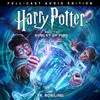
I've been re-reading (or listening, in this case) to the entire Harry Potter series leading up to new TV series, and The Chamber of Secrets is the one that I don't really have much in the way of stong memories towards. I recalled it being a bit of a retread of The Philosopher's Stone as a child, and I never really gave it fair shake beyond that as an adult.
I was pleasantly surprised by how much more than The Philosopher's Stone I enjoyed it ont his re-read. Though a lot of the narrative structure is similar in both stories, Chamber benefits tremendously from simply being able to dive the reader into the story without having to fully establish the world beforehand. Harry, Ron and Hermione attend Hogwarts for another year, find another dark secret within the school, and spend a large amount of time sneaking off to investigate it when they'd be better off simply telling an adult in the room.
Where the book really differentiates itself from The Philosopher's Stone is in the level of nuance given to the world and to the characters. The first book was framed from the perspective of a boy just learning that Wizards and Witches exist, the second is able to dive into the nooks and crannies and make the world feel alive. The first really felt scoped in on Hogwarts as a location, here we get little tidbits of information from outside, spending time at the Weasley family home, new locations in the magical parts of London, and getting a fair amount of expansion on the views and ideas of various types of Wizards outside the school. It's the book that marks the shift from The Wizarding School to The Wizarding World.
The characters are more fleshed out. Harry is able to grow into his newfound identity as a wizard, feeling more comfortable at school, allowing more of his personality to shine through, rather than simple confusion at every new thing he encounters. There's a bit of sass there, a confidence that this is where he belongs that leads to a great payoff in the ending. This allows Ron to be more involved as a character rather that an exposition device. Some of the banter between the two of them is endearingly hilarious. The villain is more deeply integrated into the school storyline, and it leads to palpable tension for everyone along with some genuinely creepy moments. However, if there is one flaw, it's that Hermione is absent for a suprisingly large amount of the novel. It does really let the Harry and Ron friendship blossom, but her absence is noticable.
All things considered, this is a review for a series that has been reviewed to death at this point. If you liked The Philosopher's Stone, then The Chamber of Secrets is a funnier, darker and more refined version of the same formula. It's the best kind of more of the same.
And, as a final note, I'm listening to the Audible Full-Cast versions of the audiobook, I need to give a shoutout to how incredible Kit Harrington is as Lockhart. Lockhart is one of my favourite characters in the series, and Harrington's performance stole every scene he was involved in. He has the perfect level of smug stupidity for the character, and makes the new audiobook worth listening to by himself.
I've been re-reading (or listening, in this case) to the entire Harry Potter series leading up to new TV series, and The Chamber of Secrets is the one that I don't really have much in the way of stong memories towards. I recalled it being a bit of a retread of The Philosopher's Stone as a child, and I never really gave it fair shake beyond that as an adult.
I was pleasantly surprised by how much more than The Philosopher's Stone I enjoyed it ont his re-read. Though a lot of the narrative structure is similar in both stories, Chamber benefits tremendously from simply being able to dive the reader into the story without having to fully establish the world beforehand. Harry, Ron and Hermione attend Hogwarts for another year, find another dark secret within the school, and spend a large amount of time sneaking off to investigate it when they'd be better off simply telling an adult in the room.
Where the book really differentiates itself from The Philosopher's Stone is in the level of nuance given to the world and to the characters. The first book was framed from the perspective of a boy just learning that Wizards and Witches exist, the second is able to dive into the nooks and crannies and make the world feel alive. The first really felt scoped in on Hogwarts as a location, here we get little tidbits of information from outside, spending time at the Weasley family home, new locations in the magical parts of London, and getting a fair amount of expansion on the views and ideas of various types of Wizards outside the school. It's the book that marks the shift from The Wizarding School to The Wizarding World.
The characters are more fleshed out. Harry is able to grow into his newfound identity as a wizard, feeling more comfortable at school, allowing more of his personality to shine through, rather than simple confusion at every new thing he encounters. There's a bit of sass there, a confidence that this is where he belongs that leads to a great payoff in the ending. This allows Ron to be more involved as a character rather that an exposition device. Some of the banter between the two of them is endearingly hilarious. The villain is more deeply integrated into the school storyline, and it leads to palpable tension for everyone along with some genuinely creepy moments. However, if there is one flaw, it's that Hermione is absent for a suprisingly large amount of the novel. It does really let the Harry and Ron friendship blossom, but her absence is noticable.
All things considered, this is a review for a series that has been reviewed to death at this point. If you liked The Philosopher's Stone, then The Chamber of Secrets is a funnier, darker and more refined version of the same formula. It's the best kind of more of the same.
And, as a final note, I'm listening to the Audible Full-Cast versions of the audiobook, I need to give a shoutout to how incredible Kit Harrington is as Lockhart. Lockhart is one of my favourite characters in the series, and Harrington's performance stole every scene he was involved in. He has the perfect level of smug stupidity for the character, and makes the new audiobook worth listening to by himself.
Updated a reading goal:
Read 20 books by December 31, 2026
Progress so far: 15 / 20 75%
Updated a reading goal:
Read 20 books by December 31, 2026
Progress so far: 15 / 20 75%

I've seen this book described as what would happen if Cormac McCarthy wrote Dark Souls, and I have to say that's pretty much on point.
The Plague is raveging France, the Legions of Hell have begun to wage war on Heaven, with God nowhere to be found.
This is the initial setup for the novel which follows a brigand, a priest and a young girl who has prophetic visions on a journey to Avignon. It's worth noting that for a large portion of the novel, the above setup is more or less the only real story notes that are explicitly given, with the story instead taking on a far more episodic structure than I was expecting. Like the stories metioned above, Between Two Fires is perfectly content to feed the overarching narrative to you via contextual tidbits and through the worldbuilding itself. This initially threw me for a bit of a loop, as it did feel like the middle segment of the book meanders for a while with a bunch of loosly connected stories. However, once I started to piece together what was going on, the structue clicked for me pretty quickly. The end result is that the overall novel is fantastic, but I can also see myself simply going back to re-read individual chapters which work well as standalone stories.
And when it all comes together in the last act, I was absolutly hooked. The ending is incredibly strong, the perfect capstone to the characters journeys.
I also really enjoyed the writing style. The writing has fantastically grotesque imagery, it's incredibly bleak, but there's a suprising amount of levity in the dialogue. I found myself really enjoying the little moments where the main trio managed to get a little bit of time to simply talk to each other, it made the overall story so much better.
All things considered, this might be one of the few instances where a book that's been blowing up online may have exceeded my expectations. It's an easy 5 stars for me.
I've seen this book described as what would happen if Cormac McCarthy wrote Dark Souls, and I have to say that's pretty much on point.
The Plague is raveging France, the Legions of Hell have begun to wage war on Heaven, with God nowhere to be found.
This is the initial setup for the novel which follows a brigand, a priest and a young girl who has prophetic visions on a journey to Avignon. It's worth noting that for a large portion of the novel, the above setup is more or less the only real story notes that are explicitly given, with the story instead taking on a far more episodic structure than I was expecting. Like the stories metioned above, Between Two Fires is perfectly content to feed the overarching narrative to you via contextual tidbits and through the worldbuilding itself. This initially threw me for a bit of a loop, as it did feel like the middle segment of the book meanders for a while with a bunch of loosly connected stories. However, once I started to piece together what was going on, the structue clicked for me pretty quickly. The end result is that the overall novel is fantastic, but I can also see myself simply going back to re-read individual chapters which work well as standalone stories.
And when it all comes together in the last act, I was absolutly hooked. The ending is incredibly strong, the perfect capstone to the characters journeys.
I also really enjoyed the writing style. The writing has fantastically grotesque imagery, it's incredibly bleak, but there's a suprising amount of levity in the dialogue. I found myself really enjoying the little moments where the main trio managed to get a little bit of time to simply talk to each other, it made the overall story so much better.
All things considered, this might be one of the few instances where a book that's been blowing up online may have exceeded my expectations. It's an easy 5 stars for me.

Added to listOwnedwith 11 books.




The Harry Potter series was integral to my childhood growing up, each new release feeling like an event in the way that I don't think I've ever had since. I recall lining up at midnight for the release of each of the books after Prisoner of Azkaban as they released, seeing each of the movies in theatres on release weekend and so on.
But I haven't re-read the series since the release of The Deathly Hallows films, give or take.
So I came into the start of thir re-read a little apprehensive about if the books would live up to my expectations and memories as as a teen and young adult now that I'm comfortably in my 30s.
I'm glad to say that The Philosopher's Stone abosolutely did. It's the perfect example of a childrens novel that's still just as magical and relatable as an adult as it is when you're 11. Rowling's worldbuilding is masterful, and the prose while not the focus infuses the story with a fairy-tale sense of whimsy and wonder that holds up to this day.
The only real complaint I have coming back to it over the years is that the short length does mean a lot of the charcter development and friendship between the core trio of characters happens off-screen, with chapters jumping months ahead into the future. We're told about half-way through that Harry and Ron became friends with Hermione, and it then jumps forward from Halloween to Christmas, where she's home for the holidays. In fact, we don't actually see the three of them doing much of anything before the final confrontation due to the lack of pages. As a child, I was okay with "then they were friends" as being enough, as an adult it felt like the book would have benefitted from just a little bit more content in the middle act. However, this is a minor complaint that has no bearing on my enjoyment at all.
I also listened to the Audible Full-Cast audiobook, which was also great. It's more of an audio-drama with music and sound effects than a straight audiobook, so I wouldn't recommend it for first time readers, but I thought for a re-read it added so much to the experience.
The Harry Potter series was integral to my childhood growing up, each new release feeling like an event in the way that I don't think I've ever had since. I recall lining up at midnight for the release of each of the books after Prisoner of Azkaban as they released, seeing each of the movies in theatres on release weekend and so on.
But I haven't re-read the series since the release of The Deathly Hallows films, give or take.
So I came into the start of thir re-read a little apprehensive about if the books would live up to my expectations and memories as as a teen and young adult now that I'm comfortably in my 30s.
I'm glad to say that The Philosopher's Stone abosolutely did. It's the perfect example of a childrens novel that's still just as magical and relatable as an adult as it is when you're 11. Rowling's worldbuilding is masterful, and the prose while not the focus infuses the story with a fairy-tale sense of whimsy and wonder that holds up to this day.
The only real complaint I have coming back to it over the years is that the short length does mean a lot of the charcter development and friendship between the core trio of characters happens off-screen, with chapters jumping months ahead into the future. We're told about half-way through that Harry and Ron became friends with Hermione, and it then jumps forward from Halloween to Christmas, where she's home for the holidays. In fact, we don't actually see the three of them doing much of anything before the final confrontation due to the lack of pages. As a child, I was okay with "then they were friends" as being enough, as an adult it felt like the book would have benefitted from just a little bit more content in the middle act. However, this is a minor complaint that has no bearing on my enjoyment at all.
I also listened to the Audible Full-Cast audiobook, which was also great. It's more of an audio-drama with music and sound effects than a straight audiobook, so I wouldn't recommend it for first time readers, but I thought for a re-read it added so much to the experience.


Added to listOwnedwith 10 books.
